Half a Million U.S.-Funded Weapons Unaccounted for After Taliban Takeover: UN and BBC Reports

Taliban

A troubling new report from the BBC, corroborated by the United Nations, has revealed that approximately 500,000 weapons — part of the vast military stockpile seized by the Taliban during their takeover of Afghanistan in 2021 — are now either missing, smuggled, or sold to militant groups.

When the Taliban swiftly regained control of Afghanistan in August 2021, they inherited a significant cache of military equipment. A former Afghan official, speaking to the BBC under anonymity, stated that close to one million items of weaponry and equipment, primarily supplied and funded by the United States, were seized. This included modern firearms like the M4 and M16 rifles, along with older weapons left behind after decades of conflict.

Taliban

According to sources familiar with a closed-door United Nations Security Council Sanctions Committee meeting in Doha, the Taliban themselves admitted that at least half a million pieces of military equipment are now “unaccounted for.” This staggering number has raised significant concerns among global security experts and intelligence communities.

Weapons Reaching Militants

The UN report, released in February, confirms that Al-Qaeda affiliates — including Tehreek-e-Taliban Pakistan (TTP), the Islamic Movement of Uzbekistan, the East Turkestan Islamic Movement, and Yemen’s Ansarullah movement — have gained access to these Taliban-captured weapons. These arms are reaching militants either directly through Taliban sources or via the black market, according to the report.

Despite these findings, Taliban officials deny the accusations. Hamdullah Fitrat, the deputy spokesperson for the Taliban government, told the BBC that “all light and heavy weapons are securely stored,” rejecting any claims of smuggling or loss.

Black Market and Local Commanders

However, UN investigations paint a different picture. A 2023 UN report stated that the Taliban allowed local commanders — many of whom operate autonomously — to keep around 20% of the weapons they had seized. This decentralised control has fuelled a thriving black market, where weapons are freely traded, gifted, or sold as commanders seek to build loyalty and consolidate power.

Adding to the concern, a former journalist from Kandahar revealed that an open arms market flourished in the city for over a year after the Taliban takeover. Although that market has since gone underground, it now operates through WhatsApp, with commanders and wealthy individuals buying and selling American-made weapons with ease.

U.S. Accountability and Oversight Failures

The Special Inspector General for Afghanistan Reconstruction (Sigar) has long raised alarms about inadequate tracking of U.S. military equipment in Afghanistan. A 2022 Sigar report acknowledged that the Department of Defense (DoD) had serious “shortfalls” in tracking weapons over the past decade, and criticised the State Department for providing “limited, inaccurate, and untimely information” regarding the extent of equipment left behind. The State Department has rejected these claims.

Sigar also noted that overlapping efforts from different U.S. departments made it impossible to determine exactly how many weapons and vehicles were supplied to Afghan forces over the years.

Political Fallout in the U.S.

The issue has become highly politicised in the United States. Former President Donald Trump, during a cabinet meeting, slammed the U.S. withdrawal and vowed to reclaim the estimated $85 billion worth of equipment, although this number is debated. He said:

“Afghanistan is one of the biggest sellers of military equipment in the world, you know why? They’re selling the equipment that we left.”

He added that the U.S. might even consider paying to get the weapons back, though experts widely believe such efforts would be futile.

In response, Taliban spokesperson Zabiullah Mujahid insisted that the seized weapons now belong to Afghanistan. He stated:

“We seized these weapons from the previous administration and will use them to defend the country and counter any threats.”

The Reality on the Ground

While U.S. forces claimed to have disabled much of the high-end equipment before withdrawal, reports suggest otherwise. The Taliban have successfully used Humvees, firearms, and other tactical gear, even if advanced vehicles and helicopters remain largely idle due to operational challenges.

According to former Sigar head John Sopko, the idea of reclaiming the weapons is “pointless.” The cost and risks involved would far exceed the potential benefits.


Conclusion

The unaccounted-for weapons represent a serious global security threat, particularly as they continue to flow into the hands of extremist organisations across Central and South Asia, the Middle East, and beyond. Despite denials from the Taliban, the UN and multiple intelligence sources remain firm in their warnings. As the U.S. and its allies assess their next steps, the legacy of the 2021 withdrawal continues to cast a long shadow over regional stability.
Evolving Alliances: Rising Tensions Between Pakistan and Afghanistan Amid Strengthening India-Taliban Ties

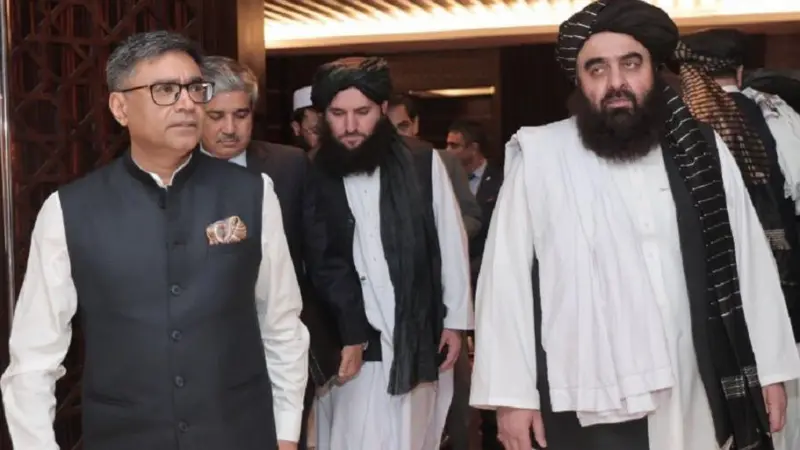
Taliban Leaders

In recent years, the geopolitical landscape of South Asia has undergone significant shifts, particularly following the Taliban’s return to power in Afghanistan in 2021. These changes have not only strained relations between Pakistan and Afghanistan but have also seen India recalibrating its approach towards the Taliban, leading to a complex web of alliances and rivalries.

Historical Context

The withdrawal of U.S. forces from Afghanistan and the subsequent collapse of Ashraf Ghani’s government marked a pivotal moment in the region. Many in Pakistan, including its military and diplomatic circles, initially viewed the Taliban’s ascension as a strategic victory. It was believed that a Taliban-led Afghanistan would align more closely with Pakistan’s interests, especially in countering Indian influence in the region.

However, the reality has proven more complex. Over the past four years, Pakistan’s expectations have been met with growing challenges. The Taliban’s return has not resulted in the anticipated stabilisation of Pakistan’s western borders. Instead, there has been an uptick in attacks by the Tehrik-i-Taliban Pakistan (TTP), which Islamabad claims are being orchestrated from Afghan soil. Despite Pakistan’s repeated calls for action against the TTP, the Taliban’s response has been lukewarm, further straining bilateral relations.

Growing India-Taliban Engagement

While Pakistan’s relations with the Taliban have soured, India has been quietly cultivating ties with the Afghan rulers. Historically, India has invested heavily in Afghanistan, seeing it as a critical partner for regional connectivity and a counterbalance to Pakistani influence. The fall of the Ghani government initially seemed a setback for India, but recent developments suggest a strategic recalibration.

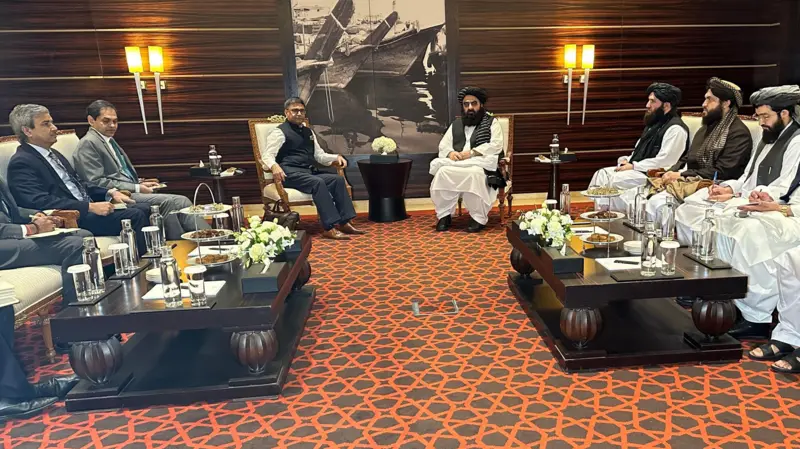
In January 2025, India’s Foreign Secretary Vikram Misri held a meeting with the Taliban’s acting Foreign Minister, Amir Khan Muttaqi, in Dubai. This marked one of the highest-level engagements between India and the Taliban since 2021. The discussions focused on enhancing trade and economic cooperation, with particular emphasis on using Iran’s Chabahar Port to bypass Pakistani routes. Afghanistan’s Ministry of Foreign Affairs described India as a vital regional and economic partner, signalling a significant warming of ties.

This burgeoning relationship serves multiple purposes for India. Economically, it ensures access to Central Asian markets through Afghanistan and Iran. Politically, it provides India with leverage against Pakistan by fostering an independent relationship with the Taliban, thus complicating Islamabad’s strategic calculus.

Pakistan’s Concerns and Strategic Missteps

Pakistan’s reaction to these developments has been cautious but marked by underlying concern. The lack of a coherent and effective policy towards the evolving dynamics in Afghanistan has been a point of criticism among Pakistani analysts. The initial euphoria over the Taliban’s return has given way to a more sobering reality of increased security threats and diminished influence.

Former Pakistani diplomats and military officials have publicly acknowledged the misjudgment. The expectation that a Taliban-controlled Afghanistan would automatically align with Pakistan’s strategic interests has proven overly simplistic. Instead, the Taliban’s pursuit of an independent foreign policy, including its rapprochement with India, highlights the limitations of Pakistan’s influence.

Regional Implications

The evolving alliances in South Asia are reshaping the region’s security architecture. India’s outreach to the Taliban, coupled with its investments in infrastructure projects like the Chabahar Port, underscores its long-term strategic vision. For Afghanistan, India represents not only an economic partner but also a counterbalance to Pakistani influence.

Conversely, Pakistan finds itself in a precarious position. The rise in TTP attacks has compounded internal security challenges, while the diplomatic fallout with the Taliban has eroded Islamabad’s traditional leverage over Afghan affairs. The regional perception of Pakistan as a supporter of the Taliban has also led to increased scrutiny and criticism, particularly from Western policymakers.

Conclusion

The shifting alliances in South Asia, particularly the strengthening ties between India and the Taliban, present a complex challenge for Pakistan. As the regional dynamics continue to evolve, Islamabad will need to reassess its strategies to safeguard its interests. For India, the engagement with the Taliban offers both opportunities and risks, necessitating a careful balancing act to maintain its influence without compromising its broader strategic objectives.

In this intricate geopolitical chess game, the coming years will reveal whether these evolving alliances lead to greater regional stability or further entrench existing rivalries