Omar Abdullah Demands Action: Restore Jammu & Kashmir Statehood or Let Supreme Court Decide

Omar Abdullah

Former Jammu and Kashmir Chief Minister Omar Abdullah has issued a bold appeal to all major political parties in India, urging them to support the immediate restoration of statehood to Jammu and Kashmir, a promise he says has remained unfulfilled for far too long.

In a direct message to parties with significant representation in Parliament, Omar confirmed that he has written letters calling for unified support to raise and pass a statehood bill during the current session. He reminded them that the Centre had made this promise multiple times — in public speeches, on the floor of Parliament, and even before the Supreme Court.

“Several Years, No Action — Court Must Intervene”

Pointing to the long delay, Omar Abdullah said that August 8 is a crucial day, as the Supreme Court is set to hear a related matter. He expressed hope that the judiciary would hold the government accountable if it continues to delay.

“The Supreme Court played a role in pushing for assembly elections by setting a deadline. Now, it should do the same for restoring statehood,” he asserted.

Assembly Elections Held Under Court Pressure

Referring to the recent assembly elections in the region, Omar noted that they were not held voluntarily by the government but only after the Supreme Court mandated a timeline. He suggested a similar push was needed to ensure that statehood is not kept in cold storage indefinitely.

“Security Situation Has Changed, Yet Troops Increase”

Omar also spoke about the current security situation, stating that troop presence in Jammu and Kashmir has increased following the deadly attack on April 22. However, he pointed out that despite security challenges, around 4 lakh pilgrims successfully completed the Amarnath Yatra this year via the Baltal and Pahalgam routes, indicating relative stability on the ground.

He encouraged tourists from across the country to visit Kashmir, expressing hope for a strong rebound in tourism.

Climate Warnings After Ramban & Uttarakhand Tragedies

In a broader message, Omar highlighted the dangers of environmental degradation. Referring to recent landslide and flood-related incidents in Ramban and Uttarakhand, he blamed deforestation, indiscriminate mountain cutting, and changing weather patterns for making mountainous areas like Jammu and Kashmir more vulnerable.

He stressed the urgent need for policy-level interventions to safeguard fragile Himalayan ecosystems, adding that the J&K government stands in solidarity with the people of Uttarakhand.


🔍 Why It Matters

  • Restoring statehood has been a key demand since Article 370 was revoked and J&K downgraded to a Union Territory in 2019.
  • Despite repeated promises by the central government, no timeline has been offered for statehood restoration.
  • Public trust and regional autonomy remain contentious political and constitutional issues, with growing pressure from both civil society and political leaders.

Omar Abdullah’s call is not just a political appeal — it is a challenge to the nation’s institutions. With the Supreme Court’s upcoming hearing and the Parliament session underway, the next few days could be decisive in shaping Jammu and Kashmir’s political future.

Nine Soldiers Missing After Flash Floods Hit Army Camp in Uttarakhand’s Harshil

Supreme Court to Hear Plea on August 8 Seeking Time-Bound Restoration of J&K Statehood

Mehbooba Mufti Slams Centre on Article 370 Anniversary, Calls It a Threat to Democracy Across India

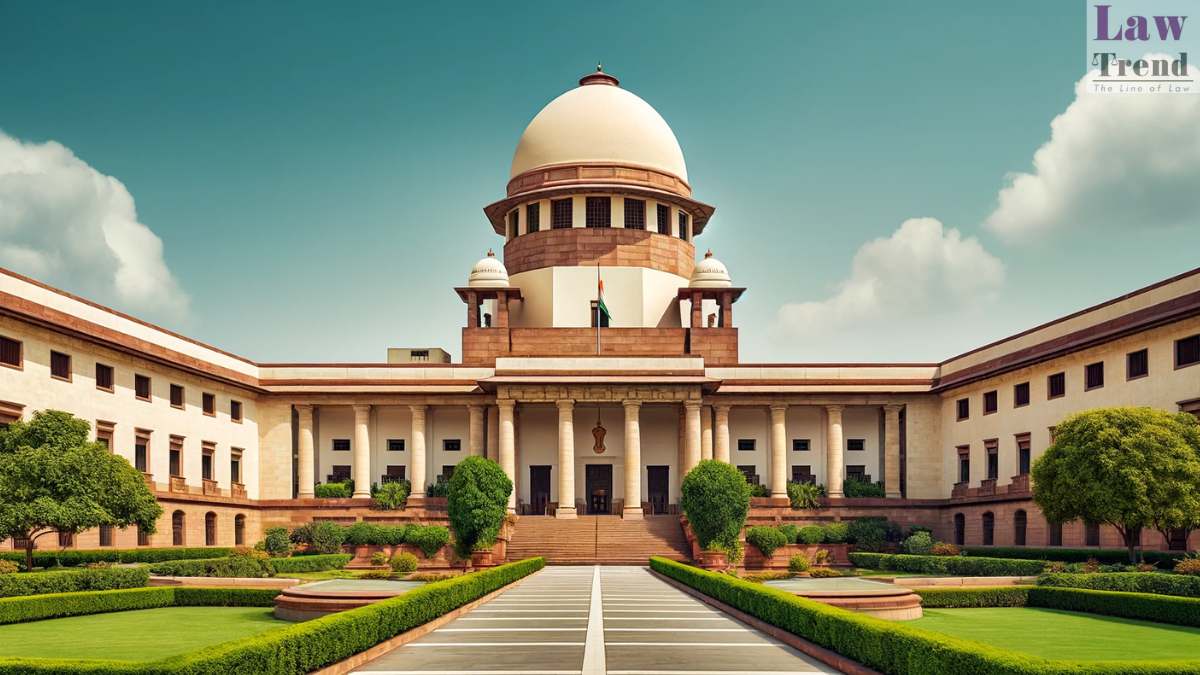
Supreme Court to Hear Petitions Challenging Waqf (Amendment) Act 2025 Today at 2 PM

supreme-court-4

The Supreme Court of India is set to hear a series of petitions challenging the constitutional validity of the Waqf (Amendment) Act 2025 today at 2 PM. The matter will be heard by the Chief Justice’s bench and has drawn attention from various political parties, organisations, and legal experts across the country.

Multiple Petitions Filed

Several petitions have been filed challenging the Waqf (Amendment) Act 2025, which recently came into force after receiving Presidential assent on April 5. The Act was officially enforced from April 8, following a 12-hour-long debate in the Parliament. It was passed by the Lok Sabha with a margin of 288 to 232 and later by the Rajya Sabha with 128 votes in favour and 95 against.

The amendments are being challenged by a broad spectrum of petitioners, including political leaders, religious bodies, civil rights groups, and non-governmental organisations. Among those who have moved the apex court are:

  • All India Majlis-e-Ittehadul Muslimeen (AIMIM) MP Asaduddin Owaisi
  • Congress MPs Mohammad Jawed and Imran Pratapgarhi
  • AAP MLA Amanatullah Khan
  • NPP MLA Sheikh Noorul Hassan
  • Azad Samaj Party President Chandra Shekhar Azad
  • Samajwadi Party MP Zia Ur Rehman Barq
  • Jamiat Ulema-i-Hind President Maulana Arshad Madani
  • Samastha Kerala Jamiatul Ulema
  • Indian Union Muslim League
  • Social Democratic Party of India
  • NGO Association for Protection of Civil Rights

Additionally, the Dravida Munnetra Kazhagam (DMK), Communist Party of India (CPI), and Tamilaga Vettri Kazhagam (TVK) led by actor-turned-politician Vijay have also approached the court opposing the law.

Arguments from Petitioners

The petitioners argue that the Waqf (Amendment) Act 2025 violates fundamental constitutional rights and specifically targets the autonomy of Muslim religious institutions. Congress MP Mohammad Jawed, who was part of the Joint Parliamentary Committee that reviewed the Waqf (Amendment) Bill, has submitted that the Act imposes unfair restrictions on the Muslim community that are not applied to other religious institutions.

The petitioners have demanded an interim stay on the implementation of the law, claiming that it infringes upon the freedom of religion and equality guaranteed under the Indian Constitution.

Advocate Pradeep Yadav, appearing for petitioners Tayyab Ahmed Sulemani and Anjum Qadri, confirmed that their writ petitions are listed for hearing today and have requested that the Act be put on hold pending final judgment.

Defence of the Act

On the other side, Hindu Sena President Vishnu Gupta and Satish Kumar Aggarwal of the Akhil Bharat Hindu Mahasabha have submitted intervention applications in support of the amended law. Advocate Barun Kumar Sinha, representing Gupta, stated that the amendments were thoroughly reviewed by the Government of India and are fully aligned with constitutional principles.

Sinha argued that the amended law was introduced to correct “draconian provisions” in the original Waqf Act, 1995, and that no citizen’s fundamental rights have been violated. He also challenged the locus standi of some petitioners, alleging that several of them represent political parties that are using the issue for political mileage.

Background and Significance

The Waqf (Amendment) Act 2025 has sparked a nationwide debate. Waqf properties, which are endowments made by Muslims for religious or charitable purposes, have long been managed under the Waqf Act of 1995. Critics of the new amendments argue that the 2025 version centralises control, restricts local decision-making, and could lead to misuse of community assets.

Supporters of the law claim it enhances transparency, accountability, and governance, ensuring that Waqf properties are protected from encroachment and mismanagement.

What to Expect

As the Supreme Court takes up this sensitive matter, all eyes will be on the proceedings scheduled for 2 PM today. The outcome could have a significant impact on the future governance of Waqf properties and religious rights in India.

The hearing may also influence how similar religious endowments from other communities are treated in future legislation. A ruling either way is expected to set an important precedent.

Congress Vows to Resist Modi Govt’s Moves, Lists Key Legal Challenges in Supreme Court

Supreme Court

The Congress on Friday said it will “very soon” challenge in the Supreme Court the constitutionality of the Wakf (Amendment) Bill, 2024 that was passed in Parliament.

The Waqf (Amendment) bill was cleared by Parliament early Friday, with the Rajya Sabha giving its nod.

In a post on X, AICC general secretary Jairam Ramesh said, “The INC will very soon be challenging in the Supreme Court the constitutionality of the Wakf (Amendment) Bill, 2024”.

We are confident and will continue to resist all assaults of the Modi Govt on the principles, provisions, and practices that are contained in the Constitution of India,” he said.

Ramesh said the INC’s challenge of the CAA, 2019 is being heard in the Supreme Court.

The INC’s challenge of the 2019 amendments to the RTI Act, 2005 is being heard in the Supreme Court, he noted.

“The INC’s challenge to the validity of the amendments to the Conduct of Election Rules (2024) is being heard in the Supreme Court.

“The INC’s intervention to uphold the letter and spirit of the Places of Worship Act, 1991 is being heard in the Supreme Court,” the Congress leader said.