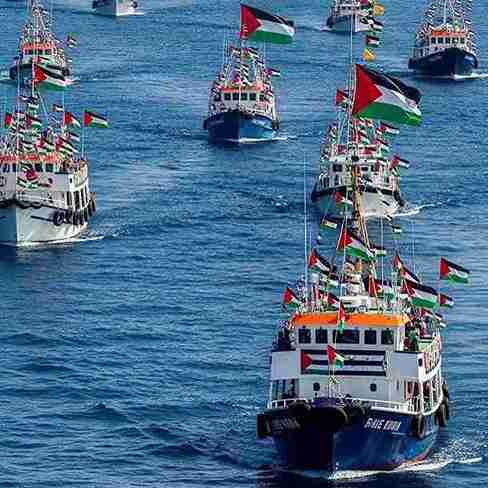
The Global Sumud Flotilla, a large humanitarian convoy of over 40 boats carrying aid for Gaza, is now closer than ever to its destination. As of 1 October 2025, the fleet has entered the “high-risk zone”, about 150 nautical miles (278 km) from Gaza’s coast. After a month-long journey of around 1,700 nautical miles, organisers say the flotilla may arrive in 3–4 days, though an Israeli interception looks likely.
The mission, called “Sumud” (meaning resilience in Arabic), aims to break Israel’s 18-year naval blockade of Gaza. It is delivering food, medicine, and medical equipment, while also drawing attention to the ongoing humanitarian crisis. This is the largest attempt yet, involving 500 activists from 39 countries—including lawyers, doctors, journalists, parliamentarians, and Swedish climate activist Greta Thunberg.
Recent Developments
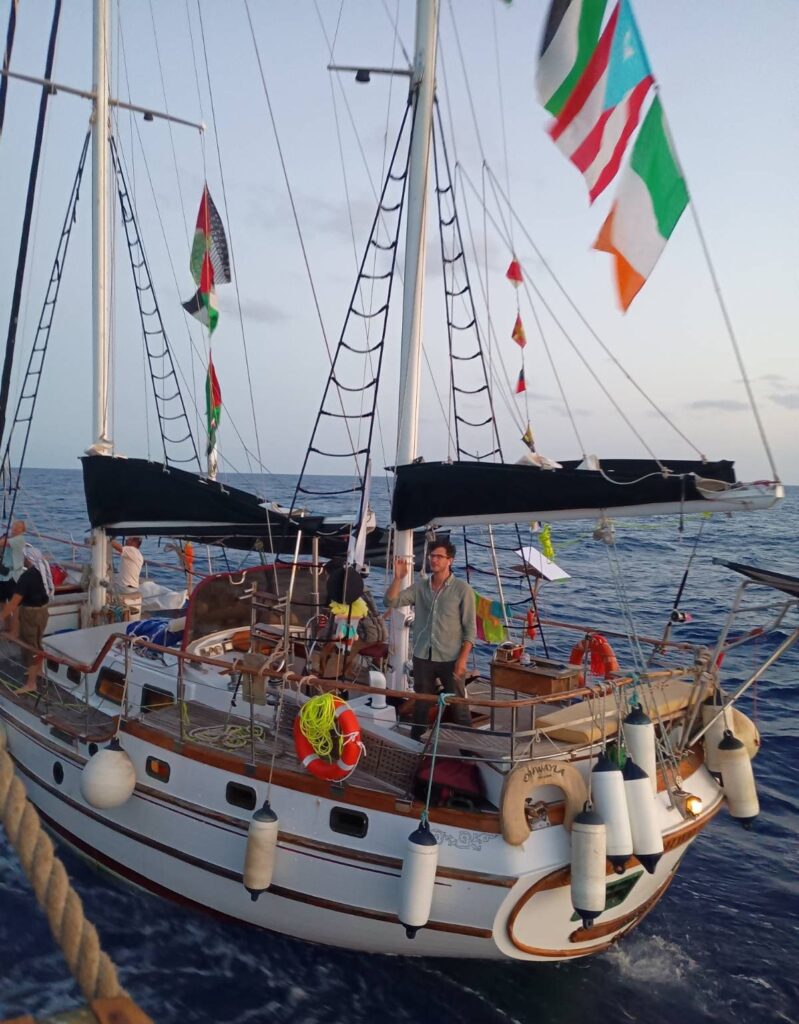
- High-Risk Zone: The flotilla, now 44–47 vessels strong, has entered waters where earlier aid missions were stopped or attacked. Live video streams are running for safety and monitoring.
- Israeli Harassment: On the night of 30 September–1 October, two Israeli warships approached lead boats, jamming communications and performing warning manoeuvres but did not board. Israeli media reports that an operation is being prepared.
- International Monitoring: Turkish drones and escort ships from Spain, Italy, and Greece are nearby. The UN and EU have urged Israel to allow safe passage, citing international maritime law.
- Crew Preparations: Activists have been training for possible boarding. Medics are stationed on every vessel, and organisers have warned of an “imminent attack”, calling for global support if stopped.
Wider Context
The flotilla left Barcelona on 31 August 2025, joined by groups from Tunisia, Italy, and Asia-Pacific countries such as Indonesia and Malaysia. It has already survived drone attacks and storm damage.
Israel claims the convoy has links to militants and insists the blockade is needed for security. Activists, the UN, and rights groups say the blockade is illegal collective punishment and demand it be lifted. Italy even suggested aid should be rerouted via Cyprus, but organisers rejected this, insisting on direct delivery to Gaza.
| Issue | Activists / UN | Israeli Government |
|---|---|---|
| Legal Rights | Freedom of navigation under international law; humanitarian aid allowed. | Blockade justified for security reasons. |
| Cargo | Food, medicine, baby formula, no weapons. | Items could be “dual use” and must be inspected. |
| Past Incidents | 2010 raid killing 9 still demands accountability. | Actions taken were defensive. |
| Global Reaction | EU, UN call for protection; dockworkers threaten strikes if flotilla attacked. | Some allies warn flotilla to stop; US voices support for Israel. |
Current Situation
Despite the risks, activists vow to continue:
“We sail onward… Your resilience is our compass,” the flotilla stated.
Israeli Foreign Minister Gideon Sa’ar urged organisers to hand over aid to Cyprus, saying it was “not too late.” However, activists remain committed to non-violence and plan to record any Israeli boarding attempts with mobile phones and CCTV.
If the flotilla is stopped, it could trigger new global criticism of Israel’s blockade. Either way, organisers say more fleets will follow until the siege is broken.
Click Here To Follow Our WhatsApp Channel
You Might Also Like:
Leh Apex Body Halts Talks with Home Ministry Until Normalcy Returns in Ladakh
Kargil Democratic Alliance Demands Release of Sonam Wangchuk, Urges Justice
Former Masjid al-Haram Imam Dr. Sheikh Saleh Al-Talib Released After 7 Years Detention
Baramulla Police File Charge Sheets Against Tehreek-e-Hurriyat, J&K National Front in Unlawful Activities Cases