Born Under a Fading Empire, Sir Syed Ahmad Khan Lit the Torch That Transformed Muslim India Forever

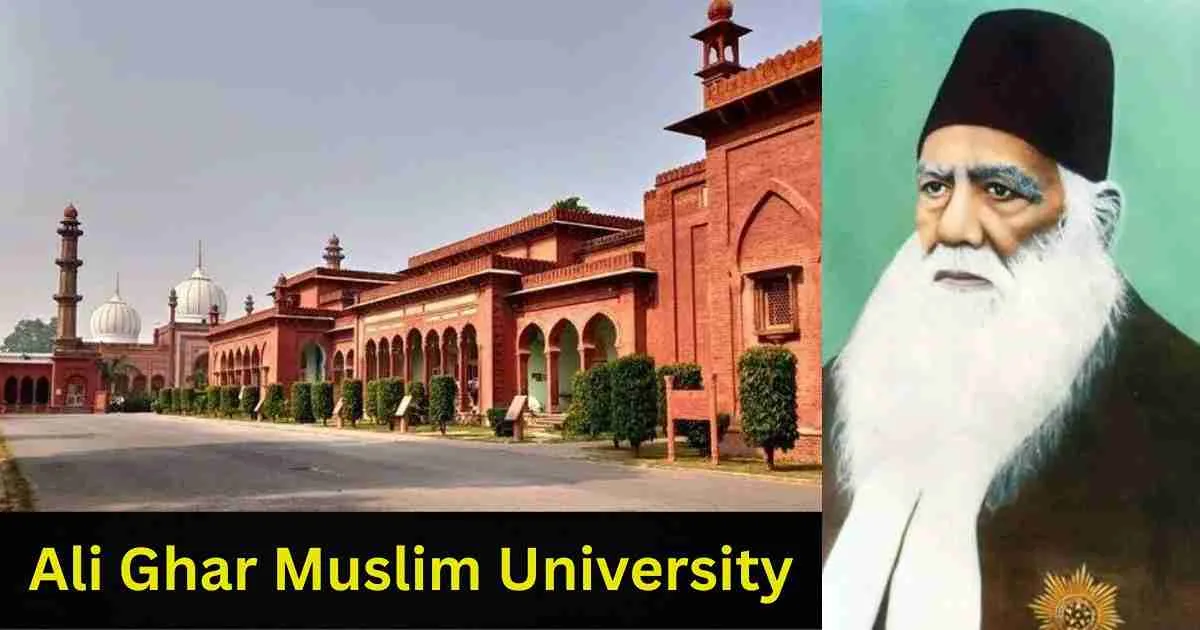
ali ghar muslim university

October 17 is the birthday of famous Islamic reformer, philosopher, educator, scholar and the founder of the Aligarh Muslim University, Sir Syed Ahmad Khan

Date of Birth: 17 October 1817

– Place: Delhi, Mughal Empire

– Ruling Monarch: Akbar II, the penultimate Mughal emperor (reigned 1806–1837)

At the time of Sir Syed’s birth, the Mughal Empire was a shadow of its former glory—its authority largely symbolic, with real power held by the British East India Company. Akbar II’s court was more ceremonial than sovereign, and Delhi had become a city caught between fading grandeur and colonial encroachment.Click Here To Follow Our WhatsApp Channel

Sir Syed’s birth under a declining Mughal regime deeply influenced his worldview. He witnessed firsthand the erosion of Muslim political power and the rise of British dominance. This backdrop shaped his reformist zeal—his push for modern education, scientific thinking, and Muslim upliftment through institutions like the Muhammadan Anglo-Oriental College (later Aligarh Muslim University).Sir Syed is considered as one of the most important architects of modern India.

Sir Syed was born in a family that had previously served the Mughal court for nearly two and a half centuries. He was descended from the family of Prophet Muhammad through his daughter Fatimah and Ali. As a child, he was brought up in a Sufi household by his maternal grandfather Khwaja Fariduddin who was among the descendants of the 12th Sufi scholar of Naqshbandi Tariqa, Khwaja Mohammad Yusuf Hamdani.

The Indian Uprising of 1857 was one of the major turning points in Syed Ahmed’s life. He foresaw the imperative need for the Muslims to acquire proficiency in the English language and modern sciences, if the community were to maintain its social and political clout, particularly in Northern India.

He began to prepare the road map for the formation of a Muslim University by starting various schools. He instituted Scientific Society in 1863, launched The Aligarh Institute Gazette in 1866, and founded the Madrasatul Uloom in Aligarh in 1875. The Madrasatul Uloom later became the Muhammadan Anglo-Oriental College in 1877.

He patterned MAO College after Oxford and Cambridge universities that he went on a trip to London in 1869. Later, the same MAO College turned into the Aligarh Muslim University in 1920. The year 2020 marks the 100 years of the prestigious Aligarh Muslim University.

Apart from education and social reforms, Sir Syed contributed a lot to the religious, legal, historical, and political disciplines of learnings. He wrote several books, journals, and articles on different subjects. Today, Sir Syed is not only celebrated by the Indians or Pakistanis but by the peoples from all around the world. He died on March 27, 1898, and lies buried next to the main mosque at AMU.

Sir Syed Ahmad Khan: His Life, Education, and Lasting Services to the Muslim Community

Sir Syed Ahmad Khan

Sir Syed Ahmad Khan was one of the most important Muslim leaders of the 19th century. He was a reformer, educator, writer, and social thinker who worked tirelessly to uplift the Muslim community of India. At a time when Muslims were facing political downfall and educational backwardness, Sir Syed became a light of hope. Through his vision, he inspired generations to embrace modern education while staying true to their faith.


Early Life and Background

Sir Syed Ahmad Khan was born on 17 October 1817 in Delhi, during the last days of the Mughal Empire. His family was well-known for its scholarship and service in the Mughal court. His father, Syed Muttaqi, was connected with the royal family, while his mother, Aziz-un-Nisa, was a wise and religious woman who gave him a strong moral foundation.

From childhood, Sir Syed showed great interest in learning. He studied the Qur’an, Arabic, Persian, mathematics, and medicine. Unlike many others of his time, he wanted to understand both traditional and modern knowledge. His early education shaped his open-minded attitude towards the world.


Professional Life

In 1838, Sir Syed joined the East India Company as a judicial officer. During his service, he travelled to many parts of India and closely observed the social and political condition of the people, especially Muslims.

When the War of 1857 (also known as the First War of Independence) broke out, Sir Syed remained loyal to his duty and helped protect innocent lives during the chaos. The British, however, blamed Muslims for the revolt, and the community suffered severe punishment. Seeing their misery deeply affected Sir Syed and changed the direction of his life.


After the War of 1857

After the war, Muslims of India lost their positions in government, education, and trade. They became fearful of learning English or cooperating with the British. Sir Syed realised that without modern education, Muslims would remain weak and backward.

In response, he wrote his famous book “Asbab-e-Baghawat-e-Hind” (The Causes of the Indian Revolt), where he explained the true reasons behind the uprising. He argued that the British government’s policies, not religion, caused the revolt. His honesty earned him respect from the British and showed his courage to speak the truth.


Educational Efforts and the Aligarh Movement

Sir Syed believed that education was the only key to progress. He encouraged Muslims to study English, science, and modern subjects so that they could compete in a changing world.

In 1864, he founded the Scientific Society in Ghazipur to translate English books into Urdu, making modern knowledge accessible to ordinary Muslims.

His greatest contribution came in 1875, when he founded the Mohammedan Anglo-Oriental College in Aligarh, which later became the Aligarh Muslim University (AMU). This institution combined Western learning with Islamic morals. It produced educated Muslims who later became leaders in various fields. The Aligarh Movement started by Sir Syed was not just about education — it was about the revival and reform of the entire Muslim community.


Social and Religious Reforms

Sir Syed was a social reformer who wanted to remove outdated customs and superstitions from Muslim society. He encouraged critical thinking, honesty, and moral behaviour. He also supported women’s education and opposed child marriage and unnecessary spending on weddings.

In 1870, he started the journal “Tahzib-ul-Akhlaq” (The Refinement of Morals), through which he spread his message of social change. He urged Muslims to adopt modern ways of life without losing their Islamic identity.

Religiously, Sir Syed tried to show that Islam and modern science were not opposed to each other. He interpreted Islamic teachings in a rational way and believed that reason and faith could go hand in hand. He worked to create harmony between religion and modern knowledge.


Political Views

Sir Syed was not in favour of political confrontation with the British. He believed Muslims first needed education and unity before engaging in politics. When the Indian National Congress was formed in 1885, he advised Muslims not to join it immediately, fearing their interests might be ignored in a Hindu-majority organisation.

He encouraged Muslims to develop their own political awareness and identity. His foresight later influenced leaders like Allama Iqbal and Quaid-e-Azam Muhammad Ali Jinnah, who carried forward his vision in shaping the political destiny of Muslims in India.


Last Years and Death

Sir Syed continued his mission until the end of his life. He spent his final years in Aligarh, overseeing the development of the college and guiding the younger generation. He passed away on 27 March 1898 and was buried inside the campus of Aligarh Muslim University — the very institution that became the symbol of his dream.


Legacy

Sir Syed Ahmad Khan’s contribution to education and reform is unforgettable. The Aligarh Movement not only produced educated Muslims but also gave birth to a new sense of self-respect and confidence in the community. His efforts changed the direction of Muslim thought in India and left a deep mark on the history of South Asia.

Even today, Sir Syed is remembered as a pioneer of modern Muslim education, a bridge between tradition and progress, and a true reformer who devoted his life to the service of his people.


Conclusion

Sir Syed Ahmad Khan’s life was a journey of faith, courage, and vision. He taught Muslims that knowledge is power and that education is the real foundation of progress. His message still holds true — that no nation can rise without learning, unity, and moral strength. Through his lasting services, Sir Syed remains one of the most respected and inspiring figures in the history of the Indian subcontinent.