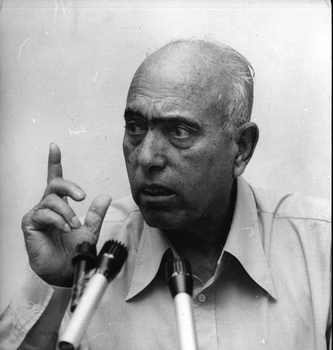
Sheikh Mohammad Abdullah: The Lion of Kashmir
Sheikh Mohammad Abdullah, popularly known as Sher-e-Kashmir (Lion of Kashmir), remains one of the most revered and influential figures in the history of Jammu and Kashmir. His life was dedicated to the service of his people, championing their rights, promoting social justice, and striving for a dignified existence within the framework of democracy and secularism.
Early Life and Education
Born on December 5, 1905, in Soura, near Srinagar, Sheikh Abdullah hailed from a middle-class family. His early education was in Srinagar, after which he pursued higher studies at the Islamia College, Lahore, and later at Aligarh Muslim University. It was during his time at Aligarh that he was deeply influenced by the ideas of nationalism, secularism, and social reform. He earned a Master’s degree in Physics and later a degree in Chemistry, but his true calling lay in public service. Click Here To Follow Our WhatsApp Channel
Political Awakening and the Freedom Struggle
Returning to Kashmir in the early 1930s, Sheikh Abdullah was deeply moved by the plight of the common people, who faced exploitation under the autocratic rule of the Dogra Maharaja. In 1932, he founded the Muslim Conference, which later evolved into the National Conference in 1939 to reflect a broader, secular platform inclusive of all communities.
Under his leadership, the National Conference launched the “Naya Kashmir” movement, envisioning a society based on democracy, socialism, and secularism. The Naya Kashmir Manifesto (1944) outlined progressive policies including land reforms, free education, workers’ rights, and gender equality.
Role in Kashmir’s Accession to India
During the tumultuous period of Partition in 1947, Sheikh Abdullah emerged as a key figure in guiding Kashmir’s political destiny. He opposed the idea of joining Pakistan, citing its two-nation theory, and advocated for accession to India based on secular and democratic principles. His support was instrumental in Maharaja Hari Singh’s decision to sign the Instrument of Accession to India in October 1947.
Sheikh Abdullah believed that Article 370, which granted special autonomy to Jammu and Kashmir, was essential to protect the region’s unique identity while being part of the Indian Union. He served as the Prime Minister of Jammu and Kashmir from 1948 to 1953, implementing landmark land reforms that abolished feudal landlordism and distributed land to tillers, earning him immense popularity among the masses.
Commitment to Secularism and National Integration
Throughout his life, Sheikh Abdullah was a staunch advocate of Kashmiriyat—a syncretic cultural identity that celebrated Hindu-Muslim unity. He often quoted the poetry of Lal Ded and Nund Rishi, spiritual saints revered by all communities in Kashmir, to emphasize communal harmony.
Despite political differences with the central government at times, his commitment to India’s secular fabric never wavered. After periods of detention, he returned to active politics and signed the 1975 Indira-Sheikh Accord, which reaffirmed Kashmir’s relationship with India while preserving its regional autonomy. He served as the Chief Minister of Jammu and Kashmir from 1975 until his passing in 1982.
Legacy and Contributions
Sheikh Mohammad Abdullah’s legacy is multifaceted:
- Social Reforms: His land redistribution policies transformed the agrarian structure and empowered peasants.
- Educational Advancement: He established schools, colleges, and the University of Kashmir, emphasizing education for all.
- Women’s Empowerment: He promoted gender equality and encouraged women’s participation in public life.
- Democratic Values: He strengthened democratic institutions in Jammu and Kashmir and ensured peaceful political transitions.
- Cultural Pride: He championed Kashmiri language, art, and heritage, fostering a sense of regional pride within national unity.
Even after his death on September 8, 1982, Sheikh Abdullah’s vision continues to inspire generations. The Sher-e-Kashmir Institute of Medical Sciences and numerous educational institutions across the valley stand as testaments to his dedication to public welfare.
Conclusion
Sheikh Mohammad Abdullah was not just a political leader but a symbol of hope, resilience, and progressive ideals. His life reflected a profound love for Kashmir and an unwavering faith in India’s democratic ethos. As a unifying figure, his efforts to bridge communities and promote peace remain relevant today. The Lion of Kashmir’s roar for justice, equality, and dignity continues to echo in the hearts of his people.
You Might Also Like:
At 13, This Kashmiri Boy Built 31 Apps and AI Tools
Delhi Court Convicts Kashmiri Separatist Asiya Andrabi in UAPA Case
Why Is Omar Abdullah Silent as a Kashmiri Shawl Seller Is Brutally Attacked in Uttarakhand?