Tarun Chugh Meets Dalai Lama in Ladakh, Reaffirms India’s Commitment to Peace, Ahimsa, and Buddhist Heritage

Dalai Lama

In a significant spiritual and symbolic gesture, BJP National General Secretary Tarun Chugh met with His Holiness the 14th Dalai Lama on Tuesday in Ladakh. The meeting, steeped in reverence and mutual respect, underscored India’s enduring civilisational commitment to peace, compassion, religious freedom, and the preservation of Buddhist heritage.


A Meeting of Souls and Civilisations

The encounter between Chugh and the Dalai Lama was more than a political or ceremonial visit—it reflected India’s timeless role as a sanctuary for seekers of truth, ahimsa (non-violence), and karuna (compassion). The Dalai Lama, who has been living in exile in India since 1959, acknowledged this bond during the meeting.

“Since coming into exile from Tibet in 1959, we have received immense support and assistance from the Government of India. It is thanks to India’s generosity that we have been able to preserve our unique identity, language, and cultural heritage, deeply rooted in the principles of ahimsa and karuna,” the Dalai Lama stated in a heartfelt message.


Chugh: “India’s Spiritual DNA Reflects in the Dalai Lama”

Tarun Chugh described the Dalai Lama as not only a globally respected spiritual leader but also a “living embodiment of India’s civilisational values.”

“His message of compassion, universal brotherhood, and spiritual strength resonates with the soul of India,” said Chugh. “Meeting him in Ladakh is a reminder that India’s strength lies not only in its economy or military, but in its unwavering moral and spiritual foundation.”


Modi’s Leadership and the Preservation of Buddhist Legacy

Chugh went on to praise Prime Minister Narendra Modi for his commitment to safeguarding and promoting India’s Buddhist heritage, both domestically and on the global stage.

“Under PM Modi’s leadership, India has stood firm on its ancient promise of being a sanctuary for seekers of truth and justice,” he said. “Modi Ji is not only working to uplift the lives of citizens but also ensuring the protection of our Buddhist legacy, keeping alive the values of Bhagwan Buddha for generations to come.”

Citing PM Modi’s initiatives like the revival of Buddhist pilgrimage sites, international conferences on Buddhism, and infrastructural support in regions like Ladakh, Chugh said India is living up to its civilisational dharma, not just a policy mandate.


Ladakh: A Sacred Frontier

Chugh also highlighted the unique role of Ladakh as a confluence of Buddhist wisdom, national pride, and strategic importance.

“Ladakh is not just a frontier on the map—it is a spiritual heartland where Indian civilisation meets Buddhist thought. This region reflects the soul of India, where silence is sacred and every monastery echoes centuries of wisdom,” he noted.


Reaffirming India’s Role in a Troubled World

Emphasizing the broader implications of his meeting with the Dalai Lama, Chugh said that India has a timeless duty to protect torchbearers of truth, ahimsa, and dharma in a world increasingly plagued by violence, polarization, and spiritual emptiness.

“This meeting is not merely symbolic—it is a reaffirmation of our civilisational promise to protect spiritual heritage, stand with oppressed communities, and offer light in dark times,” he said.


Conclusion

The meeting between Tarun Chugh and the Dalai Lama in Ladakh stands as a reminder that India’s greatest contributions to the world are not material, but moral and spiritual. As global challenges mount—from violence and war to climate crisis and cultural erasure—India continues to uphold the flame of non-violence, inclusivity, and spiritual resilience.

The message was clear: In the land of the Buddha, under the gaze of the Himalayas, India reaffirms its eternal role as a beacon of peace and protector of the sacred.


J&K Speaker Denies Mehbooba Mufti’s Claim on July 13 Holiday Resolution, Calls It Misleading

Suspected Bangladeshi National Held in Katra for Illegal Entry, FIR Registered Under Foreigners Act

Kapil Sharma Under Terrorist Threat: Why Khalistani Groups Attacked His Canada Café Days After Opening

PM Modi Inaugurates Chenab and Anji Bridges, Calls Them Symbols of Strength and India’s Bright Future

PM Modi

Noting that the newly inaugurated Chenab and Anji Bridges will not only connect Jammu and Kashmir directly but also boost economy, Prime Minister Narendra Modi on Friday said that these bridges are not just structures of brick, cement, steel and iron, but a living symbols of India’s strength and the roar of India’s bright future.

As he inaugurated several railway projects, marking major transformation and a boost in railway connectivity in Jammu and Kashmir, Prime Minister Modi asserted that all the good work was “indeed” left for him to complete.

The Prime Minister stated that the Udhampur-Srinagar-Baramulla Railway Link (USBRL) project is a recognition of Jammu and Kashmir’s new strength and a proclamation of India’s new strength.

Addressing a public gathering, PM Modi said, “Today’s programme is a huge celebration of India’s unity and willpower. With the blessings of Mother Vaishno Devi, today Kashmir valley has been connected with India’s rail network. While describing Mata Bharti, we have been saying with reverence, Kashmir to Kanyakumari. This has now become a reality for the railway network as well. USBRL project is not just a name, it is the recognition of Jammu and Kashmir’s new strength. It is a proclamation of India’s new strength.”

“I got the opportunity to inaugurate Chenab and Anji bridges. Today, J&K has received two new blessings. Here in Jammu, the foundation stone of a new medical college has been laid. Projects worth Rs 46,000 crores will give a new impetus to the development of Jammu and Kashmir,” he added.

Congratulating the people of the territory on these projects, PM Modi said, “I congratulate all of you for this new era of development. Many lineages of J-K have spent their lives dreaming of rail connectivity. Yesterday, I was watching CM Abdullah’s statement; he had also said that since he was studying in 7 or 8 standard, he was waiting for the completion of this project. Today the dream of lakhs of people of J-K has been fulfilled. All the good work is indeed left for me only to complete. It is the good fortune of our government that this project gained momentum during our tenure, and we completed it…”

Highlighting that the Indian Railways faced major challenges in the completion of the USBRL project, the Prime Minister stated that now the focus is on building all-weather projects and Sonmarg tunnel, Chenab bridge and Anji bridge are all examples of this.

He said, “This was a challenging project to complete, but our government always chooses the path of challenging the challenge itself. The all-weather projects being built in J-K are an example of this. The Sonmarg tunnel was started a few months ago. I came via Chenab and Anji bridges. While walking on these bridges I have experienced the lofty intentions of India, the honor and courage of our engineers, our workers.”

Prime Minister Modi further highlighted that the bridge on the Chenab river is taller than Eiffel Tower in Paris, France and it has potential to become a tourist site.

“Chenab bridge is the tallest railway arch bridge in the world. People go to see the Eiffel Tower in Paris in France and this bridge is much higher than the Eiffel Tower. Now people will definitely go to see Kashmir via Chenab bridge; this bridge will also become an attractive tourist destination in your country. Our Anji bridge is also the best example of engineering. It is the first cable-supported railway bridge in India,” the PM said.

PM Modi further noted that these bridges will in boosting the local economy also.
He said, “These bridges are not just structures of brick, cement, steel and iron, they are living symbols of India’s strength, standing on the rugged hills of Pir Panjal. This is the roar of India’s bright future. This shows that as big as the dream of Viksit India is, equally big is our courage and our capability. And the most important thing is the good intention. This is an extraordinary effort. Chenab or any other bridge will become a means of prosperity for the world. This will not only increase Tourism but will also benefit other sectors of the economy.”

Earlier today, Prime Minister Modi inaugurated the world’s highest railway arch bridge – ‘Chenab Railway Bridge’ and India’s first cable-stayed ‘Anji Bridge’ in Jammu and Kashmir’s Reasi district. He also flagged off two Vande Bharat Express trains from Katra Railway Station, directly connecting Jammu division with Kashmir. (ANI)

PM Modi Calls Operation Sindoor a Decisive Strike,Destroyed Terror Targets, Everything Recorded on Camera,Pakistan’s Proxy War Now Fully Exposed

PM Modi

Terming Operation Sindoor as a “decisive action” PM Narendra Modi said that nine terrorist hideouts were destroyed in 22 minutes during India’s airstrikes against Pakistan adding that the entire action was recorded in front of cameras so that nobody will ask for proof.

Addressing a rally in Gandhinagar, the Prime Minister said that India is a “land of the brave” and highlighted that the terror attacks on the country can now no longer be termed as “proxy wars”.

“This is a land of the brave. Until now, what we used to call a proxy war, after the scenes witnessed post-May 6, we can no longer make the mistake of calling it a proxy war. The reason is that when nine terrorist hideouts were identified and destroyed within just 22 minutes, it was a decisive action. And this time, everything was done in front of the cameras, so that no one back home would ask for proof,” PM Modi said.

Addressing the rally, the Prime Minister said, “I say this can no longer be called a proxy war because the terrorists whose funerals were held after May 6 were given state honours in Pakistan. Pakistan’s flags were placed on their coffins, and their army saluted them. It proves that terrorist activities are not a proxy war but a well-planned war strategy. You are already at war, and you will receive the response accordingly. We do not seek enmity with anyone. We want to live peacefully. We also want to progress so that we can contribute to the welfare of the world…”

Furthermore, PM Modi highlighted how the country was ruined due to the Indus Water Treaty.

“I want to tell the new generation how our country was ruined. If you study the 1960 Indus Waters Treaty, you’ll be shocked. It was decided that the dams built on the rivers of Jammu and Kashmir would not be cleaned. Desilting would not be done. The bottom gates for clearing sediments were to remain shut. For 60 years, these gates were never opened. Reservoirs that were supposed to be filled to 100 per cent capacity have now been reduced to only 2 per cent or 3 per cent…”

Taking a dig at Pakistan, PM Modi stated that till now he has not done anything but people in the neighbourhood are “swerting”.

Right now, I haven’t done anything and people are sweating there (Pakistan). We have opened small gates for cleaning the dams, and there is already a flood there…”

Remembering the time of India’s partition in 1947, PM Modi stated that Pakistan annexed a part of Kashmir with the help of terrorists. He said that if those terrorists had been killed that day and if Sardar Patel’s advice had been accepted, then the series of terror activities in India would have stopped, which has been going on for the past 75 years.”

“In 1947, Mother India was torn into pieces. The chains should have been cut, but the arms were chopped off. The country was divided into three parts, and the same night, the first terrorist attack took place on the soil of Kashmir. Pakistan captured a part of Mother India with the help of terrorists, in the name of Mujahideen. If these Mujahideen had been killed on that day and Sardar Patel’s advice had been accepted, then this series (of terrorist incidents) that has been going on for the last 75 years would not have been seen.

The Prime Minister said that the country has decided to root out the thorn of terrorism. “…Shareer kitna hi swasth kyu naa ho lekin agar ek kaanta chubhta hai toh poora shareer pareshan rehta hai. Ab humne tay kar liya hai uss kaante ko nikaal ke rahenge…” (No matter how strong or healthy the body is, even a single thorn can cause constant pain–and we’ve decided that the thorn must be removed)”, PM Modi said.

The Prime Minister further exposed Pakistan’s capability and stated that it cannot defeat India in war, due to which they have begun a proxy war. He asserted that the terrorists kept on attacking India, and the citizens tolerated every attack.

“When the need for war with Pakistan arose, India’s military power defeated Pakistan all three times. Pakistan understood that it could not defeat India in a war. It started a proxy war against India. They kept attacking wherever they got a chance, and we kept tolerating it”, PM Modi said. (ANI)

PM Modi Holds Urgent Security Briefing at Airport After Return from Saudi Arabia

PM Modi

Shortly after returning from Saudi Arabia, Prime Minister Narendra Modi held an urgent briefing at the airport to review the situation following the Pahalgam terror attack in Jammu and Kashmir.

PM Modi was joined by External Affairs Minister S. Jaishankar, National Security Advisor Ajit Doval, and other top officials during the meeting. The focus was on assessing the latest updates from the ground and planning the government’s next steps.

The Prime Minister had cut short his foreign trip following the tragic attack, which claimed the lives of at least 28 civilians, mostly tourists.

PM Modi and Rajnath Singh Extend Birthday Wishes to J&K CM Omar Abdullah

modi

Prime Minister Narendra Modi and Defence Minister Rajnath Singh on Monday Extended birthday wishes to the Jammu and Kashmir Chief Minister Omar Abdullah.

In a post on X, PM Modi wrote, “Birthday wishes to Jammu and Kashmir Chief Minister Shri Omar Abdullah Ji. Praying for his long and healthy life.”

Rajnath Singh also wrote in a post on X, “Warm birthday greetings to Chief Minister of Jammu and Kashmir, Shri @OmarAbdullah. May he lead a long and healthy life.”

Prime Minister Narendra Modi inaugurates Sonamarg Tunnel in Central Kashmir’s Ganderbal,LG J&K, CM, and Union Ministers Accompany PM

PM Modi

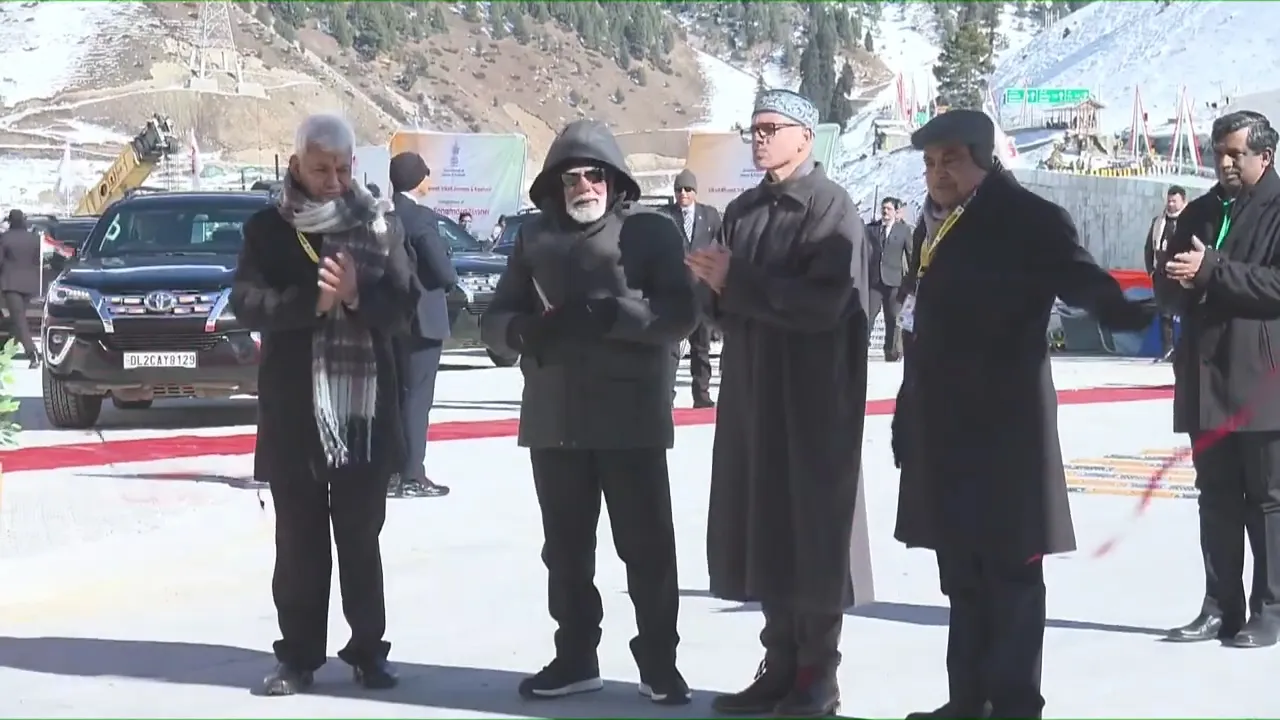
Prime Minister Narendra Modi inaugurated the highly anticipated Z Morh tunnel in Sonamarg area in central Kashmir’s Ganderbal district.

The 6.5km long vital Z-Morh tunnel being constructed near Gagengar area in central Kashmir’s Ganderbal district on Srinagar-Leh Highway was innagurated and dedicated to the Nation. Prime Minister inspected the tunnel and interacted with the tunnel authorities and workers.

The Lietunent Governor Manoj Sinha, Chief Minister Omar Abdullah and several union ministers accompanied the PM. Prime Minsiter is scheduled to address a public gathering in Sonamarg in afternoon.

Pertinent to mention here that, the Work on the 6.5-km Z-Morh tunnel, part of a strategic project and a first step towards ensuring round-the-year connectivity between Kashmir valley and Ladakh region. Now open the Z-Morh tunnel will provide all-weather connectivity between Srinagar and famous tourist destination Sonamarg in Ganderbal district. The Z-Morh tunnel which is a stretch of 6.5 km will connect tourist destination Sonamarg along with a 5 km approach road is project worth 2700 crores. It is a bi-direction tunnel along with an escape tunnel for any eventuality. The Z-Morh tunnel is being developed by Apco Infratech Pvt Ltd at an estimated cost of Rs 2,700 crore.

PM Modi Reflects on His Journey and Humble Beginnings in Podcast Interview

PM Modi Reflects

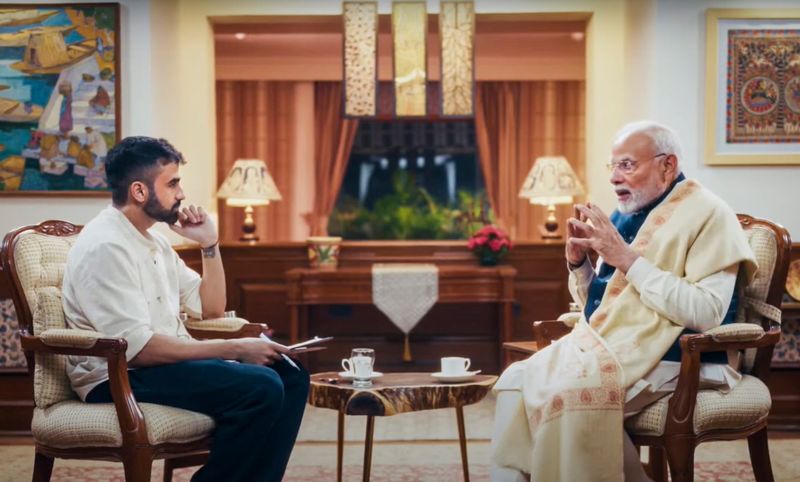
Prime Minister Narendra Modi stated that although the situation and his designation have changed but he is still the same person who once used to sit on the floor and that is the reality.

In a podcast with Zerodha Co-founder Nikhil Kamath, when asked about a photo of a swearing-in ceremony of Gujarat Chief Minister Keshubhai Patel in 1995, where senior politicians were sitting on a chair while he was sitting on the floor, and what has changed in his life since then. PM Modi said, “My designations have changed, and situations have changed. The setup may have changed. Modi is the same person who once used to sit on the floor. This is reality. It makes no difference to me.”

PM Modi said that when he went to Abu Dhabi and asked the Crown Prince to allocate land for temple then the land was allocated without any delay.

PM Modi said, “I went to Abu Dhabi and said to the Crown Prince that if he could allocate a land for temple it would be great service. Without any delay, I got land and permission to build a temple in an Islamic country. Today millions of Hindus are filled with joy.”

When asked about other countries and his food preferences, he said that he is not a foodie.

PM Modi said, “I am not a foodie. Whatever is served to me in the country that I visit I relish it. But it is my bad luck that if you take me to a restaurant today and give me a menu and ask me to select then I won’t be able to do it. It has been years since I have visited any restaurant. Earlier when I was in the Sangathan, Arun Jaitley was very fond of eating. He knew what was best at which restaurant in which city across the country. He was like an encyclopedia. So when we used to travel together one meal at a restaurant was a certain thing.”

“But if someone hands over the menu to me to select food, I cannot do it. Because I am not aware of the names of the dishes and what they really are. As I don’t have the tendency. So I always told Arun Jaitley to order the food. My only preference was that I wanted to have vegetarian food,” he further said.

PM Modi said that often he is asked that since he is from Gujarat then how he is able to speak Hindi so well.

“Earlier when I used to work for Sangh, people used to think that I am from North India but I lived in Gujarat. The reason is that when we used to sell tea in the Railway Station, my village Mehsana, Meh means buffalo, so in my village when the buffaloes would start giving milk, they would be transported to Mumbai. People would sell milk in Mumbai. When buffaloes would stop giving milk there, they would be brought back to the village. The people who used to work in this business were from Uttar Pradesh. When they came they used to wait for the goods train. When they used to get the train they used to fill it with grass, and accommodate four buffaloes. 30 to 40 such people always used to stay at the platform. I used to sell tea and go to them. I used to talk to them and learnt Hindi during my childhood.” he said.

PM Modi further said that in the evening they used to sing devotional songs and order tea and from them he learnt Hindi. (ANI)

PM Modi to Inaugurate Z-Morh Tunnel on January 13, Transforming Sonamarg into All-Weather Destination

PM Modi

PM Modi is set to visit Jammu and Kashmir on January 13, 2025, to inaugurate the much-awaited Z-Morh Tunnel, a crucial infrastructure project on the Srinagar-Sonamarg road.

This development will transform Sonamarg into an all-weather tourist destination, ensuring seamless connectivity throughout the year.

The Z-Morh Tunnel, spanning 6.5 km, bypasses the avalanche-prone Gagangir-Sonamarg stretch, which often remains blocked during winter. The tunnel will significantly reduce travel time, enabling vehicles to cover the stretch in just 15 minutes.

It also enhances connectivity to key locations such as Baltal (Amarnath cave), Kargil, and the Ladakh region.

Strategically located on the Srinagar-Leh Highway, the tunnel will bolster military logistics, ensuring year-round access for the Indian armed forces. It is also expected to provide a major boost to tourism, allowing Sonamarg to attract visitors throughout the year.

The project has created employment opportunities during its construction phase and will further benefit the local economy by enhancing tourism and allied industries like hospitality, transport, and retail.

The construction of the tunnel began in 2018, facing several challenges due to the rugged Himalayan terrain and extreme weather. The project suffered a setback on October 20, 2024, when terrorists attacked a workers’ camp at Gagangir, resulting in the tragic deaths of seven civilians. Despite these challenges, the project continued, demonstrating resilience and commitment to development.

The Z-Morh Tunnel, along with the adjacent Zojila Tunnel, marks a significant step in improving connectivity in the region, strengthening both economic growth and national security. (KNS)