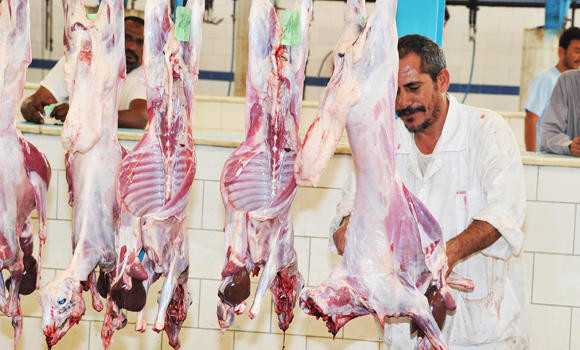
Dispelling fears of a price rise ahead of Ramadan, the All Kashmir Butchers Union on Saturday said that mutton will continue to be sold at the current rate across Jammu and Kashmir.
In a statement issued here, the union clearly denied rumours that mutton prices would rise to Rs 750 or Rs 800 per kilogram. It assured consumers that the price will remain fixed at Rs 700 per kg throughout the holy month of Ramadan and during the Eid-ul-Fitr festival. Click Here To Follow Our WhatsApp Channel
The union said reports of a price hike are unfounded and misleading. It also clarified that mutton and other meat prices in Jammu and Kashmir are not regulated by the Legal Metrology Department or any other government body. As a result, prices are decided through self-regulation by traders and general market forces.
The union, however, highlighted serious external challenges affecting the supply chain. It accused authorities in Punjab of imposing what it called illegal levies on livestock trucks at various checkpoints.
According to the union, taxes linked to the Madhopur cattle fair and grazing charges are unfair and increase the cost of mutton before it reaches Kashmir. Madhopur is a major transit point for trucks carrying sheep and other livestock from Punjab and other states to the Valley.
While Punjab regulates cattle fairs under the Punjab Cattle Fairs (Regulation) Act, 1967, Kashmiri traders allege that unofficial “cattle fair taxes” ranging from Rs 10,000 to Rs 15,000 per truck are being charged. The union has described this practice as extortion.
Earlier, the butchers’ body had approached the Jammu and Kashmir government to raise the issue diplomatically with Punjab authorities. Despite these difficulties, the union has urged consumers to buy mutton only at the officially fixed rate of Rs 700 per kg.
It is important to note that the J&K government does not have the legal power to control or cap mutton prices. In 2023, the administration revoked the J&K Mutton (Licensing and Control) Order of 1973, ending five decades of government price control. Since then, pricing has been left entirely to market forces and traders’ associations.
Kashmir consumes around 22 lakh sheep every year, producing nearly 2.1 million kilograms of mutton. About 70 per cent of this supply is imported from outside the region, making transportation costs and supply disruptions key factors in pricing.
You Might Also Like:
At 13, This Kashmiri Boy Built 31 Apps and AI Tools
Delhi Court Convicts Kashmiri Separatist Asiya Andrabi in UAPA Case
Pahalgam Railway Line Is About Future, Not Fear—Connectivity Is Development