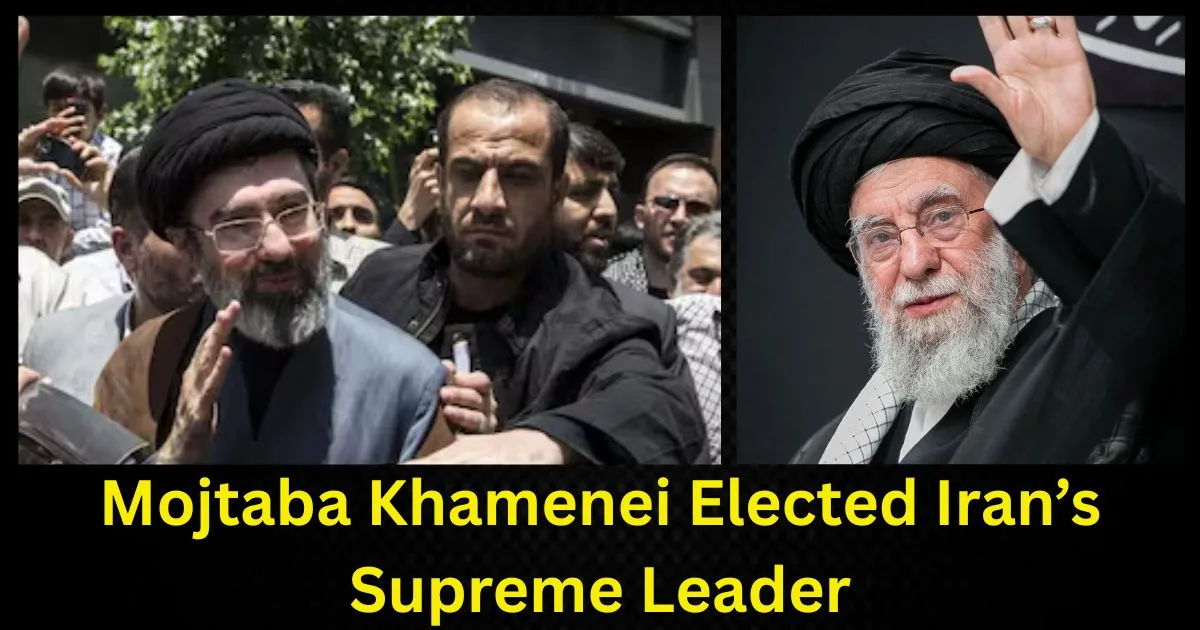
In a major political development during the 2026 Iran war, Iran’s Assembly of Experts has elected Mojtaba Khamenei as the country’s new Supreme Leader following the assassination of his father, Ayatollah Ali Khamenei. (Wikipedia)
The announcement was made on March 8–9, 2026, after an emergency meeting of the 88-member clerical body responsible for selecting Iran’s top leader. Mojtaba Khamenei becomes the third Supreme Leader of Iran since the 1979 Islamic Revolution. (Wikipedia)
His election came just days after Ali Khamenei was killed in a US-Israeli airstrike in Tehran on February 28, which triggered a major leadership crisis in the Islamic Republic. (Wikipedia)
Rapid Succession After Khamenei’s Death
The death of the long-time leader created a sudden power vacuum in Iran’s political and religious system. Under the constitution, the Assembly of Experts must appoint a new Supreme Leader when the position becomes vacant. (Wikipedia)
Reports say the clerical body met in an emergency session and quickly reached a decision to ensure stability during the ongoing conflict with the United States and Israel. Click Here To Follow Our WhatsApp Channel
Analysts say the swift appointment was aimed at preventing political uncertainty while Iran faces airstrikes, military exchanges, and regional tensions.
Who Is Mojtaba Khamenei?
Mojtaba Khamenei, born September 8, 1969, in Mashhad, is the second son of the late Ayatollah Ali Khamenei.
Key facts about him:
- A 56-year-old Shiite cleric
- Considered a hardline figure within Iran’s conservative establishment
- Known for close ties with the Islamic Revolutionary Guard Corps (IRGC)
- Rarely appeared publicly and held no formal elected office
- Was placed under US sanctions in 2019
For many years, he was believed to hold significant influence behind the scenes within his father’s office and Iran’s security institutions.
First Father-to-Son Leadership in Iran
Mojtaba’s appointment is historic because it marks the first time the Supreme Leadership has passed from father to son in the Islamic Republic.
Some analysts say the decision reflects the strong influence of conservative institutions and the IRGC, which reportedly supports Mojtaba’s leadership.
However, critics argue that such a succession resembles hereditary rule, something the Iranian revolution originally opposed.
Global Reactions and Regional Impact
The leadership change comes at a time of intense conflict in the Middle East.
- Iranian state institutions and military forces quickly pledged loyalty to Mojtaba Khamenei. (Wikipedia)
- The move has drawn criticism from Western leaders, including US President Donald Trump, who warned the new leader may face international pressure. (Wikipedia)
- Regional tensions have increased, with missile attacks and military strikes continuing across the region. (The Guardian)
Energy markets have also reacted strongly, with global oil prices rising due to concerns about disruptions in the Strait of Hormuz, a key global shipping route. (The Guardian)
What Happens Next?
Mojtaba Khamenei now takes power at one of the most dangerous moments in Iran’s modern history.
Observers say his leadership will likely focus on:
- Maintaining regime stability during wartime
- Strengthening ties with Iran’s military and security institutions
- Continuing Iran’s confrontational stance toward Western powers
Whether he can consolidate authority and guide the country through the ongoing conflict remains uncertain, but his appointment signals continuity of Iran’s hardline political direction.
You Might Also Like:
At 13, This Kashmiri Boy Built 31 Apps and AI Tools
Delhi Court Convicts Kashmiri Separatist Asiya Andrabi in UAPA Case
Why Is Omar Abdullah Silent as a Kashmiri Shawl Seller Is Brutally Attacked in Uttarakhand?