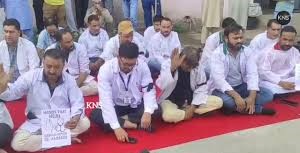
A violent assault on a doctor and two employees at the Community Health Centre (CHC) Kralgund in North Kashmir’s Kupwara district triggered widespread outrage and protests among medical professionals and healthcare workers. The incident, reported by Kashmir Life, occurred when a group of offenders allegedly attacked the medical staff after a patient with a hand injury was brought to the facility by family members. This shocking event has reignited concerns about the safety of healthcare workers in the region, leading to demonstrations at CHC Kralgund and Sub District Hospital (SDH) Langate.
Details of the Assault
According to reports, the assault took place inside CHC Kralgund when the attackers, reportedly accompanying a patient with a hand injury, targeted the on-duty doctor and two staff members. The exact motive behind the attack remains unclear, but it has been described as a “barbaric and unacceptable” act by the Doctors Association Kashmir (DAK). The incident disrupted normal operations at the health facility, highlighting the vulnerability of medical staff in high-pressure environments.
Police acted swiftly, arresting two individuals identified as having prior criminal records. An FIR was registered at Kralgund Police Station, and legal proceedings are underway. The prompt response from Handwara police was praised by local civil society members, who condemned the attack and demanded strict punishment for the perpetrators.
Protests and Disruptions
The assault sparked immediate protests across Kupwara district, with healthcare workers at CHC Kralgund and SDH Langate taking to the streets. Demonstrators carried placards and raised slogans such as “No Safety, No Service” and “Protect Our Doctors,” expressing their frustration over the growing threat to their safety. The protests disrupted medical services for several hours, with outpatient departments and routine operations temporarily halted.
One protesting doctor stated, “Doctors cannot work under constant threat. If hospitals become unsafe, it will directly impact public health services.” The sentiment was echoed by many, who emphasized that such violent incidents create an atmosphere of fear, undermining their ability to deliver quality patient care. Despite the disruptions, healthcare workers eventually resumed their duties but issued a stern warning that they may escalate protests if authorities fail to implement adequate security measures promptly.
Demands for Enhanced Security
The medical community has put forth clear demands to address the crisis:
- Comprehensive Security Arrangements: Installation of CCTV cameras, security personnel, and panic buttons at healthcare facilities.
- Strict Protective Measures: Enactment of laws specifically designed to safeguard medical professionals from violence.
- Exemplary Punishment: Harsh penalties for the accused to deter future attacks.
- Filling Vacant Posts: Addressing staff shortages to reduce pressure on existing healthcare workers, which can exacerbate tense situations.
The Doctors Association Kashmir (DAK) condemned the assault as a “direct attack on the medical fraternity.” DAK President Dr. M Y Tak called the incident “intolerable,” stating, “Such shameful conduct undermines the very foundation of the healthcare system.” Dr. Ayjaz Ahmad Bhat, DAK Kupwara President, described the attack as “reprehensible” and urged authorities to ensure the safety and dignity of medical staff. The Jammu and Kashmir Private Hospitals and Dialysis Centres Association (JKPHDCA) also condemned the attack, reinforcing the call for strict action against the culprits.
Police and Community Response
The police response was commended for its speed, with the two accused arrested shortly after the incident. An official from Handwara police stated, “We have a zero-tolerance policy toward violence against healthcare workers. The accused have been taken into custody, and investigations are ongoing.” The arrests followed the registration of an FIR under relevant legal provisions at Kralgund Police Station.
Local residents and civil society members joined the protests, holding demonstrations in the area to condemn the attack. They hailed the police’s timely action but stressed the need for systemic changes to protect medical professionals. The community’s support underscored the broader public reliance on healthcare workers and the urgency of ensuring their safety.
Context of Healthcare Challenges in Kupwara
The assault at CHC Kralgund comes amid ongoing challenges in Kupwara’s healthcare system. A July 2024 report by Greater Kashmir highlighted the lack of sanctioned posts for specialists like gynaecologists and sonologists at CHC Kralgund, which strains existing staff and impacts patient care. The Chief Medical Officer (CMO) of Kupwara noted that only one medical officer post under the National Health Mission was vacant at the time, but facilities like PHC Ashpora and NTPHC Cheerkote operate with limited staff, often on a 24/7 basis despite being approved for day-based services only. These staffing shortages can heighten tensions in healthcare settings, contributing to incidents like the one at CHC Kralgund.
Broader Implications for Healthcare Safety
The incident is part of a troubling pattern of violence against healthcare workers in India. The rape and murder of a trainee doctor in Kolkata on August 9, 2024, sparked nationwide protests and a 42-day strike by junior doctors in West Bengal, highlighting the vulnerability of medical professionals. The Indian Medical Association (IMA) has repeatedly called for hospitals to be designated as safe zones and for a central law to protect healthcare workers. While the Union Health Ministry mandated institutional FIRs within six hours for violence against healthcare workers in August 2024, implementation remains inconsistent.
In Kupwara, the protests reflect a growing demand for systemic reforms to ensure the safety of medical staff. The healthcare workers’ warning of escalated protests signals the urgency of addressing these issues to prevent further disruptions to public health services.
Conclusion
The assault on a doctor and two employees at CHC Kralgund has sent shockwaves through Kupwara’s medical community, prompting strong protests and demands for enhanced security. The swift arrest of the accused is a step forward, but the incident underscores the need for comprehensive measures to protect healthcare workers. As demonstrations continue and the medical fraternity unites against violence, authorities face mounting pressure to implement lasting solutions. The safety of doctors and healthcare staff is not just a professional concern but a public health imperative, as their ability to serve without fear directly impacts the well-being of the community.
Click Here To Follow Our WhatsApp Channel
You Might Also Like:
Kashmir Politics From Mahraja Hari Singh To Syed Ali Geelani
From Boom to Bust: How the April 22 Terror Attack Shattered Pahalgam’s Tourism Dream
Former Jamat-e-Islami Spokesperson Advocate Zahid Ali Surrenders to Jammu and Kashmir Police