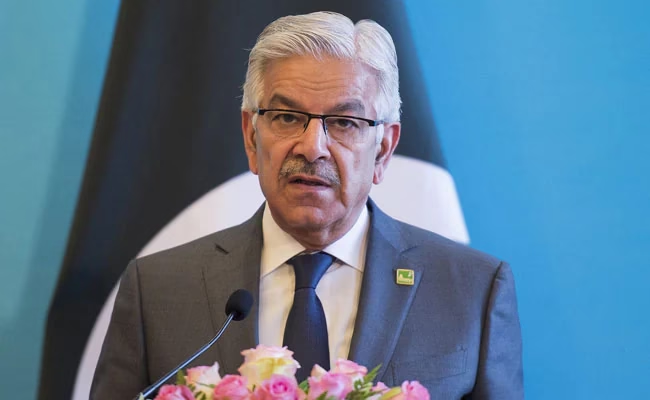
Islamabad: Pakistan’s Defence Minister Khawaja Asif has once again sparked controversy after linking India to Islamabad’s growing tensions with Afghanistan.
Speaking to Samaa TV, Asif warned that India “could play dirty at the border,” adding that Pakistan was fully prepared for a “two-front war” if hostilities broke out with both India and Afghanistan.Click Here To Follow Our WhatsApp Channel
When asked about the possibility of Indian provocations along the Line of Control, Asif said, “No, absolutely, you cannot rule that out. There are strong possibilities.”
The interviewer then questioned whether the government had discussed the matter with Prime Minister Shehbaz Sharif. Asif confirmed, “Yes, strategies are in place. I can’t discuss them publicly, but we are prepared for any eventuality.”
Earlier Remarks on India and Afghanistan
This is not the first time Khawaja Asif has made such claims. Earlier this week, during an interview with Geo News, he accused the Taliban-led Afghan government of fighting a “proxy war” on behalf of India.
Ignoring Pakistan’s long record of supporting extremist groups, Asif said, “I have my doubts that the ceasefire will hold, because the decisions of the [Afghan] Taliban are being sponsored by Delhi. Right now, Kabul is fighting a proxy war for Delhi.”
His remarks have raised eyebrows both domestically and internationally, with analysts warning that such statements could further damage already fragile regional relations.
Pakistan-Afghanistan Tensions
Asif’s latest comments come shortly after Islamabad and Kabul agreed to a 48-hour ceasefire following deadly cross-border clashes. Dozens of troops and civilians were killed earlier this week in heavy fighting along the Pakistan-Afghanistan border.
The violence marked one of the worst flare-ups between the two neighbours in months. Relations have soured since Pakistan accused Afghan authorities of harbouring militants linked to attacks inside its territory, a claim that Kabul has repeatedly denied.
The short-term truce, which began late Wednesday, aims to de-escalate the situation. However, given the history of mistrust between the two sides, security experts remain sceptical about how long the calm will last.
Regional Outlook
Analysts say Asif’s repeated references to India serve as a diversion from Pakistan’s deepening domestic security and economic crises.
By reviving the “two-front threat” narrative, Islamabad may be attempting to rally national sentiment amid rising pressure from internal militant violence and worsening ties with Afghanistan.
Observers also note that India has largely avoided commenting on Asif’s remarks, maintaining silence over Pakistan’s internal political and military rhetoric.
Would you like me to add a clickbait-style headline and SEO meta description (around 18 words) for this report too?
Islamabad: Pakistan’s Defence Minister Khawaja Asif has once again sparked controversy after linking India to Islamabad’s growing tensions with Afghanistan.
Speaking to Samaa TV, Asif warned that India “could play dirty at the border,” adding that Pakistan was fully prepared for a “two-front war” if hostilities broke out with both India and Afghanistan.
When asked about the possibility of Indian provocations along the Line of Control, Asif said, “No, absolutely, you cannot rule that out. There are strong possibilities.”
The interviewer then questioned whether the government had discussed the matter with Prime Minister Shehbaz Sharif. Asif confirmed, “Yes, strategies are in place. I can’t discuss them publicly, but we are prepared for any eventuality.”
Earlier Remarks on India and Afghanistan
This is not the first time Khawaja Asif has made such claims. Earlier this week, during an interview with Geo News, he accused the Taliban-led Afghan government of fighting a “proxy war” on behalf of India.
Ignoring Pakistan’s long record of supporting extremist groups, Asif said, “I have my doubts that the ceasefire will hold, because the decisions of the [Afghan] Taliban are being sponsored by Delhi. Right now, Kabul is fighting a proxy war for Delhi.”
His remarks have raised eyebrows both domestically and internationally, with analysts warning that such statements could further damage already fragile regional relations.
Pakistan-Afghanistan Tensions
Asif’s latest comments come shortly after Islamabad and Kabul agreed to a 48-hour ceasefire following deadly cross-border clashes. Dozens of troops and civilians were killed earlier this week in heavy fighting along the Pakistan-Afghanistan border.
The violence marked one of the worst flare-ups between the two neighbours in months. Relations have soured since Pakistan accused Afghan authorities of harbouring militants linked to attacks inside its territory, a claim that Kabul has repeatedly denied.
The short-term truce, which began late Wednesday, aims to de-escalate the situation. However, given the history of mistrust between the two sides, security experts remain sceptical about how long the calm will last.
Regional Outlook
Analysts say Asif’s repeated references to India serve as a diversion from Pakistan’s deepening domestic security and economic crises.
By reviving the “two-front threat” narrative, Islamabad may be attempting to rally national sentiment amid rising pressure from internal militant violence and worsening ties with Afghanistan.
Observers also note that India has largely avoided commenting on Asif’s remarks, maintaining silence over Pakistan’s internal political and military rhetoric.
You Might Also Like:
Watch Dr. Tariq Rasool’s Message to Kashmir’s Apple Orchard Owners: Diseases, Causes
A Reflection on Surat-al-Ankabut : Faith, Effort, and the Delusion of Self-Sufficiency
13000 PhDs and Engineers Fight for One Constable Job in Madhya Pradesh — A Shocking Reality Check!