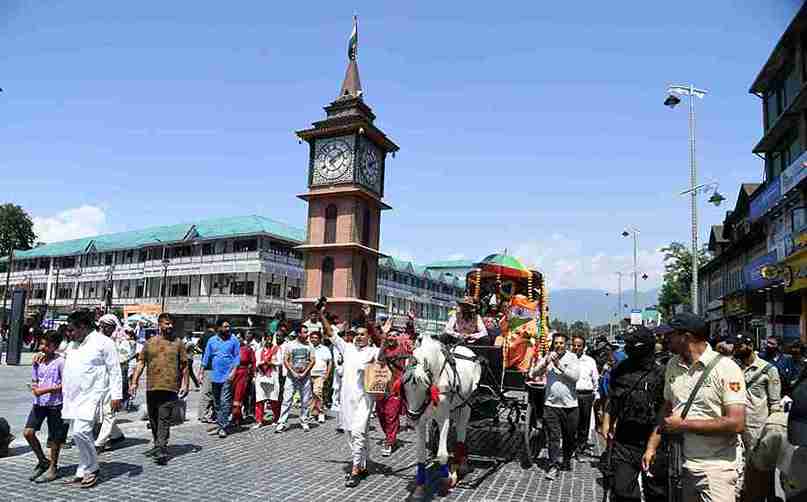
Janmashtami 2025, commemorating the birth of Lord Krishna, the eighth incarnation (avatar) of Lord Vishnu, was celebrated across India on August 16 with great devotion, traditional rituals, and vibrant cultural events.
The festival, which holds deep spiritual significance, is observed on the eighth day (Ashtami) of the Krishna Paksha in the month of Bhadrapada (as per the Hindu lunar calendar). Devotees mark this sacred occasion by remembering the divine birth of Krishna in Mathura, where he appeared to Devaki and Vasudeva inside a prison cell, symbolising the triumph of dharma over adharma.
Midnight Celebrations and Rituals
Since Lord Krishna is believed to have been born at midnight, temples and households across the country held special midnight prayers and rituals. Devotees gathered in large numbers, singing bhajans, kirtans, and shlokas, while chanting “Hare Krishna, Hare Rama.” At the stroke of midnight, priests bathed the deity’s idol in panchamrit (a mixture of milk, curd, honey, ghee, and sugar), decorated it with fresh flowers, and performed aarti as conch shells and bells echoed through temples.
Fasting and Devotion
Fasting forms an essential part of Janmashtami observance. Many devotees observe a nirjala vrat (fast without water) or consume only fruits and milk until midnight, breaking the fast after offering food to Lord Krishna. The fast is considered an act of devotion, symbolising self-control, humility, and surrender to God.
Dahi Handi Celebrations
In Maharashtra, Gujarat, and parts of North India, the festival was marked by the vibrant tradition of Dahi Handi, where groups of young men, known as Govindas, formed human pyramids to break earthen pots filled with curd, butter, and milk hung at great heights. This playful ritual commemorates the childhood exploits of Krishna, who is lovingly remembered as Makhan Chor (butter thief).
Temple Festivities Across India
- Mathura and Vrindavan, the birthplace and childhood home of Krishna, witnessed grand celebrations with thousands of devotees participating in jhankis (tableaux), processions, and cultural performances.
- In Dwarka, Gujarat, temples decorated with lights and flowers hosted special pujas, narrating episodes from Krishna’s life.
- ISKCON temples worldwide also celebrated with grandeur, hosting Rasleela performances, discourses on the Bhagavad Gita, and devotional singing.
Cultural and Spiritual Significance
Lord Krishna is revered not only as an avatar of Vishnu but also as a guide, philosopher, and protector. His teachings in the Bhagavad Gita form the foundation of spiritual wisdom, emphasising duty, righteousness, and devotion. Janmashtami celebrations thus serve as a reminder of Krishna’s eternal message of love, compassion, and truth.
Modern-Day Observance
Beyond temples, the festival was marked in homes, schools, and cultural organisations with children dressing up as Krishna and Radha, staging plays, and enacting Rasleelas. Social media platforms buzzed with devotional messages, live-streamed prayers, and virtual celebrations, allowing global participation in the festival.
Conclusion:
Janmashtami 2025 united millions of devotees across India and the world in a spirit of faith, joy, and cultural pride. From fasting and midnight rituals to festive Dahi Handis and temple celebrations, the day highlighted the timeless devotion to Lord Krishna and the enduring relevance of his teachings.