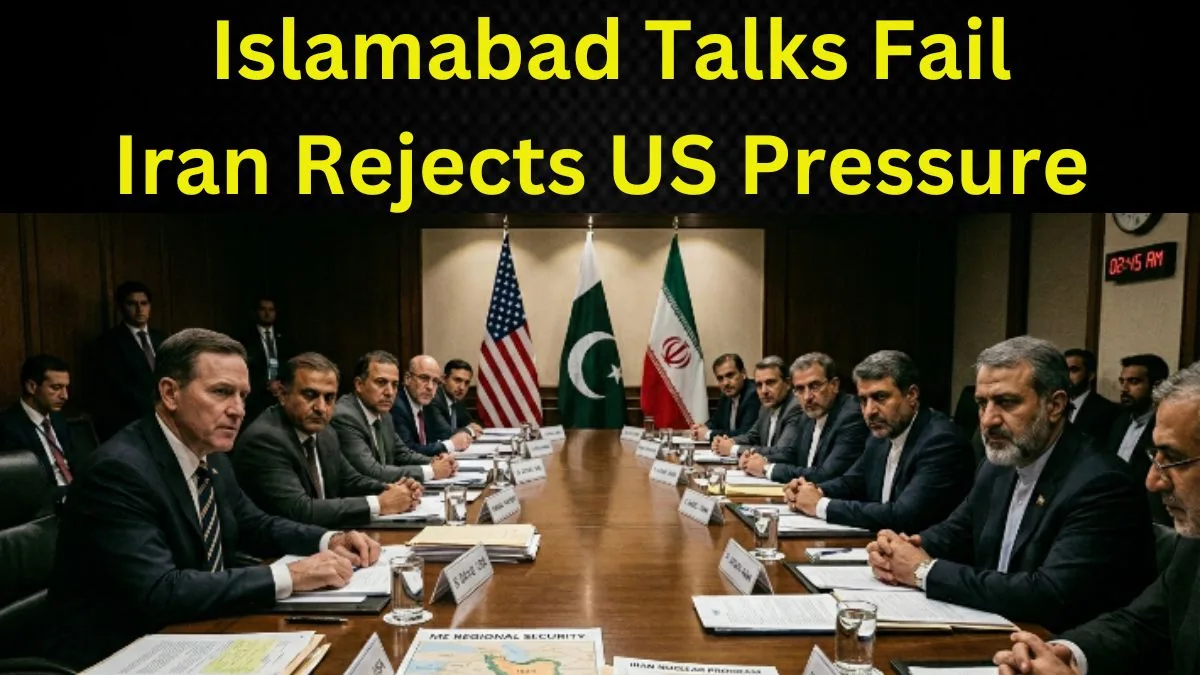
High-level peace talks between the United States and Iran have collapsed after more than 21 hours of intense negotiations in Islamabad, ending without any agreement. Click Here To Follow Our WhatsApp Channel
The talks were hosted and mediated by Pakistan and were aimed at securing a long-term ceasefire and reducing rising tensions in the region. It was one of the most significant direct engagements between Washington and Tehran in years. (Wikipedia)
Iran Rejects US Pressure, Calls Demands ‘Excessive’
Iran strongly pushed back against the US position, blaming the collapse on what it described as unfair and excessive demands.
According to Iranian officials and state media:
- US demands were “unreasonable and unlawful”
- Washington tried to impose conditions that violate Iran’s sovereignty
- Iran refused to accept pressure-based terms
Iran stressed that it entered the talks seriously but would not compromise on its core national rights. (The Times of India)
Officials also said the US was attempting to gain through negotiations what it could not achieve during the conflict, especially on strategic issues like nuclear policy and regional influence.
US Position: Nuclear Programme Remains Key Issue
The US delegation, led by Vice President JD Vance, blamed Iran for refusing to accept its conditions.
According to the US:
- Iran did not agree to limit its nuclear programme
- A “final and best offer” was presented
- Talks failed due to lack of commitment from Tehran
President Donald Trump was kept informed throughout the negotiations. (The Guardian)
Key Disputes Behind the Failure
Major disagreements that blocked any deal included:
- Iran’s uranium enrichment programme
- Control of the Strait of Hormuz
- Sanctions relief and release of blocked funds
- Broader regional tensions involving Israel and allied groups
Both sides remained firm on their positions, making compromise difficult. (Reuters)
Ceasefire Now at Risk
The talks were closely linked to a fragile two-week ceasefire, which now faces uncertainty.
Experts warn:
- The risk of renewed conflict is increasing
- Global oil markets could be affected
- Regional tensions may rise again
Despite the failure, Pakistan has urged both sides to continue diplomatic efforts.
No Immediate Plan for New Talks
Iranian officials confirmed that there are no immediate plans for another round of negotiations, although they stressed that diplomacy is still open.
They called on the US to:
- Show flexibility
- Avoid excessive demands
- Respect Iran’s sovereignty
Conclusion
The collapse of the Islamabad talks highlights the deep divide between the US and Iran.
From Iran’s perspective, the failure was caused by pressure-driven US demands, not a lack of willingness to negotiate.
👉 With both sides holding firm positions, the path to a lasting agreement remains uncertain, and the coming days will be critical for regional stability.
You Might Also Like:
US Rescues Downed Pilot from Iran in High-Risk Operation, Trump Declares “We Got Him”
Dr.Fatemeh Ardeshir-Larijani Ousted from Emory, Visa Revoked After Protests Over Iran Links