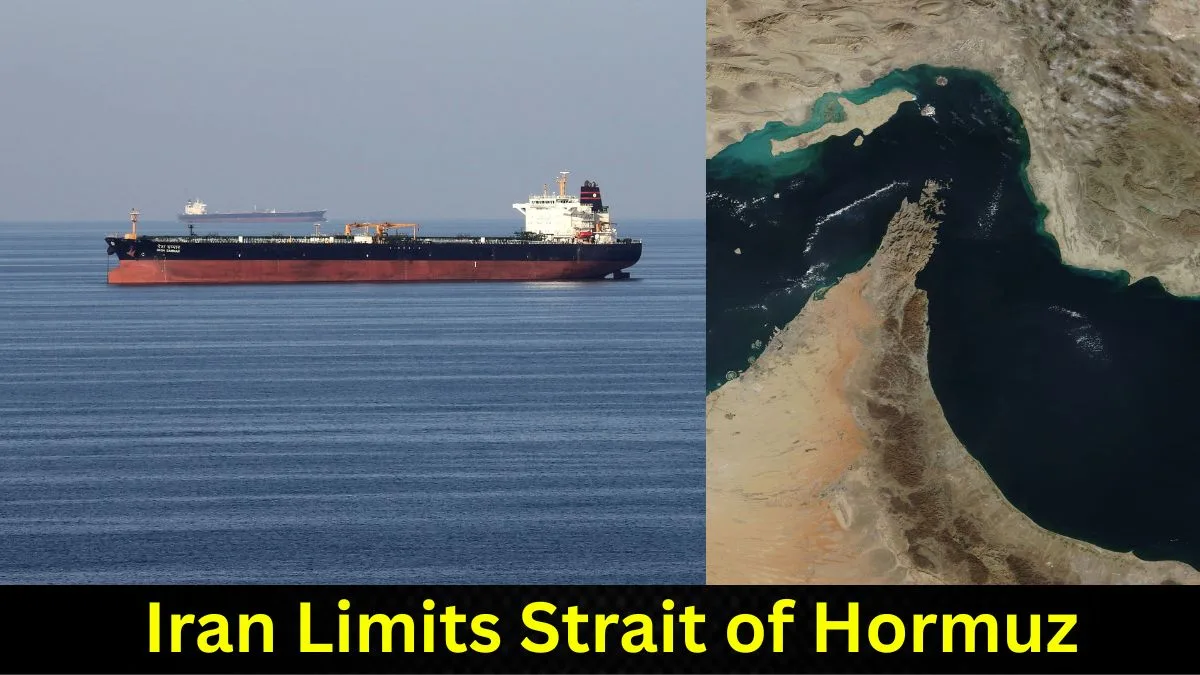
Despite the recent two-week ceasefire between the United States and Iran, the Strait of Hormuz has not fully reopened.
Iran has announced that only 15 ships per day will be allowed to pass through the crucial waterway, and only after receiving prior approval. Click Here To Follow Our WhatsApp Channel
Strict Conditions for Passage
According to Iranian sources, ships must follow several strict rules:
- Prior permission from Iran’s naval forces
- Full compliance with inspection procedures
- No transit without approval, or risk being targeted
- Restrictions on vessels from countries seen as hostile
- Possible toll charges for passage
Iran’s naval wing, linked to the Islamic Revolutionary Guard Corps (IRGC), is expected to oversee these movements.
Sharp Drop in Shipping Activity
Before the conflict, around 100 to 138 ships used the Strait of Hormuz daily.
Now, traffic has dropped significantly, with only 10 to 20 vessels moving through in a day, even after the ceasefire.
This limited reopening has created uncertainty for global shipping companies.
Why Iran Is Restricting Access
Iran says the restrictions are due to security concerns and technical limitations.
Tehran has also linked safe passage to broader political demands, including:
- Lifting of sanctions
- No further attacks
- Inclusion of regional allies in ceasefire terms
Recent Israeli strikes in Lebanon have further complicated the situation, with Iran warning of possible responses.
Global Impact
The Strait of Hormuz is one of the world’s most important trade routes, carrying about 20% of global oil supply.
Any disruption here can quickly affect:
- Oil prices
- Energy supply chains
- Global markets
Shipping companies are now cautious, with many waiting for clearer conditions before sending vessels through the region.
What Happens Next
US officials, including President Donald Trump, have said American forces will remain in the region until Iran allows safe and full access to the strait.
Talks between the US and Iran are expected soon, possibly in Pakistan, to resolve key issues.
Conclusion
For now, the Strait of Hormuz remains only partially open and tightly controlled.
The situation is fragile, and any further escalation could disrupt global trade and energy supplies even more.
You Might Also Like:
US Rescues Downed Pilot from Iran in High-Risk Operation, Trump Declares “We Got Him”
Dr.Fatemeh Ardeshir-Larijani Ousted from Emory, Visa Revoked After Protests Over Iran Links