Indian Army Holds Ex Servicemen Rally at Langate to Honour Veterans and Support Welfare Needs

Indian Army

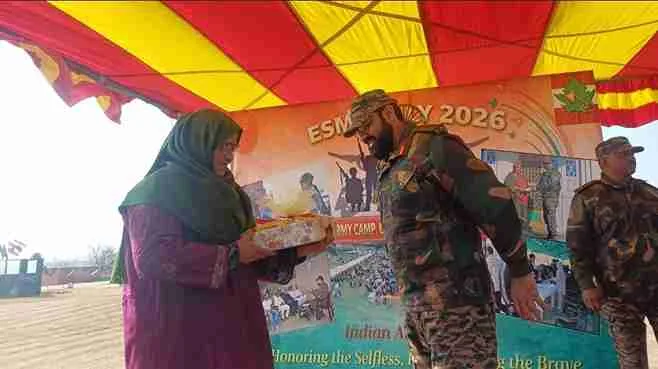
To mark Defence Forces Veterans Day, the Indian Army successfully organised an Ex Servicemen Rally at Langate Army Camp in Handwara on January 14, 2026. The event focused on addressing welfare-related issues and strengthening the bond between the Army and its veterans, including Veer Naris and widows.

A large number of ex-servicemen, Veer Naris, widows, and their dependents from different districts of Kashmir took part in the rally. The programme offered a single-window platform where participants could raise and resolve issues linked to pensions, medical facilities, resettlement, documentation, and other welfare schemes.Click Here To Follow Our WhatsApp Channel

Several key offices and departments were present to support the veterans. These included representatives from Army Record Offices, the Zila Sainik Welfare Office, Ex-Servicemen Contributory Health Scheme (ECHS), banks, the Social Welfare Department, Skill Development agencies, and other government bodies.

On-the-spot solutions were provided for issues related to service records, pension discrepancies, ECHS cards, and entitlement benefits. Many veterans appreciated the quick response and direct assistance offered during the rally.

Senior Army officers also interacted personally with the veterans and their families. They assured them of continued support and reaffirmed the Army’s commitment to their well-being and dignity.

Participants expressed satisfaction with the arrangements and thanked the Indian Army for recognising their service. The rally stood as a strong reminder of the Army’s lasting responsibility towards its veterans and their families, honouring their sacrifices and dedication to the nation.

Indian Army Allows Controlled Instagram Use for Viewing Only, Bars Posting to Prevent Security Breaches

Indian Army

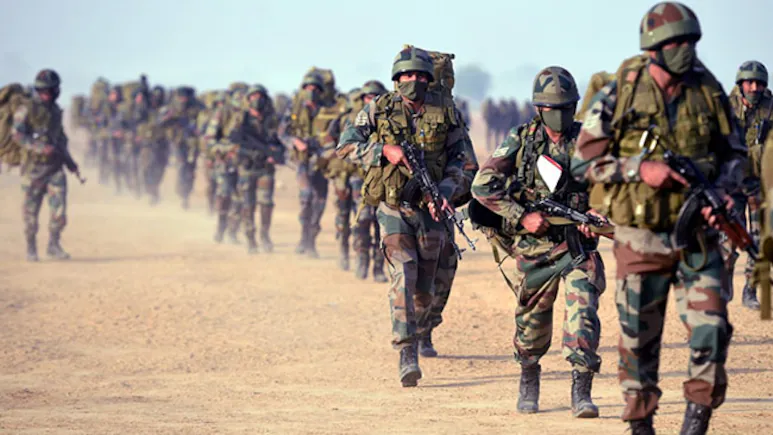
The army has made a significant change to its policy on the use of social media: soldiers and officers are allowed to use Instagram for viewing and monitoring purposes only, sources said. They can’t post, like, or comment as all other existing rules on digital activities for army personnel will remain in effect.

These instructions have been issued to every army unit and department, sources said, adding the aim is to allow soldiers to view and monitor content on social media for their own awareness and information gathering.Click Here To Follow Our WhatsApp Channel

Soldiers will also be able to flag fake or misleading posts that they find to senior officers.

The army has periodically issued guidelines on using social media platforms like Facebook, X (formerly Twitter), and Instagram. Restrictions were previously imposed on their use for security reasons.

These strict rules were implemented because in some cases, soldiers fell victim to honey traps set by foreign agencies, leading to the unintentional leakage of sensitive information. Recently, Indian Army chief General Upendra Dwivedi mentioned the rules for social media use by army personnel at the Chanakya Defence Dialogue.

The question that was asked was: “Today’s youth, Generation Z, wants to join the army. There seems to be a contradiction. The army essentially means staying away from social media. Is the new army thinking about integrating this in a new way? Because even the Commanding Officers must be facing a lot of difficulty deciding how much to allow and how much not to?”

General Dwivedi replied, “This is indeed a problem because when these young people come to the NDA [National Defence Academy], I’m told that the first thing they do is search their cabins to find where they have hidden their phones. It takes three to six months to convince the cadets that there is life without a phone. But is a smartphone a necessity today? I think it is an absolute necessity today. When I meet the soldiers, I tell them the same thing, that a smartphone is necessary.”

He continued, “I never refuse soldiers anything. Why? Because, you see, we are always in the field. You have to pay your child’s school fees. I couldn’t even be there for the birth of both my children. So, today, if a soldier is somewhere far away and wants to see his child’s first cries, how will he see them? He’ll only see them in a photo. Similarly, he’ll inquire about his parents’ well-being or even get scolded by his wife over the phone. So, the point is that smartphones are very important. If you want to read something, how many books will you carry? Obviously, you’ll read on your phone.”

General Dwivedi also spoke about uploading content on social media and decisions like when to use and when not to use social media, and what to post and what not to post on the internet.

There’s a difference between reacting and responding, the army chief said.

“Reacting means you want to give an immediate, quick answer. Responding means thinking about it, analyzing it seriously, and then giving a reply. We don’t want our soldiers to get involved in this, so we have told them that we will only allow you to use Twitter [X] for viewing. Don’t reply to anything right now. Reply after you retire. You can view it; there’s no problem with that. I think there’s a difference between reacting and responding. And this is a very big message for our adversaries. We don’t react, we respond,” General Dwivedi said.

In 2017, the then Minister of State for Defence Subhash Bhamre told Lok Sabha that these guidelines were created to protect information and prevent its misuse.

Complete Ban To Controlled Use

Till 2019, army personnel were not allowed to be part of any social media group. Following several cases of social media misuse, the army tightened the rules in 2020 and instructed soldiers to delete 89 mobile apps, including Facebook and Instagram.

However, despite strict regulations, the army has allowed the use of some platforms such as Facebook, YouTube, X, LinkedIn, Quora, Telegram, and WhatsApp, albeit with stringent rules and monitoring.

The army already has its own official social media accounts. Following the new guidelines, soldiers can now use these platforms for general information. They can view content to gather information, upload their resumes, or look for professional opportunities, but strict adherence to all security protocols is mandatory. They can’t violate any instruction.

During Operation Sindoor, the army’s official handles were the only reliable sources of information when the situation was developing. While Pakistani X accounts started posting around 1.30 am that something was happening in areas like Bahawalpur and Kotli, the details and the name of the operation were confirmed at 1.51 am by the Indian Army’s official social media handle.

Indian Army on High Alert After Pahalgam Terror Attack; Top Security Review Held in Jammu & Kashmir

Indian Army in Kathua encounter

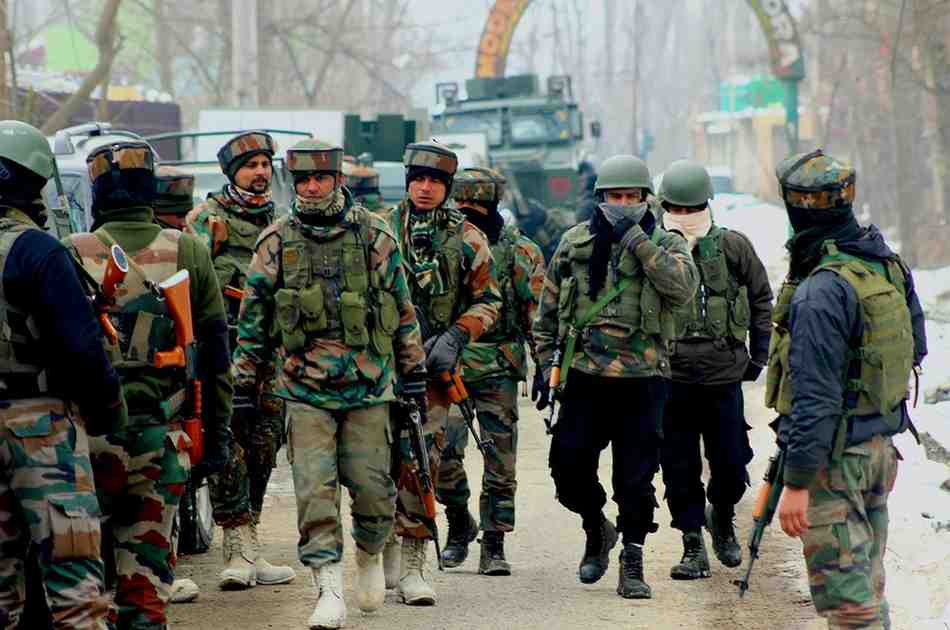
The security forces have been placed on high alert in the Rajouri region in Jammu and Kashmir on Saturday.

The security forces are conducting thorough checks of vehicles on the highway, with a focus on suspicious activity along the Jammu-Rajouri-Poonch highway.

The forces are deployed in large numbers to prevent any untoward incidents.

This comes amid uproar over terrorists attacking tourists at Baisaran meadow in Pahalgam on April 22, killing 25 Indian nationals and one Nepali citizen while leaving several others injured.

On Friday, Indian Army Chief General Upendra Dwivedi, for the first time following the Pahalgam terror attack, reached Jammu and Kashmir’s Srinagar and reviewed the security situation of the Union Territory.

The Indian Army Chief General was also briefed on the actions being taken by the formations against terrorists inside their own territory and the Pakistan Army’s attempts to violate the ceasefire along the LoC.

Jammu and Kashmir Lieutenant Governor Manoj Sinha has asked the Army Chief General Upendra Dwivedi, who called on him here, to take effective steps not only to bring those responsible for the Pahalgam terror attack to justice but also to intensify efforts to crush the infrastructure of terrorism and its ecosystem.

During the discussion, the Lieutenant Governor said the nation has full faith in the bravery and valour of our army, police and CAPFS, and they must work in close synergy to identify perpetrators, enablers and OGWS of Pahalgam terrorist killing and pursue the entire chain in a sustained manner and neutralise them.

“Every perpetrator and supporter of the Pahalgam terror attack, whatever his location or affiliation, must be hunted and they must pay the heavy price for the cowardly and dastardly act against our citizens,” the Lieutenant Governor told the top army officials.

The meeting also reviewed security mechanisms in place, various short-term, long-term measures and integration and coordination among the various security agencies. The meeting was also attended by GOC-in-C Northern Command Lt Gen MV Suchindra Kumar, Deputy Chief of Army Staff Lt Gen Pratik Sharma and GoC 15 Corps Lt Gen Prashant Srivastava.

The Indian Army is on a high alert, launching several search operations to neutralise the terrorists following the attack in Pahalgam on April 22, in which 26 people were killed.

The incident has sparked nationwide outrage, with widespread protests erupting across the country, demanding stricter action against Pakistan over the Pahalgam attack. (ANI)

Indian Army Clarifies No Blockage of Civilian Movement on NH 44 in Jammu and Kashmir

army

The Ministry of Defence informed Parliament on Friday that the Indian Army does not block civilian movement on the National Highway, as traffic regulation is managed by state authorities, and ambulances are given priority by security forces in Jammu and Kashmir.

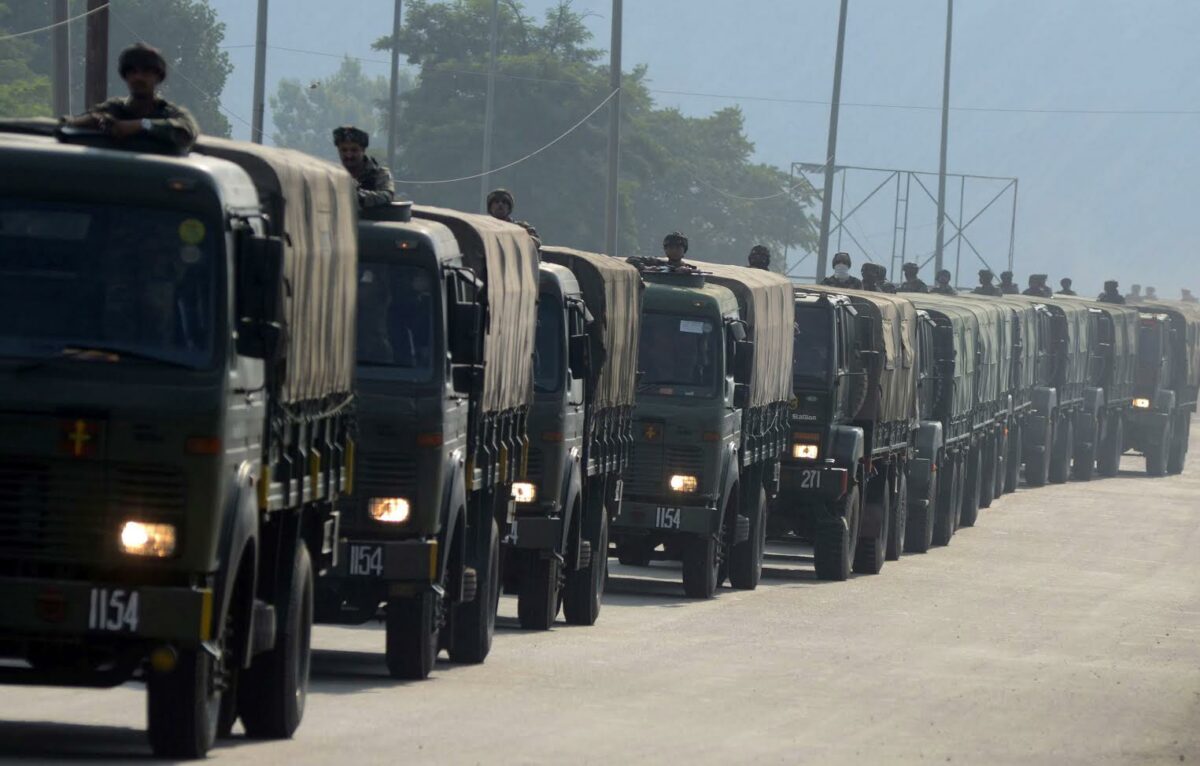
The Minister Sanjay Seth said that as part of drill, regular movement of convoys takes place between Jammu and Srinagar for various operational as well as administrative reasons.

He also said that the Indian Army follows detailed procedures for the movement of convoys with due emphasis on friendly move of the populace. “Owing to security reasons and to thwart incidents like attack/ambush of convoy in past, Road Opening Parties are sent out prior to the movement of any Security Forces Convoy.

Traffic is regulated, temporarily, particularly at points where laterals meet the NH 44 and at U Turns, during the movement of the Army/CAPF convoys,” he said.

He further said that the Indian Army does not harass or stop any civil movement on the National Highway.

“The charter of civilian traffic regulation is of the State authorities/Jammu and Kashmir Police,” he said, adding that Ambulances are always accorded priority for movement and they are not stopped anywhere by Security Forces.(KNS).

Crackdown on ‘Digital Arrest’ Scam, Cyber Police Kashmir Zone Arrested 3 Non Locals

Two Government Employees Terminated From Their Services in J&K over Terror Llinks

₹3,300-Crore Highway to Connect Rajouri and Baramulla: Construction to Begin Soon

Religious Surveys and Police Actions in Sambhal UP a Growing Concern for Muslim Sentiments in India: Mirwaiz Umar Farooq

Over 5.5 lakh Applicants Set To Compete For 4000 Vacancies Of Constables Held on 1st ,8th and 22nd December, 2024