
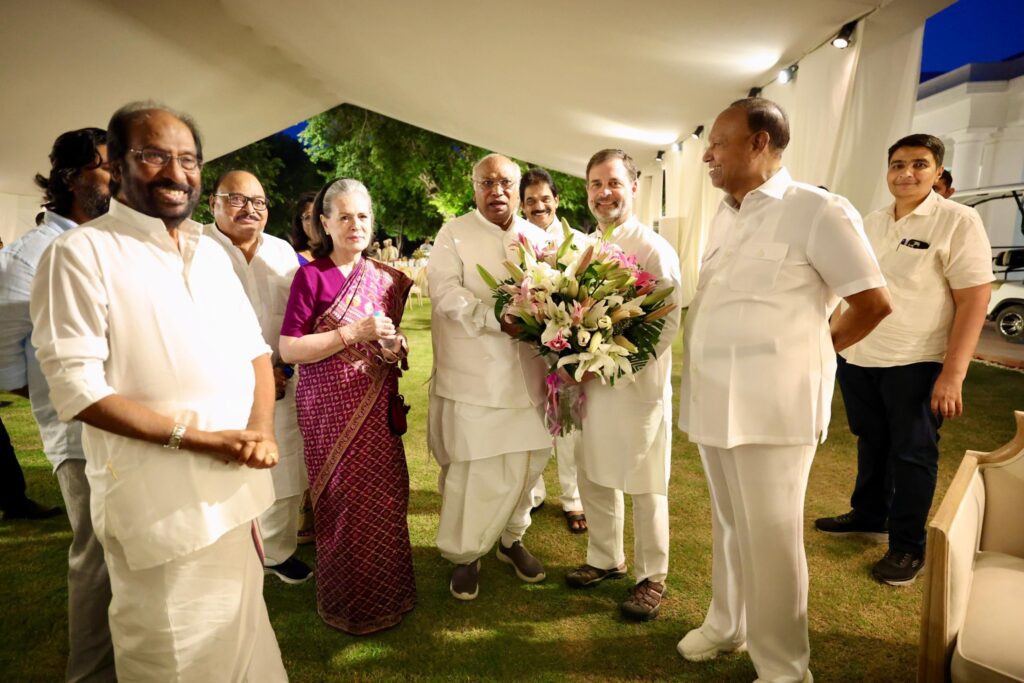
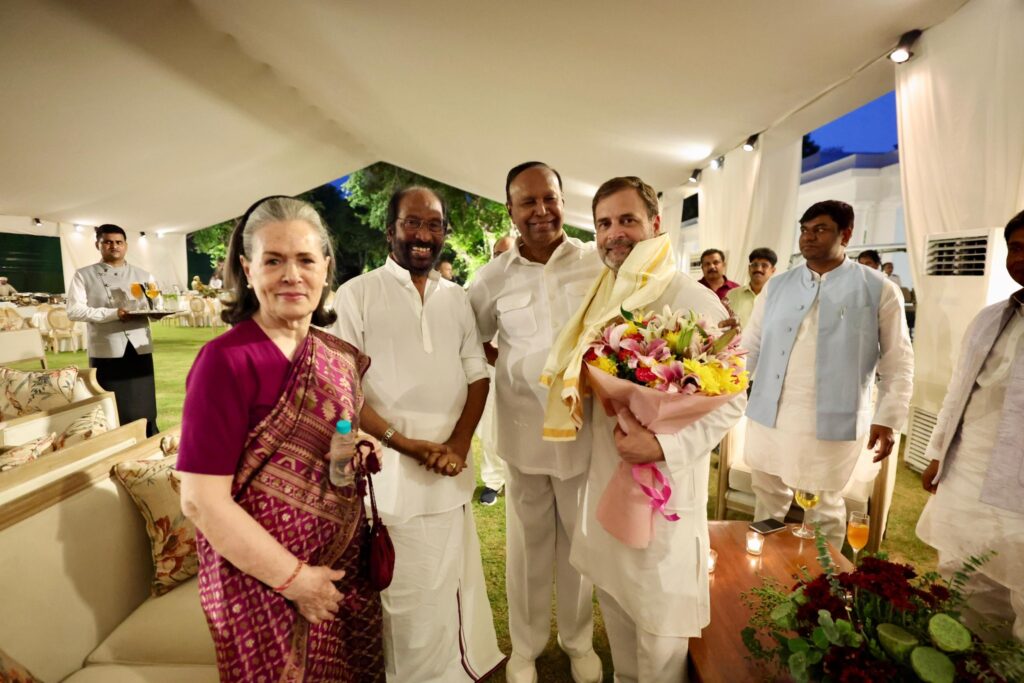
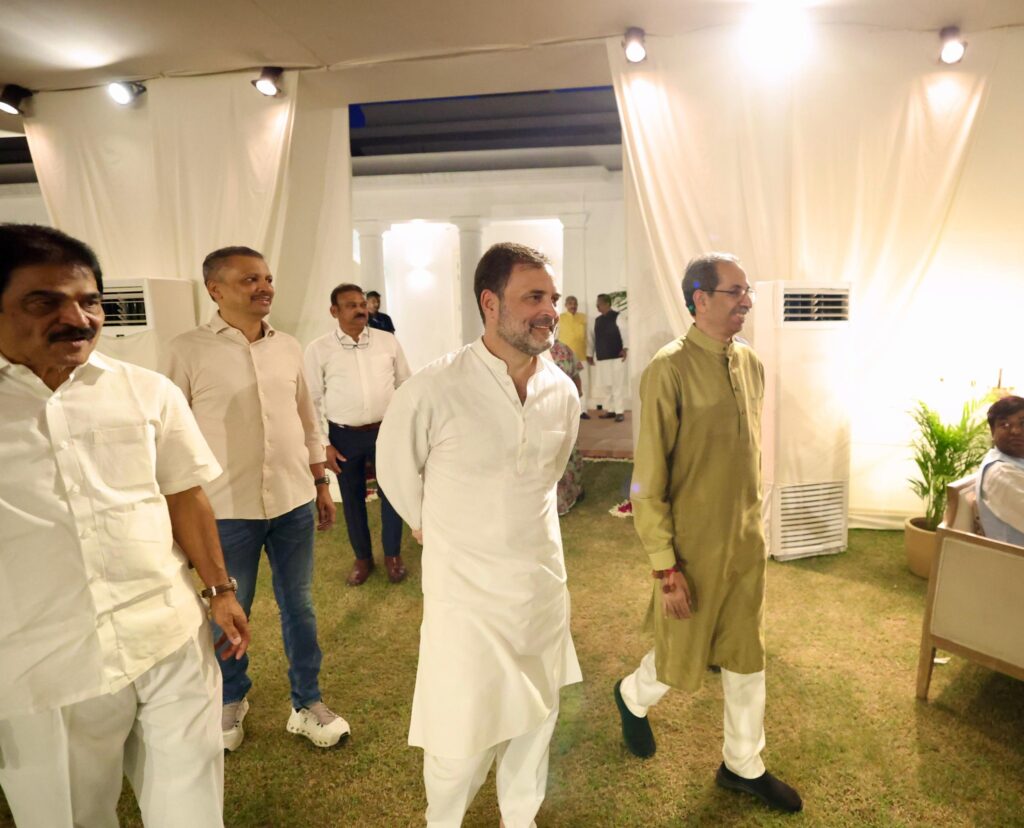
On the evening of August 7, 2025, the residence of Rahul Gandhi, the Leader of Opposition in the Lok Sabha, at 5, Sunehri Bagh, New Delhi, became the epicenter of opposition unity as leaders of the Indian National Developmental Inclusive Alliance (INDIA) gathered for a pivotal dinner meeting. This high-profile gathering, attended by approximately 50 leaders from 25 political parties, was convened to address pressing concerns about alleged electoral fraud, the contentious Special Intensive Revision (SIR) of voter lists in Bihar, and other critical issues threatening India’s democratic framework. The meeting, described as both strategic and symbolic, underscored the INDIA bloc’s resolve to challenge the ruling Bharatiya Janata Party (BJP) and the Election Commission of India (ECI) over perceived threats to electoral integrity. This article provides a detailed account of the meeting, its key discussions, outcomes, and broader implications for India’s political landscape.
Background and Context
The INDIA bloc, a coalition of opposition parties formed to counter the BJP’s dominance, has been vocal about electoral irregularities since the 2024 Lok Sabha elections. The August 7 meeting was prompted by escalating concerns over the SIR exercise in Bihar, which opposition leaders allege could disenfranchise millions of voters, particularly marginalized communities, ahead of the state’s assembly elections. Additionally, Rahul Gandhi’s recent allegations of “vote theft” and “electoral fraud” during the 2024 elections, particularly in Karnataka’s Mahadevapura constituency, set the stage for this gathering. The meeting followed a day of intense parliamentary protests and a press conference where Gandhi presented what he claimed was “bulletproof” evidence of voter manipulation, accusing the ECI and BJP of collusion in undermining democracy.
This was the first major physical gathering of INDIA bloc leaders since June 1, 2024, convened at Congress president Mallikarjun Kharge’s residence just before the Lok Sabha election results. The August 7 meeting at Rahul Gandhi’s new official residence marked a renewed effort to consolidate opposition unity and strategize both within and outside Parliament.
Key Attendees
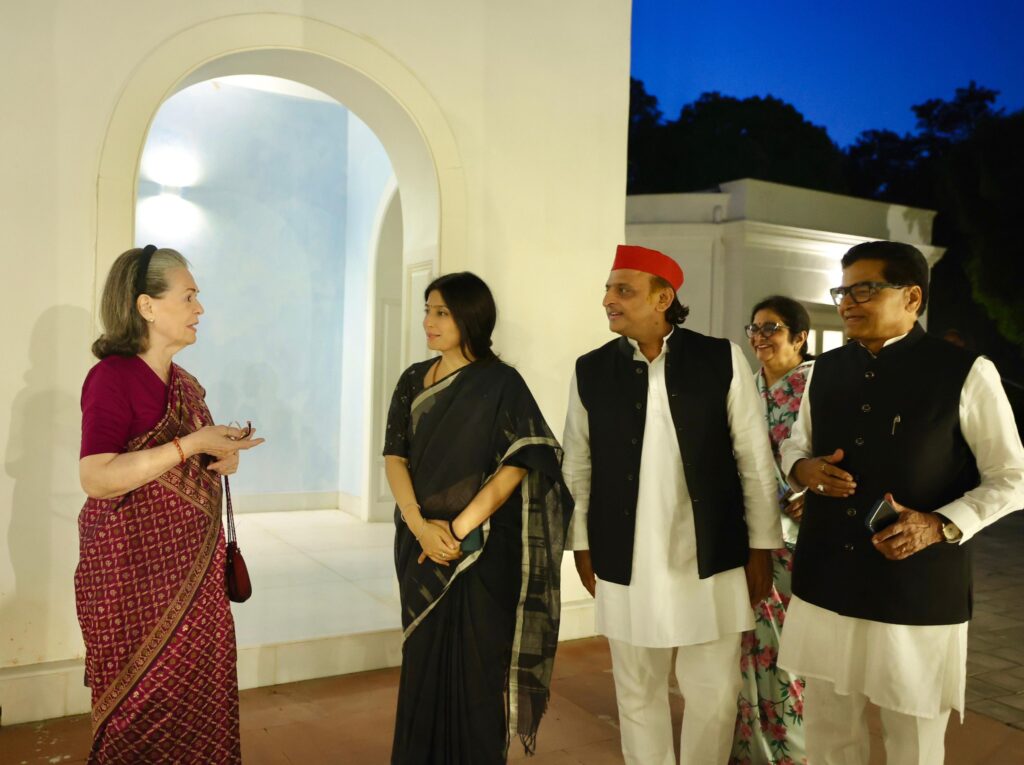
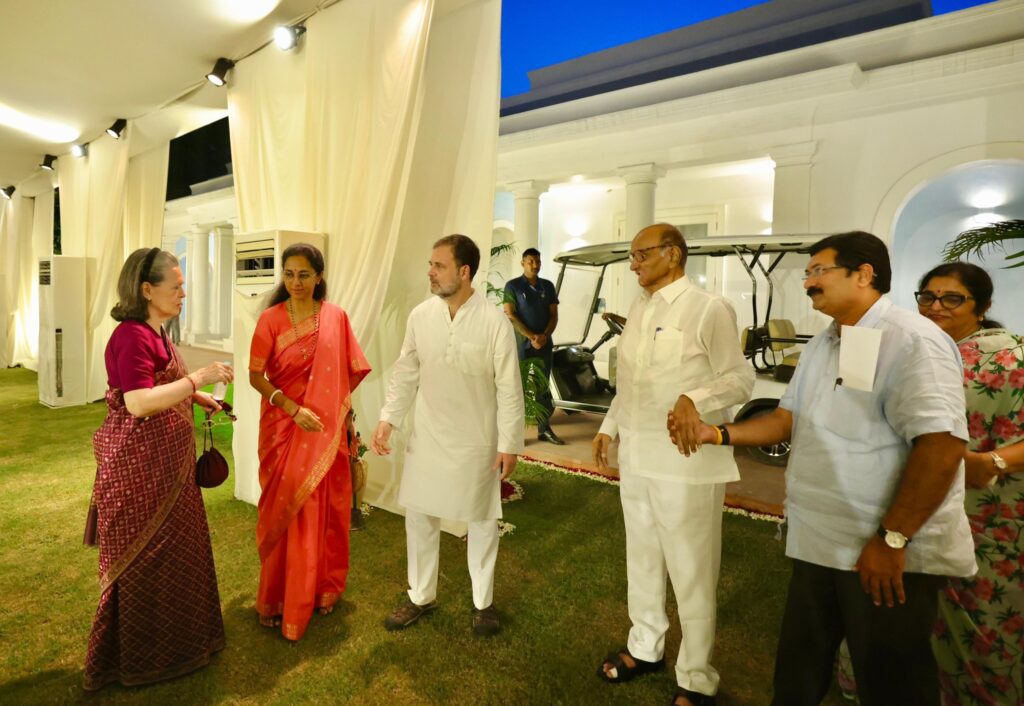
The dinner meeting saw a high-profile turnout, reflecting the coalition’s broad representation. Notable attendees included:
- Congress: Sonia Gandhi, Mallikarjun Kharge, Priyanka Gandhi Vadra, Jairam Ramesh, Gaurav Gogoi, KC Venugopal, Karnataka Chief Minister Siddaramaiah, Telangana Chief Minister Revanth Reddy, and Himachal Pradesh Chief Minister Sukhwinder Sukhu.
- Samajwadi Party (SP): Akhilesh Yadav, Dimple Yadav, Ramgopal Yadav.
- Nationalist Congress Party (NCP-SCP): Sharad Pawar, Supriya Sule.
- Shiv Sena (UBT): Uddhav Thackeray, Aditya Thackeray, Sanjay Raut.
- Rashtriya Janata Dal (RJD): Tejashwi Yadav.
- National Conference (NC): Farooq Abdullah.
- Dravida Munnetra Kazhagam (DMK): TR Baalu, Kanimozhi, Tiruchi Siva.
- People’s Democratic Party (PDP): Mehbooba Mufti.
- Communist Party of India (CPI): D Raja.
- Jharkhand Mukti Morcha (JMM): Mahua Maji.
- Other Parties: Leaders from the All India Forward Bloc (AIFB), Viduthalai Chiruthaigal Katchi (VCK), Kerala Congress (M), Marumalarchi Dravida Munnetra Kazhagam (MDMK), Kongunadu Makkal Desia Katchi (KMDK), Puthiya Tamilagam (PWK), Rashtriya Loktantrik Party (RLP), Indian Union Muslim League (IUML), Kerala Congress (J), Revolutionary Socialist Party (RSP), and others, including Kamal Haasan, NK Premachandran, Sadiq Ali Shihab Thangal, Mukesh Sahani, and Dipankar Bhattacharya.
This diverse representation highlighted the coalition’s commitment to unity across regional and ideological lines.
Key Discussions
The meeting focused on several critical issues, with Rahul Gandhi’s presentation on “vote chori” (vote theft) being the centerpiece. The agenda included:
- Allegations of Electoral Fraud:
- Rahul Gandhi delivered a detailed PowerPoint presentation, reiterating claims made earlier that day at a press conference. He alleged that the 2024 Lok Sabha elections were marred by large-scale voter manipulation, citing evidence from Karnataka’s Mahadevapura constituency where over 40,000 votes were allegedly linked to fake addresses. Gandhi claimed that 70–80 Lok Sabha seats might have been rigged, potentially altering the outcome of the elections. He accused the ECI of colluding with the BJP to perpetrate a “huge criminal fraud” on India’s democracy.
- Congress MP Francis George emphasized that the presentation exposed “widespread rigging and malpractices” during the 2024 elections, vowing to expose the BJP publicly.
- CPI General Secretary D Raja described the presentation as “very meaningful,” noting that Gandhi provided specific examples from Karnataka and Maharashtra, warning that similar manipulations could occur nationwide, including in Bihar.
- Special Intensive Revision (SIR) in Bihar:
- The ongoing SIR of electoral rolls in Bihar was a major flashpoint. Opposition leaders expressed concerns that the process, which identified 35 lakh voters as either migrated or untraceable, could lead to the disenfranchisement of marginalized communities and minorities.
- RJD leader Tejashwi Yadav outlined plans for a statewide protest march in Bihar against the SIR, thanking allies for their parliamentary support and inviting them to join the march.
- The INDIA bloc planned a joint protest march to the ECI headquarters in New Delhi on August 11, 2025, to demand transparency and accountability in the voter list revision process.
- Jammu and Kashmir Issues:
- National Conference leader Farooq Abdullah raised the demand for restoring statehood to Jammu and Kashmir, criticizing the government for delaying the process. He also condemned the ban on certain books in the Union Territory, calling it unconstitutional, and highlighted the issue of four unfilled Rajya Sabha seats.
- Vice-Presidential Election:
- While not the primary focus, the upcoming vice-presidential election on September 9, 2025, was discussed. Leaders explored the possibility of fielding a joint candidate, though no formal decisions were announced.
- Other Concerns:
- The meeting touched on broader issues, such as the punitive tariffs threatened by U.S. President Donald Trump and their potential impact on India.
- Congress MP Gaurav Gogoi noted that while the meeting was informal, it reflected the same unity seen in Parliament, where the opposition has been pressing the government on public interest issues.
Outcomes and Strategic Decisions
The meeting yielded several key outcomes, reinforcing the INDIA bloc’s commitment to a united front:
- Protest March to ECI: The coalition agreed to organize a joint march to the ECI headquarters on August 11, 2025, to protest the SIR in Bihar and alleged electoral manipulations.
- Continued Parliamentary Pressure: Leaders planned to intensify their efforts in Parliament, pushing for discussions on the SIR and voter list irregularities through adjournment motions and Rule 267 notices.
- Public Awareness Campaign: The bloc aims to expose the alleged “vote theft” to the public, with Gandhi’s presentation serving as a blueprint for highlighting ECI and BJP malpractices.
- Strengthened Alliance: The meeting was described as a “successful” display of opposition unity, with leaders expressing shock at Gandhi’s evidence and condemning the government’s actions. Congress General Secretary KC Venugopal noted that “every leader was shocked” by the presentation, reinforcing the coalition’s resolve to protect democracy.
Public and Political Reactions
- Opposition Sentiment: The meeting was widely praised within the INDIA bloc. Congress’s official X handle described it as “a distinguished gathering of leaders united in their commitment to upholding the Constitution and safeguarding our democracy,” emphasizing camaraderie and mutual respect.
- BJP’s Response: The BJP dismissed Gandhi’s allegations as “childish.” Shiv Sena MP Naresh Mhaske criticized the “vote theft” remarks, while the ECI challenged Gandhi to submit a signed complaint with evidence to initiate an investigation.
- Public Sentiment: Posts on X reflected mixed sentiments. While opposition supporters rallied behind the INDIA bloc’s unity, BJP supporters, such as @TimesAlgebraIND, labeled Gandhi the “Leader of Opposing Bharat,” accusing him of undermining national interests.
Broader Implications
The August 7 meeting at Rahul Gandhi’s residence marks a significant moment for the INDIA bloc as it seeks to regain political momentum ahead of crucial state elections, particularly in Bihar. The coalition’s focus on electoral integrity taps into growing public concerns about democratic institutions, especially the ECI’s credibility. By presenting evidence of alleged voter manipulation, the opposition aims to pressure the government and rally public support, potentially reshaping the narrative around the 2024 elections and future polls.
However, the bloc faces challenges. The ECI’s call for formal complaints and the BJP’s dismissal of the allegations suggest a contentious battle ahead. The opposition must balance its aggressive stance with concrete evidence to avoid being labeled as alarmist. Additionally, maintaining unity among 25 diverse parties will be critical as the coalition navigates complex regional and national issues, from Bihar’s voter lists to Jammu and Kashmir’s statehood.
Conclusion
The INDIA bloc’s dinner meeting at Rahul Gandhi’s residence on August 7, 2025, was more than a symbolic gathering; it was a strategic move to consolidate opposition forces against perceived threats to India’s democracy. With Rahul Gandhi’s allegations of “vote chori” at the forefront, the coalition demonstrated its ability to unite across ideological lines to challenge the BJP and ECI. The planned protest march, continued parliamentary pressure, and public awareness campaign signal a robust opposition strategy. As the INDIA bloc gears up for the 2029 elections, this meeting at 5, Sunehri Bagh could prove to be a turning point in its fight for democratic accountability and electoral fairness.
Click Here To Follow Our WhatsApp Channel
You Might Also Like:
CM Omar Abdullah Reaffirms Commitment to Gurez’s Development
Rahul Gandhi Alleges Modi Can’t Oppose Trump Due to U.S. Probe into Adani-Russia Oil Links
J&K Police Raid Srinagar Bookshops to Seize Banned Books Promoting Anti-National Content
Kashmir Administration Officially Banned 25 Books including Maulana Maududi’s Al-Jihad fil Islam