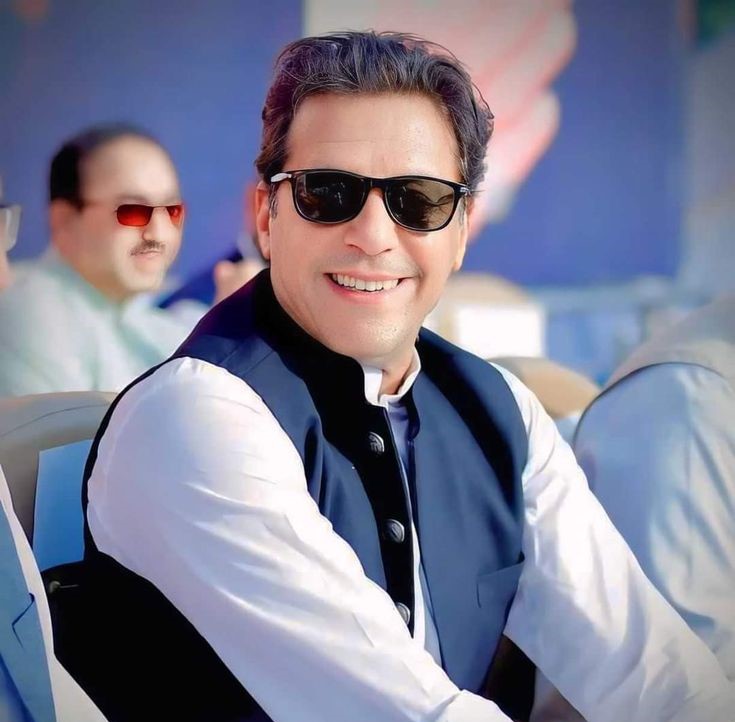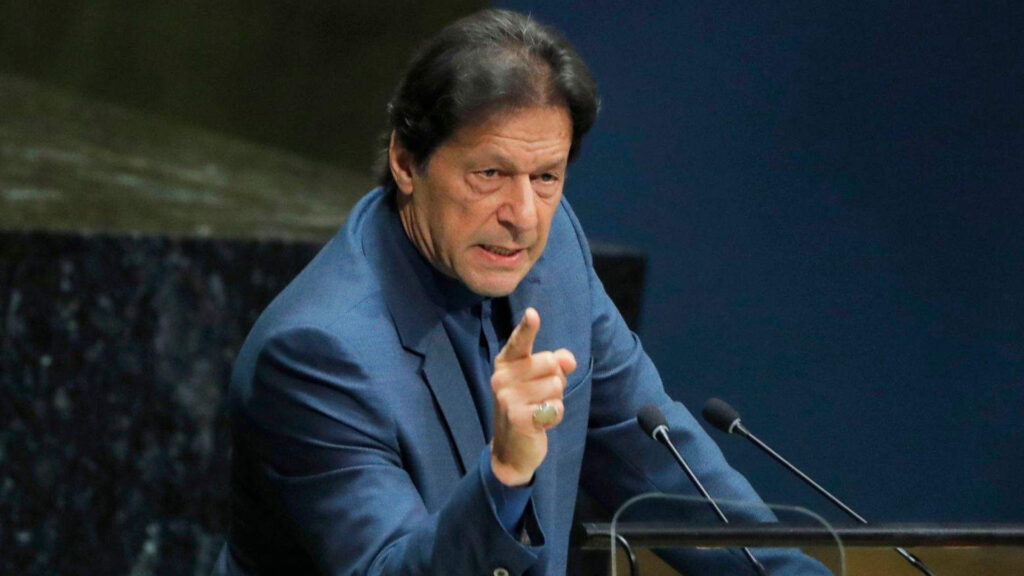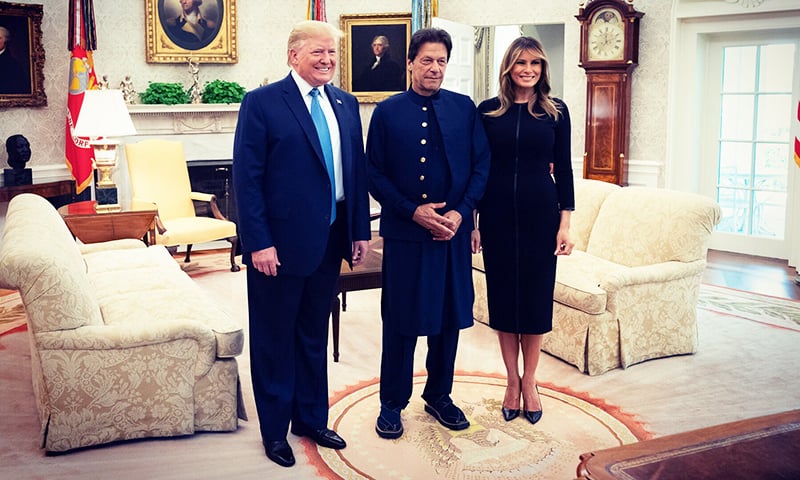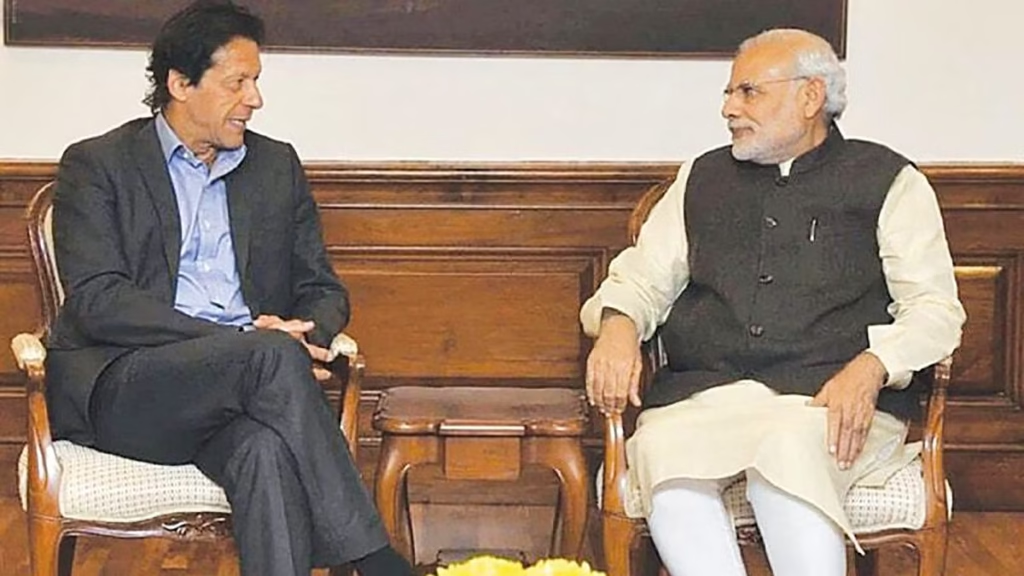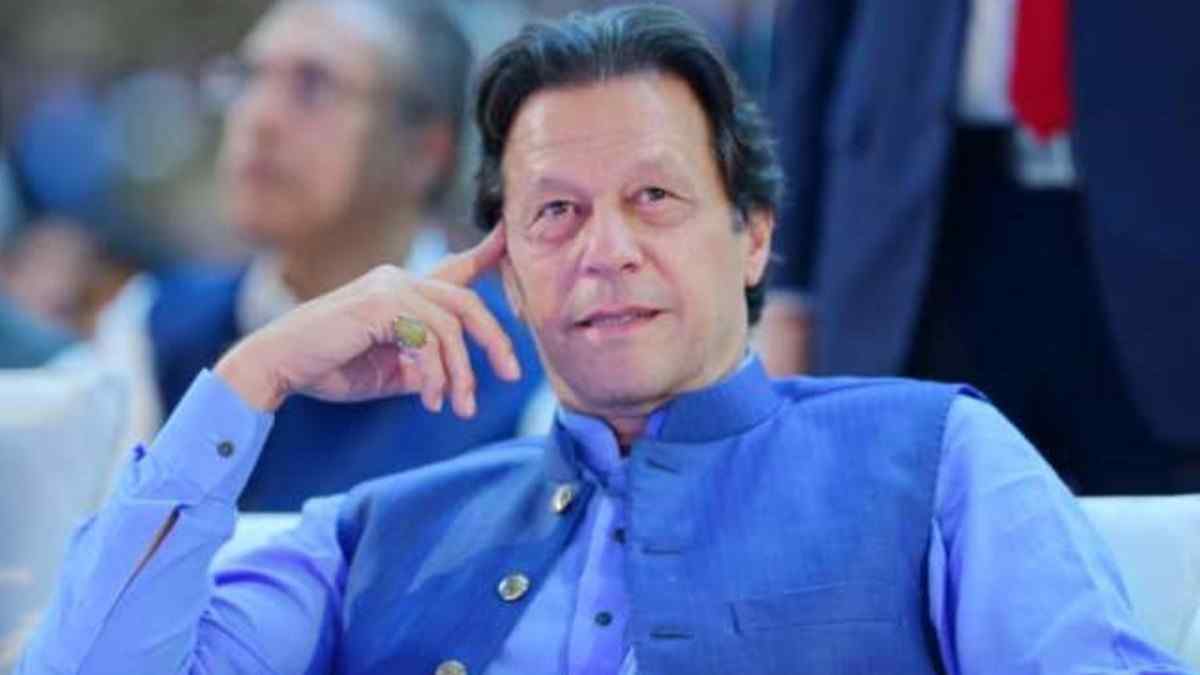
Pakistan’s former Prime Minister Imran Khan urged his supporters to gear up for countrywide protests following a 17-year jail term handed to him and wife Bushra Bibi in a corruption case.Khan and his wife Bushra Bibi were sentenced to 17 years in jail each by a court on Saturday in the Toshakhana 2 corruption case.Click Here To Follow Our WhatsApp Channel
Khan, 73, who has been in jail since August 2023, faces multiple cases launched against him since his ouster from power in April 2022. The Toshakhana 2 case involves alleged fraud in state gifts that the former first couple received from the Saudi government in 2021.
In a conversation with his lawyers in Adiala Jail after the “military-style trial decision” Khan urged his supporters to stand up in protest after the decision, according to a midnight statement posted on Khan’s X account.
It was not known who posted his conversation on his personal account as Khan has no access to his social media handles in jail.
“I have sent a message to (Khyber Pakhtunkhwa Chief Minister) Sohail Afridi to prepare for the street movement. The entire nation will have to rise for its rights,” he said, and added: “Struggle is worship, and I am even ready to embrace martyrdom for the true freedom of Pakistan!”
He argued that the latest sentence did not come as a surprise and asked his legal team to move the high court against the decision.
“Like the baseless decisions and sentences of the last three years, the Toshakhana-II decision is also nothing new to me. This decision was given in haste by the judge without any evidence and without fulfilling the legal requirements,” he said, adding that his legal team was “not even heard”.
He also said that it was inevitable for the Insaf Lawyers Forum, a group of lawyers to his Pakistan Tehreek-i-Insaf, and the legal community to come forward for justice.
“For the struggle to establish the supremacy of law and restore the Constitution, it is essential for the Justice Lawyers Forum and the lawyers’ front to come to the forefront. Only the system of justice can protect the people. Without it, neither economic progress nor moral development is possible,” he said.
He also targeted the army’s leadership for his detention, but in the same vein said that the “army is mine”, showing his effort to win its support while attacking the top leadership of the armed forces.
Khan also alleged that he and wife were being “continuously subjected to mental torture by keeping us in solitary confinement”.
“There is a ban on our books, TV, and meetings. Every prisoner in jail can watch TV, but even watching TV has been banned for me and Bibi Bushra,” he alleged.
Khan has been incarcerated since August 2023 in case launched after he was removed from office though a no-trust vote in April 2022.
The Toshakhana is a department under the Cabinet Division that stores gifts given to rulers and government officials by heads of other governments and foreign dignitaries. Once deposited, the gifts can be bought back following proper rules and procedures.
In October 2024, Bushra was granted bail by the Islamabad High Court in this case, and a month later, Khan was also granted bail in the same case. They were indicted in December last year.
A Pakistani court on Saturday sentenced Pakistan Tehreek-e-Insaf (PTI) chief and former PM Imran Khan and his wife Bushra Bibi to 17 years in prison in connection with the Toshakhana-2 corruption case, local media reported.Click Here To Follow Our WhatsApp Channel
The case involves the purchase of an expensive jewellery set, gifted to Imran by the Saudi crown prince during an official visit in May 2021, at a nominal price.The verdict was pronounced by Judge Central Shahrukh Arjumand of the Federal Investigation Agency (FIA)’s special court during proceedings conducted at Rawalpindi’s Adiala jail, where Imran is being imprisoned.
Under the ruling, Imran was sentenced to a total of 17 years in prison, receiving 10 years of rigorous imprisonment under several sections of the Pakistan Penal Code, and seven years under the Prevention of Corruption Act.
Bushra Bibi also received a 17-year imprisonment sentence under the same legal provisions.
Additionally, both were fined Rs 16.4 million, with failure to pay the fines resulting in further imprisonment.
“This court, while passing sentences, has considered the old age of Imran Ahmed Khan Niazi, as well as the fact that Bushra Imran Khan is a female. It is in consideration of both said factors that a lenient view has been taken in awarding lesser punishment,” Pakistani leading daily Dawn reported, quoting the court order.
Following the verdict, legal teams of Imran and Bushra said they would challenge the verdict before the high court.
The two were reportedly indicted in December last year, and in October this year, both denied the charges, calling them “fabricated and politically motivated” attempts to strip him from politics.
Reports suggest that while recording his statement before the special court, Imran dismissed the prosecution’s version, alleging that the entire case was “malicious, fabricated, and politically engineered”.
He argued that he did not fall within the definition of “public servant” under the Pakistan Penal Code, maintaining that during his tenure as the Prime Minister, he was not aware of the specific details of the gift presented to his wife.
The PTI founder asserted that all procedures under the country’s Toshakhana Policy 2018 were followed. He added that the gift was reported to the PM Office protocol section, assessed, and legally retained following payment to the national exchequer.
“We complied with the Toshakhana Policy in letter and spirit,” he said.
In recent days, Pakistan’s military has made strong statements against former Prime Minister Imran Khan. On December 5, 2025, the army’s spokesperson, Lt. Gen. Ahmed Sharif Chaudhry, called Khan’s ideas a “threat to national security.” He also said Khan is “mentally ill” and a “narcissist.” This has led to fears among Khan’s supporters that the army might harm him or even kill him. But is this true? This article looks at the facts, both sides of the story, and what it means for Pakistan. We will use simple words to explain everything.
Imran Khan was Pakistan’s Prime Minister from 2018 to 2022. He is a famous cricket player who started the Pakistan Tehreek-e-Insaf (PTI) party. Many people, especially young ones, like him because he talks about fighting corruption and making Pakistan stronger. In 2022, he lost power in a no-confidence vote. Khan says the army and the US helped remove him. Since then, he has been in jail on charges like corruption and leaking secrets. He calls these cases fake and made up by his enemies.
The Pakistan Army has a big role in the country’s politics. It has ruled directly many times through coups. Now, it often works behind the scenes. Khan was once close to the army, but now they are enemies. His party won many seats in the 2024 elections, but he says the vote was stolen. This has caused big protests and fights.
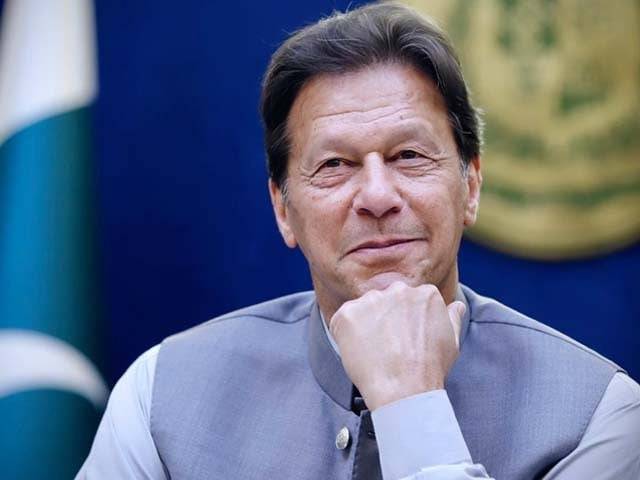
The Army’s Recent Statements
On December 5, 2025, Lt. Gen. Chaudhry held a long press conference in Rawalpindi. He said Khan’s words are hurting Pakistan’s security. Here are the main points:
Anti-Army Talk: Khan blames the army for his problems. The spokesperson said this creates hate between the people and the soldiers. It could make the army weaker against enemies like terrorists or India.
Mental Health Claims: He called Khan “mentally ill” and said he puts his ego first, not the country. Khan thinks, “If not me, then nothing for Pakistan.”
Links to Enemies: The army says Khan works with outside groups, like Indian media or Afghan networks, to spread bad stories about Pakistan. They also say he opposes army actions against terrorists, like the Tehreek-e-Taliban Pakistan (TTP).
Calls for Trouble: Khan is accused of telling people to protest, stop sending money home (remittances), and attack army leaders. This could hurt the economy and cause chaos.
Security Threat Label: The spokesperson said Khan’s ideas are a “creeping national security threat.” He compared Khan to past leaders who caused splits, like Sheikh Mujibur Rahman in Bangladesh. He warned that free speech has limits if it harms the state.
The army says it will fight back hard if needed. They also said Khan’s party runs fake social media campaigns to attack them.
Imran Khan and PTI’s Side
Khan and his party say these words are just to scare people and hide the army’s mistakes. From jail, Khan uses social media (through helpers) to fight back. PTI leaders like Gohar Ali Khan say the army is attacking democracy.
Popular Support: PTI says Khan has the people’s vote. In polls, over 60% want him free. Calling him a threat means calling millions of Pakistanis threats too.
Army as the Real Threat: Many supporters say the army is the problem. It controls too much, like businesses and politics. They break the law by interfering in elections and jailing opponents.
No Proof of Wrongdoing: PTI says there is no evidence Khan helps terrorists or enemies. He wants peace and strong borders, but without army control over everything.
Fears for Khan’s Life: Some posts on X say the “security threat” label could lead to a military trial, death sentence, or even killing him in jail. They point to past cases, like Zulfikar Ali Bhutto, who was hanged after army rule. Supporters worry the army is planning something bad.
PTI also attacked the spokesperson’s family, saying his father was once linked to terrorism by the UN. But the army calls this fake news.
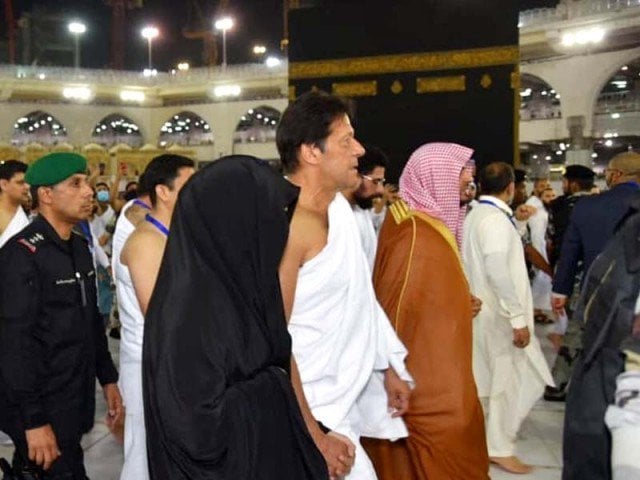
Public Reactions
On social media like X, opinions are split:
Pro-Khan Views: Many call the army “fascist” and say it is the real security threat. They use hashtags like #ReleaseImranKhan and #PakistanLovesImranKhan. Some say the army wants to kill Khan to end his popularity.
Pro-Army Views: Others agree with the military. They say Khan is causing division and helping enemies. Government leaders like Azam Nazeer Tarar also call Khan a threat.
International media, like from India and the Arab world, report on this as a sign of deep problems in Pakistan.
Analysis: Is the Army Planning to Kill Khan?
The claim that the army “wants to kill” Khan is strong but not proven. Here is a fair look:
Historical Patterns: Pakistan has a dark history. Leaders like Bhutto were called threats and then executed. Nawaz Sharif and others were jailed or exiled. The army has used “security” reasons to remove rivals. This makes people worry.
Current Risks: Calling Khan a “threat” could mean military courts, where trials are secret and punishments harsh. Pakistan has the death penalty for treason. Supporters fear poison or an “accident” in jail, like past cases of journalists or activists.
No Direct Proof: The press conference did not say anything about killing. It focused on words and ideas. The army says it wants to protect the country, not harm people. But the strong language, like “bare-knuckle response,” scares many.
Why Now?: Pakistan faces big problems: high prices, terrorism, and bad economy. The army might want to blame Khan to distract people. Khan’s popularity is still high, even in jail. Banning PTI or hurting him could make things worse, causing more protests.
In simple terms, the label might be a way to justify tough actions, but killing would cause huge anger inside and outside Pakistan. It could split the country more.
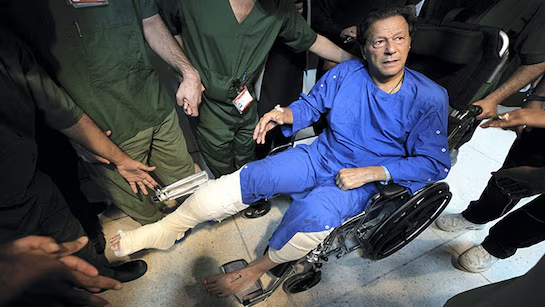
Implications for Pakistan
This fight hurts everyone:
Security: If people hate the army, it could help terrorists. Attacks in areas like Khyber Pakhtunkhwa are rising.
Economy: Protests and boycotts make things unstable. Pakistan needs help from the IMF and friends like China.
Democracy: If the army wins, elections might not be fair. This could make young people lose hope.
Global View: The world watches. Groups like the UN or US might speak up if Khan is harmed. But Pakistan’s army is strong, and change is hard.
To fix this, both sides need talks. Maybe free Khan and hold fair elections.
Conclusion
The Pakistan Army’s words against Imran Khan are serious. They call him a security threat, but supporters see it as a plan to silence or harm him. There is no clear proof of a kill plot, but history and fears make it possible. Pakistan needs peace between leaders and the army. Without it, the country suffers. The people want leaders who work for them, not fight each other.
Speculation surrounding the well-being of Pakistan’s jailed former Prime Minister Imran Khan, continues to intensify after unverified Afghan media reports claimed he had died while in custody at Adiala Jail. In response, his son, Kasim Khan, has publicly demanded confirmation that his father is alive, along with immediate access and his eventual release.
Posting on X on Thursday, Kasim said it has now been 845 days since Imran Khan was imprisoned, adding that his father has reportedly spent the last six weeks in a death cell with no contact allowed with family members.Click Here To Follow Our WhatsApp Channel
“For the past six weeks, he has been kept alone in a death cell in an environment of complete isolation. His sisters have been barred from every meeting, despite clear court orders. No phone calls, no meetings, and no news of his well-being. My brother and I have not been able to contact our father in any way,” Kasim wrote.
Kasim alleged that this level of secrecy is not a routine security measure, but an intentional attempt to hide Khan’s condition and block communication with his family.
“Let it be clear that the Pakistani government and its masters will bear full legal, moral, and international responsibility for my father’s safety and every consequence of this inhumane isolation,” he added.
Calling the situation “inhumane,” Kasim urged global leaders, international courts, and human rights organisations to intervene. He listed several demands, including a verified confirmation of Imran Khan’s status, communication access as mandated by court rulings, an end to solitary confinement and what he calls “politically-motivated imprisonment.”
Khan’s sister emphasised that the authorities could resolve the situation by simply following judicial directives.
“The solution is simple… follow court orders and allow his family, his lawyers, and his party leadership to meet him.”
Imran Khan’s family has also warned that the authorities would not dare harm him, stating, “The only reason we believe him to be safe is because the authorities would not dare to hurt even a hair on Imran Khan’s head. They are well aware of the consequences… He is the leader of at least 90 per cent of Pakistan.”
Imran Khan has been in custody since August 2023, facing multiple legal cases that he insists are politically driven. In January this year, he and his wife were convicted in a corruption case, receiving sentences of 14 years and seven years, respectively.
Earlier in March, leaders from Pakistan Tehreek-e-Insaf (PTI), Khan’s political party, also claimed he was being held in a death cell under solitary confinement. PTI spokesperson Sheikh Waqas Akram stated at the time that conditions remained harsh both before and after the conviction.
As rumours grow and official silence persists, the international community is closely watching how Pakistani authorities respond to growing calls for transparency regarding Khan’s condition and legal status.
There are leaders who rule through power, and there are leaders who rule through the hearts of people. In today’s Pakistan, the difference is clear. Imran Khan is not just another political figure — he has become a symbol of hope, dignity and resistance for millions of Pakistanis.
For many citizens, this clash was never simply about elections or political parties. It has become a fight between a system that has survived for decades and a man who dared to challenge it.Click Here To Follow Our WhatsApp Channel
Why Imran Khan Became the Voice of the People
Long before the current political crisis, Imran Khan inspired a new generation. His supporters believe that he represents honesty in a landscape filled with corruption and greed. They see him as a leader who:
speaks without fear,
questions authority,
and puts Pakistan first.
He did not come from a traditional political family. He did not inherit power. He earned it through public trust. That is why attempts to weaken him only bring more sympathy and support.
A Leader Who Refuses to Bow Down
In the eyes of his supporters, Imran Khan stands alone against a political machine stronger than any party. They believe:
he is being targeted because he refuses to compromise,
he exposed the weaknesses of traditional power structures,
and he awakened the confidence of ordinary people.
Whether on the streets, social media, or public discussions, one sentiment keeps returning again and again:
“He fights for us.”
This connection is emotional and personal — the kind of connection that cannot be taken away by force or intimidation.
A New Political Awakening
For decades, ordinary citizens felt powerless. The same families and the same elite circles controlled the country. Many Pakistanis felt they had no voice. But Imran Khan changed that. His supporters see him as the only leader who talks openly about:
national self-respect,
independence in foreign policy,
ending corruption,
dignity for every citizen.
It is not just admiration. It is belief. It is hope. It is love for a man who dared to say what millions had been feeling.
A Public That Refuses to Give Up
Even when Imran Khan faced political and legal pressure, his support did not collapse. If anything, it grew. His rallies became bigger. His message became louder. His image became stronger.
His followers say that this is because Pakistanis have changed. The public today is more aware, more emotional, more resistant. They are no longer silent. They no longer accept whatever the system decides.
And in this new Pakistan, Imran Khan has become a symbol of courage.
The Battle Is Not Over
This is not the end of the story. The struggle continues. The establishment has its power, but Imran Khan has something far more dangerous and powerful:
the people.
For millions who support him, he represents:
justice,
pride,
independence,
and a better future for Pakistan.
His movement is not just political. It is personal. It is emotional. It is a fight for dignity.
A Leader Who Became a Movement
Perhaps that is why no matter what challenges he faces, Imran Khan remains the heart of the nation. His supporters believe that he is the only leader who stands between them and a system they feel has failed them.
“Imran Khan is our voice. Imran Khan is Pakistan’s future.”
This slogan is more than just a line shouted at rallies. It has become the emotional heartbeat of an entire movement. To millions of Pakistanis, Imran Khan represents something they were waiting for all their lives: someone who speaks when they cannot, someone who dares when others stay silent.
He became the voice of frustration
For decades, ordinary people felt ignored. Inflation rose, corruption spread, and trust in the system faded. Many believed that no matter which party ruled, nothing changed for them. They were unheard.
Then came Imran Khan — talking about dignity, justice and fairness. Whether one agrees with his politics or not, there is no doubt that he gave people the confidence to speak. He changed the political conversation. He made the public believe that their voice matters.
He became the voice of hope
Supporters say he made them dream again. He made them believe that Pakistan deserves more than struggle, more than division, more than broken promises. Young people who once never cared about politics suddenly saw a future worth fighting for.
The older generation saw a leader who reminded them of Pakistan’s original promise: a country built on self-respect, independence and equality.
He became the voice of resistance
Whenever his supporters felt their country was controlled by the same handful of powerful figures, Imran Khan became the person who said:
“You deserve better.”
They saw him challenge the system openly, publicly, fearlessly. His supporters believe he is not just a politician — he is a movement.
Why they call him Pakistan’s future
Because his followers do not see him only in the present. They see him as the leader who can:
break old political traditions,
speak for the poor and ordinary people,
bring pride to the nation,
and build a future that belongs to everyone.
To them, the slogan is a promise:
Pakistan will not return to the past.
And whether he is in office or in opposition, inside parliament or outside, his supporters still say the same words with pride and emotion:
“Imran Khan is our voice. Imran Khan is Pakistan’s future.”
It is not just a sentence. It is a belief. It is a declaration of identity. It is a message from the people to the system.
Recent reports claiming that former Prime Minister of Pakistan, Imran Khan, has been nominated for the Nobel Peace Prize are false. The news, widely circulated on social media and various platforms, suggested that members of the Pakistan World Alliance (PWA), affiliated with the Norwegian political party Partiet Sentrum, had put forward his name for the prestigious award. However, after thorough investigation, there is no official confirmation of such a nomination.
The misinformation appears to have spread due to unverified social media claims and news reports that lacked credible sources. Several posts suggested that Khan’s nomination was linked to his past efforts in regional peace, particularly his role in the 2019 de-escalation of tensions between Pakistan and India.
However, neither the Norwegian Nobel Committee nor any official body responsible for the Nobel Peace Prize nominations has confirmed Imran Khan’s candidacy for the award.
Has Imran Khan Ever Been Nominated for the Nobel Peace Prize?
Imran Khan was previously the subject of a parliamentary resolution in Pakistan in 2019, which called for his nomination due to his decision to release Indian Air Force pilot Wing Commander Abhinandan Varthaman. However, there was no formal nomination registered with the Nobel Committee at that time either.
The Nobel Peace Prize nomination process is strictly confidential, and only a select group of individuals—including heads of state, university professors, and Nobel laureates—can submit nominations. The committee does not disclose nominees’ names until 50 years after the selection process.
Fact-Checking and Public Reaction
After the false news spread, fact-checkers and media organizations debunked the claim, confirming that Imran Khan has not been nominated for the 2025 Nobel Peace Prize.
Reactions to the Fake News
PTI supporters initially celebrated the unverified reports, believing it to be a recognition of Khan’s leadership.
Fact-checkers and journalists called for caution, urging people not to spread misinformation without confirmation.
Opposition parties and critics accused PTI members of spreading propaganda to boost Khan’s public image.
This incident serves as a reminder to always verify news from reliable sources before sharing or believing unconfirmed reports.
Conclusion
The claim that Imran Khan has been nominated for the Nobel Peace Prize is false. There is no official evidence or confirmation from the Norwegian Nobel Committee or any credible source. This incident highlights the importance of fact-checking and relying on official sources to avoid the spread of misinformation.
Imran Khan’s journey from a celebrated cricket hero to a jailed political figure is a story filled with passion, determination, and controversy. His life’s arc, stretching from sports glory to political upheaval, captures the attention of millions worldwide. This article explores the life of Imran Khan, his rise to fame, his foray into politics, his struggles against corruption, and the circumstances that led to his imprisonment.
Imran Ahmad Khan Niazi was born on October 5, 1952, in Lahore, Pakistan. He belonged to an affluent Pashtun family and was educated at prestigious institutions, including the Royal Grammar School in Worcester and later at Keble College, Oxford. From an early age, Khan showed a keen interest in sports, especially cricket, which would later become his ticket to global fame.
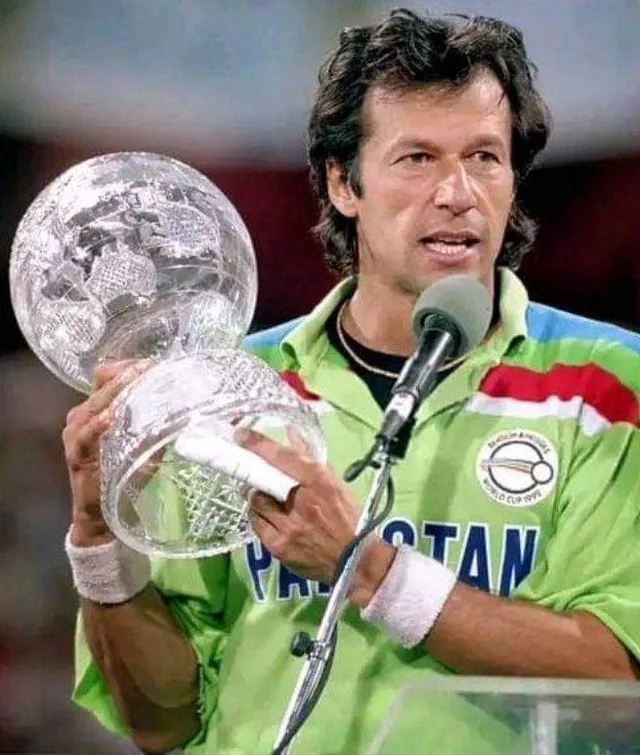
Khan made his debut in international cricket in 1971 at the age of 18. His cricketing prowess, particularly as a fast bowler, quickly made him a crucial part of the Pakistani cricket team. Over the years, he evolved into a brilliant all-rounder and was known for his charismatic leadership. His crowning achievement came in 1992 when he led Pakistan to its first and only Cricket World Cup victory. This triumph not only solidified his status as a national hero but also marked the end of his illustrious cricketing career.
Philanthropic Ventures
Following his retirement from cricket, Khan channeled his energy into philanthropy. He established the Shaukat Khanum Memorial Cancer Hospital & Research Centre in 1994, named after his mother who had died of cancer. The hospital was a significant achievement as it provided free cancer treatment to thousands of patients, regardless of their financial status.
In addition to his contributions to healthcare, Khan also founded Namal University in Mianwali. This institution aimed to offer quality higher education to the underprivileged, further cementing his image as a benefactor of the poor and marginalized.
Entry into Politics
Imran Khan’s transition into politics was driven by his dissatisfaction with the status quo and his desire to bring about meaningful change in Pakistan. In 1996, he founded the Pakistan Tehreek-e-Insaf (PTI), which translates to Pakistan Movement for Justice. The party’s primary focus was on anti-corruption, justice, and economic reform.
In the initial years, PTI struggled to gain significant traction. The political landscape of Pakistan was dominated by established parties like the Pakistan Muslim League (PML-N) and the Pakistan Peoples Party (PPP). However, Khan’s persistence and his appeal as a clean, honest leader who was above the typical political fray gradually started to attract a following.
Rise to Power
Khan’s political fortunes began to change in the 2010s, as he capitalized on growing public disillusionment with the traditional political elites. His message of accountability, justice, and a corruption-free Pakistan resonated with a large section of the population, particularly the youth.
In the 2013 general elections, PTI emerged as a significant political force, although it could not secure a majority. The turning point came in the 2018 elections when PTI won a sweeping victory, and Imran Khan was sworn in as the 22nd Prime Minister of Pakistan. His ascent to power was seen as a new beginning for a country long plagued by corruption and mismanagement.
Governance and Challenges
Khan’s tenure as Prime Minister was marked by a mix of achievements and challenges. He implemented various reforms aimed at improving governance, economic stability, and social welfare. His government launched the Ehsaas Programme, which was designed to reduce poverty and provide social protection to the most vulnerable segments of society.
However, his administration also faced significant hurdles. The economic situation remained precarious, with inflation and unemployment posing serious challenges. His government’s relationship with the military, traditionally a powerful institution in Pakistan, also began to strain over disagreements on key issues, including the appointment of military officials and foreign policy decisions.
Conflict with the Military
The military’s influence in Pakistan’s political affairs is well-documented, and any leader’s success often depends on maintaining a stable relationship with it. Khan’s relationship with the military, which was initially supportive, began to sour during his time in office. Reports of disagreements over policy directions and key appointments became frequent, leading to speculation about growing rifts.
The culmination of these tensions came in April 2022, when Khan was ousted from power through a no-confidence vote in the National Assembly. This move was widely perceived as being backed by the military, which had grown increasingly disillusioned with Khan’s governance.
Post-Ouster Political Struggles
Following his removal from office, Khan became a vocal critic of the military’s role in politics. He accused the establishment of orchestrating his ousting and began rallying his supporters against what he described as a corrupt and unjust system. His post-ouster period was marked by a series of mass protests and rallies, where he called for fresh elections and a return to civilian supremacy.
Khan’s defiance and his refusal to bow down to pressure made him a target of various legal cases. He faced numerous charges, ranging from corruption to incitement of violence. His supporters viewed these cases as politically motivated, aimed at sidelining him from the political scene.
Imprisonment and Legacy
In January 2025, Imran Khan was sentenced to 14 years in prison on corruption charges. His imprisonment was seen by many as a move to remove a potent threat to the entrenched political and military elite. Despite his incarceration, Khan’s popularity remained undiminished. His supporters continued to view him as a martyr who was being punished for challenging a corrupt system.
Khan’s legacy is a complex one. On one hand, he is celebrated as a cricketing legend and a philanthropist who made significant contributions to Pakistani society. On the other hand, his political career has been marked by both bold reforms and contentious relations with the military and political adversaries.
Conclusion
Imran Khan’s life story is a testament to his resilience and his unwavering commitment to his principles. From his days as a cricketing icon to his time as a political leader, Khan has consistently sought to challenge the status quo and fight for a better Pakistan. His journey, filled with triumphs and tribulations, reflects the struggles of a man who dared to dream of a corruption-free Pakistan. Whether seen as a hero or a controversial figure, Imran Khan’s impact on Pakistan’s political landscape is undeniable, and his story will continue to inspire debates and discussions for years to come.