
Ibtisam Elahi Zaheer (sometimes spelled Ibtisam Ilahi Zaheer) is a prominent Pakistani Islamic scholar, preacher, and political figure born on August 19, 1971, or January 12, 1972, depending on sources. He is the son of Ehsan Elahi Zaheer, a well-known scholar of the Ahl-e-Hadith movement, a conservative Sunni Islamic sect, who was assassinated in Lahore, Pakistan, in 1987, reportedly due to sectarian tensions with Shia groups. Ibtisam has followed in his father’s footsteps, becoming a key leader in Pakistan’s religious and political landscape.
Click Here To Follow Our WhatsApp Channel
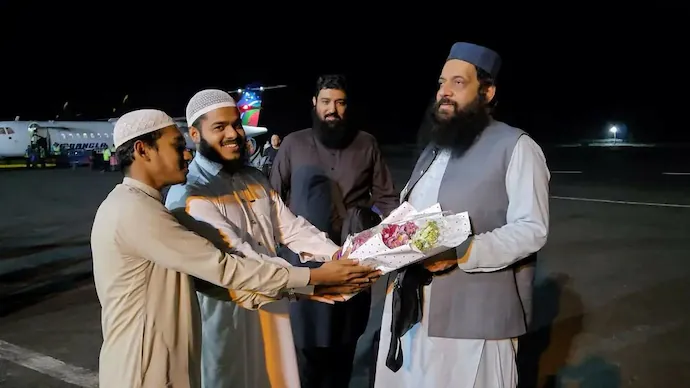
- Leadership Roles: Ibtisam is the Chief Organizer and Secretary General of Markazi Jamiat Ahle Hadith, a major Ahl-e-Hadith organization in Pakistan that promotes strict adherence to the Quran and Sunnah (teachings of Prophet Muhammad). He also chairs the Quran O Sunnah Movement Pakistan, a platform focused on spreading Islamic teachings.
- Political Ambitions: He has run for office as a candidate for Pakistan’s National Assembly, representing the Ahl-e-Hadith community, though he has not won a seat. His political activities often blend religious rhetoric with calls for social and political change aligned with Islamic principles.
- Education and Outreach: Ibtisam holds a degree in engineering and a master’s in English, which he uses to deliver articulate and fiery speeches in Urdu, English, and Arabic. He is known for his extensive international travels for da’wah (Islamic propagation), addressing topics like Islamic unity, the Palestinian cause, and criticism of Shia beliefs, which has made him a polarizing figure.
- Public Presence: His Facebook page, with over 52,000 followers, regularly shares updates about his sermons, religious events, and community work. He also maintains a YouTube presence, where his lectures attract thousands of views, often focusing on religious revivalism and anti-Western sentiments.
Why Did Ibtisam Visit Bangladesh?
On October 25, 2025, Ibtisam arrived in Dhaka, Bangladesh, for what he and his supporters describe as a religious tour. His stated purpose was to deliver sermons, attend Islamic conferences, and engage with local Muslim communities. Bangladesh, with its large Muslim population and history of Ahl-e-Hadith influence, is a natural destination for preachers like Ibtisam. However, his activities have raised significant concerns in India due to his proximity to the India-Bangladesh border and his controversial connections.
Detailed Timeline of His Activities in Bangladesh
Ibtisam’s itinerary in Bangladesh includes several stops, particularly in areas close to the India-Bangladesh border, which has heightened India’s suspicions. Here’s a detailed breakdown of his activities based on available information:
- October 25, 2025 – Arrival in Dhaka: Ibtisam landed in Dhaka, welcomed by local religious figures, including members of Bangladesh’s Ahl-e-Hadith community. His visit was publicized on social media as a religious mission to strengthen Islamic scholarship and unity.
- October 27, 2025 – Visit to Chapainawabganj: Ibtisam traveled from Naudpara to Chapainawabganj, a district in northwest Bangladesh that shares a porous border with India’s Malda district in West Bengal. He was accompanied by Sheikh Abdul Razzaq bin Yusuf, a Bangladeshi cleric known for his Salafi-leaning sermons.
- Meetings in Nachole: In Chapainawabganj, they visited Nachole, a border town, and held closed-door meetings at local mosques. Indian intelligence sources claim these meetings involved discussions with local religious leaders, though the exact content remains unclear.
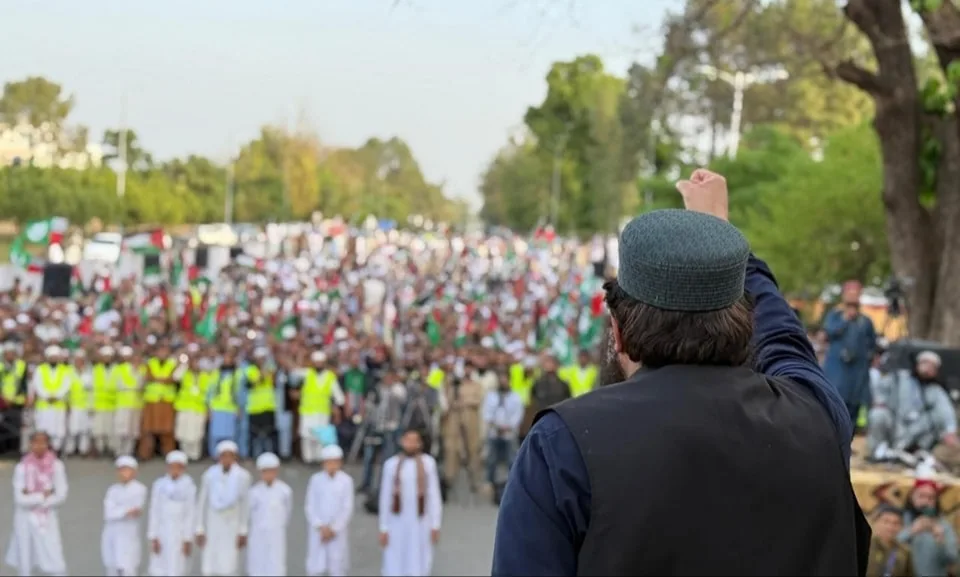
- Provocative Speech: During a public gathering in Chapainawabganj, Ibtisam delivered a speech urging attendees to “be ready to sacrifice yourself for the cause of Islam.” Indian media outlets, such as India Today, flagged this as potentially inflammatory, interpreting it as a call to radical action, though Pakistani and Bangladeshi sources argue it was a standard religious exhortation about devotion.
- Upcoming Schedule:
- November 1, 2025: Ibtisam is scheduled to visit Joypurhat, another district in northern Bangladesh, for a religious gathering.
- November 2, 2025: He will travel to Nagaon for similar activities, likely involving sermons and meetings with local scholars.
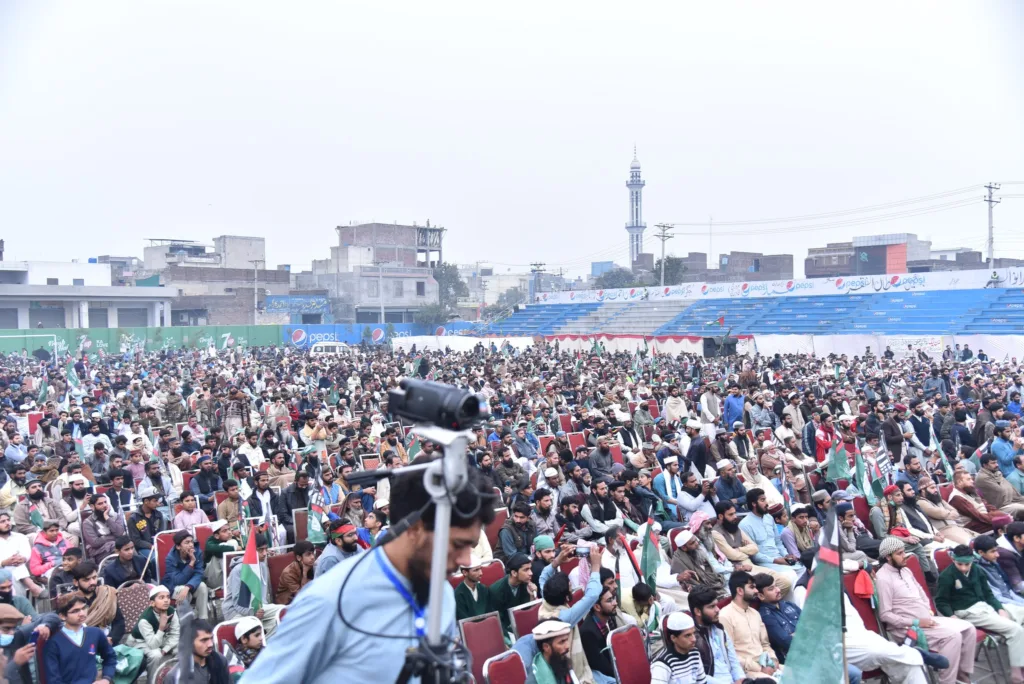
- November 6–7, 2025: He is set to attend a major Salafi conference in Dangipara, Rajshahi, expected to draw thousands of attendees. This event is organized by Bangladesh’s Ahl-e-Hadith network and will feature prominent clerics.
- November 8, 2025: Ibtisam is expected to return to Pakistan, concluding his tour.
Historical Context of His Travels
This is not Ibtisam’s first engagement in the region. His father, Ehsan Elahi Zaheer, traveled to Bangladesh and India in the 1970s and 1980s for da’wah, building networks that Ibtisam has inherited. The Ahl-e-Hadith movement has a small but dedicated following in Bangladesh, and Ibtisam’s visit aligns with efforts to strengthen these ties. His international preaching has also taken him to countries like Saudi Arabia, the UK, and Malaysia, where he promotes a puritanical interpretation of Islam.
Why the “Conspiracy” Concerns?
India’s alarm over Ibtisam’s visit stems from his connections to Hafiz Muhammad Saeed, the founder of Lashkar-e-Taiba (LeT), a Pakistan-based terrorist group responsible for the 2008 Mumbai attacks, which killed 166 people and injured over 600. Saeed, a UN-designated global terrorist with a $10 million U.S. bounty, is a senior figure in the Ahl-e-Hadith movement, and Ibtisam is described as a “long-term associate” of his. While Ibtisam has not been directly linked to terrorism, his ideological alignment with Saeed and LeT’s broader network raises red flags.
Here’s a detailed look at the factors fueling India’s suspicions:
- Proximity to the India-Bangladesh Border:
- Chapainawabganj, where Ibtisam visited, is just across from India’s Malda district in West Bengal. This 4,096-km border is notoriously porous, with issues like smuggling, human trafficking, and illegal crossings. Indian intelligence agencies fear Ibtisam’s presence in sensitive border areas could be a cover for reconnaissance or radicalization efforts targeting India’s Northeast (states like Assam, Tripura, and West Bengal).
- The Northeast has a history of unrest, including ethnic tensions and Islamist militancy. The presence of Rohingya refugees, some of whom have been linked to extremist groups, adds to India’s concerns about cross-border radicalization.
- Connections to Zakir Naik:
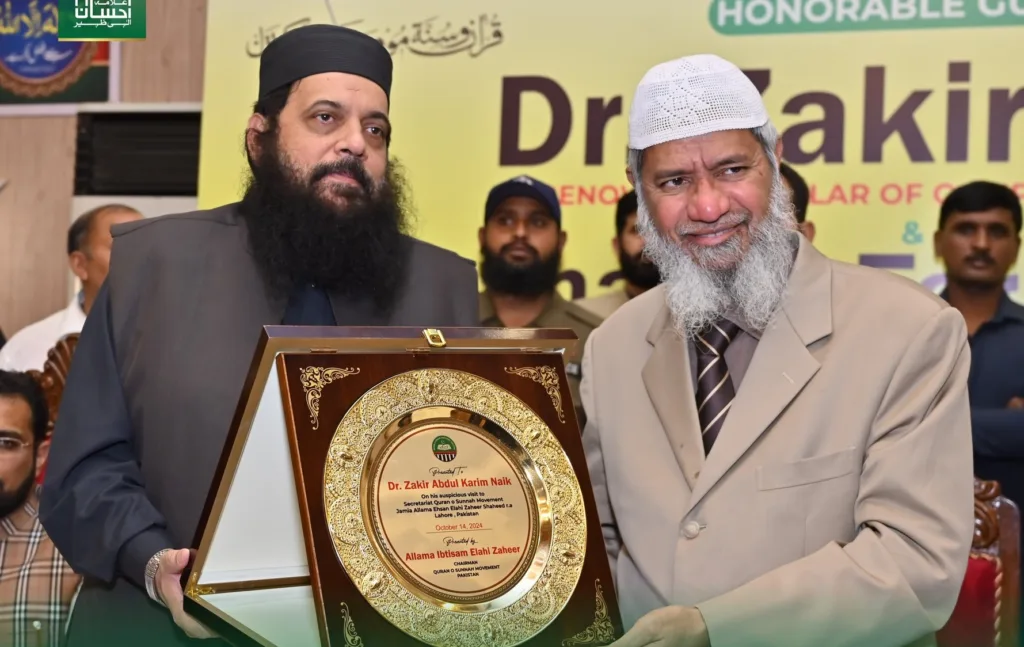
- In 2024, Ibtisam met Zakir Naik, a fugitive Indian preacher wanted by India for hate speech, incitement to terrorism, and money laundering. Ascot. Naik, who fled India in 2016 and now lives in Malaysia, visited Pakistan in 2024, where he was hosted by Ahl-e-Hadith groups, including those linked to Ibtisam. Their meeting was publicized, with photos circulating on social media.
- Naik’s Peace TV channel, banned in India and Bangladesh for promoting extremism, has been accused of inspiring radical groups. Indian authorities see Ibtisam’s association with Naik as evidence of a broader extremist network.
- Bangladesh’s Political Instability:
- Since August 2024, Bangladesh has faced political turmoil after the ousting of Prime Minister Sheikh Hasina’s government following violent protests. The interim government, led by Muhammad Yunus, has struggled to maintain stability, and reports suggest a rise in Islamist influence, including from groups like LeT and Jamaat-e-Islami.
- Indian media outlets, such as India Today, India.com, and News18, have described Ibtisam’s visit as part of a “major conspiracy” or “evil plot” orchestrated by Hafiz Saeed to destabilize India’s Northeast. They allege Pakistan’s intelligence agency, ISI, may be using religious figures like Ibtisam to expand LeT’s influence in Bangladesh and infiltrate India.
- Ahl-e-Hadith’s Militant Ties:
- The Ahl-e-Hadith movement, while primarily religious, has been linked to militancy in Pakistan. LeT, which shares its ideology, has used religious networks to recruit and fundraise. The UN and U.S. monitor such groups for terror financing, and Ibtisam’s leadership in this movement makes him a person of interest.
No concrete evidence has been made public to prove Ibtisam is directly involved in a terrorist plot, but his connections, provocative rhetoric, and choice of locations have prompted Indian agencies to act cautiously. The Border Security Force (BSF) and other agencies have increased patrols along the West Bengal-Bangladesh border.
Different Perspectives
- Indian Media and Government:
- Indian outlets portray Ibtisam’s visit as a deliberate move by Pakistan to fuel unrest in India’s Northeast, a region with complex ethnic and religious dynamics. They frame it as part of a “hybrid warfare” strategy, combining religious radicalization with militant activities. Articles cite his speech and border visits as evidence of intent to radicalize local Muslims or facilitate cross-border operations.
- The Indian government has not issued an official statement, but security sources quoted in the media emphasize the need for vigilance, especially given recent arrests of suspected LeT operatives in Assam and West Bengal.
- Pakistani and Bangladeshi Sources:
- In Pakistan and Bangladesh, Ibtisam’s visit is presented as purely religious. His supporters, including on his active Facebook page, share videos and photos of his sermons, focusing on Islamic unity and charity work. They dismiss India’s concerns as exaggerated or politically motivated to malign Pakistan and Bangladesh’s Ahl-e-Hadith community.
- Local Bangladeshi clerics, like Sheikh Abdul Razzaq, have hosted Ibtisam warmly, emphasizing his role as a scholar, not a political or militant figure.
- Global Watchdogs:
- Internationally, figures like Ibtisam are monitored due to the overlap between Ahl-e-Hadith networks and militant groups. The U.S. Treasury and UN Security Council have sanctioned individuals and charities linked to LeT for terror financing, though Ibtisam himself has not been named in such designations.
Broader Implications
Ibtisam’s visit comes at a time of heightened India-Pakistan tensions, exacerbated by ongoing border disputes and Pakistan’s alleged support for cross-border terrorism. India’s Northeast, with its diverse population and history of insurgency, is particularly vulnerable to external interference. The Rohingya refugee crisis, with over 1 million refugees in Bangladesh, has also created fears of extremist recruitment, as some Rohingya have been linked to groups like Arakan Rohingya Salvation Army (ARSA).
For Bangladesh, hosting figures like Ibtisam risks straining relations with India, a key economic and diplomatic partner. The interim government, already grappling with internal challenges, may face pressure to monitor or restrict such visits to avoid appearing complicit in India’s eyes.
What’s Next?
Indian authorities are closely tracking Ibtisam’s movements, with increased border surveillance and intelligence-gathering in West Bengal and the Northeast. Bangladesh’s government has not publicly commented on the issue, but security cooperation with India may come under scrutiny. Ibtisam’s remaining events, especially the high-profile Rajshahi conference, will likely draw further attention from Indian agencies.
You Might Also Like:
Islam’s Unique Civilisation: Unity of Faith, Culture and History
Father Rejects Suicide Theory After NEET Aspirant Found Dead in Kota Hostel Room
Fake SSP Nabbed in Kokernag: Anantnag Police Arrest Impostor with Uniform and Insignia