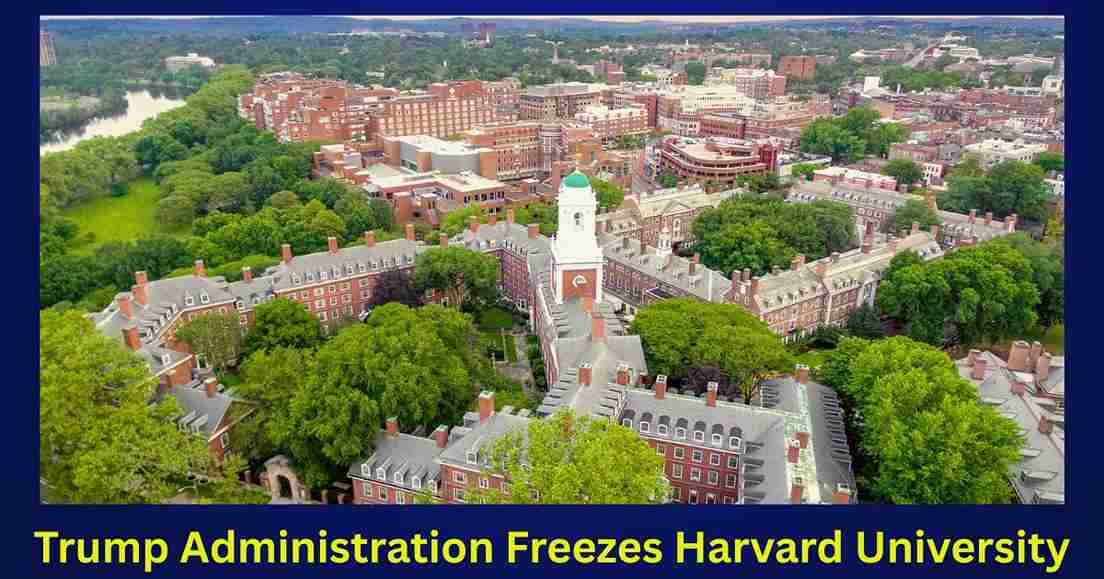
Trump Administration Targets Harvard University with Additional $1 Billion Funding Cut Amid Growing Political Standoff

Harvard University

The ongoing clash between the Trump administration and Harvard University has taken a sharp turn, with reports confirming that the government is planning to strip the university of an additional $1 billion in federal funding. This follows a previous decision to revoke $2.2 billion in research grants and educational contracts, bringing the total potential financial hit to over $3 billion. The move is part of a broader and intensifying pressure campaign launched by the administration, triggered by Harvard’s refusal to comply with a set of controversial government demands.

The Origins of the Dispute

Tensions began when the Trump administration sent Harvard University a letter listing several sweeping reforms it wanted the university to implement. These demands included:

  • Restructuring leadership roles within the university
  • Revising its admissions policies
  • Auditing and reviewing diversity-related programmes and initiatives
  • Deregistering or ceasing recognition of certain student clubs and organisations
Trump Administration Freezes

According to The Wall Street Journal, the White House intended for the letter to serve as a confidential opening for negotiations. However, when Harvard President Alan Garber publicly disclosed the demands and firmly rejected them, it sparked an angry response from Washington.

Harvard’s refusal to engage in private negotiations and its choice to expose the demands publicly were seen by Trump officials as a betrayal. The administration reportedly viewed the letter as a good-faith offer that was never meant to be aired in public, and felt blindsided by Garber’s actions.

Harvard’s Defiant Response

In a strongly worded message to the Harvard community, President Alan Garber made it clear that the university would not yield to political pressure.

“The University will not surrender its independence or relinquish its constitutional rights,” Garber wrote. “No government — regardless of which party is in power — should dictate what private universities can teach, whom they can admit and hire, and which areas of study and inquiry they can pursue.”

His statement was not just a defence of Harvard, but a broader declaration of academic freedom and institutional autonomy — principles that many in academia fear are being threatened.

Funding Freeze: A Political Weapon?

The Trump administration’s response to Harvard’s rejection was swift and significant. Within days of Garber’s public letter, the government announced a freeze on billions of dollars in federal research funding tied to the university. The new plan to cut an additional $1 billion in health research grants and contracts adds to the growing financial strain.

Federal funding is a major pillar of support for U.S. universities, especially for advanced research in fields like medicine, science, and technology. While Harvard receives substantial private donations and has a world-leading endowment worth over $50 billion, federal grants still play a vital role in sustaining many of its ongoing research projects and partnerships.
Trump Demands
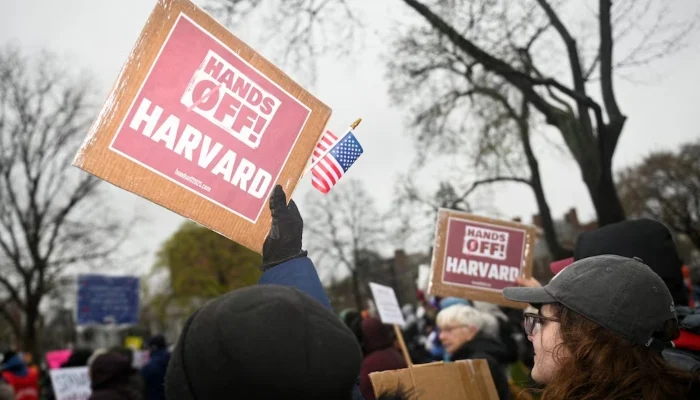
Demonstrators rally on Cambridge Common in a protest organised by the City of Cambridge calling on Harvard leadership to resist interference at the university by the federal government in Cambridge, Massachusetts, US, on April 12, 2025. —Reuters

The administration’s actions have sparked concern among educators and policymakers, with many viewing the funding threats as a dangerous precedent that politicises educational funding and undermines academic independence.

A Threat to Non-Profit Status?

The conflict doesn’t stop at funding. The Trump administration has also floated the idea of revoking Harvard’s non-profit status — a move that could have broader implications for its tax benefits and financial structure. Additionally, the administration has hinted at limiting or revoking the university’s ability to admit international students, who form a significant portion of the student body and contribute immensely to Harvard’s cultural and academic environment.

These aggressive tactics have raised eyebrows even among some conservatives, who warn that using federal power to punish dissenting institutions is a slippery slope that could harm U.S. education in the long term.

Harvard’s Financial Fortitude

Despite the threats, Harvard is in a uniquely strong financial position. With its massive endowment, the university is arguably more capable than any other in the country to withstand short- or even long-term funding cuts. Experts suggest that Harvard may use this moment to stand as a symbol of resistance against political intrusion into education.

That said, a loss of billions in federal funds would not be without consequences. Research projects might be delayed or discontinued, partnerships with federal agencies could be disrupted, and other universities may be discouraged from speaking out if they fear similar backlash.

Confusion and Controversy Over the Demands

In a surprising twist, The New York Times reported that the original list of demands sent to Harvard may have been sent in error — drafted without full internal approval. Despite this, the White House has stood by the contents of the letter, treating it as a legitimate policy position and refusing to withdraw or amend its stance.

This confusion has added another layer to the controversy, leaving many to question the process and motives behind the administration’s aggressive stance toward one of the world’s leading academic institutions.

What Comes Next?

The future of this standoff remains uncertain. Harvard appears unlikely to yield, and the Trump administration does not seem interested in backing down either. The situation could escalate further, or it might eventually shift to the courts, especially if the government attempts to revoke Harvard’s non-profit status or impose restrictions on foreign admissions.

What is clear is that this clash goes beyond dollars — it touches on foundational issues such as academic freedom, political influence in education, and the limits of government authority over private institutions.

As the situation unfolds, Harvard’s resistance may become a defining moment in the broader debate over the autonomy of educational institutions in the United States. With billions at stake and principles on the line, this is more than just a funding fight — it’s a battle for the soul of American higher education.

Trump Administration Freezes $2.2 Billion Funding to Harvard University in Massachusetts Over Antisemitism Dispute

Trump Administration Freezes

The Trump administration has taken a bold and controversial step by freezing over $2.2 billion in multi-year grants and contracts to Harvard University in Massachusetts. The move, confirmed by the administration’s Joint Task Force to Combat Antisemitism, comes amid growing tensions between the federal government and some of the country’s top universities over how they are handling rising incidents of antisemitism on campus.

Background of the Decision

The decision follows a statement from Harvard University President Alan M. Garber, who declared that the university would not comply with certain federal demands aimed at curbing antisemitic activity on campus. According to the administration, these demands were issued to ensure that universities uphold civil rights laws and protect Jewish students from harassment and discrimination.

Garber stated in his letter that Harvard had been presented with an “updated and expanded list of demands” late on a Friday night. These demands were tied to maintaining the university’s financial relationship with the federal government. Garber criticized the nature of these conditions, arguing that they went beyond addressing antisemitism and amounted to direct interference in the intellectual and academic freedom of the institution.

“We have informed the administration through our legal counsel that we will not accept their proposed agreement. The University will not surrender its independence or relinquish its constitutional rights,” Garber said in a strong response.

Statement from the Joint Task Force

In its announcement, the Joint Task Force to Combat Antisemitism said the freeze includes $2.2 billion in grants and $60 million in contracts allocated to Harvard. The task force stressed that federal investment in education comes with a responsibility to uphold civil rights laws and ensure campuses remain safe and inclusive for all students.

“Harvard’s statement today reinforces the troubling entitlement mindset that is endemic in our nation’s most prestigious universities,” the task force said. “The harassment of Jewish students is intolerable. The disruption of learning that has plagued campuses in recent years is unacceptable.”

The statement further warned that universities unwilling to take meaningful steps to combat antisemitism risk losing federal taxpayer support.

Broader Crackdown on Ivy League Schools

This funding freeze is part of a wider federal investigation into antisemitism on college campuses, particularly following pro-Palestinian protests that have intensified since October 2023. President Trump’s administration has launched a probe into multiple Ivy League institutions, suspending federal funding for all Ivy League schools except the University of Pennsylvania and Dartmouth College.

A recent review by the federal task force also revealed that Harvard holds nearly $9 billion in federal grants and contracts — funding now at risk if the university continues to oppose the administration’s terms.

Impact and Implications

The move has ignited a national debate on the balance between academic independence and government oversight. Critics of the Trump administration argue that the freeze sets a dangerous precedent by pressuring universities to align with political expectations or face financial consequences. Others, however, have applauded the administration for taking decisive action to address rising antisemitism and protect Jewish students.

The administration has also announced plans to detain and deport foreign students who were involved in organizing anti-Israel protests. Officials say such measures are necessary to curb extremism and restore safe learning environments.

Conclusion

The freezing of Harvard’s federal funding marks a significant and controversial moment in the ongoing clash between university autonomy and government mandates. As the situation unfolds, the outcome could reshape how American universities respond to civil rights issues, manage campus protests, and maintain federal relationships in a politically charged climate. Whether Harvard will eventually compromise or stand firm on its principles remains to be seen — but the stakes, both financially and politically, are undeniably high.

Certainly! Here’s a more detailed introduction about Harvard University that you can use in articles or reports:


Harvard University, located in Cambridge, Massachusetts, is one of the most prestigious and oldest institutions of higher education in the world. It was established in 1636 by the Massachusetts Bay Colony and named after its first benefactor, John Harvard. As the oldest university in the United States, Harvard has a long-standing reputation for academic excellence, influential research, and leadership in education.

The university is part of the Ivy League and comprises 13 schools and institutes, including the well-known Harvard College (for undergraduate studies), Harvard Law School, Harvard Medical School, Harvard Business School, the Harvard Kennedy School, and the Harvard Graduate School of Education, among others.

Harvard has a diverse student body, with thousands of students from all 50 U.S. states and more than 100 countries. It offers undergraduate, graduate, and professional programs in a wide range of fields including science, engineering, medicine, law, business, arts, and humanities.

The university’s sprawling library system is the largest academic library in the world, housing over 20 million volumes. Harvard is also known for its strong emphasis on research and innovation, and it has consistently been ranked among the top universities globally.

With a massive endowment — one of the largest of any educational institution in the world — Harvard supports extensive academic research, student scholarships, and global initiatives. The university’s alumni network includes U.S. presidents, Nobel laureates, world leaders, tech innovators, and leading figures in literature, science, and business.

Harvard’s main campus lies along the Charles River in Cambridge, but the university also has facilities and affiliated institutions in nearby Boston, such as the Harvard Medical School and affiliated hospitals.

Despite its elite status, Harvard continues to work on issues of accessibility, inclusion, and academic freedom — often placing it at the centre of national and international discussions on education, ethics, and public policy.