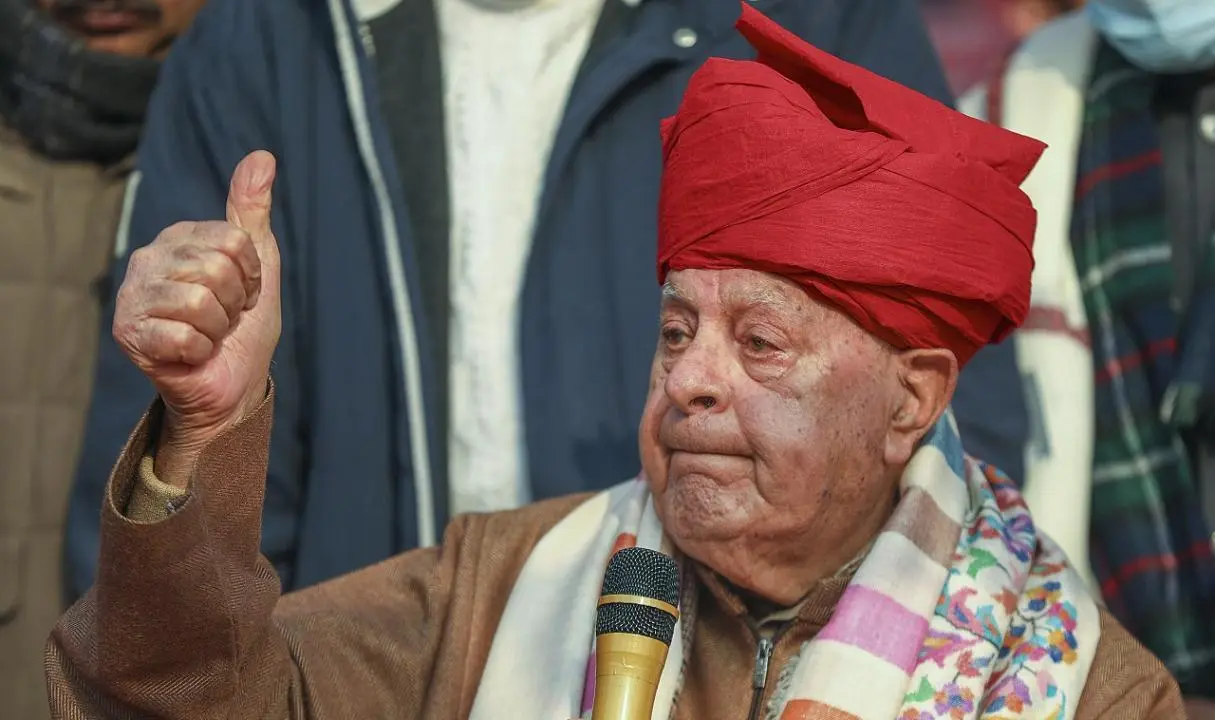
Dr. Farooq Abdullah asks Government of India On Human Rights Day to Protect the Rights of Minorities in the Country

farooq

The President of the Jammu and Kashmir National Conference, Dr. Farooq Abdullah Tuesday emphasized the importance of human rights as essential to the dignity of every individual.

In a statement, Dr. Farooq expressed concern over the increasing attacks on Muslims throughout the country, stating that such actions go against the principles of India’s constitution.

Dr Farooq said that these attacks not only tarnish India’s reputation globally but also hinder the country’s growth. He stressed that for India to progress, every citizen must have access to development and prosperity.

“In the 21st century, the persistence of such attacks indicates that the country is veering off course. The government can not simply pay lip service to the constitution and human rights; its policies must align with these values. It is imperative that the government takes concrete actions to protect the rights of all citizens and ensure that India remains on the path to progress and inclusivity. Failure to do so will only lead to further division and hinder the nation’s advancement,” he said(KNS).

JKNC President Farooq Abdullah Says on NC-Congress govt performance“Our government going very we”

Farooq Abdullah

Jammu Kashmir National Conference (JKNC) President Farooq Abdullah on Sunday said that the NC-Congress government in the Union Territory is doing ‘very well’ and assured of fulfilling all promises made in their election manifesto.

“Our government is going very well…we will fulfil the promises made in our manifesto in 5 years,” JKNC President Abdullah told reporters.

When asked about PDP chief Mehbooba Mufti’s statement, asking JKNC to make its stand clear on article 370 he said, “… She should not make such statements…our manifesto is clear about this (Article 370) …”

Earlier on Saturday, National Conference President Farooq Abdullah reaffirmed his commitment to restoring statehood to Jammu and Kashmir, expressing confidence that it will be achieved.

“How many days have passed since the new government was formed? How many weeks? Will the statehood come from the sky? I have no doubt that we will get the statehood,” Abdullah told reporters.

The state was bifurcated into two Union Territories following the abrogation of Article 370 in 2019. Political parties in the state have been demanding early restoration of statehood.

Responding to ‘Katenge toh batenge”, Abdullah said that India will become strong when diversity is strengthened

“What does it mean? What is this slogan? I don’t understand what it means… What does ‘Katenge, batenge’ mean?… I don’t know. What are we if we are not one? Is India not one? India has unity in diversity. India will become strong when diversity is strengthened,” Abdullah added.

Farooq Abdullah also expressed grief over the loss of children in the Jhansi fire incident, urging the government to provide swift assistance and launch an investigation into the fire incident.

The tragedy unfolded when a fire, suspected to have been caused by a short circuit in an oxygen concentrator, quickly spread in the highly oxygenated environment of the NICU, claiming the lives of 10 newborns.

The tragedy has left grieving families devastated, with many still searching for their missing children. (ANI)

Traffic Police Issues Advisory for Motorists in Rural Kashmir amid Snowfall 

Sajad Lone Criticises NC and Congress for Misleading J&K Over Article 370 Resolution

Intensive Traffic Enforcement Drive in Kashmir: 2,338 Vehicles Checked, ₹7.98 Lakh Fines Imposed

SKUAST-K Celebrates Graduation, Fresher’s Day,University inspiring Visionary Leaders Equipped to Face Global Challenges: Prof mNazir Ahmad Ganai Vice Chancellor

Farooq Abdullah Declines Lok Sabha Bid on Health Grounds; NC Seeks Strong Replacement

In a significant development for Jammu and Kashmir’s political landscape, National Conference (NC) President and sitting Member of Parliament from Srinagar, Farooq Abdullah, has announced his decision not to contest the upcoming Lok Sabha elections due to health reasons. The announcement was made by his son and NC Vice President, Omar Abdullah, at a party function held in Rawalpora, on the outskirts of Srinagar.

Omar Abdullah conveyed that his father, Farooq Abdullah, had sought permission from the party’s leadership, including General Secretary Ali Mohammad Sagar, to abstain from contesting the polls this time, citing health concerns. He stressed the party’s commitment to fielding the most competent candidate from the Srinagar constituency, expressing hope that voters would rally behind the chosen candidate to ensure effective representation in Delhi.

Farooq Abdullah’s decision marks a notable departure from his longstanding political career, which has seen him serve as a prominent figure in Jammu and Kashmir politics. Despite health challenges, he has been an active participant in state and national affairs, previously holding ministerial portfolios at the Centre.

The 2002 Legislative Assembly elections saw Omar Abdullah take the reins of the NC leadership, while Farooq Abdullah shifted focus to national politics. Farooq Abdullah’s parliamentary journey includes stints in the Rajya Sabha and the Lok Sabha, where he has represented the Srinagar constituency.

In the 2014 Lok Sabha elections, Farooq Abdullah faced defeat at the hands of the Peoples Democratic Party (PDP) candidate Tariq Hameed Karra. However, a by-election in 2017 following Karra’s resignation saw Abdullah reclaim the Srinagar parliamentary seat, defeating the PDP’s Nazir Ahmed Khan. He secured victory again in the 2019 polls.

Omar Abdullah acknowledged the unique circumstances surrounding the upcoming parliamentary elections, noting the absence of factors like boycott calls or significant security concerns that had previously impacted voter turnout in Srinagar. He urged residents to actively engage in the political process, emphasizing the importance of choosing their representatives and voicing their concerns through democratic means.

Farooq Abdullah’s decision not to contest underscores the changing dynamics in Kashmiri politics and the NC’s efforts to ensure continued representation and effective governance in the region. As the party prepares to nominate a successor for the Srinagar constituency, all eyes are on the upcoming elections and the role voters will play in shaping the region’s political future.
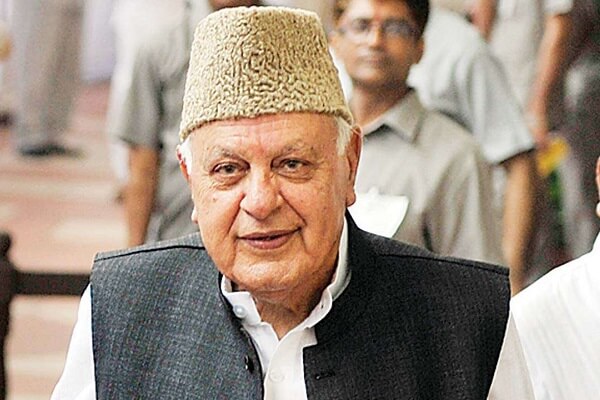
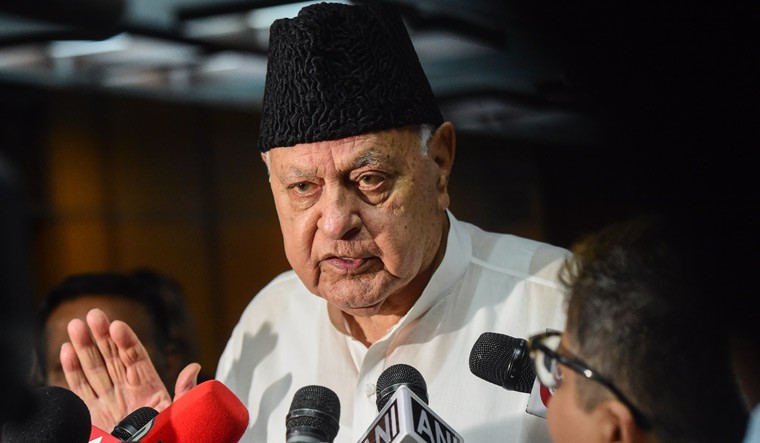
Farooq Abdullah refrains from assigning blame to Nehru for his father’s imprisonmentMadhu Dandavate’s Birth Centenary Commemoration

farooq

As the birth centenary celebrations for Madhu Dandavate unfolded in Mumbai, Farooq Abdullah, the three-time former Chief Minister of Jammu and Kashmir and National Conference president, took the opportunity to share a personal revelation. He disclosed that his father had endured a decade-long incarceration at the hands of Pandit Jawahar Lal Nehru.

While acknowledging this significant chapter in his family’s history, Abdullah chose not to lay blame on Nehru. He expressed his belief that there must have been some compelling national interest guiding Nehru’s decisions during that period.

The event, dedicated to Madhu Dandavate, a five-time Member of Parliament from Maharashtra and a two-time Minister in the Central Government, witnessed the presence of senior politician Sharad Pawar. In his address, Abdullah underscored the importance of unity that transcends religious and state boundaries, proclaiming, “Ram belongs to all of us.” He urged citizens to unite for the greater good of the nation.

Emphasizing the need for cooperation and solidarity, Abdullah conveyed that collaboration across diverse segments of society is crucial for India’s progress. The seasoned politician expanded the discourse to delve into broader reflections on political ethics and responsibilities, stressing the importance of honesty and fidelity to society and voters.

Taking a moment to recognize the contributions of Jawaharlal Nehru and Indira Gandhi, Abdullah lamented their apparent neglect in contemporary discussions. He highlighted Nehru’s 14-year tenure as Prime Minister and Indira Gandhi’s transformative ‘Green Revolution,’ considering these leaders indispensable to the foundation of the nation’s progress.