
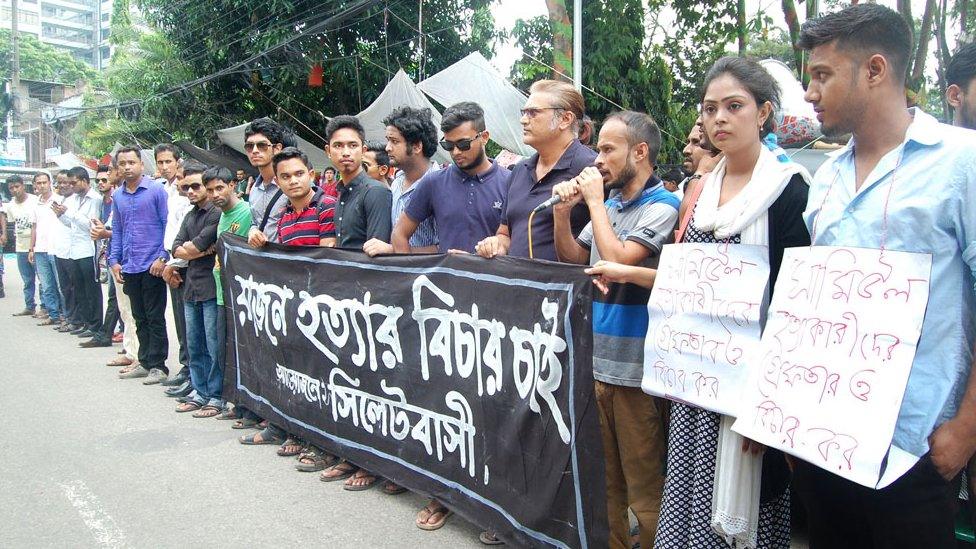
The brutal lynching of Dipu Chandra Das, a 29-year-old Hindu factory worker, has sent shockwaves across Bangladesh and drawn international attention to the worsening security situation faced by religious minorities in the country. The incident, which occurred in the city of Mymensingh, has become a grim symbol of fear, insecurity, and communal tension gripping Hindu communities.
A Family Left Behind
Back in his village, grief hangs heavy in the air. Dipu Das’ wife, Meghna Rani, remains largely silent, lying motionless in shock. His young daughter Dipika is too small to understand why her father will never return. His parents and brothers now face not only emotional devastation but also economic hardship, having lost the family’s primary earner.Click Here To Follow Our WhatsApp Channel
The government announced limited compensation, including cash assistance and basic supplies. While welcomed, villagers say it does little to address the deeper issue: fear has now replaced hope.


A Life Ended in Brutality
Dipu Das lived a modest life. His home was a small tin-sheet structure in a village nearly 140 kilometres from Dhaka, where he worked hard to support his family. That fragile stability was shattered on December 18, when a co-worker accused him of blasphemy inside a factory. Within moments, a mob gathered.
What followed was horrific. Dipu Das was beaten to death in public. His body was later hung and set on fire, a level of brutality that stunned even seasoned observers of communal violence. Authorities later clarified that there was no evidence that Dipu Das had committed blasphemy.
Fear Spreading Across Communities
Local Hindu leaders and residents say Dipu Das’ killing has intensified anxiety among minorities. Many fear that accusations like blasphemy—often unverified—can instantly turn deadly.
In conversations with residents in Dhaka, members of the Hindu community described a pattern of intimidation and violence. They reject claims that attacks are politically motivated, insisting instead that religion is the primary reason.
“They attack us because we are Hindus,” one resident said, requesting anonymity. “The claim that this is about politics is just a smokescreen.”

Role of Islamist Groups
Community members allege that radical Islamist elements, including supporters inspired by Jamaat-e-Islami, are emboldening such violence. While the government maintains that it is acting against extremism, reports from different regions suggest attacks on Hindus continue with alarming regularity.
Government Response and Growing Doubts
Bangladesh is currently administered by interim authorities led by Muhammad Yunus, a Nobel laureate who has pledged protection for all communities. Officials claim that minorities are safe and that law enforcement is responding firmly.
However, ground reports and testimonies from victims tell a different story. Human rights observers warn that failure to ensure accountability may encourage further violence.
A Chilling Message
For many Hindus, Dipu Das’ death sends a terrifying signal: ambition, visibility, or even routine work can become dangerous. Villagers openly say that survival now depends on keeping a low profile.
The lynching of Dipu Das is not just an isolated crime—it is a mirror reflecting the deepening communal fault lines in Bangladesh. Unless justice is delivered swiftly and minority protection is enforced meaningfully, fear will continue to define everyday life for thousands who already live on the margins.
As Bangladesh grapples with its identity and stability, the question remains painfully clear: Can minorities live without fear in today’s Bangladesh?
You Might Also Like:
Al-Tilmeez: A Pioneering Arabic Literary Journal from Jammu and Kashmir
Professor Mufti Abdul Ghani Azhari: Scholar, Sufi, Historian, and Social Reformer of Kashmir