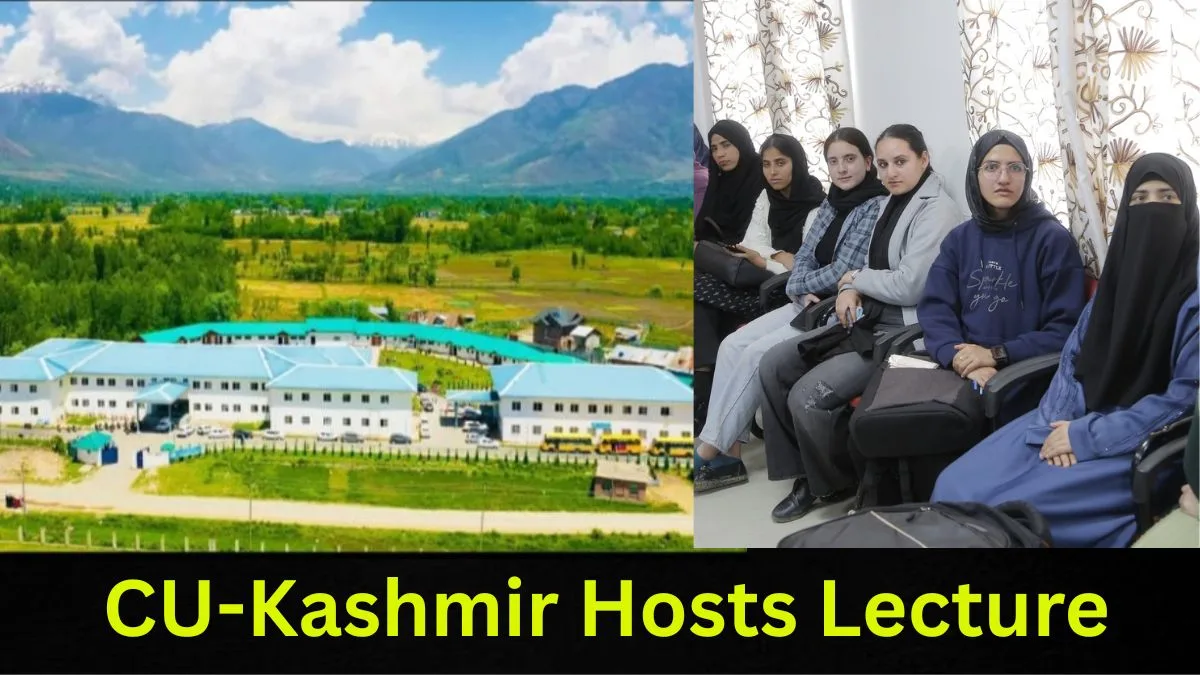
The Central University of Kashmir (CUKashmir) organised an online lecture under its distinguished lecture series on the topic “The Women’s Reservation Bill: Constitutional Vision for Gender Equity & Democratic Representation in India.” Click Here To Follow Our WhatsApp Channel
The session was delivered by Rekha Sharma, Member of Parliament (Rajya Sabha) and former Chairperson of the National Commission for Women.
Women’s Reservation Bill a Historic Step
Addressing faculty members, research scholars, and students, Rekha Sharma described the Women’s Reservation Bill (WRB) as a historic move to ensure equal political participation for women.
She said the Bill reflects the spirit of the Constitution by correcting long-standing imbalances and creating opportunities for women to take part in governance and decision-making.
Need for Greater Representation
Sharma pointed out that women are still underrepresented in legislative bodies despite progress in other sectors.
She explained that the Bill is not just a law but a corrective step to strengthen democracy, making it more inclusive and representative.
“A strong democracy must include the voices of women, who make up nearly half of the population,” she said.
Challenges Faced by Women
During her talk, she highlighted several challenges that limit women’s participation in politics, including:
- Social and cultural barriers
- Lack of institutional support
- Limited access to resources
She stressed the need to address these issues to ensure meaningful participation.
Impact on Governance
Rekha Sharma also spoke about how increased representation of women can improve policymaking.
She noted that women leaders often bring new perspectives, especially in areas like:
- Health
- Education
- Social welfare
This helps create more balanced and people-focused governance.
Role of Education and Awareness
She emphasised that education and awareness are key to empowering women in leadership roles.
Sharma urged universities to promote discussions on gender equality and constitutional values through initiatives like the Naari Shakti Vandan Adhiniyam.
Interactive Session and Conclusion
The lecture ended with an interactive session where students and scholars asked questions and discussed the implementation of the Bill.
The programme was chaired by Prof Naseema Chandakalayam, while Dr Himabindu, the coordinator, appreciated the efforts of Vice Chancellor Prof Ravinder Nath for organising the event.
Conclusion
The lecture highlighted the importance of women’s political participation and the role of education in promoting gender equality.
It also encouraged young people to actively take part in democracy and contribute to nation-building.
You Might Also Like:
US Rescues Downed Pilot from Iran in High-Risk Operation, Trump Declares “We Got Him”
Dr.Fatemeh Ardeshir-Larijani Ousted from Emory, Visa Revoked After Protests Over Iran Links