Bihar Assembly Elections 2025: 13.13% Voter Turnout Recorded Till 9 AM in First Phase

Bihar Assembly Election

A voter turnout of 13.13 per cent was recorded till 9 am in the first phase of the Bihar Assembly elections, according to the Election Commission of India.

The highest voter turnout of 15.27 per cent was recorded in Saharsa district of the state among all districts, while Lakhisarai recorded a sluggish turnout of 7 per cent.Click Here To Follow Our WhatsApp Channel

As of 9 am, a voter turnout of 14.60 per cent was recorded in Begusarai district, followed by 13.11 per cent in Bhojpur, 13.28 per cent in Buxar, 12.48 per cent in Darbhanga, 13.97 per cent in Gopalganj, 14.15 per cent in Khagaria, 13.74 per cent in Madhepura, 13.37 per cent in Munger, 14.38 per cent in Muzaffarpur, 12.45 per cent in Nalanda, 11.22 per cent in Patna, 12.86 per cent in Samastipur, 13.30 per cent in Saran, 12.97 per cent in Sheikhpura, 13.35 per cent in Siwan and 14.30 per cent in Vaishali.

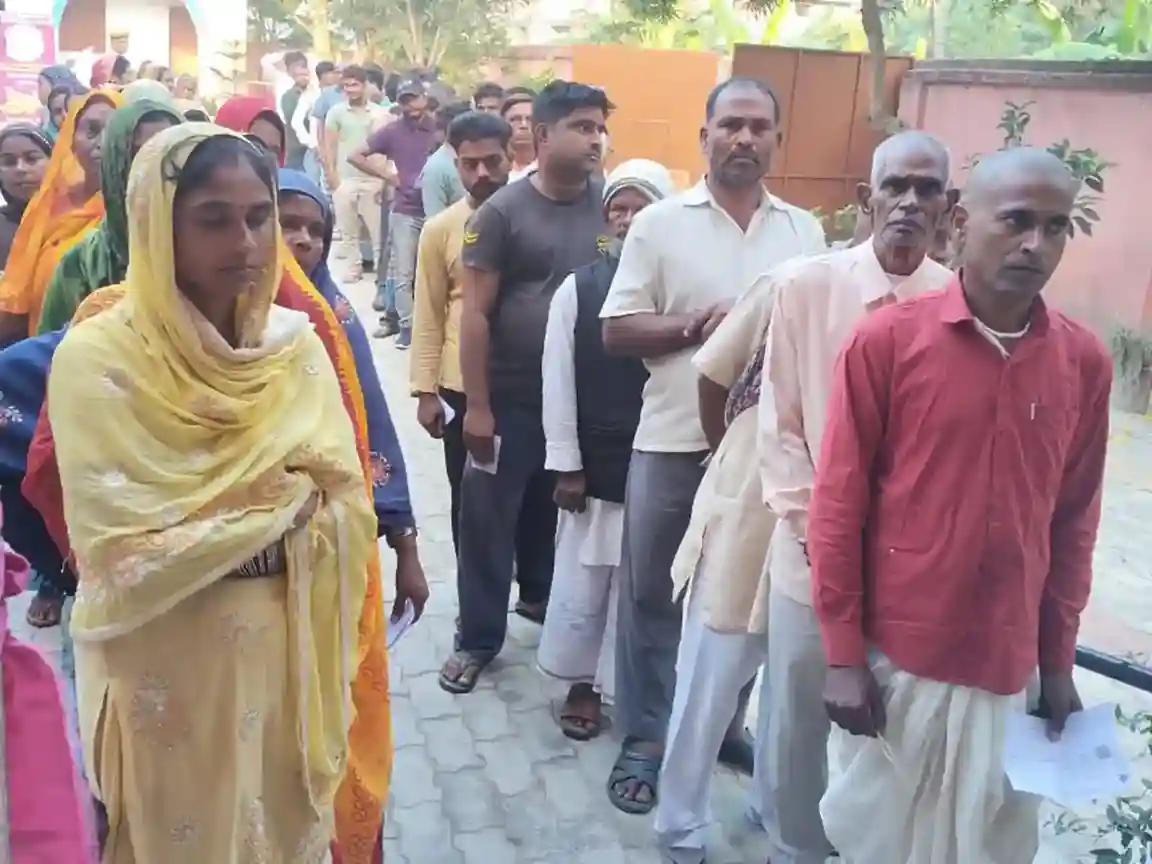
Voters cast their ballots amid tight security in all seats.

Meanwhile, Bihar Deputy Chief Minister and Tarapur BJP candidate Samrat Choudhary cast his vote in Munger’s Tarapur while Deputy CM Vijay Sinha and BJP’s Lakhisarai candidate also cast his vote.

Former Bihar Chief Minister and RJD Chief Lalu Prasad Yadav, along with his wife Rabri Devi, son and Mahagathbandhan Chief Ministerial face Tejashwi Yadav, cast their vote in Patna.

Voting for the first phase of the 2025 assembly elections in Bihar began today at 7.00 am across 121 constituencies in 18 districts of the state’s 243 seats, with approximately 3.75 crore electors casting their ballot.

Polling will conclude at 6 pm, and due to security considerations, polling time has been curtailed to 5 pm in some constituencies.

The first phase will decide the fate of several senior leaders, including RJD’s Tejashwi Prasad Yadav, BJP leaders Samrat Choudhary and Mangal Pandey and JD(U)’s Shravan Kumar and Vijay Kumar Choudhary. Tej Pratap Yadav is also in the fray in the first phase.

According to the Election Commission, there are 10.72 lakh ‘new electors’ and 7.78 lakh voters are in the age group of 18-19 years. The total population of these constituencies, as stated by the Election Commission, is 6.60 crore.

There are total of 122 women candidates in the fray in the first phase of polls.

Jan Suraj Party fielded 119 candidates in this phase. Within NDA, JD(U) is contesting 57 seats, followed by BJP on 48 and LJP (Ram Vilas) on 14.

Among the Mahagathbandhan constituents, RJD is contesting 73 seats in the first phase followed by 24 from Congress and 14 from CPI(ML). There will be friendly fight on a few seats among Mahagathbandhan constituents.

In the 2020 Bihar Assembly elections, polling took place in three phases. The National Democratic Alliance (NDA) secured 125 seats, while the opposition Mahagathbandhan (MGB) won 110. Among the major parties, the Janata Dal (United) bagged 43 seats and the Congress 19. The JD(U) had contested 115 constituencies and the BJP 110, whereas the RJD contested 144 seats and the Congress 70. (ANI)

Tarun Chugh Meets Dalai Lama in Ladakh, Reaffirms India’s Commitment to Peace, Ahimsa, and Buddhist Heritage

Dalai Lama

In a significant spiritual and symbolic gesture, BJP National General Secretary Tarun Chugh met with His Holiness the 14th Dalai Lama on Tuesday in Ladakh. The meeting, steeped in reverence and mutual respect, underscored India’s enduring civilisational commitment to peace, compassion, religious freedom, and the preservation of Buddhist heritage.


A Meeting of Souls and Civilisations

The encounter between Chugh and the Dalai Lama was more than a political or ceremonial visit—it reflected India’s timeless role as a sanctuary for seekers of truth, ahimsa (non-violence), and karuna (compassion). The Dalai Lama, who has been living in exile in India since 1959, acknowledged this bond during the meeting.

“Since coming into exile from Tibet in 1959, we have received immense support and assistance from the Government of India. It is thanks to India’s generosity that we have been able to preserve our unique identity, language, and cultural heritage, deeply rooted in the principles of ahimsa and karuna,” the Dalai Lama stated in a heartfelt message.


Chugh: “India’s Spiritual DNA Reflects in the Dalai Lama”

Tarun Chugh described the Dalai Lama as not only a globally respected spiritual leader but also a “living embodiment of India’s civilisational values.”

“His message of compassion, universal brotherhood, and spiritual strength resonates with the soul of India,” said Chugh. “Meeting him in Ladakh is a reminder that India’s strength lies not only in its economy or military, but in its unwavering moral and spiritual foundation.”


Modi’s Leadership and the Preservation of Buddhist Legacy

Chugh went on to praise Prime Minister Narendra Modi for his commitment to safeguarding and promoting India’s Buddhist heritage, both domestically and on the global stage.

“Under PM Modi’s leadership, India has stood firm on its ancient promise of being a sanctuary for seekers of truth and justice,” he said. “Modi Ji is not only working to uplift the lives of citizens but also ensuring the protection of our Buddhist legacy, keeping alive the values of Bhagwan Buddha for generations to come.”

Citing PM Modi’s initiatives like the revival of Buddhist pilgrimage sites, international conferences on Buddhism, and infrastructural support in regions like Ladakh, Chugh said India is living up to its civilisational dharma, not just a policy mandate.


Ladakh: A Sacred Frontier

Chugh also highlighted the unique role of Ladakh as a confluence of Buddhist wisdom, national pride, and strategic importance.

“Ladakh is not just a frontier on the map—it is a spiritual heartland where Indian civilisation meets Buddhist thought. This region reflects the soul of India, where silence is sacred and every monastery echoes centuries of wisdom,” he noted.


Reaffirming India’s Role in a Troubled World

Emphasizing the broader implications of his meeting with the Dalai Lama, Chugh said that India has a timeless duty to protect torchbearers of truth, ahimsa, and dharma in a world increasingly plagued by violence, polarization, and spiritual emptiness.

“This meeting is not merely symbolic—it is a reaffirmation of our civilisational promise to protect spiritual heritage, stand with oppressed communities, and offer light in dark times,” he said.


Conclusion

The meeting between Tarun Chugh and the Dalai Lama in Ladakh stands as a reminder that India’s greatest contributions to the world are not material, but moral and spiritual. As global challenges mount—from violence and war to climate crisis and cultural erasure—India continues to uphold the flame of non-violence, inclusivity, and spiritual resilience.

The message was clear: In the land of the Buddha, under the gaze of the Himalayas, India reaffirms its eternal role as a beacon of peace and protector of the sacred.


J&K Speaker Denies Mehbooba Mufti’s Claim on July 13 Holiday Resolution, Calls It Misleading

Suspected Bangladeshi National Held in Katra for Illegal Entry, FIR Registered Under Foreigners Act

Kapil Sharma Under Terrorist Threat: Why Khalistani Groups Attacked His Canada Café Days After Opening

BJP Sees Significant Boost in Kashmir with Thousands of New Active Members

Thousands of New Active Members

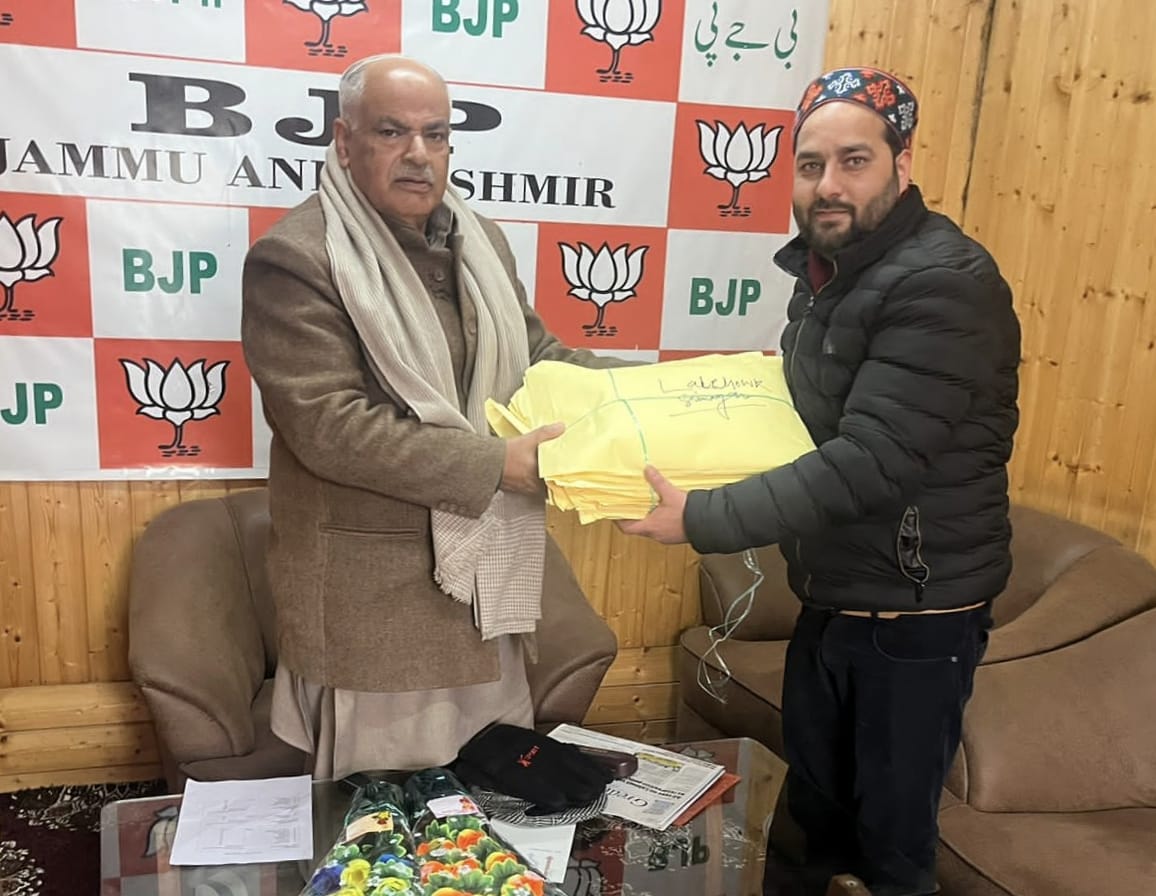
In a significant boost to the Bharatiya Janata Party’s (BJP) presence in Kashmir, thousands of Active Membership forms were handed over to Ashok Koul  General Secretary (Org) BJP J&K, by  Bilal Parray, National Executive Member BJYM & Incharge Active Membership Kashmir.

This massive response from the people of Kashmir is a testament to their growing faith in the BJP’s ideology and its commitment to delivering on its promises. The party’s transparent and accountable governance has resonated deeply with the people, who have been disillusioned with previous governments that failed to deliver on their promises.

“The people of Kashmir have shown their trust in the BJP, and we are committed to working tirelessly for their welfare and development,” said Bilal Parray. “We will continue to reach out to the people, listen to their concerns, and work towards addressing them.”

The BJP’s growing popularity in Kashmir is a reflection of its efforts to connect with the people and understand their aspirations. The party’s leadership has been actively engaging with the public, addressing their grievances, and working towards creating a more inclusive and prosperous society.

With this significant influx of new members, the BJP is poised to further strengthen its presence in Kashmir and work towards creating a brighter future for the people of the region.