Understanding Article 370: History, Provisions, Abrogation, and Its Impact on Jammu and Kashmir

Article 370

Article 370 was a key part of the Indian Constitution that gave special status to the region of Jammu and Kashmir. This provision allowed the area a level of independence not seen in other Indian states. Over the years, Article 370 sparked much debate and controversy. In 2019, the Indian government decided to remove it, leading to big changes in the region. This article explores the full story of Article 370, from its beginnings to its end, and what it means today. We’ll look at the history, the rules it set, how it was scrapped, and the effects on Jammu and Kashmir.

The Historical Background of Article 370

The story of Article 370 starts in the late 1940s, just after India gained independence from British rule. Jammu and Kashmir was a princely state ruled by Maharaja Hari Singh. In 1947, when India and Pakistan split, the Maharaja faced pressure from both sides. Pakistan-backed tribes invaded Kashmir, forcing the Maharaja to seek help from India.Click Here To Follow Our WhatsApp Channel

To get Indian military support, the Maharaja signed the Instrument of Accession on 26 October 1947. This document joined Jammu and Kashmir to India but only in matters of defence, foreign affairs, and communications. Other areas stayed under the state’s control. This setup formed the basis for Article 370 in the Indian Constitution, which came into force in 1950.
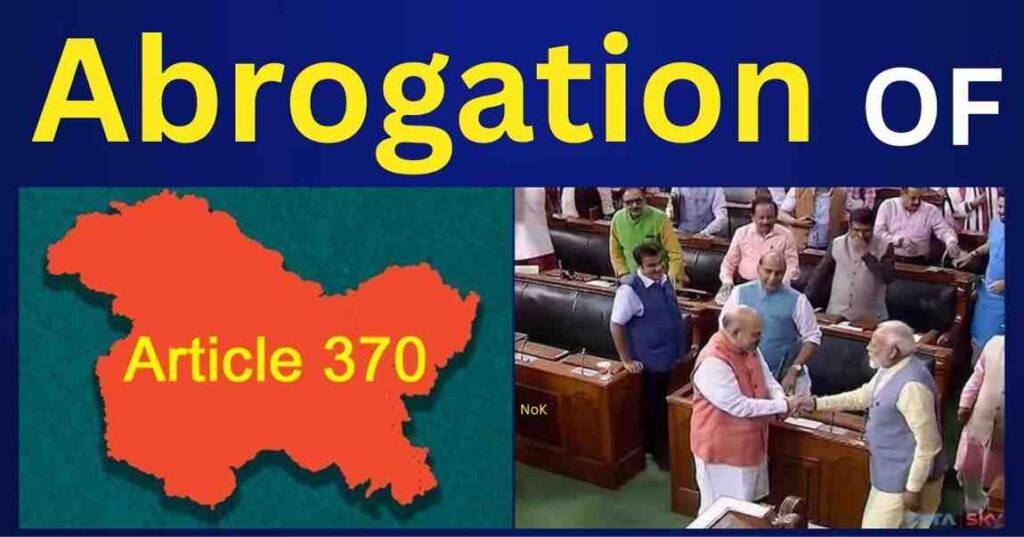
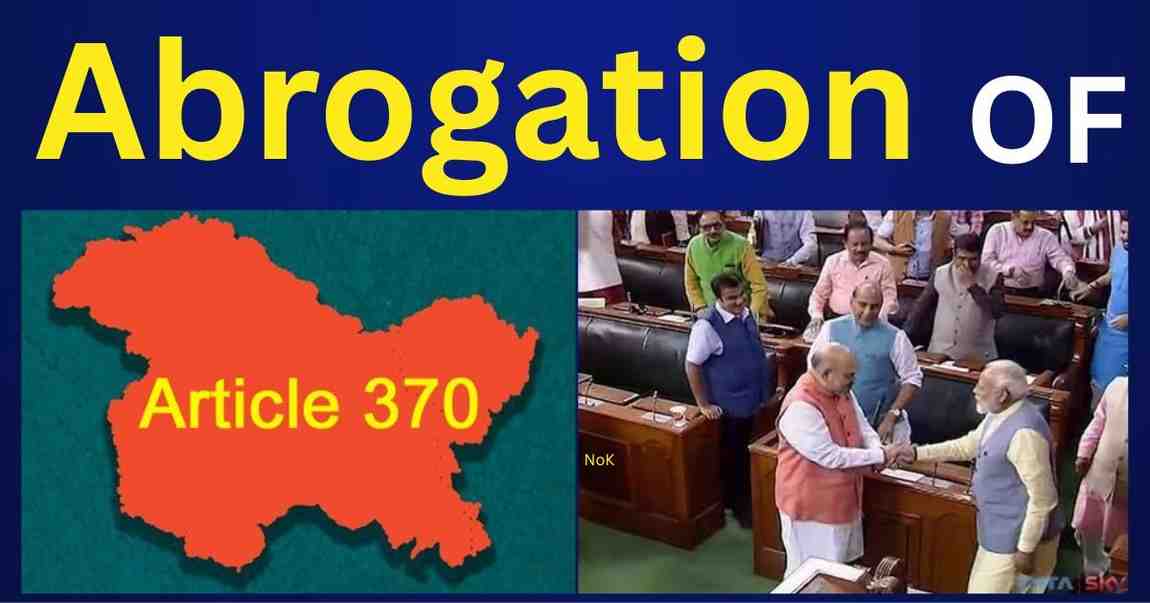
Abrogation of Article 370

Article 370 was meant to be temporary. It was added to bridge the gap until Jammu and Kashmir could decide its future through a Constituent Assembly. In 1951, this assembly was formed, and by 1957, it had created the state’s own constitution. After that, the assembly dissolved, but Article 370 remained in place.

For decades, Article 370 symbolised the unique relationship between Jammu and Kashmir and the rest of India. It protected the region’s identity and autonomy amid ongoing disputes with Pakistan over Kashmir.

Key Provisions of Article 370

Article 370 outlined how the Indian Constitution applied to Jammu and Kashmir. Unlike other states, not all parts of the Constitution automatically covered the region. Instead, the President of India could extend provisions with the agreement of the state’s government.

Here are the main features:

  • Limited Central Power: The Indian Parliament could only make laws on defence, foreign affairs, finance, and communications without the state’s consent. For other matters, like land or education, the state had its own rules.
  • Own Constitution and Flag: Jammu and Kashmir had its own constitution and state flag, alongside the Indian one.
  • Residency Rights: Linked to Article 35A (added in 1954 via a presidential order), it defined ‘permanent residents’ and gave them special rights, such as buying property or getting government jobs. Outsiders could not easily settle or own land in the state.
  • No Emergency Powers: The President could not declare a financial emergency in the state under Article 360 of the Indian Constitution.

These rules aimed to preserve the cultural and demographic makeup of Jammu and Kashmir, a Muslim-majority area in a diverse country.
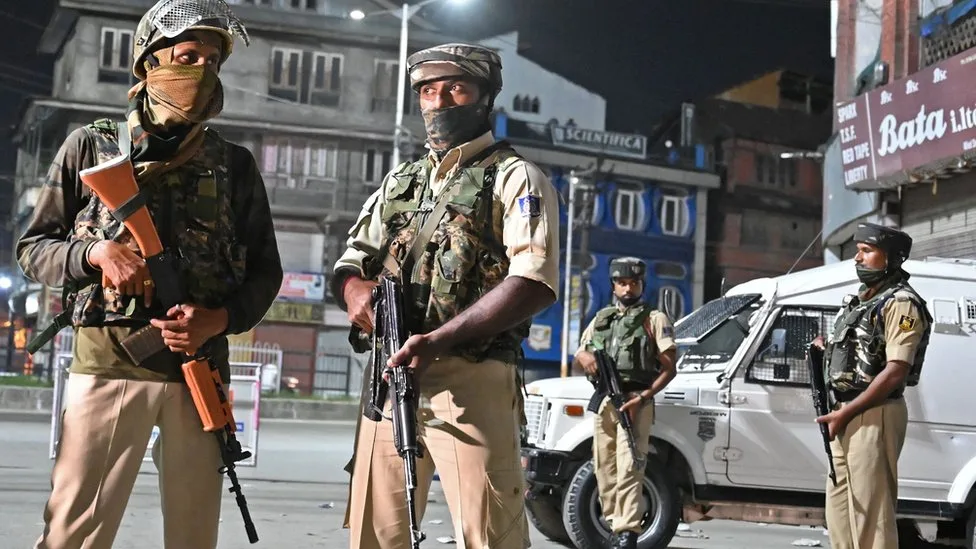
Article 35A: The Companion to Article 370

Article 35A was closely tied to Article 370. It came from a 1954 presidential order and let the Jammu and Kashmir legislature define who counted as a permanent resident. Only these residents could own land, vote in state elections, or access scholarships and jobs.

This article faced criticism for being discriminatory, especially against women who married outsiders—they could lose their rights. Supporters argued it protected the region’s identity from outside influence. When Article 370 was removed, Article 35A went with it.

The Abrogation of Article 370 in 2019

The push to end Article 370 grew stronger under the Bharatiya Janata Party (BJP), led by Prime Minister Narendra Modi. The party had promised to scrap it in their 2014 and 2019 election manifestos, seeing it as a barrier to full integration.
On 5 August 2019, while Jammu and Kashmir was under President’s Rule (meaning central control via the governor), Home Minister Amit Shah announced changes in Parliament. The government issued Presidential Order CO 272, which amended Article 367. This changed ‘Constituent Assembly’ to ‘Legislative Assembly’ in Article 370.

Since there was no state assembly, the governor’s approval stood in. This allowed the President to apply the full Indian Constitution to Jammu and Kashmir. The next day, 6 August 2019, Presidential Order CO 273 made most of Article 370 inoperative, except for a clause saying all Indian laws now applied.

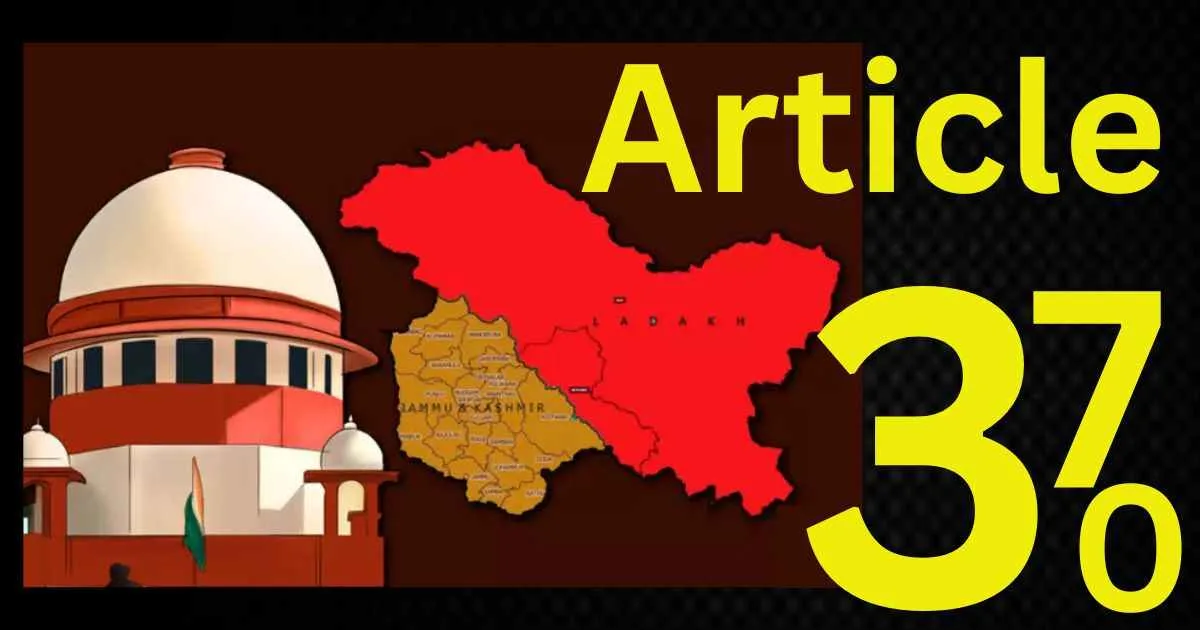
At the same time, Parliament passed the Jammu and Kashmir Reorganisation Act, 2019. This split the state into two Union Territories: Jammu and Kashmir (with a legislature) and Ladakh (without one). The changes took effect on 31 October 2019.

The move came with a communications blackout, curfews, and arrests of local leaders to prevent unrest. It drew mixed reactions—cheers from some parts of India, protests in Kashmir, and concern from abroad.

Legal Challenges and the Supreme Court Verdict

Many challenged the abrogation in the Supreme Court, arguing it was unconstitutional without the state’s consent. They said Article 370 became permanent after the Constituent Assembly dissolved in 1957.

On 11 December 2023, a five-judge bench unanimously upheld the changes. The court called Article 370 ‘temporary’ and said the President had the power to revoke it. It noted the abrogation promoted integration and development.

The judges ordered assembly elections by September 2024 and said Jammu and Kashmir should regain statehood ‘at the earliest’. This ruling ended major legal doubts but left some questions about the process.
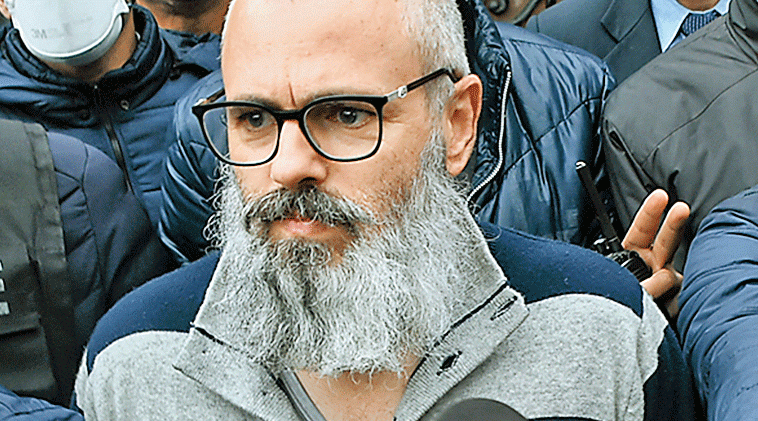
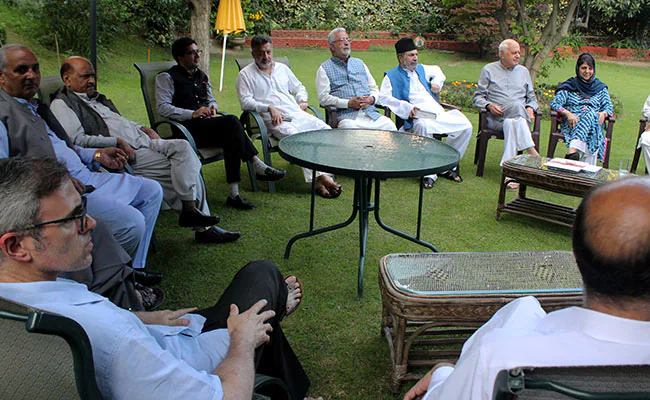
Omar Abdullah. Image Courtesy: PTI

Impacts of Abrogating Article 370 on Jammu and Kashmir

The end of Article 370 brought sweeping changes:

  • Political Shifts: Without special status, Jammu and Kashmir lost its separate constitution and flag. Elections in 2024 brought back a local government after years of central rule.
  • Economic Growth: The government claims investments have risen, with better infrastructure, tourism, and jobs. Laws now allow outsiders to buy land, aiming to boost development. By 2025, on the sixth anniversary, the Prime Minister highlighted improved security and progress.
  • Social Changes: Permanent residency rules ended, opening doors for non-locals. This raised fears of demographic shifts in the Muslim-majority area. Women’s rights improved in some ways, as old discriminatory laws vanished.
  • Security and Human Rights: Supporters say militancy dropped, with fewer attacks. Critics point to ongoing tensions, internet shutdowns, and claims of rights violations.
  • International View: Pakistan condemned the move, straining ties. The UN and others watched closely, but India called it an internal matter.
By 2026, symbols like the Tricolour lighting up Srinagar’s Lal Chowk on Republic Day show greater integration.

Current Status of Article 370 in 2026

As of February 2026, Article 370 remains abrogated. Jammu and Kashmir is a Union Territory with an elected assembly, while Ladakh stays without one. The Supreme Court’s 2023 verdict stands, and statehood restoration is discussed but not yet done.

The region sees ongoing development, but debates continue over autonomy and identity. The abrogation is seen as a step towards unity, yet it divides opinions in Kashmir.

Conclusion

Article 370 shaped Jammu and Kashmir’s place in India for nearly 70 years. Its abrogation in 2019 marked a bold shift towards full integration, upheld by the courts. While it promises growth and equality, it also raises questions about local rights and culture. Understanding Article 370 helps grasp India’s complex federal system and the ongoing Kashmir story. As time passes, its true impact will become clearer.

At 13, This Kashmiri Boy Built 31 Apps and AI Tools

Delhi Court Convicts Kashmiri Separatist Asiya Andrabi in UAPA Case

Today is Anniversary of Abrogation of Article 370

Abrogation of Article 370

On August 5, 2019, the Government of India, led by Prime Minister Narendra Modi and Home Minister Amit Shah, revoked Articles 370 and 35A of the Indian Constitution, fundamentally altering the constitutional status of Jammu and Kashmir. Today, August 5, 2025, marks the sixth anniversary of this historic decision, which ended the special status and autonomy previously granted to the region. The abrogation integrated Jammu and Kashmir fully into the Indian Union, sparking widespread debate and reshaping the region’s political, social, and economic landscape. This article examines the historical context, legal mechanisms, implications, and reactions to this landmark decision, reflecting on its significance six years later.

Historical Context

Origins of Article 370

Article 370, incorporated into the Indian Constitution on October 17, 1949, under Part XXI (“Temporary, Transitional and Special Provisions”), granted Jammu and Kashmir unique autonomy. It allowed the state to have its own constitution, flag, and control over internal affairs, except for defense, foreign affairs, and communications, as stipulated in the Instrument of Accession signed by Maharaja Hari Singh in 1947. This arrangement, negotiated by National Conference leader Sheikh Abdullah, aimed to accommodate Jammu and Kashmir’s accession to India amid the 1947 India-Pakistan conflict over the region.

Intended as a temporary provision, Article 370 permitted the Jammu and Kashmir Constituent Assembly to determine the extent of the Indian Constitution’s applicability. However, when the Constituent Assembly dissolved in 1957 without recommending abrogation, the article’s status became contentious, with some viewing it as permanent and others as transitional.

Article 35A and Permanent Residency

Introduced via the Constitution (Application to Jammu and Kashmir) Order, 1954, under Article 370, Article 35A empowered the state legislature to define “permanent residents” and grant them exclusive rights to property ownership, government jobs, and scholarships. Non-residents were barred from these privileges, a policy rooted in the 1927 laws of the Dogra ruler Hari Singh to protect local interests. Critics highlighted its discriminatory aspects, particularly against women who married non-residents, as their residency rights were revoked, marked as “valid only till marriage.”

Criticisms and Political Debate

Articles 370 and 35A were polarizing. Critics, including the Bharatiya Janata Party (BJP), argued that they fueled separatism, restricted economic growth, and marginalized groups like refugees and women marrying outside the state. The BJP’s 2019 election manifesto pledged to abrogate both articles to fully integrate Jammu and Kashmir with India. Conversely, regional parties like the National Conference and Peoples Democratic Party (PDP) defended the articles, emphasizing their role in preserving the region’s unique cultural and demographic identity.

The Abrogation Process

Legal Mechanism

On August 5, 2019, Home Minister Amit Shah announced in the Rajya Sabha the issuance of the Constitution (Application to Jammu and Kashmir) Order, 2019 (C.O. 272), under Article 370(1). This Presidential Order superseded the 1954 Order, extending all provisions of the Indian Constitution to Jammu and Kashmir, effectively nullifying the state’s separate constitution and autonomy. To address the legal hurdle posed by the dissolved Constituent Assembly, the government amended Article 367, redefining “Constituent Assembly” as “Legislative Assembly.” With the state under President’s Rule, the Governor’s concurrence substituted for the state government’s approval.

On August 6, 2019, a second Presidential Order (C.O. 273) rendered all clauses of Article 370 inoperative except Clause 1, which was amended to confirm the full applicability of the Indian Constitution. Simultaneously, the Jammu and Kashmir Reorganisation Act, 2019, passed with a two-thirds majority in Parliament, bifurcated the state into two Union Territories: Jammu and Kashmir (with a legislative assembly) and Ladakh (without one), placing both under central administration.

Constitutional Challenges

The abrogation faced immediate legal scrutiny. Petitions filed in the Supreme Court argued that the Presidential Orders violated Article 370’s requirement for the Constituent Assembly’s consent and that the reorganization breached Article 3, which governs state boundary changes. Critics invoked the “doctrine of colorable legislation,” claiming an indirect constitutional amendment. On December 11, 2023, a five-judge Constitution Bench, led by Chief Justice D.Y. Chandrachud, upheld the abrogation, ruling that Article 370 was a temporary provision meant to facilitate integration during conflict. The court rejected claims of retained sovereignty, citing the Instrument of Accession and the state’s constitution.

Implications of the Abrogation

Political and Administrative Changes

The abrogation aligned Jammu and Kashmir’s legal and administrative framework with India’s. The Indian Penal Code replaced the Ranbir Penal Code, and central laws, such as the Right to Information Act and Right to Education Act, became applicable. The bifurcation into Union Territories increased central control, raising concerns about reduced political representation, particularly in Ladakh. The Supreme Court mandated assembly elections for Jammu and Kashmir by September 30, 2024, to restore limited statehood, a process still unfolding as of August 2025.

Socio-Economic Impacts

The government touted the abrogation as a catalyst for economic growth, citing increased investment, tourism, and job opportunities due to the removal of property ownership restrictions. Supporters, including the BJP and groups like Panun Kashmir and IkkJutt Jammu, argued it empowered marginalized communities, such as Scheduled Castes, Scheduled Tribes, and displaced Kashmiri Pandits. Critics, however, warned of a potential “demographic shift” in the Muslim-majority region, as non-residents gained property rights, raising fears of cultural and ethnic changes.

Security and Stability

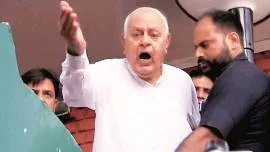
Prior to August 5, 2019, the government deployed thousands of paramilitary troops and imposed restrictions, including house arrests of leaders like Omar Abdullah and Mehbooba Mufti, citing security risks. The government claimed the abrogation reduced terrorism and improved stability, with Solicitor General Tushar Mehta noting increased investments and tourism in court. However, critics argue that unrest persists, and the heavy security presence reflects ongoing tensions.

Gender and Social Equity

The abrogation nullified Article 35A’s gender-discriminatory provisions, granting equal rights to women marrying non-residents. Earlier challenges, like Charu Wali Khanna’s 2017 petition, had criticized Article 35A for violating fundamental rights. However, the loss of permanent residency privileges sparked concerns among locals about access to jobs and resources in a competitive environment.

Reactions and Perspectives

Support for Abrogation

The BJP, supported by parties like the Bahujan Samaj Party and YSR Congress Party, hailed the abrogation as a step toward national unity. Groups like Panun Kashmir, representing displaced Kashmiri Hindus, saw it as enabling their return to the Valley. Celebrations occurred in Jammu and among communities like the Gujjar Bakarwals and Sikhs, who faced prior discrimination. Prime Minister Modi, marking the fifth anniversary in 2024, described it as ensuring “security, dignity, and opportunity for all.”

Opposition and Criticism

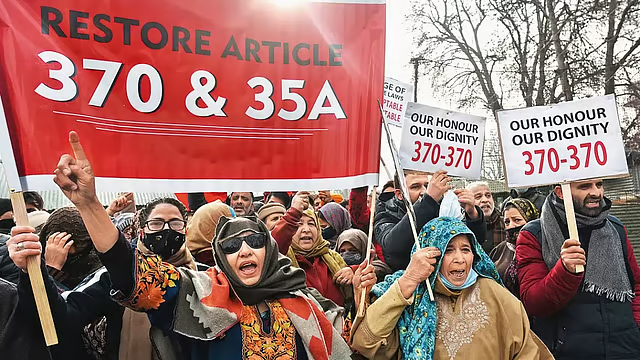
Regional parties, including the National Conference and PDP, condemned the abrogation as an assault on Jammu and Kashmir’s identity. Former Chief Minister Farooq Abdullah, speaking in 2024, questioned the government’s achievements and demanded statehood restoration. Constitutional scholars like Faizan Mustafa argued that the move violated the 1947 Instrument of Accession, potentially fueling sovereignty debates. Pakistan criticized it as violating UN resolutions, while India maintained it was an internal matter.

International and Legal Perspectives

Pakistan and some international actors raised concerns, citing UN Security Council resolutions on Kashmir. The Supreme Court’s 2023 ruling, however, affirmed India’s sovereignty over Jammu and Kashmir, dismissing external claims. Constitutional experts like Subhash Kashyap supported the abrogation’s legality, while others questioned the bypassing of the Constituent Assembly’s consent.

Reflections on the Sixth Anniversary

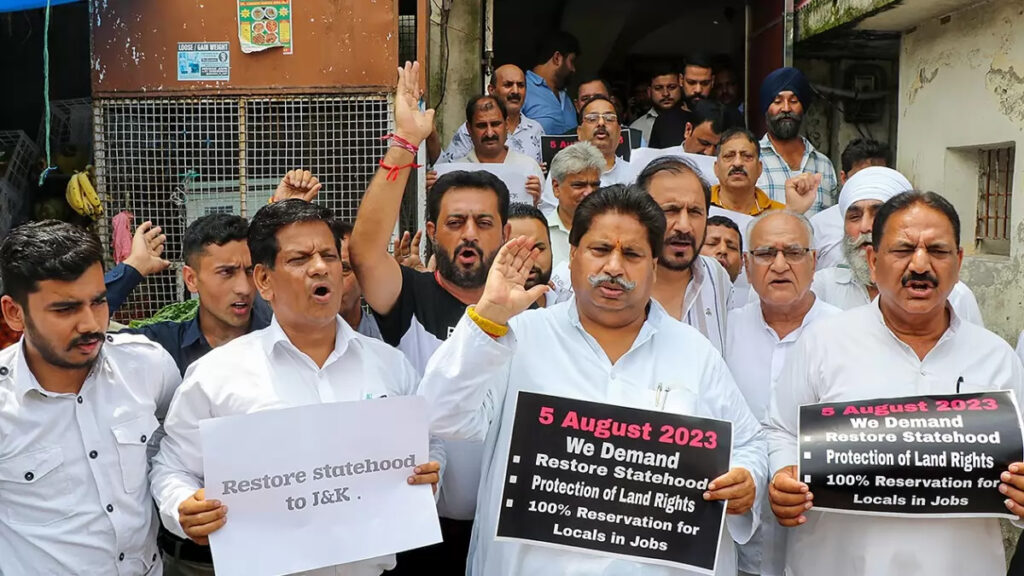
As we mark the sixth anniversary on August 5, 2025, the abrogation’s legacy remains complex. The government highlights economic gains and integration, with X posts from @ANI and @DDNewslive noting celebrations and claims of development. However, opposition voices, including regional leaders, continue to demand statehood and question the region’s political marginalization. The Supreme Court’s directive for elections by September 2024 has yet to fully restore local governance, keeping the region’s future in focus.

Conclusion

The abrogation of Articles 370 and 35A on August 5, 2019, fundamentally transformed Jammu and Kashmir’s relationship with India. Celebrated by some as a step toward unity and development, it remains contentious for eroding regional autonomy and raising demographic concerns. The Supreme Court’s 2023 ruling settled its legality, but political, social, and security challenges persist. On this sixth anniversary, the abrogation continues to shape debates about integration, identity, and governance in Jammu and Kashmir.

Former JKNC MLA Kafil-ur-Rehman Joins PDP

Former IAS Officer G.A. Peer of Seer Hamdan Passes Away in Srinagar After Brief Illness

J&K Political Parties Condemn Assault on SpiceJet Staff by Army Officer at Srinagar Airport