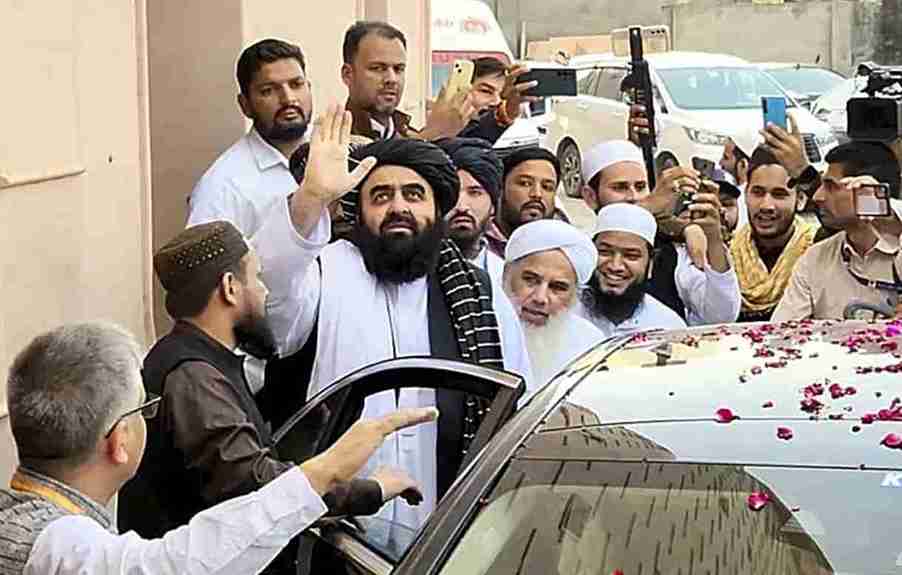
Why Deoband Featured on Taliban Foreign Minister Amir Khan Muttaqi’s India Visit ?

Amir Khan Muttaqi

Afghanistan’s Taliban Foreign Minister, Amir Khan Muttaqi, began a week-long official visit to India in October 2025. His itinerary includes a significant stop at Darul Uloom Deoband, a renowned Islamic seminary in Uttar Pradesh. The visit has attracted widespread attention for its historical, ideological, and diplomatic symbolism.Click Here To Follow Our WhatsApp Channel


The Visit

Amir Khan Muttaqi’s visit marks the highest-level interaction between India and the Taliban regime since the group’s return to power in 2021. His arrival in India comes amid efforts by the Taliban to strengthen regional relations and project a softer image abroad.

While in India, Muttaqi is scheduled to meet Indian officials, engage with Afghan students, and visit key religious and educational centres. Among these, his visit to Darul Uloom Deoband stands out as the most symbolically charged moment of the trip. He is expected to meet senior clerics, tour the seminary’s campus, and interact with students, including several from Afghanistan who are studying there.


What is Darul Uloom Deoband?

Darul Uloom Deoband was founded in 1866 in the town of Deoband, Uttar Pradesh. Over time, it became one of the most respected Islamic seminaries in South Asia. The seminary follows the Hanafi school of Islamic jurisprudence and advocates a reformist, education-based approach to preserving Islamic teachings.

The “Deobandi” school of thought that emerged from this institution spread widely across India, Pakistan, Bangladesh, and Afghanistan. Many religious scholars, teachers, and movements across South Asia trace their spiritual or academic lineage to Deoband. Its influence can be seen in thousands of affiliated madrasas across the region.


Deoband’s Connection to Afghanistan and the Taliban

The link between Deoband and Afghanistan runs deep. For more than a century, Afghan scholars have studied at Darul Uloom Deoband and taken its teachings back home. The Deobandi school’s ideas became popular in Afghanistan during the 20th century, especially among religious students who sought Islamic reform rooted in scholarship rather than politics.

When the Taliban emerged in the 1990s, many of its leaders and clerics were graduates of Pakistani seminaries that themselves followed the Deobandi model. The ideological foundation of the Taliban—its emphasis on Islamic law, education, and social conservatism—reflects this heritage. Visiting Deoband, therefore, carries strong symbolic meaning for the group.

For the Taliban, Darul Uloom Deoband represents their spiritual origin. It is seen as the mother institution of the Deobandi movement, whose teachings shaped the religious outlook of their founders. By visiting Deoband, Amir Khan Muttaqi is reaffirming the historical and ideological link between the Taliban and the broader Deobandi tradition.


Why the Visit Matters

The visit has multiple layers of significance — religious, political, and diplomatic.

1. Affirming Ideological Roots

By visiting Deoband, Muttaqi acknowledges the Taliban’s doctrinal foundation. It is a gesture of respect toward the institution that shaped the religious and intellectual background of many Taliban scholars. The visit also signals to the Taliban’s followers that their movement remains committed to its original Deobandi teachings.

2. “Spiritual Diplomacy”

Muttaqi’s trip is not just political; it also represents what can be called spiritual diplomacy. Instead of focusing on military or economic agendas, the visit is built around cultural and religious connections. Engaging with Deoband allows the Taliban to present themselves as part of a broader Islamic scholarly tradition rather than an isolated militant movement.

3. Expanding Beyond Pakistan

Historically, the Taliban’s religious and logistical support came largely from Pakistan. But this visit to India — particularly to an Indian religious seminary — suggests that the group wants to diversify its relationships. Visiting Deoband gives the Taliban an opportunity to connect with religious institutions in India, signaling that their movement’s spiritual roots go beyond any one country.

4. India’s Perspective

For India, this visit presents both opportunities and challenges. On one hand, it allows New Delhi to open a non-political channel of communication with Afghanistan’s ruling authorities. Cultural and religious exchanges are less controversial than direct diplomatic recognition. On the other hand, India must carefully manage the optics of hosting Taliban officials, given global concerns about the group’s policies.

Nevertheless, India’s decision to allow the visit to Deoband reflects a pragmatic approach. It recognizes that religious diplomacy can play a role in building regional stability and understanding, even between countries with complex histories.

5. Public Relations and Image Building

For the Taliban, the visit also helps project a more moderate image. Engaging with an Indian institution known for scholarly learning allows them to show that they are interested in education, tradition, and dialogue. It is part of the Taliban’s broader effort to appear more open and diplomatic since their return to power.


Potential Outcomes

The Deoband visit could lead to several developments in the coming months and years.

  • Educational Cooperation: More Afghan students may be encouraged to study at Deoband or similar institutions in India. This could revive traditional educational links that existed before decades of conflict disrupted them.
  • Cultural Exchange: The visit might promote greater cultural understanding between India and Afghanistan, rooted in shared South Asian Islamic heritage.
  • Shift in Regional Balance: If the Taliban continue building connections with Indian religious institutions, it could slightly reduce Pakistan’s exclusive influence over the group’s religious and educational landscape.
  • Diplomatic Engagement: Though India does not officially recognize the Taliban government, informal engagements like this could lay the groundwork for future dialogue on issues like trade, security, and humanitarian aid.

Controversies and Concerns

Despite its symbolic value, the visit has sparked mixed reactions.

Some observers view it as an important step toward regional engagement, while others fear it may be seen as legitimizing the Taliban regime. Human rights groups have raised concerns that such visits should not overshadow the Taliban’s restrictions on women’s education and other freedoms in Afghanistan.

For India, there is also a delicate balance to maintain. While religious diplomacy can open doors, any visible closeness with the Taliban could attract criticism from domestic and international audiences. Therefore, the government’s approach has remained cautious — allowing the visit, but keeping it largely limited to religious and cultural grounds.


Deoband’s Position

Darul Uloom Deoband itself remains a respected centre of Islamic education, known for promoting religious scholarship and discipline. It does not involve itself in political activities and often distances itself from political interpretations of its teachings.

Scholars at Deoband are expected to welcome the visiting delegation as part of their tradition of hospitality but are unlikely to make any political statements. Their focus will likely remain on spiritual and educational matters, reinforcing that Deoband’s role is religious, not political.


Broader Meaning

The visit highlights the enduring influence of Deoband in shaping Islamic thought across South Asia. More than a century after its founding, this institution continues to be a point of reference for millions of Muslims across the world. Its reach extends far beyond India’s borders — influencing seminaries, scholars, and movements in Pakistan, Bangladesh, Afghanistan, and beyond.

By returning to the source of their spiritual inspiration, the Taliban leadership is symbolically acknowledging their intellectual debt to Indian scholars. This also shows how religious ideas, unlike political boundaries, have long connected the peoples of South Asia.


The Road Ahead

Whether this visit leads to real change remains to be seen. Symbolism alone cannot replace substantive progress. But it does create space for dialogue, understanding, and education — all of which are essential for peace in the region.

For the Taliban, visits like these can help soften their international image and create opportunities for cooperation beyond politics. For India, it’s a reminder of how its cultural and religious institutions can serve as bridges of influence and dialogue even with complex neighbours.

Ultimately, Amir Khan Muttaqi’s visit to Darul Uloom Deoband is more than a courtesy call. It represents an intersection of history, faith, and diplomacy — where religion becomes a medium of communication between two nations with deep, intertwined pasts. Whether this connection leads to constructive engagement or remains a symbolic gesture will depend on the willingness of both sides to build on shared heritage for a more stable future.


Watch Dr. Tariq Rasool’s Message to Kashmir’s Apple Orchard Owners: Diseases, Causes

A Reflection on Surat-al-Ankabut : Faith, Effort, and the Delusion of Self-Sufficiency

Mehbooba Mufti Criticizes Government for Criminalizing Kashmiris, Condemns Seizure of Geelani’s Widow’s Home

Taliban Foreign Minister Amir Khan Muttaqi’s Historic Visit to Darul Uloom Deoband Marks New Phase in India–Afghanistan Relations

Amir Khan Muttaqi

Amir Khan Muttaqi, the Acting Foreign Minister of Afghanistan’s Taliban-led government, made a significant visit to Darul Uloom Deoband, a renowned Islamic seminary in Saharanpur, Uttar Pradesh, India. This visit, part of a six-day official trip to India from October 9 to October 16, marked a historic moment as the first high-level Taliban engagement in India since the group’s return to power in 2021. Facilitated by a temporary exemption from the UN Security Council’s Taliban Sanctions Committee, Muttaqi’s visit to Deoband highlighted the deep ideological and historical ties between Afghanistan and the Deobandi movement, while also signaling a new chapter in India-Afghanistan relations.

Background and Context

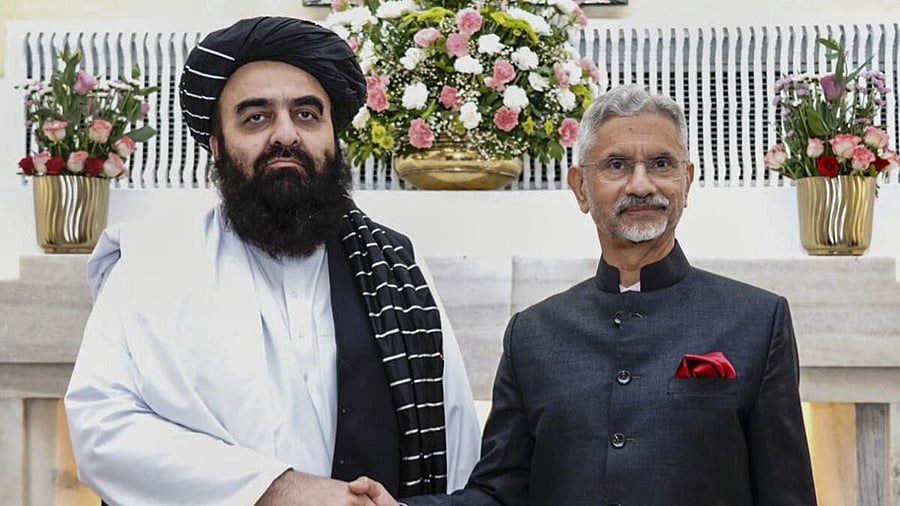
Muttaqi’s trip to India began on October 9, 2025, with his arrival in New Delhi, where he held high-level discussions with India’s External Affairs Minister, S. Jaishankar, on October 10. The talks focused on critical issues such as security, trade, counter-terrorism, and regional stability. India reiterated its stance that Afghan soil must not be used for terrorist activities, a concern rooted in the region’s complex security dynamics. In response, Muttaqi assured that the Taliban government was committed to preventing Afghanistan from becoming a haven for international terrorist groups. Addressing the media, he emphasized the Taliban’s vision of a “strong Islamic Emirate” free from external threats.

The visit to Darul Uloom Deoband on October 11 was a carefully planned stop, reflecting the seminary’s profound influence on Afghan religious and political thought. Founded in 1866, Darul Uloom Deoband is one of South Asia’s most prestigious Islamic institutions, known for shaping the Deobandi school of Sunni Islam. This movement, emphasizing Islamic reform, strict adherence to Hanafi jurisprudence, and anti-colonial resistance, has significantly influenced Afghanistan’s religious landscape. Many Taliban leaders, as well as scholars from seminaries like Darul Uloom Haqqania in Pakistan, trace their intellectual lineage to Deoband’s teachings. The institution is often referred to as the “spiritual center” (roohani markaz) for the Deobandi movement, making Muttaqi’s visit both symbolically and diplomatically significant.

Muttaqi framed the visit as an effort to “reconnect and restore historic ties” between Afghanistan and Deoband, distancing the Taliban from Pakistan’s Deobandi networks and asserting ideological independence. The visit was described as an act of “religious diplomacy,” underscoring the Taliban’s attempt to present themselves as legitimate heirs to a scholarly tradition rather than merely a militant group.

Details of the Visit

Arrival and Reception

Muttaqi arrived at Darul Uloom Deoband at approximately 11:00 AM IST on October 11, 2025, for a four-hour visit. He was warmly welcomed by the seminary’s leadership, including Rector Mufti Abul Qasim Nomani, the Mohtamim (chancellor), and Maulana Arshad Madani, President of Jamiat Ulama-e-Hind, a prominent Deobandi-affiliated organization. The reception was marked by a sense of camaraderie, reflecting the long-standing educational and scholarly connections between Afghanistan and the institution. Maulana Arshad Madani referred to Deoband as the Taliban’s “Madar-e-Ilmi” (intellectual cradle), highlighting its role in shaping Afghan Islamic scholarship.

Interactions with Students and Faculty

During his visit, Muttaqi engaged with approximately 12 Afghan students enrolled in the Daura-e-Hadith program, a prestigious year-long course focused on advanced Hadith studies. These students represent a continuation of the historical flow of Afghan scholars to Deoband, a tradition dating back to the 19th century. Muttaqi’s interactions were described as cordial, with discussions centered on the importance of Islamic education and the role of Deoband in fostering scholarly exchange.

He also toured the seminary’s historic library, one of the largest repositories of Islamic manuscripts in South Asia, which houses rare texts on theology, jurisprudence, and Hadith. The visit to the library underscored the Taliban’s interest in reinforcing their scholarly credentials through association with Deoband’s intellectual legacy.

Public Address

At 3:00 PM IST, Muttaqi delivered a public address to an audience of students, faculty, and local community members. In his speech, he expressed gratitude for the warm hospitality and emphasized the shared history between Afghanistan and Darul Uloom Deoband. He voiced hope for increased Afghan student enrollment at the seminary, signaling a desire to strengthen educational ties. The address was well-received, with attendees noting Muttaqi’s focus on unity and mutual respect.

Security Arrangements

Given the high-profile and sensitive nature of the visit, extensive security measures were put in place. Local police, in coordination with intelligence agencies, deployed comprehensive security arrangements around the seminary. The presence of security personnel ensured a smooth and incident-free visit, reflecting India’s cautious approach to hosting a Taliban official.

Significance of the Visit

Historical and Ideological Ties

The visit to Darul Uloom Deoband holds profound significance due to the seminary’s historical influence on Afghanistan. Since its founding, Deoband has been a beacon of Islamic scholarship, attracting students from across the Muslim world, including Afghanistan. Afghan scholars who studied at Deoband in the 19th and 20th centuries played a key role in spreading Deobandi ideas, which later influenced the Taliban’s ideological framework. By visiting Deoband, Muttaqi sought to reaffirm these ties, positioning the Taliban as a movement rooted in scholarly tradition rather than solely in militancy.

The visit also served to distinguish the Taliban’s Afghan identity from Pakistan’s Deobandi networks, particularly seminaries like Darul Uloom Haqqania, often dubbed the “Taliban’s university.” By engaging directly with Deoband, the Taliban signaled a desire to reclaim their intellectual heritage independently of Pakistani influence.

Diplomatic Implications

Muttaqi’s visit is a milestone in India-Afghanistan relations, which have been cautious but pragmatic since the Taliban’s 2021 takeover. India has provided humanitarian aid to Afghanistan, including food, medicine, and educational support, but has stopped short of formally recognizing the Taliban government. The Deoband visit offers India an opportunity for “theological engagement,” a soft-power approach to influence Taliban policies, particularly on contentious issues like women’s rights and governance inclusivity.

However, the visit has sparked debate in India. Supporters view it as a pragmatic step to engage with Afghanistan’s de facto government and secure India’s regional interests, especially in countering terrorism. Critics, however, argue that hosting a Taliban official risks legitimizing a regime with a controversial human rights record, particularly its restrictions on women’s education and employment.

Regional and Global Context

The visit comes amid growing international pressure on the Taliban to moderate its policies. Countries like India, China, and Russia have engaged with the Taliban to varying degrees, driven by strategic interests in regional stability and counter-terrorism. Muttaqi’s visit to Deoband, coupled with his meetings in New Delhi, reflects the Taliban’s efforts to gain international legitimacy while maintaining their Islamic identity.

Post-Deoband Itinerary

Following the Deoband visit, Muttaqi’s itinerary included a visit to the Taj Mahal in Agra on October 12, 2025, showcasing India’s cultural heritage. On October 13, he was scheduled to engage with Indian business leaders through the Federation of Indian Chambers of Commerce and Industry (FICCI) to explore trade opportunities. Additional engagements included addresses at think tanks like the Vivekananda International Foundation and meetings with Afghan diaspora communities in India, underscoring the multifaceted nature of his trip.

Public and Media Reactions

Recent posts on X captured live footage of Muttaqi’s arrival at Darul Uloom Deoband, with clips showing a warm reception and excerpts from his address. Indian media outlets reported mixed reactions, with some praising the visit as a bold diplomatic move and others questioning its implications. Afghan diaspora members expressed cautious optimism, hoping the visit would foster educational exchanges and improve bilateral ties.

Conclusion

Mawlawi Amir Khan Muttaqi’s visit to Darul Uloom Deoband on October 11, 2025, was a landmark event, blending religious diplomacy with strategic outreach. By reconnecting with the intellectual cradle of the Deobandi movement, the Taliban sought to reinforce their scholarly legitimacy while strengthening ties with India. For India, the visit offered a chance to engage with Afghanistan’s leadership through a unique lens of shared history and ideology. As the Taliban navigates global isolation and India balances pragmatic diplomacy with domestic concerns, the Deoband visit will likely remain a pivotal moment in shaping future bilateral relations.

Watch Dr. Tariq Rasool’s Message to Kashmir’s Apple Orchard Owners: Diseases, Causes

A Reflection on Surat-al-Ankabut : Faith, Effort, and the Delusion of Self-Sufficiency

Mehbooba Mufti Criticizes Government for Criminalizing Kashmiris, Condemns Seizure of Geelani’s Widow’s Home

Taliban FM Amir Khan Muttaqi’s India Visit Marks Major Diplomatic Shift Amid Strained Pakistan Ties

Taliban FM Amir Khan Muttaqi

On October 9, 2025, Taliban Acting Foreign Minister Amir Khan Muttaqi arrived in New Delhi for an eight-day visit, marking the highest-level engagement between India and the Taliban regime since the group’s return to power in August 2021. This trip, facilitated by a temporary UN Security Council waiver exempting Muttaqi from long-standing sanctions, came on the heels of his participation in the Moscow Format talks and underscored a significant thaw in India-Afghanistan relations. Amid escalating tensions with Pakistan, including Pakistani airstrikes on Afghan soil just hours before key meetings, Muttaqi’s statements from Indian territory delivered a pointed rebuke to Islamabad on cross-border terrorism. This analysis delves into the visit’s context, key developments, and broader implications, drawing on strategic, security, and geopolitical lenses to explore how this engagement reshapes South Asian dynamics.

Afghan Diplomacy: Taliban Vows No Threat to India

Background: From Hostility to Pragmatic Engagement

India’s relationship with the Taliban has historically been fraught with suspicion. During the Taliban’s first rule (1996-2001), India viewed the group as a Pakistani proxy, particularly after events like the 1999 IC-814 hijacking and the sheltering of anti-India militants such as Al Qaeda. Post-2001, India invested over $3 billion in the US-backed Afghan Republic, supporting infrastructure and development while aligning against the Taliban insurgency. The 2021 Taliban takeover prompted India to evacuate its personnel and close its embassy in Kabul, halting visa issuances due to security fears.

However, realpolitik has driven a gradual reset. By June 2022, India reopened a technical mission in Kabul to manage humanitarian aid, and unannounced visits by Taliban officials to Delhi built trust. Key milestones included a January 2025 meeting in Dubai between Muttaqi and India’s Foreign Secretary Vikram Misri, and India’s response to the April 2025 Pahalgam terror attack in Jammu and Kashmir, where the Taliban condemned the incident—a rare alignment that facilitated deeper dialogue. The September 2025 earthquake in Afghanistan further accelerated ties, with India delivering aid via Iran’s Chabahar port, positioning itself as Kabul’s “first responder.”

Meanwhile, Taliban-Pakistan relations have soured dramatically. Once close allies, the two now trade accusations: Pakistan blames the Taliban for harboring Tehreek-e-Taliban Pakistan (TTP) militants, leading to airstrikes, while the Taliban counters that Islamabad seeks to destabilize Afghanistan. This rift has created space for the Taliban to diversify partnerships, hedging against over-reliance on Pakistan and seeking legitimacy from neighbors like India.

Key Events of the Visit

Muttaqi’s itinerary included bilateral talks with External Affairs Minister S. Jaishankar on October 10, focusing on diplomatic, trade, economic, and regional issues. In a joint press conference, Jaishankar announced India’s decision to upgrade its Kabul mission to a full embassy, signaling de facto engagement without formal recognition. Muttaqi hailed India as a “close friend,” emphasizing mutual respect, trade, and people-to-people ties, and proposed a consultative mechanism for stronger relations. He also suggested joint India-Afghanistan-US talks to address trade barriers, such as tariffs imposed by US President Donald Trump.

The visit extended beyond Delhi, with Muttaqi scheduled to meet Indian business leaders, visit the Taj Mahal, and tour the Darul Uloom Deoband seminary in Uttar Pradesh—a nod to cultural and religious linkages. Notably, Pakistan’s airstrikes on alleged TTP hideouts in Kabul, killing 30 militants just before the Jaishankar-Muttaqi meeting, added urgency to discussions on security.

Muttaqi’s Message on Terrorism: A Veiled Warning to Pakistan

The visit’s centerpiece was Muttaqi’s assurances on counterterrorism, framed as a direct swipe at Pakistan. He asserted that the Taliban has “eliminated all terror groups” from Afghan soil over the past four years, including Lashkar-e-Taiba (LeT) and Jaish-e-Mohammad (JeM), claiming “not a single one of them is in Afghanistan” and that “not an inch of land is controlled by them.” Muttaqi urged other countries—implicitly Pakistan—to “act against such terror groups like Afghanistan did for peace.”

In a stern warning, he stated: “The courage of Afghans should not be tested. If someone wants to do this, they should ask the Soviet Union, America, and NATO, so they can explain that it is not good to play games with Afghanistan.” He accused Pakistan of a recent border blast and airstrikes, calling them “wrong” and “provocative,” and emphasized that problems cannot be resolved through violence. Jaishankar echoed this, labeling cross-border terrorism a “shared threat” and subtly referencing Pakistan’s occupation of Kashmir by calling Afghanistan a “contiguous neighbor.”

Security Implications: Countering Threats Amid Distrust

At its core, the visit addresses India’s security concerns over Afghanistan-based militants targeting its interests, particularly in Kashmir. The Taliban’s pledges align with India’s priorities, as evidenced by their condemnation of the Pahalgam attack and assurances against groups like ISKP, Al Qaeda, AQIS, LeT, and JeM. Experts note this as a “convergence of security interests,” where India prioritizes pragmatism over ideological differences, such as the Taliban’s restrictions on women and minorities.

For Pakistan, Muttaqi’s rhetoric exposes vulnerabilities: Islamabad’s accusations against Kabul for TTP safe havens are countered by Taliban claims of Pakistani-sponsored destabilization. This could escalate border clashes, with Pakistan’s Defense Minister warning that “patience has run out.” Substantiated reports of internal Taliban fissures—pro- and anti-Pakistan factions—add complexity, potentially spilling over into regional instability.

Economic and Trade Aspects: Opening Routes for Growth

Economically, the visit pushes for open trade corridors, including via Chabahar port, to boost bilateral trade. Muttaqi reiterated demands for more visas, investments, and resumed infrastructure projects, while India eyes Afghanistan’s mineral reserves. This aligns with regional frameworks like the Moscow Format, promoting Afghan participation in economic projects to counter China-Pakistan influence via the China-Pakistan Economic Corridor (CPEC).

AspectIndia-Afghanistan BenefitsChallenges for Pakistan
Trade RoutesEnhanced access via Chabahar; joint US talks on tariffs.Reduced leverage over Afghan transit; counters CPEC dominance.
Aid & InvestmentHumanitarian support (e.g., earthquake relief); mineral exploration.Isolation amid refugee deportations and border closures.
ConnectivityLinks to Central Asia; people-to-people ties.Heightened competition in regional trade hubs.

Geopolitical Ramifications: A Shift in Alliances

Geopolitically, the visit signals the Taliban’s quest for legitimacy, with Russia as the first to grant de jure recognition in July 2025, followed by engagements from China, Iran, and Central Asia. For India, it counters Chinese and Pakistani influence, secures borders, and integrates Afghanistan into South-Central Asian connectivity. Analysts like Brahma Chellaney describe it as a “cautious reset,” prioritizing strategic interests over values.

Pakistan faces isolation: the Taliban’s independence challenges its historical control, potentially opening avenues for Indian support to anti-Pakistan elements like TTP or BLA, though unsubstantiated. Broader effects include messages to the US (opposing military bases) and a multipolar shift, with India hedging against US-Pakistan realignment under Trump.

Challenges and Criticisms: Balancing Pragmatism with Principles

Critics highlight risks: the Taliban’s unreliability on women’s rights and minorities could undermine long-term ties, and India’s engagement might tacitly legitimize the regime without formal recognition. Domestically, it contrasts with past arrests of Indian Muslims for Taliban sympathies, drawing irony from opposition figures. For the Taliban, over-engagement with India risks alienating Pakistan and China.

In conclusion, Muttaqi’s visit represents a calculated convergence of interests, with his anti-terrorism message isolating Pakistan while advancing India-Afghanistan ties. This could foster regional stability if sustained, but hinges on verifiable actions against militants and economic deliverables. As one expert notes, it’s a “setback for Pakistan,” reshaping alliances in a volatile neighborhood.

Watch Dr. Tariq Rasool’s Message to Kashmir’s Apple Orchard Owners: Diseases, Causes

A Reflection on Surat-al-Ankabut : Faith, Effort, and the Delusion of Self-Sufficiency
Mehbooba Mufti Criticizes Government for Criminalizing Kashmiris, Condemns Seizure of Geelani’s Widow’s Home