Al-Falah University Under Spotlight: History, Growth, Leadership, and Rising Institutional Concerns

Al-Falah University

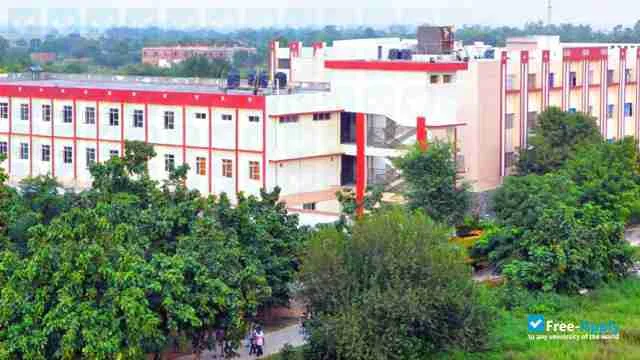
Al-Falah University (AFU) is a private university located in Faridabad, Haryana, India, approximately 27-30 km from the Delhi border. Established in 2014 by the Al-Falah Charitable Trust through the Haryana Private Universities (Amendment) Act, 2014, it spans a 70-acre campus in the village of Dhauj (Tikri Kheda, Fatehpur Taga Road). The trust, formed in 1995, initially started an engineering college in 1997, which evolved into the full university recognized by the University Grants Commission (UGC) in 2015 and the Association of Indian Universities (AIU). AFU operates as a Muslim minority institution, emphasizing multidisciplinary education with a focus on engineering, medical sciences, humanities, and more. It has come under intense national scrutiny in November 2025 due to its alleged links to the Delhi Red Fort car bomb blast on November 10, 2025, which killed 13 people and injured dozens.

The university’s official website (alfalahuniversity.edu.in) appears to be under maintenance or restricted access as of November 15, 2025, displaying only a placeholder message for site owners to log in. Its medical school’s site (alfalahmedical.org) remains active, promoting diagnostic services, outpatient care, and a blood bank, but omits any reference to recent controversies.

History and Founding

  • Founding: Established by the Al-Falah Charitable Trust, chaired by Javed Ahmed Siddiqui, an engineering graduate from Devi Ahilya Vishwavidyalaya, Indore. Siddiqui, the managing trustee, has a controversial past, including a 2000 conviction in a ₹7.5 crore investment fraud case involving Al-Falah Investments Ltd., where he was jailed from 2001-2004 for cheating, forgery, and criminal breach of trust.
  • Evolution: Began as Al-Falah School of Engineering & Technology in 1997. Upgraded to university status in 2014. The medical wing, Al-Falah School of Medical Sciences and Research Centre (AFSMRC), was approved in 2019 by the National Medical Commission (NMC) despite Siddiqui’s criminal record, raising questions about regulatory vetting.
  • Leadership: Vice-Chancellor is Dr. Bhupinder Kaur Anand; Dean of AFSMRC is Maj Gen (Dr) Pradeep Kumar Singh (retd.). Siddiqui directs nine affiliated companies under the trust, spanning finance, education, IT, energy, and healthcare, all registered at Al-Falah House in Okhla, Delhi.

Academic Programs and Facilities

AFU offers a range of UG, PG, diploma, and PhD programs across multiple schools. The flagship is its medical education through AFSMRC, affiliated with the university and attached to a 650-bed hospital. Key facilities include lecture halls, labs, a well-stocked library, seminar halls, auditorium, sports grounds, hostels, and a blood bank.

School/DepartmentKey Programs OfferedDurationAnnual Fee (Approx., INR)Intake/Seats
Medical Sciences & Research CentreMBBS, MD/MS (upcoming), BDS, B.PharmMBBS: 5.5 yrs (incl. internship)12-16.37 Lakh (Years 1-4); 9 Lakh (Year 5)MBBS: 150-200
Engineering & TechnologyB.Tech, M.Tech in various specializations4 yrs (UG)1-1.5 LakhVaries
Education & TrainingB.Ed, M.Ed2 yrs50,000-80,000Varies
Computer ScienceBCA, MCA3 yrs (UG)60,000-1 LakhVaries
Humanities & LanguagesBA, MA in Arts, Languages3 yrs (UG)30,000-50,000Varies
Commerce & ManagementBBA, MBA3 yrs (UG)80,000-1.2 LakhVaries
Physical & Molecular SciencesBSc/MSc in Sciences3 yrs (UG)40,000-70,000Varies
PolytechnicDiploma in Engineering3 yrs50,000-70,000Varies
  • Admissions: Primarily merit/entrance-based; MBBS via NEET UG (50% AIQ, 50% state quota). PG via NEET PG. As a minority institution, it prioritizes Muslim candidates.
  • Accreditations: UGC-recognized; AIU member; NMC-approved for medical programs. NAAC A-grade for some schools (e.g., Engineering, Education), but under dispute.
  • Student Reviews: Rated 3.8/5 on platforms like Shiksha for faculty (4/5), infrastructure, and placements. Praised for supportive faculty and serene campus; criticized for high fees and limited extracurriculars.

Total enrollment: ~2,000-3,000 students, with ~200 in MBBS.

Recent Controversies and Investigations (November 2025)

AFU has been at the center of the probe into the Jaish-e-Mohammed (JeM)-linked Red Fort blast, described as a “white-collar terror module” involving radicalized medical professionals. Key developments:

  • Blast Links: Three arrested doctors—Dr. Shaheen Saeed, Dr. Mujammil Shakeel, and Dr. Shaheen Shahid—from AFSMRC. Diaries revealed a two-year conspiracy with coded attack plans. Fugitive bomber Dr. Umar un Nabi (DNA-matched) rented rooms off-campus where 2,900 kg of ammonium nitrate was seized. Nisar Ul Hassan, a professor fired by J&K Lt. Gov. Manoj Sinha in 2023 for security risks, was hired by AFU.
  • Missing Personnel: 15 Islamic doctors and an MBBS student reportedly vanished post-blast; NIA arrested the student on November 15 for extremist links (family denies).
  • Raids and Detentions: Delhi Police detained three more (two AFU doctors from Nuh, Haryana) on November 15. Seven-hour search at Okhla head office; questioned 52 doctors on campus. Haryana Police found a suspect’s Suzuki Brezza on-site.
  • Regulatory Actions:
  • NAAC show-cause notice (Nov 13) for false accreditation claims; prohibited AIU logo use.
  • UGC flagged irregularities; NMC monitoring for potential medical status revocation.
  • Delhi Police filed two FIRs (Nov 15): one for cheating, one for forgery (under IPC 420, 468, etc.).
  • Other Issues: Website hacked on Nov 12 by “Indian Cyber Alliance” warning against “radical Islamic activities.” Suspicions of lab misuse for explosives; funding probes by Enforcement Directorate linking to Siddiqui’s firms.
  • University Response: Legal advisor Mohd Razi called charges “baseless”; no comment on recruitments. Operations continue, with notices for MBBS/PG admissions 2025-26 and PhD notices.
Timeline of Key Events (Nov 2025)Details
Nov 10Red Fort blast; AFU links emerge.
Nov 12Explosives seizure; website hack.
Nov 13NAAC notice; car found on campus.
Nov 1452 doctors questioned; 15 missing reported.
Nov 15NIA student arrest; two FIRs; three more detentions.

Broader Implications

The scandal exposes vetting gaps in minority institutions, especially medical approvals. While AFU promotes “ethical education and social responsibility,” investigations suggest opaque funding and radicalization risks. No further blasts reported, but security is heightened. As of November 15, 2025, the university faces potential closure or restrictions, with probes ongoing into Siddiqui’s network and cross-border ties. For admissions or queries, contact +91-9310332706 (official helpline).

Red Fort Blast Probe Widens: Al-Falah University, Fraud Case, and White-Collar Terror Links Under Scrutiny

Al-Falah University

The probe into the deadly Red Fort blast of 10 November 2025 has expanded far beyond the original crime scene, exposing a web of radicalisation, financial irregularities, and questionable institutional practices centred around Al-Falah University in Faridabad. The widening investigation—spanning Delhi, Haryana, and Madhya Pradesh—now points to a complex “white-collar terror module” involving doctors, university officials, and a decades-old fraud case that has suddenly regained national attention.Click Here To Follow Our WhatsApp Channel


Deadly Blast and the Unfolding Terror Plot

A powerful car bomb exploded near the Red Fort Metro Station on 10 November, killing 13 people and injuring dozens. The explosion, linked to Pakistan-based Jaish-e-Mohammed (JeM), was reportedly part of a wider plan involving as many as 32 vehicle-borne IEDs. Investigators believe the attacks were timed to coincide with the Babri Masjid demolition anniversary, raising fears of an attempt to destabilise the capital during a sensitive period.

The plot thickened further when Delhi Police uncovered links to a group of radicalised medical professionals from Al-Falah University of Medical Sciences and Research Centre in Faridabad. Among those arrested were Dr Shaheen Saeed, Dr Mujammil Shakeel, and Dr Shaheen Shahid, whose homes yielded coded diaries, notebooks, and evidence of two years of covert planning.


Al-Falah University Under the Scanner

The arrests quickly placed Al-Falah University under intense national scrutiny. What was initially viewed as an isolated case of radicalisation has now expanded into a wider examination of the university’s governance, recruitment practices, and financial structure.

Investigators are looking closely at the role of the university’s founder and managing trustee, Javed Ahmed Siddiqui, after discovering that several of the arrested doctors had close ties with departments under his control. Siddiqui’s long corporate history, which includes directorships in multiple companies linked to the Al-Falah Trust, has come under renewed scrutiny—especially in light of his past criminal record.

On 12 November, the university’s official website was hacked by a group calling itself the Indian Cyber Alliance, which posted warnings against “radical Islamic activities.” The cyber-attack pushed the university deeper into the national spotlight, drawing attention to gaps in its oversight mechanisms.


A 2000 Fraud Case Returns to Haunt Siddiqui

At the centre of the revived controversy is a ₹7.5 crore fraud case from 2000 linked to Al-Falah Investments, a company Siddiqui directed since 1992.

According to the FIR (No. 43/2000, New Friends Colony Police Station), Siddiqui and his brother Saood Ahmed allegedly lured investors with promises of high returns, then forged documents to convert deposits into shares and diverted the funds into personal accounts. The case involved IPC sections related to cheating, forgery, breach of trust, and criminal conspiracy.

Key details from the case include:

  • Arrest & Jail Term: Siddiqui was arrested in 2001 and spent more than three years in jail.
  • Bail Rejected: In 2003, the Delhi High Court refused bail after forensic reports confirmed forged signatures on share certificates.
  • University Response: The university’s legal advisor, Mohd Razi, dismissed the old allegations as “baseless,” claiming no role in staff recruitment.

The timing of the resurfaced case is significant, as the Enforcement Directorate (ED) has already been investigating the university’s funding sources for possible irregularities.


A Network of Nine Companies Under Review

Ministry of Corporate Affairs records show Siddiqui as a director in nine firms, all linked to the Al-Falah Trust and sharing the same Okhla address. These include entities in education, engineering, software, consultancy, energy, and export-import sectors.

Companies Connected to Siddiqui

Company NameSectorNotes
Al-Falah Investments Ltd.FinanceCentral to the 2000 fraud case.
Al-Falah School of Engineering & TechnologyEducationPrecursor to the university.
Brown Hills College of Engineering & TechnologyEducationPart of the trust’s expansion.
Al-Falah School of Education & TrainingEducationNAAC A-grade claim now under review.
Al-Falah Software Solutions Pvt. Ltd.ITPossible overlap with university systems.
Al-Falah Energy VenturesEnergyNew venture post-fraud conviction.
Al-Falah Export-Import Pvt. Ltd.TradingBeing checked for funding trails.
Al-Falah Consultancy ServicesConsultingMay link operations across firms.
Al-Falah Medical Research FoundationHealth ResearchDirectly connected to arrested doctors.

Agencies suspect that this wide corporate structure may have enabled financial overlaps, though no direct terror-funding charge has been made against Siddiqui yet.


Key Suspects and Expanding Investigations

DNA analysis confirmed that the Red Fort bomber was Dr Umar un Nabi, a fugitive associated with the Faridabad explosives seizure of 2,900 kg earlier this year. He went missing shortly after the arrest of the doctors, raising questions about a deeper network.

Another individual, Nisar Ul Hassan, earlier labelled a “potential time-bomb” by the J&K Lieutenant Governor, was also found to be linked to Al-Falah University, further complicating the picture.

Raids have now extended to:

  • Siddiqui’s office in Okhla, Delhi
  • His hometown Mhow in Madhya Pradesh
  • Residences of doctors, administrators, and staff connected to the university

The widening scope suggests the possibility of sleeper cells embedded within academic institutions.


Regulatory Concerns and National Security Implications

The scandal has prompted fresh questions about how Al-Falah University received approval for a medical college in 2019 despite Siddiqui’s criminal history and unresolved financial cases.

The National Assessment and Accreditation Council (NAAC) has issued a show-cause notice after finding that the university falsely claimed accreditation on its website—adding another layer of regulatory concern.

Security agencies believe the case reveals a dangerous intersection of higher education, financial crime, and radicalisation, where professional respectability was used to mask extremist activities.


Conclusion: A Case With Far-Reaching Consequences

As of 15 November 2025, no further explosions have occurred, but Delhi remains on high alert. For investigators, the blast is no longer just a terror attack—it is a window into how educated professionals, corporate networks, and institutional gaps can converge to create threats far larger than a single bombing.

With multiple agencies involved and new leads emerging daily, the Red Fort blast case is shaping into one of India’s most significant counterterror investigations in recent years, raising uncomfortable questions about oversight, accountability, and national security.

Suspicious Brezza Found at Al-Falah University as Agencies Tighten Probe Into Delhi Red Fort Blast

Al-Falah University

A suspicious Brezza car was found at Al-Falah University in Dhauj, Faridabad, on Thursday and is currently under investigation by the Jammu and Kashmir Police, said Faridabad police.

Later, a Haryana Police vehicle marked “Bomb Disposal Squad,” carrying several personnel, entered the campus shortly after the alert was raised.

This comes after multiple residents of Jammu and Kashmir have been arrested for allegedly being part of a terror module which possibly planned for multiple terror attacks to be carried out across various locations.

Meanwhile, fresh CCTV footage has surfaced showing the prime accused, Dr Umar Un Nabi, entering the national capital through the Badarpur border in an i20 car, further tightening the net around the accused in the ongoing blast investigation.

In the footage, Umar was seen arriving at the Badarpur toll plaza, where he stops his vehicle, takes out cash, and hands it to the toll collector.

Security agencies have recovered the diaries of Delhi blast case accused Dr Umar and Dr Muzammil, which mention the dates November 8 to 12, indicating that the planning was underway for such an incident during that period, sources said.

According to the sources, the diary also contained the names of approximately 25 individuals, most of whom hailed from Jammu and Kashmir and Faridabad.

Meanwhile, a detailed investigation is underway at the site of the car blast that occurred near the Red Fort in Delhi, with personnel from the Delhi Police and other central agencies jointly conducting the probe on Thursday.

The area has been cordoned off, and forensic teams are examining the remnants of the vehicle to determine the cause and nature of the explosion.

A joint team of Forensic Science Laboratory (FSL) and Delhi Police on Thursday recovered a body part in New Lajpat Rai Market, near the blast site in the national capital, which claimed 12 lives. (ANI)