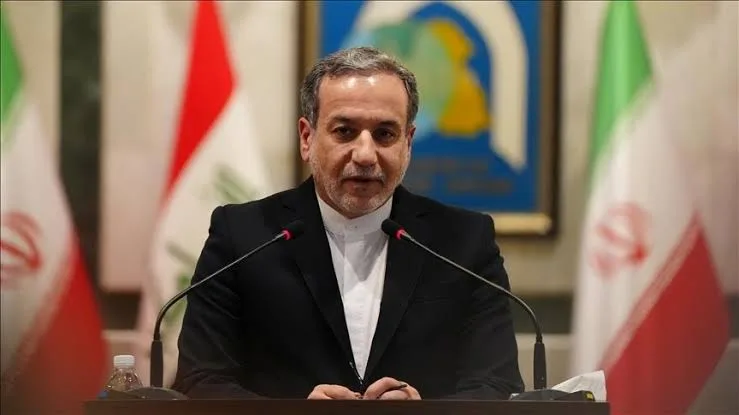
Iran Says Strait of Hormuz Open to Global Shipping but Not for US and Israeli Ships
Iran’s Foreign Minister Abbas Araghchi has said the Strait of Hormuz remains open to international shipping, but warned that vessels linked to the United States and Israel would not be allowed to pass through the route.
According to a report by The Jerusalem Post, Araghchi made the remarks during an interview with the US news outlet MS NOW. Click Here To Follow Our WhatsApp Channel
Strait Still Open for Most International Ships
Araghchi said that despite rising tensions in the region, the crucial waterway has not been closed to global maritime traffic.
However, he made it clear that Iran considers the passage restricted for ships connected to the United States and Israel.
“The Strait of Hormuz is only closed to US and Israeli ships,” Araghchi said during the interview.
He added that many ships and oil tankers are still passing through the strait. However, some international shipping companies have chosen to avoid the route because of growing security concerns in the region.
According to Araghchi, those concerns are not related to Iran’s actions.
Trump Suggests Warships Could Protect Shipping Route
The remarks come at a time of increasing tension between Iran, the United States and Israel.
US President Donald Trump recently said that Washington and several partner countries could deploy warships to the region to ensure the shipping route remains open.
In a message on Truth Social, Trump said the United States was working with countries affected by what he described as Iran’s attempt to restrict the waterway.
He also mentioned that countries such as China, France, Japan, South Korea, and the United Kingdom depend on the strait for energy shipments and could take part in efforts to keep it secure.
The Strait of Hormuz is one of the world’s most important maritime chokepoints, carrying a large portion of global oil exports from Gulf countries. Any disruption in the route can affect global oil prices and international trade.
Araghchi Dismisses Rumours About Iran’s Leadership
During the interview, Araghchi also rejected claims about instability in Iran’s leadership.
He responded to remarks by US Defence Secretary Pete Hegseth, who had suggested that Iran’s Supreme Leader Mojtaba Khamenei had been wounded.
Araghchi dismissed the claims and said there was no issue with the country’s leadership.
“There is no problem with the supreme leader,” he said, adding that the leader had recently issued a message and continues to perform his duties under Iran’s constitution.
Iran Addresses Nuclear Negotiation Claims
Araghchi also rejected accusations about comments he allegedly made during nuclear negotiations with US representatives in Geneva.
He denied threatening that Iran had enough uranium to build several nuclear bombs. Instead, he said his remarks about Iran’s enriched uranium stockpile had been misunderstood.
According to Araghchi, Iran currently possesses around 440 kilograms of uranium enriched to 60 percent purity. He explained that the issue was raised during talks to show the scale of concessions Iran could discuss during diplomatic negotiations.
Rising Tensions Over Energy Routes and Nuclear Programme
The latest developments highlight growing geopolitical tensions involving Iran, particularly around its nuclear programme, regional military activity, and the security of major global energy routes such as the Strait of Hormuz.
You Might Also Like:
Mehbooba Mufti Expresses Solidarity With Iran, Urges Kashmiris to Pray for Iranian People
Baramulla Police Hold Training Programme on UAPA and NDPS Cases for North Kashmir Officers
Centre Revokes NSA Detention of Sonam Wangchuk, Calls for Peace and Dialogue in Ladakh