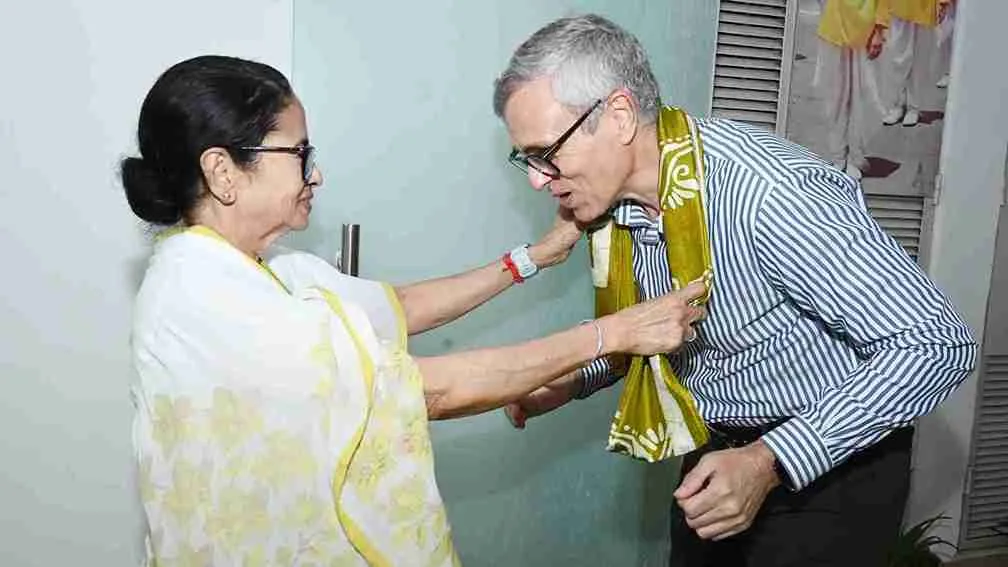
Omar Abdullah found his voice for Kolkata on Wednesday. “If Kerala can be renamed Keralam,” he told reporters in Srinagar, “the Centre should accept West Bengal’s Bangla demand too.” Gracious words. National headlines followed. Meanwhile, J&K remains the only elected government in India without statehood. One and a half years after elections. Six years after August 5, 2019. Click Here To Follow Our WhatsApp Channel
The Chief Minister governs without full powers. His cabinet lacks control over the bureaucracy. Two power centers elected government and Lieutenant Governor create confusion that ordinary citizens pay for daily. Omar himself admits: “Nobody in J&K will be satisfied till statehood is restored.” The contrast stings. Kerala renamed in one Cabinet meeting. West Bengal’s rename earns Chief Ministerial solidarity from Srinagar. J&K’s statehood, a constitutional promise made on the floor of Parliament by the Home Minister himself earns “very soon” and “appropriate time.” Union Minister Arjun Meghwal offered fresh hope last week: “You will hear some decision very soon.” J&K has heard that before. Farooq Abdullah, the elder statesman, said on Sunday what his son must say louder: statehood is not a privilege — it is a constitutional obligation. Every day’s delay weakens democratic accountability, stalls governance, and signals to J&K’s 1.35 crore people that their constitutional rights negotiate differently. Omar Abdullah is right to support Mamata. Symbolic federalism matters. But J&K’s Chief Minister owes his own people the same relentless energy he offered Bengal — on every platform, every day, until Delhi delivers. Bengal wants a new name. Kashmir wants its old status back.
You Might Also Like:
At 13, This Kashmiri Boy Built 31 Apps and AI Tools
Delhi Court Convicts Kashmiri Separatist Asiya Andrabi in UAPA Case
Why Is Omar Abdullah Silent as a Kashmiri Shawl Seller Is Brutally Attacked in Uttarakhand?