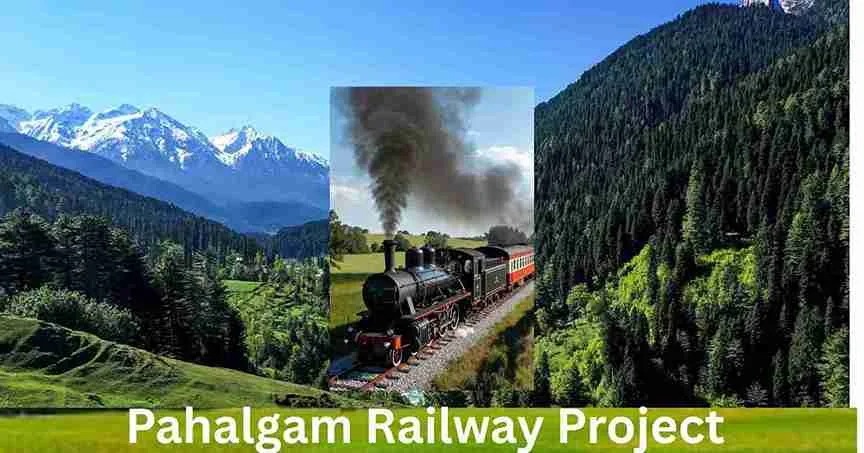
A proposed 35 km broad-gauge railway from Bijbehara to Pahalgam has sparked strong protests across south Kashmir. Farmers, local leaders and environmental groups say the route cuts through fertile land and sensitive river areas, and that communities were not properly consulted. Officials argue the railway will boost tourism, safety and jobs, but many locals remain unconvinced.
Click Here To Follow Our WhatsApp Channel
1. Who is opposing the project — and why?
- Farmers and orchardists. Much of the planned alignment goes through productive fields in Anantnag district that grow rice, apples, cherries and saffron. Locals say land taken for tracks and stations cannot be replaced and will harm food security and livelihoods.
- Environmental groups. The road follows parts of the Lidder river and nearby forests; groups warn of pollution, habitat loss and greater landslide risk from heavy excavation.
- Political and civil society leaders. Regional parties and local representatives have asked officials to rethink the plan and to release the Detailed Project Report (DPR) so experts and residents can assess impacts.
2. Key local concerns, explained simply
Loss of irreplaceable farmland
Farmers say the railway line will take thousands of kanals (local land measure) of fertile soil. That land produces staples and cash crops; losing it would hit incomes and local food supply.
Water and the Lidder river
The alignment runs close to the Lidder. People fear construction waste, soil disturbance and diverted water channels could pollute irrigation and drinking water, and weaken natural flood buffers.
Landslides and soil instability
Kashmir’s hills have a history of slope failures. Heavy tunnelling and earthworks can raise the risk of landslides and make downstream villages more vulnerable. Locals say that risk has not been convincingly addressed.
Tourism vs local needs
Officials highlight tourist and pilgrim convenience, including safer travel to Pahalgam and the Amarnath route. But many residents feel the railway is built for outsiders and commercial interests, not for local well-being. This fuels distrust.
Lack of consultation and transparency
A repeated grievance is that villagers learned of the plan through media rather than formal local consultation. Protesters demand the DPR and environmental assessments be published so independent reviewers can check assumptions and mitigation plans.
3. What the government says
Railway and government officials describe the route as part of broader valley connectivity and development. They point to earlier major rail projects in the region and say rail travel will reduce road traffic and create jobs. Officials also promise environmental safeguards and reviews during planning.
4. Where the debate stands now
Protests and political pushback have stalled progress and forced public debate. Local demands include:
- Release of the Detailed Project Report and full environmental impact assessment.
- A proper public consultation process.
- Consideration of alternative alignments that avoid prime farmland and riverbanks.
Regional parties and civil groups have publicly urged a rethink and a fuller review before any land is taken. The final decision will balance engineering, cost and political choices against environmental safety, food security and local consent.
5. Possible ways forward (practical options)
- Publish documents: Quick public release of the DPR and impact assessments so experts can review and build trust.
- Independent review: Commission an independent panel of engineers, hydrologists and agricultural specialists to study alternatives.
- Route alternatives: Consider longer or costlier routes that avoid the most valuable farmland and river banks.
- Compensation and safeguards: If any land is required, ensure fair compensation, irrigation replacement and strict construction controls to protect water and slopes.
Conclusion — what this dispute shows
The Bijbehara–Pahalgam debate is more than a local fight over tracks. It is a test of how development is planned in sensitive areas: whether connectivity and tourist income are the only measures of progress, or whether food security, environment and local consent matter equally. Until those questions are answered openly, resistance is likely to continue
You Might Also Like:
At 13, This Kashmiri Boy Built 31 Apps and AI Tools
Delhi Court Convicts Kashmiri Separatist Asiya Andrabi in UAPA Case
Pahalgam Railway Line Is About Future, Not Fear—Connectivity Is Development