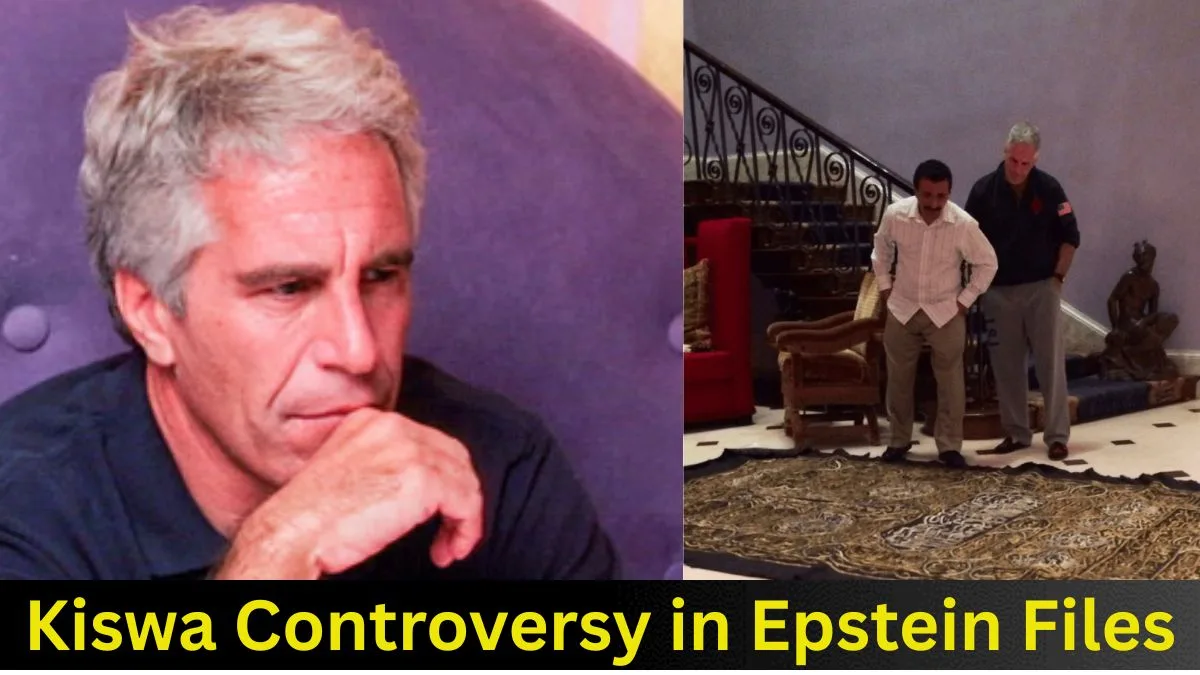
In early 2026, a stunning revelation in the newly unsealed Jeffrey Epstein files sent shockwaves across social media and global news feeds: emails and shipping records appeared to show that pieces of the Kiswa — the sacred black-and-gold embroidered cloth that covers the Kaaba in Mecca — were sent to Epstein’s home in Florida. Given the spiritual importance the Kiswa holds for millions of Muslims worldwide, the initial headlines triggered outrage, confusion, and intense online debate.
But as more people sift through not just the emails and documents, but the visual evidence associated with the shipment, a clearer picture is emerging: what was received may not be an authentic piece of the real Kiswa at all — but rather a replica or high-end souvenir.Click Here To Follow Our WhatsApp Channel
What the Epstein Files Actually Show
The unsealed documents — released under the 2026 Epstein Files Transparency Act — include emails from 2017 detailing a shipment to Epstein’s Florida residence labeled as “Kiswa pieces.” These emails mention three items described as:
- One piece purportedly from inside the Kaaba
- One from the outer covering
- A third unused piece made with similar materials
British Airways cargo records list these items as “picture frames” or artwork, with an approximate declared value of $10,980 on the invoice. The emails also reference an intermediary: a UAE-based businesswoman named Aziza al-Ahmadi, working with someone named Abdullah al-Maari.
One email even highlighted the sacred nature of the cloth, noting that “the black piece was touched by a minimum of 10 million Muslims of different denominations, Sunni, Shia, and others,” and that it was steeped in “prayers, tears, and hopes.”
The Outrage and the Backlash Online
Photos in the released files reportedly show Epstein and Emirati businessman Sultan Ahmed bin Sulayem standing over what appears to be the cloth, spread out on the floor — a visual that was quickly shared and reshared across social platforms. Many interpreted the image as evidence that a genuine, sacred artifact from Islam’s holiest site had ended up in the home of a convicted sex offender, prompting widespread condemnation.
For many Muslims, especially on platforms like Reddit, Twitter, and Instagram, the idea that something tied to the Kaaba could be handled in such a casual context was seen as deeply disrespectful.
Why Experts and Online Analysts Say It’s Likely a Replica
However, the bigger question began to surface once the photos of the cloth were scrutinized more closely. Multiple knowledgeable observers — including textile experts, historians, and scholars of Islamic art — pointed out several key discrepancies:
1. Size and Proportions Don’t Match a Genuine Kiswa Piece
Real Kiswa sections — especially those cut from the original covering — follow strict size protocols. The embroidered verses, band proportions, and overall dimensions are consistent based on decades of documented examples.
In contrast, the cloth shown in the photos appears oddly shaped and too small compared to authenticated Kiswa fragments that have been distributed to dignitaries and institutions over the years.
2. Embroidery and Design Details Are Off
The Kiswa is known for its meticulous craftsmanship: dense gold thread work, precise Quranic verses in specific fonts, and a distinct silk backing. Comparisons with official photos from Mecca show noticeable differences:
- Thread density and stitching patterns don’t match
- Color and sheen of gold embroidery appear inconsistent
- Border layout and calligraphy fonts vary from verified Kiswa segments
These inconsistencies strongly suggest that what’s in the Epstein photos may be a replica or decorative version, not a piece of the official Kaaba cloth.
3. Replica Market for Kiswa Is Large and Well-Established
Tourist markets around the Muslim world — especially in cities like Mecca, Medina, and Istanbul — are filled with souvenir Kiswa pieces. These range from inexpensive prints to higher-end framed cloth that mimic the iconic black and gold design.
Some of these replicas even come with fake certificates of authenticity, making it easy for less-informed buyers to mistake them for the real thing.
In online videos and social media posts, collectors and textile reviewers demonstrate how to spot fakes — from simple burn tests (real Kiswa is silk-based, while many fakes are synthetic) to close inspection of embroidery patterns.
4. No Official Confirmation from Saudi Authorities
Perhaps most telling: Saudi religious bodies and the administration responsible for the Kaaba’s covering — which regularly replaces the Kiswa and distributes pieces to dignitaries — have not issued any public statement confirming that an authentic Kiswa fragment was sent to Epstein.
Official channels usually document and record where genuine Kiswa segments go. The absence of any reference in those records raises serious questions about the shipment’s authenticity.
So What Really Happened?
At this point, the facts we know are:
- Emails and shipping documents reference items described as Kiswa pieces sent to Epstein’s home.
- Photos show a cloth resembling Kiswa in Epstein’s space.
- Visual and textile experts — along with careful side-by-side comparisons — strongly suggest the cloth in the photos is not an authentic segment from the real Kaaba covering.
This points to a likely scenario in which a replica or decorative version of the Kiswa was shipped — perhaps as a high-end collectible or conversation piece — and not a sacred artifact that had once covered the Kaaba.
Why This Still Matters
Even if the cloth was a replica, the episode touches on deeper cultural and ethical issues. For Muslims around the world, the idea of something associated with Islam’s holiest site being linked to Epstein is painful and provocative. The controversy shows how:
- Symbolic imagery can fuel outrage faster than facts
- Online misinformation and assumptions can spread before verification
- Cultural and religious sensitivity is essential in global discourse
This doesn’t excuse casual handling of religious symbols — but it does illustrate how easily narratives can spiral when context and expertise are ignored.
Final Takeaway
The Epstein files confirm that something called “Kiswa pieces” was shipped and received. But the balance of evidence — especially visual and expert analysis — strongly points to the items being replicas, not genuine cloth from the Kaaba.
That distinction matters: it separates a shocking headline from a more nuanced, evidence-based reality.As the story continues to unfold and more people look deeper into the facts, it’s worth keeping in mind the importance of verification, context, and respect for sensitive cultural symbols.
You Might Also Like:
At 13, This Kashmiri Boy Built 31 Apps and AI Tools
Delhi Court Convicts Kashmiri Separatist Asiya Andrabi in UAPA Case
Why Is Omar Abdullah Silent as a Kashmiri Shawl Seller Is Brutally Attacked in Uttarakhand?