
The apple orchards of Kashmir, long celebrated as the backbone of the region’s economy, are grappling with an unprecedented crisis as apple prices continue their downward spiral. Orchard owners across the valley are reeling from the financial strain, with many fearing that the plummeting market rates could jeopardize their livelihoods and destabilize an industry that supports millions.
Kashmir’s apple industry, which accounts for approximately 75% of India’s total apple production, is a vital economic driver, employing around 3.5 million people directly or indirectly and contributing nearly 10% to the region’s Gross State Domestic Product (GSDP). However, despite a robust harvest this season, growers report that market prices have dropped sharply, with a 10-12 kg carton of high-density apples fetching only ₹750 to ₹1,000, compared to last year’s ₹1,300 to ₹1,400. This steep decline has left farmers struggling to recover even basic production and transportation costs.
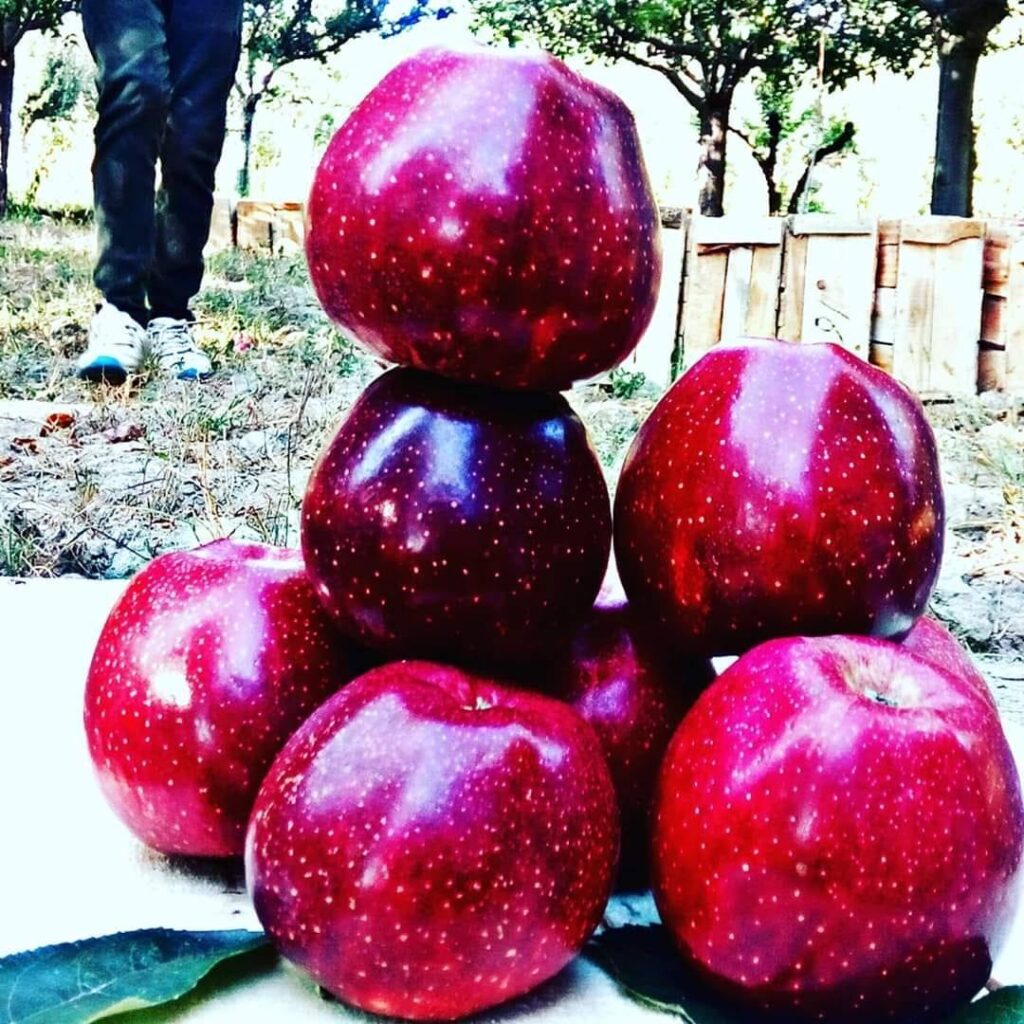
“The prices are so low that we’re barely breaking even,” said Mohammad Ashraf Wani, an apple trader and president of the Fruit Mandi in Shopian, one of Kashmir’s largest apple markets. “We’ve had a good yield this year, but the market is flooded with early-harvest varieties from high-density orchards, and the demand isn’t keeping up. If this continues, many farmers will face huge losses.”
The surge in supply is largely attributed to the rapid adoption of high-density apple cultivation across the valley. Over the past decade, farmers have increasingly shifted from traditional orchards to high-density varieties, such as Super Chief, Red Velox, and Gala Redlum, which yield fruit within two to three years and produce up to four times more per acre. The Jammu and Kashmir government’s Modified High-Density Plantation Scheme, launched in 2021, has further accelerated this trend, offering a 50% subsidy to encourage farmers to plant an estimated 2 to 3 million new high-density trees annually. While this has boosted production by 35-45% compared to last year, the oversupply has overwhelmed markets, driving prices down.
“High-density orchards were supposed to be a game-changer,” said Tariq Ahmad, a farmer from Pulwama. “We invested heavily, expecting better returns, but this glut has shaken our confidence. Without government intervention, many of us won’t survive another season like this.”
Adding to the growers’ woes is the influx of cheaper imported apples from countries like the United States, Iran, and South Africa. These imports, particularly Washington apples, have eroded the market share of Kashmiri apples, further depressing prices. Farmers and traders have long opposed such imports, arguing that they undermine the local industry, which supports around seven lakh families. “The government needs to impose higher import duties to protect us,” said Showkat Ahmad Hajam, an apple trader in Pulwama. “Right now, we’re competing against cheaper foreign apples, and it’s killing our market.”
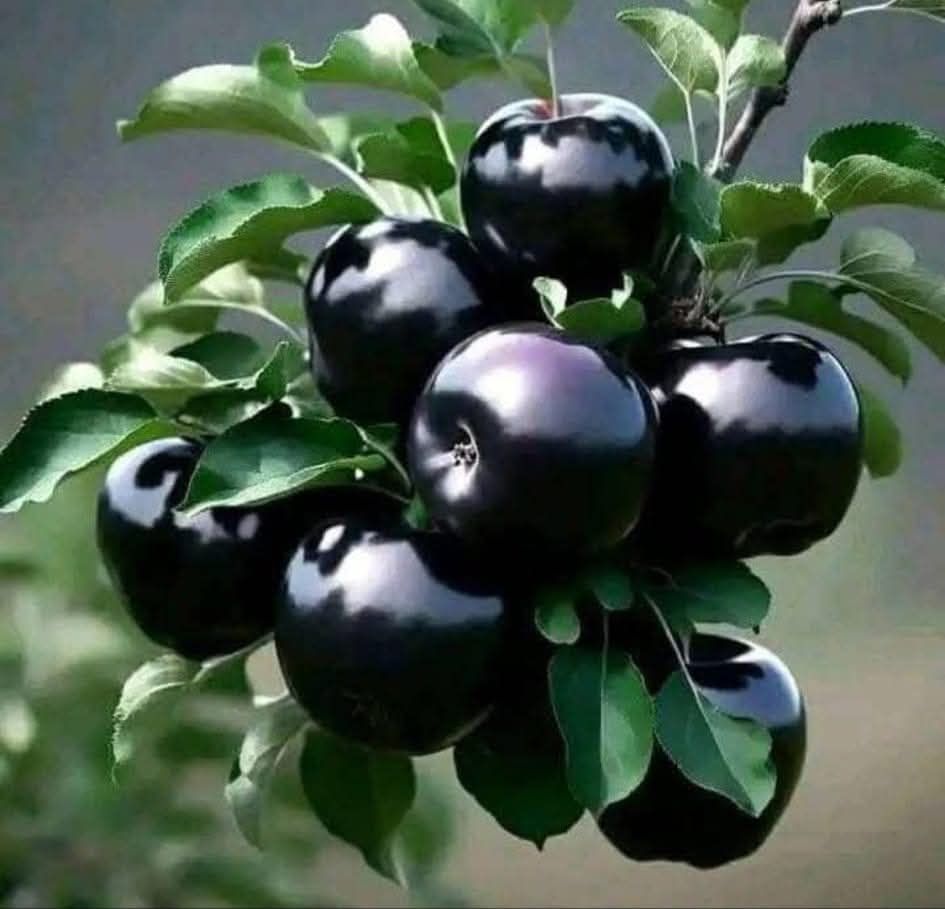
The challenges don’t end there. Erratic weather patterns, including dry spells, unseasonal hailstorms, and rising temperatures, have compounded the crisis. According to the China Economic Information Centre (CIEC), apple production in Jammu and Kashmir dropped to 2,054.828 thousand tons in 2024 from 2,146.347 thousand tons in 2023, a decline attributed to adverse weather and substandard pesticides. This year, growers report a 30% reduction in yields in some areas due to similar conditions, coupled with fungal scab outbreaks and leaf miner infestations, which have further diminished the quality and marketability of their produce.
Orchard owners are now urgently appealing to both the central and Jammu and Kashmir governments for immediate support. Key demands include the reintroduction of the Market Intervention Scheme (MIS), which previously allowed the government to procure lower-grade apples at fixed rates to stabilize prices, and the implementation of a yield-based crop insurance scheme to mitigate losses from natural calamities. “We presented 14 demands to the Chief Minister before the latest budget, including loan waivers and crop insurance, but none were addressed,” said Fayaz Ahmad Malik, president of the Sopore Fruit Mandi, Asia’s second-largest fruit market. “The government seems unaware of how this industry works. We’re being left to fend for ourselves.”
The lack of adequate cold storage and processing facilities in the region further exacerbates the crisis. Approximately 20% of apples remain unsold in Controlled Atmosphere (CA) stores, as growers struggle to find buyers willing to pay fair prices. “CA stores were supposed to help us manage supply and demand, but with low market rates, they’re just piling up losses,” said Bashir Ahmad Basheer, president of the New Kashmir Fruit Association.
The apple industry’s struggles have ripple effects across Kashmir’s economy, impacting not only growers but also laborers, transporters, and traders. With the monsoon session of Parliament concluding on August 21, 2025, growers are pinning their hopes on swift government action. Proposals for import duties, market regulation, and enhanced infrastructure could provide a lifeline to the sector, but time is running out.
“If the government doesn’t act now, the future of Kashmir’s apple industry is at stake,” warned Wani. “This isn’t just about apples—it’s about the survival of millions of families who depend on this trade.”
As Kashmir’s orchard owners await relief, the region’s famed apples, once a symbol of prosperity, now hang heavy with uncertainty, underscoring the urgent need for policies to protect this vital lifeline of the valley’s economy.
Click Here To Follow Our WhatsApp Channel
You Might Also Like:
J&K Police Attach Property of Active Terrorist in Anantnag Under UAPA Crackdown
Khelo India Water Sports Festival 2025 at Dal Lake: Boost for J&K Athletes and Tourism
Ganderbal Shock: 22-Year-Old Girl Arrested for Killing Her 14-Year-Old Sister After Altercation