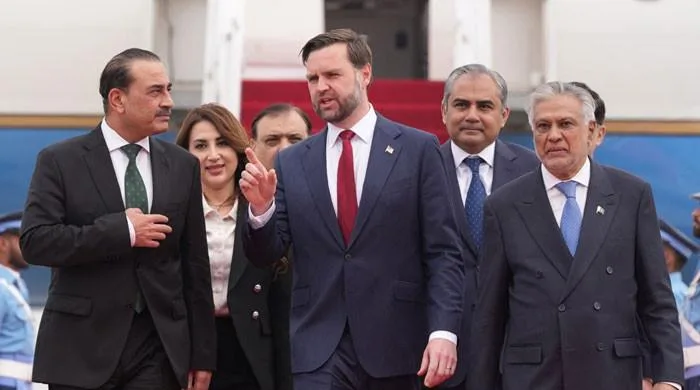
A senior United States delegation, led by Vice President JD Vance, arrived in Islamabad on Saturday for important peace talks with Iranian officials.This marks one of the highest-level engagements between Washington and Tehran since the 1979 Islamic Revolution. Click Here To Follow Our WhatsApp Channel
The talks are being hosted by Pakistan at key locations, including the heavily secured Serena Hotel. The main aim is to strengthen a fragile two-week ceasefire and move towards a more lasting peace after weeks of conflict involving the United States, Israel, and Iran.
High-Level Arrival and Meetings
Vice President Vance landed in Islamabad in the morning, along with Special Envoy Steve Witkoff and senior adviser Jared Kushner.
He was welcomed by top Pakistani officials, including:
- Syed Asim Munir
- Ishaq Dar
Later, Vance held important discussions with Prime Minister Shehbaz Sharif.
Speaking ahead of the talks, Vance said the discussions could be “positive” if Iran cooperates sincerely. However, he also warned against any attempts to mislead the United States.
Iranian Delegation and Conditions
The Iranian delegation arrived earlier and is led by Parliament Speaker Mohammad Bagher Ghalibaf, with Foreign Minister Abbas Araghchi playing a major role.
Iran has set clear conditions for meaningful progress, including:
- A full ceasefire by Israel in Lebanon
- Release of frozen Iranian financial assets
Pakistan’s Role as Mediator
Prime Minister Shehbaz Sharif has described these talks as a “make-or-break” moment for regional peace.
Pakistan has taken strict security measures across Islamabad, including:
- Deployment of thousands of security personnel
- Road closures in sensitive areas
- Public holidays to manage movement
These steps show the importance of the talks and Pakistan’s role as a neutral mediator.
Background and Key Issues
The negotiations come after weeks of intense conflict in the region. Although a temporary ceasefire was reached, both sides have accused each other of violations, raising concerns about renewed fighting.
Major issues being discussed include:
- Strengthening the ceasefire
- Reducing tensions in Lebanon
- Ensuring security in the Strait of Hormuz
- Preventing further escalation
What to Expect
Experts say expectations remain cautious, as there are still serious differences between the two sides. However, even small progress could help prevent a larger regional war and protect global oil supplies.
Pakistan’s role in hosting these talks has gained global attention, with many countries closely watching the outcome.
As discussions begin in Islamabad, the world is waiting to see whether this rare diplomatic effort can turn a fragile ceasefire into lasting peace — or if tensions will rise again.
Note: This report is based on developments as of April 11, 2026. Talks are ongoing and updates are expected.
You Might Also Like:
US Rescues Downed Pilot from Iran in High-Risk Operation, Trump Declares “We Got Him”
Dr.Fatemeh Ardeshir-Larijani Ousted from Emory, Visa Revoked After Protests Over Iran Links