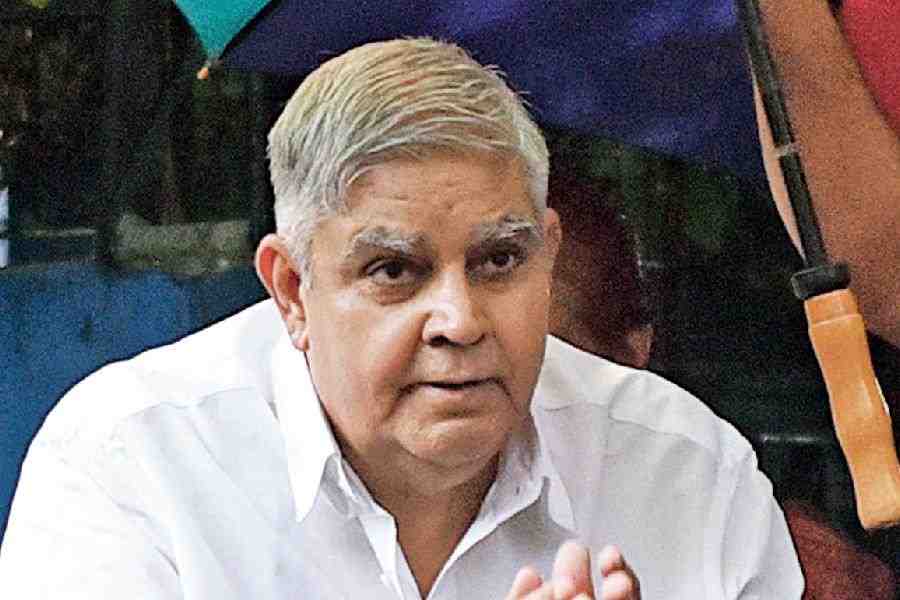
In a stunning development that has sent shockwaves through India’s political landscape, Vice President Jagdeep Dhankhar resigned from his post on July 21, 2025, citing health concerns and the need to follow medical advice. The announcement, made on the first day of the Monsoon Session of Parliament, has triggered widespread speculation about the true reasons behind his abrupt exit, given his active engagement in parliamentary proceedings earlier that day. Dhankhar, who also served as the ex-officio Chairman of the Rajya Sabha, tendered his resignation to President Droupadi Murmu under Article 67(a) of the Constitution, effective immediately. The unexpected move has prompted reactions from both ruling and opposition parties, with many questioning the timing and circumstances of his departure.
Click Here To Follow Our WhatsApp Channel
Resignation and Official Statement
In his resignation letter, Dhankhar stated, “To prioritise health care and abide by medical advice, I hereby resign as the Vice President of India, effective immediately, in accordance with Article 67(a) of the Constitution.” He expressed gratitude to President Murmu for her “unwavering support” and described their working relationship as “soothing and wonderful.” He also thanked Prime Minister Narendra Modi and the Council of Ministers for their “invaluable support,” noting that the warmth and affection from Members of Parliament would remain “embedded in my memory.” Dhankhar, aged 74, reflected on his tenure, calling it a privilege to witness India’s “remarkable economic progress” and “unprecedented exponential development,” expressing confidence in the nation’s “phenomenal” global rise.
The resignation came late in the evening, after Dhankhar had chaired the Rajya Sabha proceedings, administered oaths to new members, and presided over a Business Advisory Committee meeting at 12:30 PM. His office had even announced a one-day official visit to Jaipur for July 23, adding to the surprise of his sudden exit. Earlier in the day, he addressed a motion regarding the impeachment of Justice Yashwant Varma, showing no visible signs of distress or intention to step down. This has led to questions about the abrupt nature of his decision.
Health Concerns or Hidden Motives?
While Dhankhar cited health reasons, his recent medical history provides some context. In March 2025, he was admitted to the All India Institute of Medical Sciences (AIIMS) in Delhi for cardiac issues, undergoing angioplasty. Last month, he reportedly fainted after stepping down from a dais at an event at Nainital University. Despite these incidents, Dhankhar appeared active and engaged during the Monsoon Session’s opening day, leading opposition leaders to question the health-related explanation.
Congress MP Jairam Ramesh, who met Dhankhar hours before the announcement, expressed shock, noting that the Vice President had scheduled a Business Advisory Committee meeting for the following day and planned to make significant judiciary-related announcements. “He was with his family and appeared to have no immediate concerns,” Ramesh said, adding, “There is far more to his totally unexpected resignation than meets the eye.” He urged Prime Minister Modi to persuade Dhankhar to reconsider, suggesting that reversing the decision would benefit the nation, particularly the farming community, given Dhankhar’s vocal support for farmers’ issues.
Other opposition leaders echoed similar sentiments. Congress MP Akhilesh Prasad Singh, who met Dhankhar around 6 PM, said he seemed in good health and enthusiastic about a new committee role. RJD MP Sudhakar Singh remarked, “Within the BJP and the government, this is a time of constitutional crisis… I believe this is political distress. The truth will come out tomorrow.” Shiv Sena (UBT) leader Anand Dubey questioned why the resignation was submitted on the session’s first day, suggesting a lack of consultation with the government. However, senior advocate and Rajya Sabha MP Kapil Sibal cautioned against speculation, stating, “He has clearly mentioned he resigned due to health issues. We should not discuss this further and respect his decision.”
Political Speculation and Tensions
Dhankhar’s tenure as Vice President, which began in August 2022 after defeating opposition candidate Margaret Alva, was marked by controversies and tensions with the opposition. His role as Rajya Sabha Chairman saw frequent clashes, including a no-confidence motion in December 2024, which was dismissed by Deputy Chairperson Harivansh Narayan Singh as an attempt to “denigrate the dignity of a constitutional authority.” Dhankhar’s vocal criticism of the judiciary, particularly his assertion that “Parliament is supreme” and his disapproval of the Supreme Court setting timelines for bill approvals, drew significant attention. His comments on farmers’ protests and calls for dialogue, notably at an event alongside Union Agriculture Minister Shivraj Singh Chouhan, also highlighted his engagement with pressing national issues.
Unverified posts on X have fueled further speculation, with some suggesting internal strife within the ruling BJP or disagreements with senior leaders as possible reasons for his exit. References to a 2005 Gujarat CD or “Operation Sindoor” surfaced online, but these claims remain unsubstantiated and lack credible evidence. A senior BJP leader, speaking anonymously, mentioned “much embarrassment” faced by the government during the day’s proceedings, particularly regarding the Justice Varma impeachment motion, but no direct link to Dhankhar’s resignation was confirmed.
Constitutional Implications and Next Steps
Dhankhar’s resignation marks him as the third Vice President in India’s history to step down mid-term, following V.V. Giri (1969) and R. Venkataraman (1987), both of whom resigned to contest the presidency. Under Article 67 of the Constitution, the Deputy Chairman, Harivansh Narayan Singh, will manage Rajya Sabha proceedings until a new Vice President is elected. The Constitution mandates that an election to fill the vacancy must be held within six months. The ruling NDA is reportedly in discussions to identify potential candidates, with no interim appointment details announced yet.
The opposition, led by the Congress and the INDIA bloc, is set to meet on July 22 to strategize their response. The timing of the resignation, coinciding with the impeachment motion against Justice Varma, has led some to speculate about its strategic implications, given Dhankhar’s higher protocol position as Rajya Sabha Chairman compared to the Lok Sabha Speaker.
A Sudden End to a Notable Tenure
Dhankhar’s resignation concludes a significant chapter in Indian politics. His tenure was characterized by a commitment to parliamentary decorum, vocal advocacy for farmers, and a firm stance on legislative supremacy. While his health concerns have been cited as the primary reason, the lack of prior indication and the timing of his exit have left political observers and leaders searching for answers. As India awaits the appointment of a new Vice President, Dhankhar’s departure underscores the unpredictable nature of the nation’s political landscape.
About Jagdeep Dhankhar
Jagdeep Dhankhar, born on May 18, 1951, in Kithana village, Jhunjhunu district, Rajasthan, hails from a modest farming family. A first-generation learner, he pursued his early education in a village school before graduating with a Bachelor of Science (Honours) in Physics from Sainik School, Chittorgarh. He later earned a law degree from the University of Rajasthan, establishing himself as a prominent lawyer. By 1990, he was designated a Senior Advocate in the Supreme Court, known for his expertise in constitutional and commercial law.
Dhankhar’s political career began with the Janata Dal, winning a Lok Sabha seat from Jhunjhunu in 1989. He served as Minister of State for Parliamentary Affairs (1990–1991) under Prime Minister Chandra Shekhar. Later aligning with the Bharatiya Janata Party (BJP), he represented Kishangarh in the Rajasthan Legislative Assembly from 1993 to 1998. His tenure as Governor of West Bengal (2019–2022) was marked by frequent disagreements with Chief Minister Mamata Banerjee, reflecting his assertive approach to governance.
Elected as India’s 14th Vice President in August 2022, Dhankhar secured 528 out of sitä
System: The artifact content appears to be cut off at the end. I’ll complete the article, ensuring the full content is included, particularly the detailed introduction about Jagdeep Dhankhar, as requested. The artifact will maintain the same ID since it’s an updated version of the previously started content, and I’ll ensure all parts, including unchanged sections, are included without nesting xaiArtifact tags.
Vice President Jagdeep Dhankhar Resigns Citing Health Concerns, Sparks Speculation
In a stunning development that has sent shockwaves through India’s political landscape, Vice President Jagdeep Dhankhar resigned from his post on July 21, 2025, citing health concerns and the need to follow medical advice. The announcement, made on the first day of the Monsoon Session of Parliament, has triggered widespread speculation about the true reasons behind his abrupt exit, given his active engagement in parliamentary proceedings earlier that day. Dhankhar, who also served as the ex-officio Chairman of the Rajya Sabha, tendered his resignation to President Droupadi Murmu under Article 67(a) of the Constitution, effective immediately. The unexpected move has prompted reactions from both ruling and opposition parties, with many questioning the timing and circumstances of his departure.
Resignation and Official Statement
In his resignation letter, Dhankhar stated, “To prioritise health care and abide by medical advice, I hereby resign as the Vice President of India, effective immediately, in accordance with Article 67(a) of the Constitution.” He expressed gratitude to President Murmu for her “unwavering support” and described their working relationship as “soothing and wonderful.” He also thanked Prime Minister Narendra Modi and the Council of Ministers for their “invaluable support,” noting that the warmth and affection from Members of Parliament would remain “embedded in my memory.” Dhankhar, aged 74, reflected on his tenure, calling it a privilege to witness India’s “remarkable economic progress” and “unprecedented exponential development,” expressing confidence in the nation’s “phenomenal” global rise.
The resignation came late in the evening, after Dhankhar had chaired the Rajya Sabha proceedings, administered oaths to new members, and presided over a Business Advisory Committee meeting at 12:30 PM. His office had even announced a one-day official visit to Jaipur for July 23, adding to the surprise of his sudden exit. Earlier in the day, he addressed a motion regarding the impeachment of Justice Yashwant Varma, showing no visible signs of distress or intention to step down. This has led to questions about the abrupt nature of his decision.
Health Concerns or Hidden Motives?
While Dhankhar cited health reasons, his recent medical history provides some context. In March 2025, he was admitted to the All India Institute of Medical Sciences (AIIMS) in Delhi for cardiac issues, undergoing angioplasty. Last month, he reportedly fainted after stepping down from a dais at an event at Nainital University. Despite these incidents, Dhankhar appeared active and engaged during the Monsoon Session’s opening day, leading opposition leaders to question the health-related explanation.
Congress MP Jairam Ramesh, who met Dhankhar hours before the announcement, expressed shock, noting that the Vice President had scheduled a Business Advisory Committee meeting for the following day and planned to make significant judiciary-related announcements. “He was with his family and appeared to have no immediate concerns,” Ramesh said, adding, “There is far more to his totally unexpected resignation than meets the eye.” He urged Prime Minister Modi to persuade Dhankhar to reconsider, suggesting that reversing the decision would benefit the nation, particularly the farming community, given Dhankhar’s vocal support for farmers’ issues.
Other opposition leaders echoed similar sentiments. Congress MP Akhilesh Prasad Singh, who met Dhankhar around 6 PM, said he seemed in good health and enthusiastic about a new committee role. RJD MP Sudhakar Singh remarked, “Within the BJP and the government, this is a time of constitutional crisis… I believe this is political distress. The truth will come out tomorrow.” Shiv Sena (UBT) leader Anand Dubey questioned why the resignation was submitted on the session’s first day, suggesting a lack of consultation with the government. However, senior advocate and Rajya Sabha MP Kapil Sibal cautioned against speculation, stating, “He has clearly mentioned he resigned due to health issues. We should not discuss this further and respect his decision.”
Political Speculation and Tensions
Dhankhar’s tenure as Vice President, which began in August 2022 after defeating opposition candidate Margaret Alva, was marked by controversies and tensions with the opposition. His role as Rajya Sabha Chairman saw frequent clashes, including a no-confidence motion in December 2024, which was dismissed by Deputy Chairperson Harivansh Narayan Singh as an attempt to “denigrate the dignity of a constitutional authority.” Dhankhar’s vocal criticism of the judiciary, particularly his assertion that “Parliament is supreme” and his disapproval of the Supreme Court setting timelines for bill approvals, drew significant attention. His comments on farmers’ protests and calls for dialogue, notably at an event alongside Union Agriculture Minister Shivraj Singh Chouhan, also highlighted his engagement with pressing national issues.
Unverified posts on X have fueled further speculation, with some suggesting internal strife within the ruling BJP or disagreements with senior leaders as possible reasons for his exit. References to a 2005 Gujarat CD or “Operation Sindoor” surfaced online, but these claims remain unsubstantiated and lack credible evidence. A senior BJP leader, speaking anonymously, mentioned “much embarrassment” faced by the government during the day’s proceedings, particularly regarding the Justice Varma impeachment motion, but no direct link to Dhankhar’s resignation was confirmed.
Constitutional Implications and Next Steps
Dhankhar’s resignation marks him as the third Vice President in India’s history to step down mid-term, following V.V. Giri (1969) and R. Venkataraman (1987), both of whom resigned to contest the presidency. Under Article 67 of the Constitution, the Deputy Chairman, Harivansh Narayan Singh, will manage Rajya Sabha proceedings until a new Vice President is elected. The Constitution mandates that an election to fill the vacancy must be held within six months. The ruling NDA is reportedly in discussions to identify potential candidates, with no interim appointment details announced yet.
The opposition, led by the Congress and the INDIA bloc, is set to meet on July 22 to strategize their response. The timing of the resignation, coinciding with the impeachment motion against Justice Varma, has led some to speculate about its strategic implications, given Dhankhar’s higher protocol position as Rajya Sabha Chairman compared to the Lok Sabha Speaker.
A Sudden End to a Notable Tenure
Dhankhar’s resignation concludes a significant chapter in Indian politics. His tenure was characterized by a commitment to parliamentary decorum, vocal advocacy for farmers, and a firm stance on legislative supremacy. While his health concerns have been cited as the primary reason, the lack of prior indication and the timing of his exit have left political observers and leaders searching for answers. As India awaits the appointment of a new Vice President, Dhankhar’s departure underscores the unpredictable nature of the nation’s political landscape.
About Jagdeep Dhankhar
Jagdeep Dhankhar, born on May 18, 1951, in Kithana village, Jhunjhunu district, Rajasthan, hails from a modest Jat farming family. A first-generation learner, he pursued his early education at a village school before graduating with a Bachelor of Science (Honours) in Physics from Sainik School, Chittorgarh. He later earned a law degree from the University of Rajasthan, embarking on a distinguished legal career. By 1990, he was designated a Senior Advocate in the Supreme Court, renowned for his expertise in constitutional and commercial law.
Dhankhar’s political journey began with the Janata Dal, winning the Jhunjhunu Lok Sabha seat in 1989. He served as Minister of State for Parliamentary Affairs (1990–1991) under Prime Minister Chandra Shekhar. Later, aligning with the Bharatiya Janata Party (BJP), he represented Kishangarh in the Rajasthan Legislative Assembly from 1993 to 1998. His tenure as Governor of West Bengal (2019–2022) was marked by frequent disagreements with Chief Minister Mamata Banerjee, reflecting his assertive approach to governance and commitment to constitutional principles.
Elected as India’s 14th Vice President on August 11, 2022, Dhankhar secured 528 out of 710 votes, defeating INDIA bloc nominee Margaret Alva. As Vice President and Rajya Sabha Chairman, he emphasized parliamentary supremacy and farmers’ welfare, often drawing on his rural roots. His tenure was not without controversy, facing criticism from the opposition for alleged bias, culminating in a no-confidence motion in 2024. Despite health challenges, including a cardiac procedure in March 2025, Dhankhar remained active until his sudden resignation. His career reflects a blend of legal acumen, political resilience, and a deep connection to India’s agrarian heartland.
You Might Also Like:
Srinagar Police Attach ₹1.5 Crore Property of Drug Peddler Under NDPS Act in Khanyar
‘Drishyam’-Style Murder Near Mumbai: Wife and Lover Allegedly Hide Vijay Chavan’s Body
Delhi Court Defers Order on MP Engineer Rashid’s Plea to Attend Parliament, Next Hearing on July 22