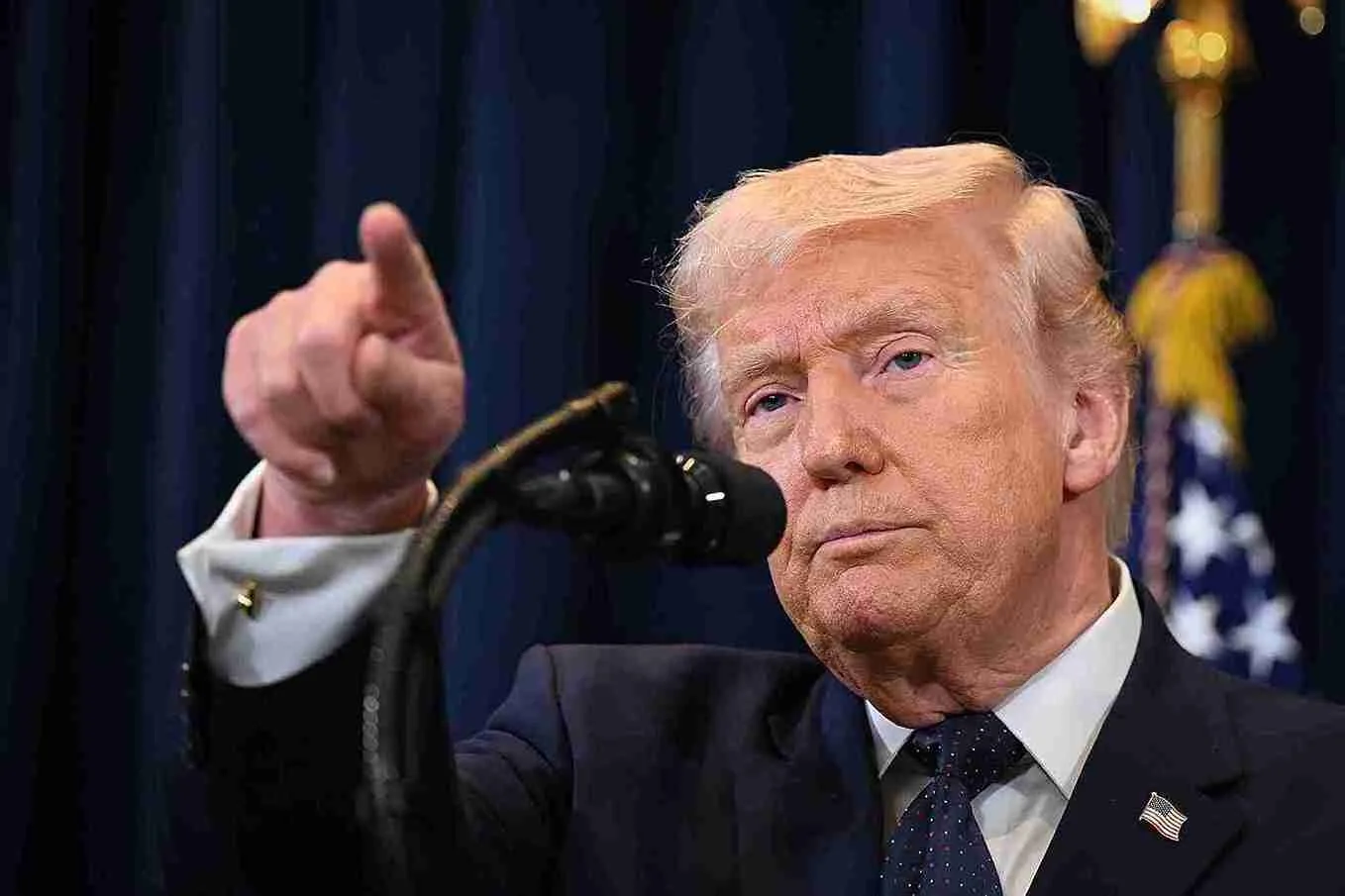
US President Donald Trump has consistently projected a narrative of decisive victory in the ongoing conflict with Iran. From the early days of the war to recent statements, he has claimed that Iran’s air force, navy, and broader military structure have been effectively destroyed
However, a closer look at intelligence assessments and battlefield developments suggests a far more complex and incomplete picture. Click Here To Follow Our WhatsApp Channel
The Politics of Declaring Victory
Trump’s repeated assertions — that Iran’s navy is “gone” and its air force “in ruins” — appear to serve a clear political purpose: shaping domestic and international perception of the war.
Declaring success early can:
- Strengthen public support at home
- Signal dominance to allies and rivals
- Create pressure on Iran to negotiate from a weaker perceived position
Yet, such claims also carry risks. If contradicted by facts on the ground, they may undermine credibility and strategic messaging.
What Intelligence Reports Actually Indicate
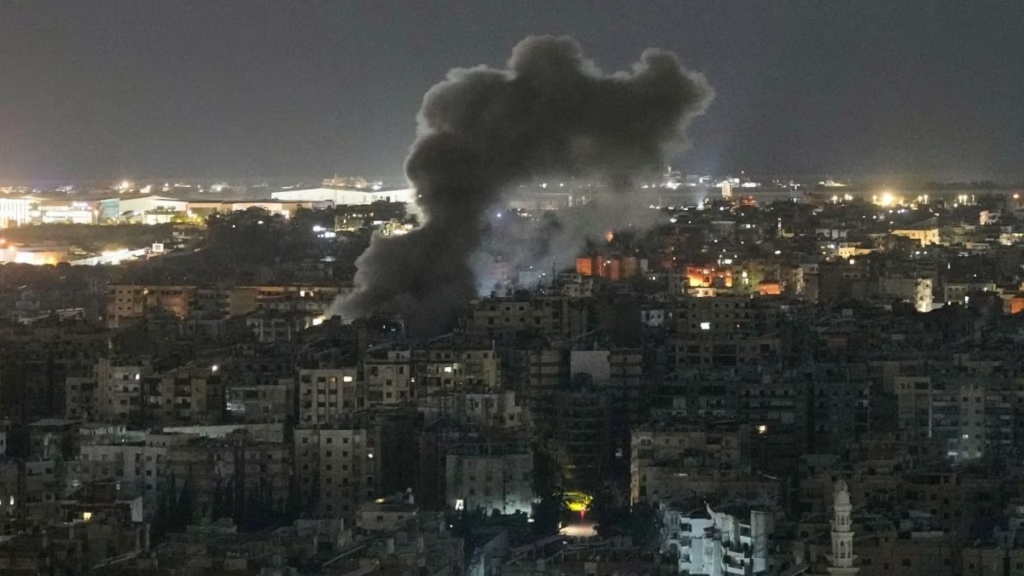
Contrary to the administration’s claims, multiple intelligence sources cited by Reuters and CNN suggest that Iran’s military capabilities remain far from eliminated.
Key findings include:
- Only about one-third of Iran’s missile arsenal has been destroyed
- Around half of missile launchers remain operational
- A significant number of cruise missiles and drones are still intact
- Underground storage systems continue to protect critical assets
This indicates that while US strikes have degraded Iran’s capabilities, they have not neutralised them.
Iran’s Strategy: Depth, Dispersal, and Denial
Iran’s military doctrine has long focused on survivability rather than visibility. Its reliance on underground facilities, mobile launchers, and decentralised production allows it to absorb strikes while maintaining operational capacity.
The continued launch of missiles and drones — including recent strikes in the Gulf — reinforces the idea that Iran is pursuing a strategy of controlled endurance, not immediate confrontation.
This approach allows Tehran to:
- Maintain pressure on regional targets
- Demonstrate resilience against US claims
- Keep strategic assets hidden for prolonged conflict
Naval Power and the Strait of Hormuz
Trump’s claim that Iran’s navy has been destroyed is particularly contested.
While conventional naval losses may have occurred, the real strategic threat lies with the Islamic Revolutionary Guard Corps (IRGC), which operates:
- Swarm tactics using small boats
- Unmanned surface vessels
- Asymmetric warfare capabilities
These assets remain critical in controlling the Strait of Hormuz, a chokepoint that directly impacts global energy markets.
Contradictory Narratives Within the US
Interestingly, even within US institutions, messaging appears divided.
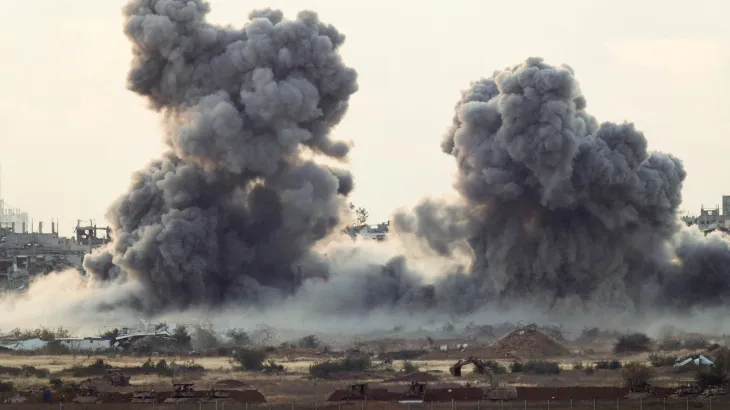
- The Pentagon acknowledges a significant reduction (around 90%) in attacks
- Yet intelligence leaks suggest substantial remaining capabilities
This gap highlights a classic wartime tension between political messaging and intelligence reality.
The White House frames success in terms of degradation, while intelligence assessments focus on remaining threat potential.
Has the War Achieved Its Objectives?
The stated goals of the US and its allies included:
- Destroying Iran’s missile programme
- Limiting its regional influence
- Securing nuclear-related risks
Based on current evidence, none of these objectives appear fully achieved.
Iran:
- Continues to launch missiles and drones
- Retains a large portion of its arsenal
- Maintains strategic leverage in the region
Even claims of leadership decapitation or regime collapse remain disputed.
The Bigger Strategic Picture
Trump’s projection of imminent victory — including claims that the war could end within weeks — contrasts sharply with the realities of modern asymmetric warfare.
Iran’s ability to:
- Sustain long-term conflict
- Operate through proxies and indirect means
- Leverage geography and hidden infrastructure
…suggests that this conflict is not nearing a quick resolution.
Conclusion: Narrative vs Reality
The central issue is not whether the US has achieved tactical success — it clearly has in damaging Iran’s infrastructure — but whether that success translates into strategic victory.
At present, the evidence suggests:
- Iran has been weakened, but not defeated
- Its military capabilities are reduced, but still operational
- The conflict is ongoing, not concluding
Trump’s claims reflect a political narrative of dominance, while intelligence reports point to a prolonged and uncertain conflict.
In modern warfare, controlling the narrative is as important as controlling the battlefield — and in this case, the gap between the two remains significant.
You Might Also Like:
Trump Weighs High-Risk US Commando Raid on Iran’s Nuclear Sites Amid Escalating War
Massive ‘No Kings’ Protests Sweep Across USA as Millions Rally Against Trump Policies and Iran War
Iran Claims Strike on US Air Base in Saudi Arabia, Says AWACS Plane Destroyed in Missile and Drone Attack