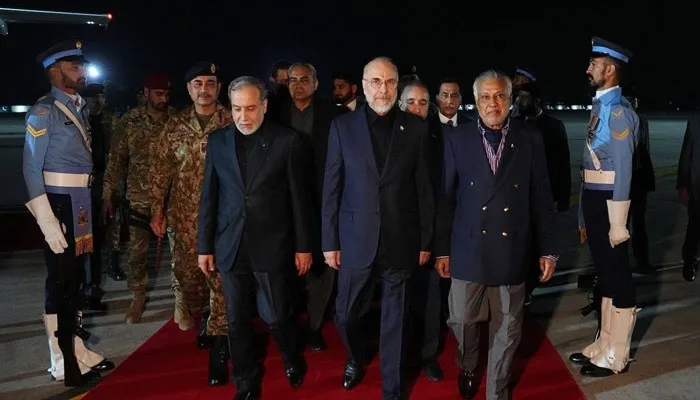
A senior Iranian delegation arrived in Islamabad late on Friday night, April 10, 2026, marking an important step towards stabilising a fragile ceasefire between Iran and the United States. The ceasefire comes after six weeks of intense conflict across the region.
The Iranian team is led by Parliament Speaker Mohammad Bagher Ghalibaf and Foreign Minister Abbas Araghchi. The group includes senior officials from Iran’s security council, the central bank, parliament, and other experts. In total, around 86 members, including media personnel, are part of the delegation. Click Here To Follow Our WhatsApp Channel
Warm Welcome in Islamabad
The delegation received a high-level welcome at Nur Khan Airbase. Key Pakistani leaders present included:
- Ishaq Dar
- Syed Asim Munir
- Sardar Ayaz Sadiq
- Mohsin Naqvi
Security across Islamabad has been extremely tight. Thousands of police and military personnel were deployed, major roads in the red zone were closed, and public holidays were announced on April 9 and 10. The Serena Hotel, where talks will take place, has been fully secured.
From Conflict to Ceasefire
These talks follow a Pakistan-mediated two-week ceasefire after a devastating six-week war involving Iran, the US, and its ally Israel. The conflict caused heavy loss of life and disrupted global oil supplies, especially through the Strait of Hormuz.
Iran has proposed a 10-point plan as the basis for negotiations. However, there is still strong public doubt within Iran, especially over reported ceasefire violations.
Tehran has also set clear conditions, including a complete ceasefire in Lebanon and the release of frozen Iranian assets.
US Delegation and Talks Format
The US delegation is expected to be led by Vice President JD Vance, along with envoy Steve Witkoff and Jared Kushner.
The talks will begin on Saturday, April 11, and are likely to follow an indirect “proximity” format, with Pakistan acting as mediator. There is also a possibility of direct meetings.
Pakistan’s Prime Minister Shehbaz Sharif has described the moment as critical for peace.
Ongoing Challenges
Despite diplomatic efforts, the ceasefire remains unstable:
- Continued accusations of violations, especially in Lebanon
- Ongoing tensions in the Strait of Hormuz
- Deep mistrust between Washington and Tehran
Iran has also highlighted the human cost of the war by displaying personal items of victims, including children.
What Happens Next?
Expectations from the talks remain cautious. Pakistan is hoping to extend the ceasefire and create a path for long-term peace discussions.
Key issues likely to be discussed include:
- Reducing tensions in Lebanon
- Sanctions relief for Iran
- Nuclear concerns
- Security in the Gulf region
As negotiations begin in Islamabad, global attention is focused on whether these talks can prevent further conflict and bring lasting stability.
You Might Also Like:
US Rescues Downed Pilot from Iran in High-Risk Operation, Trump Declares “We Got Him”
Dr.Fatemeh Ardeshir-Larijani Ousted from Emory, Visa Revoked After Protests Over Iran Links