Director Sericulture visits mulberry nurseries, farms in Srinagar, Ganderbal

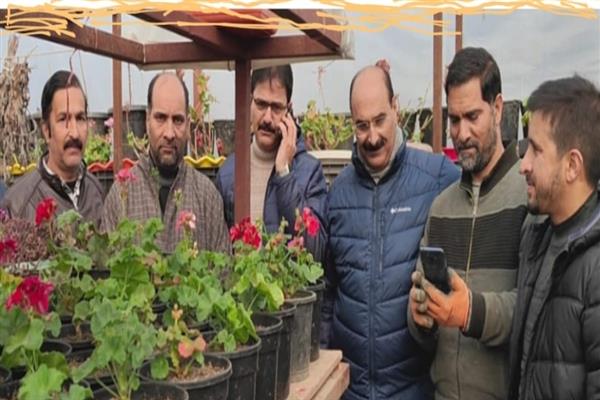
Srinagar February 05 : Ajaz Ahmad Bhat (IAS), Director Sericulture, J&K, today undertook an extensive field visit to Seed Station, New Theed Harvan, Srinagar and various Mulberry Nurseries/Farms in Danihama, Noubough, Bakura, Dadi Noubough and Alastang of District Ganderbal to take stock of the ongoing up-gradation of the Seed Station and preparations for upcoming rearing season.

During the inspection, the Director Sericulture J&K interacted with Silkworm Rearers/ farmers and reiterated his commitment for extending his unwavering support for development of sericulture sector in the region. Besides, emphasized that relentless efforts need to be made for strengthening and augmenting the Silkworm Seed production so that the department will embark towards the journey of self sufficiency in Silkworm Seed in J&K. Addressing the Silkworm Rearers/Farmers, the Director assured them of the full support of the department vis-a-via technical guidance and providing of a whole lot of facilities which include rearing kits, disinfectants and financial support for construction of rearing sheds in a phased manner. He emphasized the significance of Silkworm Rearing in the agricultural landscape and highlighted the pivotal role played by farmers in the sericulture sector.The ongoing up-gradation work at the Seed Station was a focal point of the visit, showcasing the department’s dedication to modernizing infrastructure and providing state-of-the-art facilities for sericulture enthusiasts. The Director expressed his satisfaction with the progress of the up-gradation work and his commitment for creating an enabling environment for sericulture activities in J&K.The Director Sericulture J&K exhorted upon the officers to complete all the development projects well in time and work on mission mode to achieve all the targets envisioned in Holistic Agriculture Development Programme (HADP).The Director Sericulture J&K also issued on spot direction to the District Sericulture Officer, Srinagar for installation of proper fencing of all the Mulberry Nurseries/ Farms and other departmental assets, besides, enhance the surveillance of the boundary walls of all the Mulberry Nurseries, Farms, Units and various offices of the Seed Stations so as to prevent any trespassing or damage to the departmental assets.Moreover, directed the officers and officials that all measures must be taken to thwart any attempt of encroachment and immediately intimate the higher authorities in this regard to safeguard departmental assets effectively so that strict action shall be initiated against the encroachers. The Director Sericulture J&K emphasized upon the officers and other field functionaries of the Department to gear up men and machinery for ensuing silkworm rearing season and share their technical expertise with the silkworm rearers/ farmers for successful silkworm rearing and increased cocoon production.Moreover, he also directed them to involve more and more silkworm reares/farmers and youth with silkworm rearing and others sericulture practices by virtue of wide publicity and awareness programmes at ground level so that they may increase their earnings to a great extent.  The District Sericulture Officer, Srinagar and other officers were also present during the visit of the Director Sericulture J&K.(KNS)
Empowering Agriculture: Ajaz Ahmad Bhat (IAS) Director Sericulture J&K Initiates Mulberry Plantation Season in Kathua

In a proactive move to boost sericulture practices in the region, Ajaz Ahmad Bhat (IAS), Director Sericulture J&K, kickstarted this season’s Mulberry Plantation in Jammu Division. The inauguration took place at the Mulberry Nursery in Changram, Kathua, where Director Bhat planted a Mulberry Sapling.

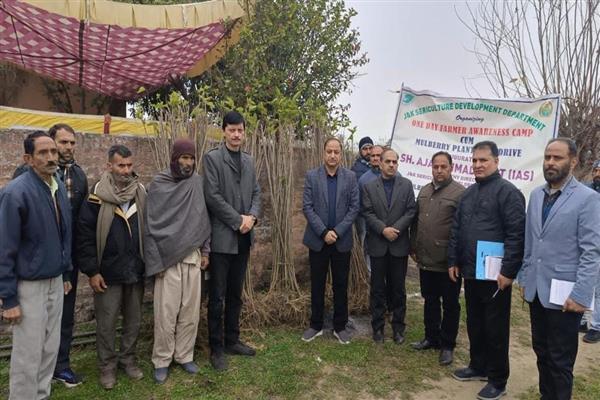
During the event, Director Sericulture J&K announced the distribution of approximately 5.50 lac standard size Mulberry Saplings for plantation, with 1.10 lakh saplings to be provided free of cost to farmers in District Kathua. Additionally, 36 lac Mulberry cuttings/roots are expected to be grown during the current season. Expressing his commitment, Director Bhat presented momentos and certificates to farmers and silkworm rearers in appreciation of their participation in a one-day awareness program organized by the Sericulture Dev. Department J&K.

Addressing the gathering, Director Bhat assured full departmental support, including technical guidance and various facilities for sericulture practices such as Silkworm Rearing, Reeling, and Weaving. He encouraged unemployed youth and farmers to engage with the department, highlighting the schemes and benefits provided by the government for their welfare. Director Bhat emphasized the integration of the Sericulture Development Department J&K into the Holistic Agriculture Development Programme (HADP), a move expected to significantly enhance the Sericulture Industry and transform the economic conditions of people in J&K.

Director Bhat extended his gratitude to the Hon’ble Lieutenant Governor J&K, the Chief Secretary of J&K, and the Principal Secretary to Govt. Agriculture Production Department for their unwavering support. He urged the public, especially the youth, to capitalize on the department’s potential to accelerate income and leverage government schemes.

For queries, Director Bhat provided contact information for the nearest Sericulture Assistant (Zone) or District Sericulture Officer, emphasizing the department’s accessibility and assistance. During his visit to District Kathua, Director Bhat urged field functionaries to provide necessary support to silkworm rearers, facilitating sericulture practices for increased cocoon production and better earnings.

The event witnessed the presence of Additional Director, Sericulture Dev. Department Jammu, Development Officer, ISDP, Rajouri, District Sericulture Officer, Kathua, and other departmental officers. Director Bhat also inspected departmental Mulberry Farms/Nurseries and offices during his visit, reinforcing the commitment to enhancing sericulture practices in the region. The move is expected to play a pivotal role in the economic development of J&K by empowering local farmers and entrepreneurs in the sericulture industry.

Cultivating Growth: Director Agriculture Kashmir Oversees Medicinal Plant Farming Advancements in Verinag

“Progress Check: Director Agriculture Kashmir Inspects Medicinal Plant Farm in Verinag for Quality Execution and Emphasizes Coordination. Ongoing efforts under HADP aim to boost aromatic and medicinal plant cultivation, tapping into Kashmir’s diverse agro-climatic conditions. Director Iqbal reinforces commitment and explores a hi-tech polyhouse at Dialgam Anantnag, showcasing advancements in agriculture. With ample opportunities in tourism, Kashmir gears up for a thriving aromatic and medicinal plant sector. #AgricultureInnovation #KashmirFarming #MedicinalPlants”

Professor Tasneem Mubarak Receives Prestigious 2023 IPI-FAI Award for Promoting Balanced Fertilizer Use

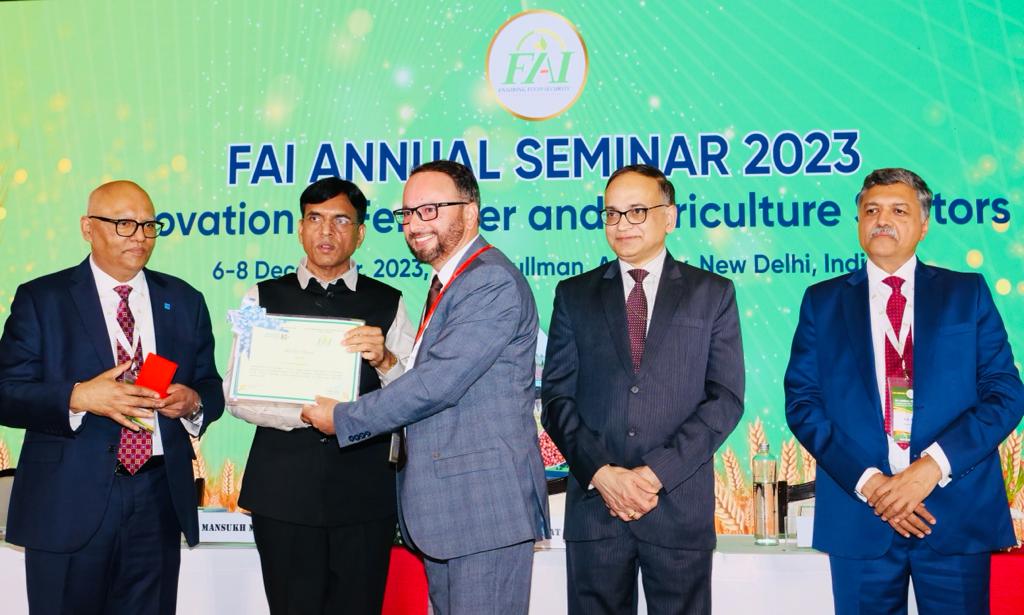
Professor Tasneem Mubarak, the Chief Scientist at MRCFC-SKUAST Kashmir, has recently received the esteemed 2023 International Potash Institute and Fertiliser Association of India (IPI-FAI) award. The distinguished recognition was bestowed upon her by Dr. Mansuk Mandaviya, the Union Minister of Chemicals and Fertilisers and Health and Family Welfare of the Government of India. The award presentation took place during the opening ceremony of the FAI Annual Seminar in New Delhi, a three-day event.

Expressing her joy at being acknowledged on such a significant platform, Professor Tasneem, who is currently stationed at the Mountain Research Centre for Field Crops SKUAST Kashmir in Khudwani, Kulgam, conveyed her belief that this recognition will serve as a source of inspiration for her and her colleagues at MRCFC. She expressed optimism that it would fuel their commitment to work with renewed energy and ambition.

The event witnessed the distribution of various awards by the Union Minister to companies, scientists, and individuals, recognizing their excellence in diverse areas such as production, environmental performance, safety, marketing, and the promotion of micronutrients and bio-fertilisers. The accolades specifically highlighted contributions to research and development aimed at enhancing agricultural productivity.

Professor Tasneem received the IPI-FAI Award for Promoting Balanced and Integrated Fertilizer Use, with a specific emphasis on Potassium. This prestigious award, which includes a cash prize of Rs 2,00,000, a Gold Medal, and a certificate, is instituted by the International Potash Institute (IPI) based in Zug, Switzerland, and administered by The Fertiliser Association of India, headquartered in New Delhi.

During the seminar, which saw participation from more than 1600 national and international delegates worldwide, Professor Tasneem emphasized the significance of the award in acknowledging and encouraging exceptional research and extension work by scientists and extension specialists. The focus was particularly on promoting balanced and integrated fertilizer usage, with a spotlight on potassium.

To know More about Agriculture Please click ME

What is Agriculture?

Agriculture is the practice of cultivating soil, raising crops, and rearing livestock for various purposes, primarily for food production. It is a fundamental human activity that involves the cultivation of plants and the domestication of animals to provide food, fiber, medicinal plants, and other products used to sustain and enhance human life.

Key components of agriculture include:

  1. Crop Cultivation: Growing plants and crops for human consumption or for other purposes, such as industrial uses or animal feed. Major crops include cereals (such as wheat, rice, and maize), pulses, fruits, vegetables, and oilseeds.
  2. Livestock Farming: Rearing and breeding animals for various products, including meat, milk, wool, and leather. Common livestock includes cattle, poultry (chickens, ducks, etc.), sheep, goats, and pigs.
  3. Agroforestry: Combining agricultural practices with the cultivation of trees and shrubs, integrating forestry and agriculture to optimize land use and provide multiple benefits.
  4. Aquaculture: The farming of aquatic organisms, such as fish, shellfish, and aquatic plants, in controlled environments for human consumption.
  5. Horticulture: The science and art of growing fruits, vegetables, nuts, seeds, herbs, sprouts, mushrooms, algae, flowers, seaweeds, and non-food crops such as grass and ornamental trees and plants.
  6. Agribusiness: The entire spectrum of commercial activities involved in the production and marketing of agricultural products, including farming, processing, distribution, and retail.

Agriculture plays a crucial role in global economies, providing food security, employment, and raw materials for various industries. The methods and practices of agriculture have evolved over time, with advancements in technology, mechanization, and sustainable farming practices aimed at improving productivity while minimizing environmental impact.

You May like :
Kashmir Art earned Global Acclaim for their artistry and elegance

Commencement of Agroforestry Enterprises and Cocoon Production Skill Training at SKUAST-K”

Two one-week entrepreneurship skill development programmes (ESDPs) on agroforestry enterprises for economic empowerment and cocoon crop production began at Sher-e-Kashmir University of Agricultural Sciences and Technology of Kashmir, Benhama and Mirgund campuses on Saturday.

The ESDPs are organised under the sponsorship of the Union Ministry of Micro, Small and Medium Enterprises.

A training program titled ‘Raising Awareness of the Socio-Economic Significance of Enterprises in Agroforestry Systems as a Tool for Achieving Economic Empowerment’ is organised by the SKUAST-K’s Division of Silviculture & Agroforestry, Faculty of Forestry.

Agoforestry

The second training titled ‘Productivity Improvement in Bi-voltine Cocoon Crop through Skill Enhancement of Job Aspiring Youth’ commenced organised by the SKUAST-K’s College of Temperate Sericulture for the students of Degree College, Hyderpora under the sponsorship of the Union Ministry of Micro, Small and Medium Enterprises. 30 students and aspiring entrepreneurs are participating in each training.

To Know More about Socio-Economic please click Here

Dean, Faculty of Forestry, Prof SA Gangoo, who was the chief guest at the inaugural function, stressed the necessity of conducting skill programs to promote entrepreneurship in Agroforestry Systems, particularly among the educated unemployed youth.

To Know About Agroforestry Click Me

Head, Division of Silviculture & Agroforestry, Dr GM Bhat emphasised the significance of enterprises in Agroforestry Systems as a Tool for achieving economic empowerment. Dr Megna Bakshi, the Program Coordinator, shed light on various aspects of the training program and the importance of enterprises in Agroforestry Systems. She discussed the program design, emphasizing its focus on providing hands-on training to the participants. Dr NA Pala, Assistant Professor, Division of SAF, presented the vote of thanks.

Director, Research, SKUAST-K, Prof Haroon R Naik, who was the chief guest at the inaugural function of cocoon production training, spoke on the importance and relevance of conducting skill programs for the youth of J&K and Ladakh, who could develop entrepreneurial skills for starting their businesses.

Associate Dean, College of Temperate Sericulture, Prof MF Baqual,  advised participating students to maximize their efforts for setting up startups based on their innovative ideas. He also thanked the university authorities for providing financial assistance through MSME. Earlier Dr SFI Qadri, coordinator of the programme, gave a brief account about the program.

You May like :

Kashmir Art earned Global Acclaim for their artistry and elegance

Kashmiri Culture : Language,Spirituality,Art,Cuisine,Traditions and Architectures

Agroforestry is an innovative and sustainable land use system that integrates the cultivation of trees or woody shrubs with traditional agricultural practices. This approach combines the benefits of forestry and agriculture, offering a holistic and environmentally friendly solution to land management. Agroforestry systems are diverse and adaptable, promoting biodiversity, conservation, and improved livelihoods for communities worldwide.

Key Components of Agroforestry:

  1. Silvopasture:
  • Integrating trees with pastureland for livestock grazing.
  • Provides shade for animals, reducing heat stress.
  • Enhances forage quality and quantity.
  1. Alley Cropping:
  • Planting rows of trees alongside crops.
  • Improves soil fertility, reduces erosion, and conserves water.
  • Creates microclimates beneficial for crop growth.
  1. Windbreaks/Shelterbelts:
  • Planting trees as barriers to protect crops, livestock, and soil from wind.
  • Minimizes wind erosion, conserves moisture, and creates a favorable microclimate.
  1. Forest Gardens/Agroforests:
  • Mimicking natural forest ecosystems with a mix of trees, shrubs, and crops.
  • Enhances biodiversity, provides diverse products, and improves soil fertility.
  1. Riparian Buffer Strips:
  • Planting trees along water bodies to protect water quality.
  • Prevents runoff, filters pollutants, and stabilizes stream banks.

Benefits of Agroforestry:

  1. Biodiversity Conservation:
  • Promotes diverse ecosystems that support a wide range of plant and animal species.
  • Creates habitats for beneficial insects, birds, and other wildlife.
  1. Soil Health Improvement:
  • Reduces soil erosion and compaction.
  • Enhances nutrient cycling and increases organic matter content.
  1. Climate Change Mitigation:
  • Trees act as carbon sinks, sequestering carbon dioxide from the atmosphere.
  • Mitigates the impacts of climate change by regulating temperature and precipitation.
  1. Increased Productivity:
  • Improves crop yields by providing shade, wind protection, and nutrient cycling.
  • Diversifies income sources through the production of timber, fruits, nuts, and other products.
  1. Water Conservation:
  • Reduces water runoff and enhances water infiltration.
  • Maintains water quality by preventing soil and nutrient runoff into water bodies.
  1. Resilience to Climate Variability:
  • Provides a buffer against extreme weather events such as droughts and floods.
  • Enhances the adaptability of agricultural systems to changing climate conditions.
  1. Economic Viability:
  • Diversifies income streams for farmers through the sale of timber, fruits, and other products.
  • Reduces dependence on a single crop, mitigating economic risks.
  1. Community Development:
  • Enhances social and economic well-being in rural communities.
  • Fosters sustainable land management practices passed down through generations.

In conclusion, agroforestry stands as a beacon of sustainable agriculture, offering a harmonious integration of trees into traditional farming systems. The multifaceted benefits of agroforestry contribute not only to environmental conservation but also to the economic prosperity and resilience of communities. As the world faces increasing challenges related to climate change and food security, the adoption of agroforestry practices represents a crucial step toward creating resilient, productive, and ecologically balanced landscapes.

WorkShop At Sher-e-Kashmir University of Agricultural Sciences & Technology of Kashmir

Skuast Kashmir

A weeklong workshop on ‘Brand for Market’ commenced at Sher-e-Kashmir University of Agricultural Sciences & Technology of Kashmir, Shalimar campus on Monday.
The workshop was organised by the SKUAST-K’s Innovation, Incubation and Entrepreneurship (SKIIE) Centre under the sponsorship of the National Agricultural Higher Education Project (NAHEP) for the institutional development of the varsity to create awareness among participants about brand equity, product formation and technology leverage.
The workshop began with a welcome address by the Chief Executive Officer, SKIIE Centre, Naveed Hamid, who gave an overview of the workshop and its purposes and introduced various topics and experts of the seven-day workshop.
Umer Qadir Sofi, an Associate Professor at the University of Latvia, who has distinguished expertise in marketing and branding, conducted the first session. Sofi gave a broader overview of brand development, branding trends and the fundamentals of brand extensions to help participants and budding entrepreneurs and startups pitch their products and technologies to market with high confidence.
At the end of the session, a Q&A session was held in which participants asked various queries to clear their doubts. Team SKIIE Centre is coordinating the workshop.

Remarkable Journey of Kashmiri Daughters

Dr Tariq Rasool ( well known scientist ) wrote on his facebook wall that ”Our daughters are special & awesome in many ways. We invest the same amount of energy/resources in our children but generally daughters are more responsive, motivated & always trying their best with sincerity & seriousness. Today, more than 70% of our students are females who are keen and ambitious to learn & develop skills”

In the tapestry of family life, the unique threads of daughters weave a story of resilience, determination, and boundless potential. Our daughters, each a shining star in her own right, bring a special kind of magic into our lives. It is a magic born out of the shared dreams, aspirations, and the unwavering support we provide, echoing the sentiment that they are indeed special and awesome in countless ways.

As parents, we invest an equal measure of energy and resources in all our children, fostering an environment where they can grow, learn, and thrive. However, there’s an undeniable truth that daughters often display a remarkable responsiveness, motivation, and an unwavering commitment to giving their best. Their sincerity and seriousness towards their pursuits become a source of inspiration for all those around them.

In our educational landscape, this unique dynamism is vividly reflected. Today, it is heartening to note that more than 70% of our student body comprises extraordinary young women. These daughters, students in their own right, stand at the forefront of a movement characterized by eagerness and ambition. Their desire to learn and develop essential skills is not just a statistic but a testament to the changing narratives of gender roles and expectations.

Our daughters, ambitious and keen learners, exemplify the spirit of progress and resilience. Their journey is a testament to the power of education, empowerment, and the breaking down of societal barriers that once constrained the aspirations of women. As we witness this transformation, it becomes clear that the future is not just female; it is empowered, determined, and ready to make a lasting impact.

In celebrating the accomplishments of our daughters, we acknowledge the importance of nurturing environments that recognize and harness their potential. It is a collective responsibility to continue fostering educational spaces where every child, regardless of gender, can thrive and contribute meaningfully to society.

As we look towards the future, guided by the shining examples of our daughters, let us champion their aspirations, provide unwavering support, and create a world where each one can fulfill her dreams without limitations. Our daughters are not just the bearers of dreams; they are the architects of a future that embraces equality, diversity, and boundless possibilities.

Absolutely, fostering an environment of encouragement, support, and equality is crucial for both daughters and sons. In today’s world, it’s essential to recognize and nurture the unique potential of every child, regardless of gender. Here’s an expanded perspective on the importance of encouraging both daughters and sons.

In the journey of parenthood, our responsibility extends beyond gender stereotypes and biases. It is imperative that we encourage, support, and empower both our daughters and sons to reach their full potential. The narrative of empowerment should be all-encompassing, acknowledging the inherent strengths and abilities of every child, irrespective of their gender.

Our daughters, with their unique qualities of resilience, determination, and empathy, deserve every opportunity to explore and excel in their chosen paths. Likewise, our sons, with their individual talents and aspirations, should be encouraged to break free from traditional expectations and pursue their passions without constraints.

In the realm of education and personal development, it is heartening to witness the growing recognition that every child, be it a daughter or a son, deserves equal access to resources, opportunities, and encouragement. The focus is shifting towards creating an inclusive environment where talents are nurtured, ambitions are supported, and dreams are not limited by societal expectations.

Encouraging our daughters as well as our sons is not just about breaking gender stereotypes; it is about fostering a sense of equality that transcends traditional roles. By instilling values of respect, understanding, and open-mindedness, we pave the way for a future where our children can thrive as individuals, unrestricted by predefined societal norms.

As parents, educators, and influencers, we play a pivotal role in shaping the mindset of the next generation. Our commitment to gender equality should reflect in our words, actions, and the opportunities we provide. Let us create an environment where our daughters and sons feel empowered to explore, learn, and grow without the limitations of gender-based expectations.

In celebrating the unique qualities of both our daughters and sons, we contribute to building a society that values diversity, embraces individuality, and recognizes the limitless potential within each child. The path to a brighter future involves fostering an environment where all children can flourish, unburdened by gender biases, and equipped to create a world that values and respects the contributions of every individual, regardless of gender.

First board of Directors meeting in SKUAST-K 

SKUAST-K Innovation, Incubation, and Entrepreneurship (SKIIE) Centre marked a significant milestone with its inaugural board of directors meeting convened on Thursday at the Discovery Building in the Shalimar campus. The gathering, attended by key board members such as Prof Azmat Alam Khan, OSD to Vice Chancellor, SKUAST-K, Dr Farhet A Shaheen, associate professor, School of Agriculture Economics, SKUAST-K, and Naveed Hamid, Chief Executive Officer of SKIIE Centre, among others, aimed to chart the future course of action and approve the work agenda as per the mandate.Click Here To Follow Our WhatsApp Channel

The SKIIE Centre, operating as a Section 8 company of SKUAST-K, enjoys support from the Department of Sciences and Technology (DST), Government of India, under the Inclusive Technology Business Incubation (iTBI) National Initiative For Developing And Harnessing Innovations (NIDHI) scheme. This support is geared towards cultivating an environment of innovation and entrepreneurship among students, faculties, entrepreneurs, and the local communities.

Naveed Hamid, CEO of SKIIE Centre, led the meeting proceedings, providing insights into the status and progress made in the realm of incubation and startups. He highlighted the innovative strategies implemented by SKIIE Centre, leading to its recognition as the top player in innovation and entrepreneurship, as reflected in the rankings released by DST J&K UT among all universities in J&K UT.

The DST team commended SKIIE Centre’s initiative to establish sustainable models for the incubator and entrusted the responsibility to CEO Naveed Hamid for newly sanctioned incubators in the Kashmir region, emphasizing the need to streamline their incubation activities.

Chaired by Prof Azmat Alam, the BoD meeting saw an appreciation of the university’s achievements in innovation, incubation, and entrepreneurship through the support of SKIIE Centre. The meeting concluded with a vote of thanks from Dr Farhet A Shaheen.

Following the board meeting, the DST team, led by Dr Praveen Roy, engaged with Prof Nazir Ahmad Ganai, Vice Chancellor of SKUAST-K. During the interaction, Prof Ganai briefed the DST team on the measures taken to position SKUAST-K as the country’s foremost innovation-led farm university.

Mind-Blowing Partnership: LuLu Group & SKUAST-K to Revolutionize Kashmir Exports!

LuLu Group

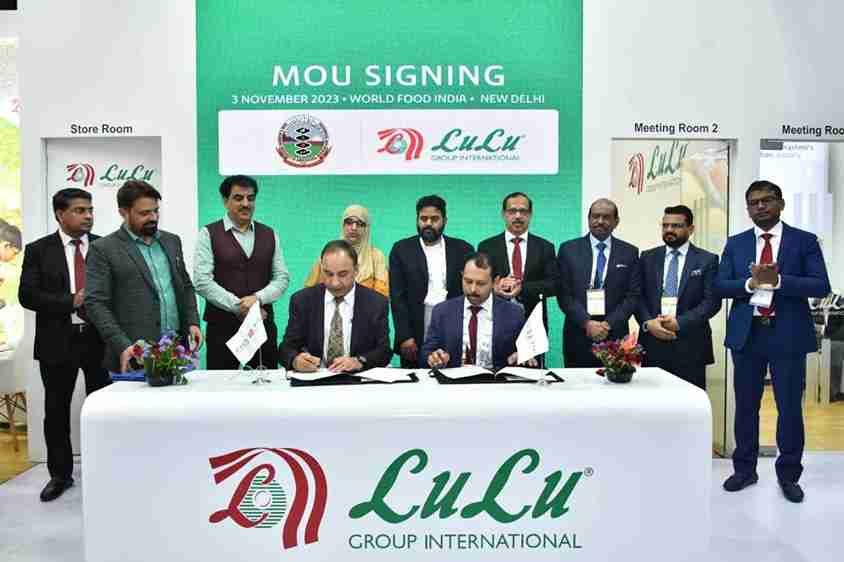
SKUAST-K has entered into a Memorandum of Understanding (MoU) with the prominent LuLu Group, headquartered in Abu Dhabi, aiming to establish a robust value chain for the export of Kashmiri products. This significant agreement was formally sealed during the World Food India 2023 expo at Pragati Maidan, New Delhi, with Prime Minister Narendra Modi inaugurating the event, where 81 countries are actively participating.

The MoU signing ceremony witnessed the participation of SKUAST-K’s Vice Chancellor, Prof. Nazir Ahmad Ganai, and the CEO of LuLu Group’s Fair Exports India Division, Najimuddin Ibrahim. The primary objective of this collaboration is to foster mutual cooperation to support agricultural entrepreneurs, Self Help Groups (SHGs), and Farmer Producer Organizations (FPOs) in Kashmir by facilitating their access to global markets.

LuLu Group, in partnership with SKUAST-K, will play a pivotal role in enabling SHGs and FPOs to reach global markets with their agricultural products. Furthermore, LuLu Group will also assist in the placement of BTech Food Technology students from SKUAST-K.

Prof. Ganai emphasized that the central focus of this MoU is to establish a seamless value chain from farm to fork. SKUAST-K will provide essential services such as residue analysis and quality certification for the procurement of Kashmir-based products by LuLu Group, which are destined for import to various countries, particularly in the Gulf and other parts of the world.

It’s worth noting that SKUAST-K boasts state-of-the-art labs and cutting-edge technology for the analysis of residues and the quality assessment of fruits and various food items.

Najimuddin Ibrahim, the CEO of LuLu Group’s Fair Exports India Division, expressed his commitment to economic and agricultural development by enhancing market linkages within the region. He described the MoU as a testament to the dedication of both SKUAST-Kashmir and LuLu Group International towards this shared goal.

LuLu Group International is a distinguished Abu Dhabi-based conglomerate with an impressive annual turnover of US$ 8 billion. The group’s extensive operations span across 23 countries and encompass diverse sectors, including hypermarkets, shopping mall development, manufacturing, trade, hospitality, and real estate. The group has a significant presence in the import and trade sectors in GCC countries.

In 2022, LuLu Group joined forces with the Jammu and Kashmir Union Territory Government to establish a food processing and logistic hub in Kashmir.

In line with the terms of the MoU, SKUAST-K will also provide training and capacity-building programs to enhance the skills and knowledge of SHGs and FPOs. This will ensure that they align with international quality standards and compliance requirements. Additionally, SKUAST-K will collaborate with SHGs and FPOs to diversify their product range, expanding their access to a broader spectrum of international markets. Joint efforts will be directed towards maintaining the highest international quality and safety standards for their products.

Jammu and Kashmir Agriculture: Battling Food Deficit and Nurturing Growth

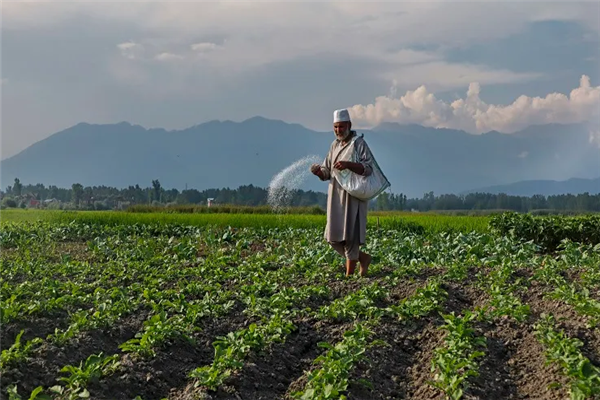
Jammu and Kashmir, now a Union Territory, boasts breathtaking natural beauty, but when it comes to food production, it faces a significant challenge. The region is food deficit, with a substantial disparity between the production of food grains and their consumption. To meet the dietary needs of its residents, Jammu and Kashmir must import approximately 7 lakh metric tonnes of food grains annually.

As of the end of the 2013-14 fiscal year, the Kashmir Division achieved food grain production of 9.9 lakh metric tonnes. However, despite this substantial output, the deficit remains alarmingly high at 21.70%, which equates to about 2.65 lakh metric tonnes of food grains. Several factors contribute to this ongoing food deficit in Kashmir.

Geography and Climate:

The geographical and climatic conditions in Kashmir Division present formidable challenges to agriculture. A significant portion of the region is mono-cropped, which limits the diversity of crops that can be grown. Harsh weather conditions and terrain further hinder agricultural productivity.

Fragmented Land Holdings:

Another key factor contributing to the food deficit is the prevalence of small and fragmented land holdings. These fragmented plots minimize the scope for mechanization and the implementation of modern agricultural practices, which are essential for boosting production.

Land Conversion:

The conversion of agricultural land for horticultural and other non-agricultural purposes exacerbates the deficit. The shift towards non-agricultural land use reduces the arable land available for food grain production.

In a concerted effort to narrow the food deficit gap, the Agriculture Department of Jammu and Kashmir has been working tirelessly to enhance food crop production in the region. Several Centrally Sponsored Schemes have been put into action to incentivize farmers to adopt the latest agricultural technologies and best practices, all aimed at increasing production.

In recent years, the Agriculture Department has achieved remarkable success in enhancing the production levels of crucial crops such as paddy, maize, vegetables, and saffron. This achievement not only boosts food security but also improves the economic condition of local farmers. However, the journey towards self-sufficiency is ongoing, and there is much more work to be done to ensure a prosperous and food-secure future for the Union Territory.

Efforts are being made to further refine the implementation of agricultural schemes and strategies to bolster the agricultural sector. The aim is not only to reduce the deficit but also to help the region thrive agriculturally, leveraging its unique natural assets and overcoming the challenges that have long stood in the way of food security in Jammu and Kashmir. With determination and a strategic approach, the future holds the promise of a more self-sufficient and food-secure Union Territory.

You May Like

Kashmir Agriculture