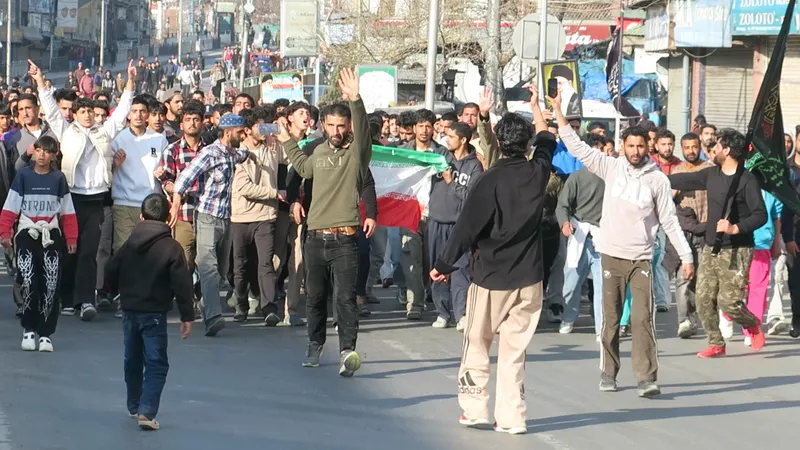
Several parts of Kashmir witnessed protests against the killing of Iran’s Supreme Leader Ayatollah Ali Khamenei for the second day on Monday, with security forces using mild force to disperse protesters in a few places.According to the officials, the protests broke out in Bemina, Gund Hassibhat, and Jehangir Chowk areas of the city here, and in Pulwama town in south Kashmir. Click Here To Follow Our WhatsApp Channel
Scores of protesters gathered in these areas, which have a large Shia population. They marched through the streets, raising anti-US and anti-Israel slogans.In some areas, the security forces resorted to using mild force to disperse the protesters.
Khamenei was killed in joint air strikes by the US and Israel on Iran early Saturday. Iranian state media confirmed his death on Sunday.Iran is firing missiles at Israel and the Arab countries in retaliation.
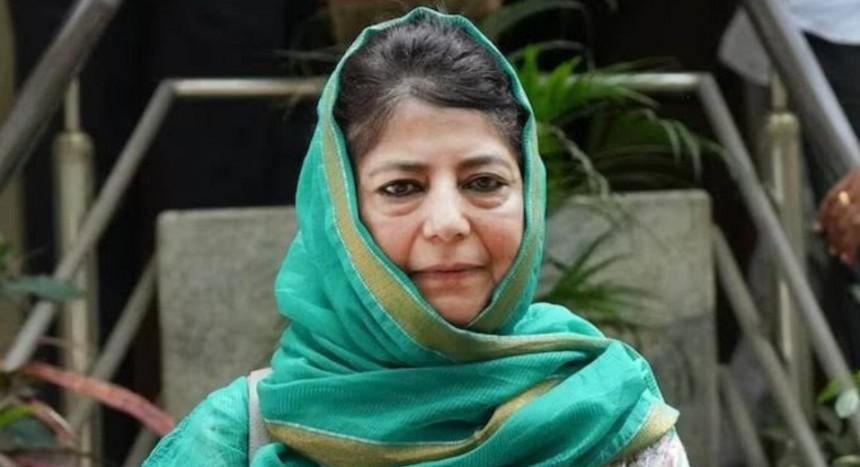
Peoples Democratic Party (PDP) President Mehbooba Mufti on Sunday strongly criticised Israel and the United States over the reported killing of Iran’s Supreme Leader Ayatollah Ali Khamenei, calling it a “deeply tragic and shameful point in history.”
In a post shared on X, Mufti said that Israel and the USA openly boasting about Khamenei’s death reflected a dark chapter in global politics. She added that what was even more “disgraceful and shocking” was the explicit and implicit support provided by some Muslim countries, which, according to her, chose “convenience and expedience over conscience.” Click Here To Follow Our WhatsApp Channel
“Today marks a deeply tragic and shameful point in history, with Israel and the USA boasting about the killing of Iran’s beloved leader, Ayatollah Ali Khamenei,” she wrote.
Mufti further stated that history would remember who stood for justice and who supported oppression. “History will stand testament to who fought for justice and who helped the oppressors,” she said.
Expressing solidarity with Iran, she added, “Prayers with the people of Iran. May Allah grant them strength and victory over forces of tyranny and injustice.”
Her remarks come amid rising regional tensions following reported joint US–Israel strikes on Iran, which have triggered political reactions and protests in several parts of the region.
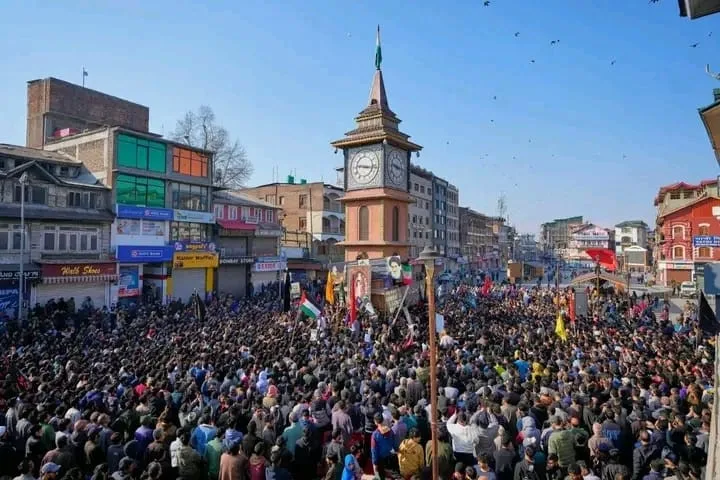
Hundreds — and according to some reports, thousands — of people, mainly from the Shia Muslim community, took to the streets in Srinagar and other parts of the Kashmir Valley on Sunday. They were mourning and protesting the reported killing of Iran’s Supreme Leader Ayatollah Ali Khamenei in joint US–Israeli airstrikes.
The demonstrations began shortly after Iranian state media confirmed Khamenei’s death early Sunday (Iran local time), following massive strikes that reportedly started late Saturday. Click Here To Follow Our WhatsApp Channel
Key Locations of Protests
In Srinagar, large gatherings were seen at:
Lal Chowk (Ghanta Ghar area)
Saida Kadal in downtown
Several Shia-majority neighbourhoods
Similar processions were reported from:
Budgam
Bandipora
Baramulla
Pulwama
Sonawari
Kargil
Crowds reportedly gathered after Sehri (pre-dawn meal during Ramadan), raising anti-US and anti-Israel slogans, waving black and Iranian flags, carrying portraits of Khamenei, and reciting Nauha (mourning verses).
Security Measures and Official Response
Authorities deployed extra security personnel across sensitive areas and diverted traffic to maintain order. Officials described the situation as largely peaceful, with no major clashes or violence reported despite the scale of mobilisation.
Jammu and Kashmir Chief Minister Omar Abdullah appealed for calm. He expressed concern over developments in Iran while urging residents not to allow tensions abroad to disturb local peace.
Contrast with Reports from Iran
While mourning was visible in parts of Kashmir, reports from Iran suggested mixed reactions — including celebrations in some cities. International outlets such as CNN reported scenes of cheering and slogans against the Iranian regime in certain areas, presenting a sharp contrast to the solidarity marches in Kashmir.
Broader Regional Context
The protests come amid an escalating conflict involving the United States, Israel, and Iran. Iranian state media earlier announced a 40-day public mourning period following Khamenei’s reported death.
As tensions continue to rise across the Middle East, authorities in Kashmir remain alert, monitoring developments closely. The situation remains fluid, both regionally and locally.
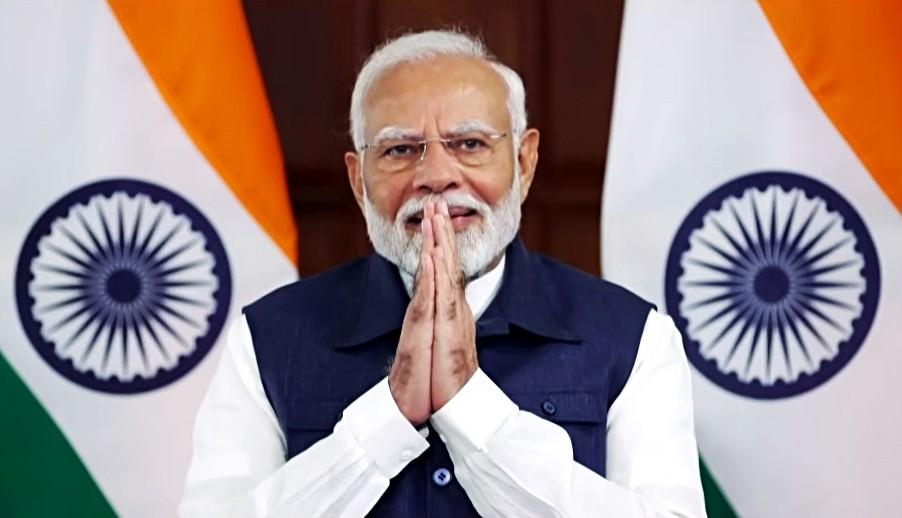
The Prime Minister has congratulated the J&K team for their first-ever Ranji Trophy win.
The Prime Minister stated that this historic triumph reflects the remarkable grit, discipline, and passion of the team. Highlighting that it is a proud moment for the people of Jammu and Kashmir, he noted that the victory underscores the growing sporting passion and talent in the region. Click Here To Follow Our WhatsApp Channel
The Prime Minister expressed hope that this feat will inspire many young athletes to dream big and play more.
The Prime Minister shared on X post as per news agency Kashmir News Service (KNS) “Congratulations to the Jammu and Kashmir team for their first ever Ranji Trophy win! This historic triumph reflects remarkable grit, discipline and passion of the team. It is a proud moment for the people of Jammu and Kashmir and it highlights the growing sporting passion and talent there. May this feat inspire many young athletes to dream big and play more.” (KNS)
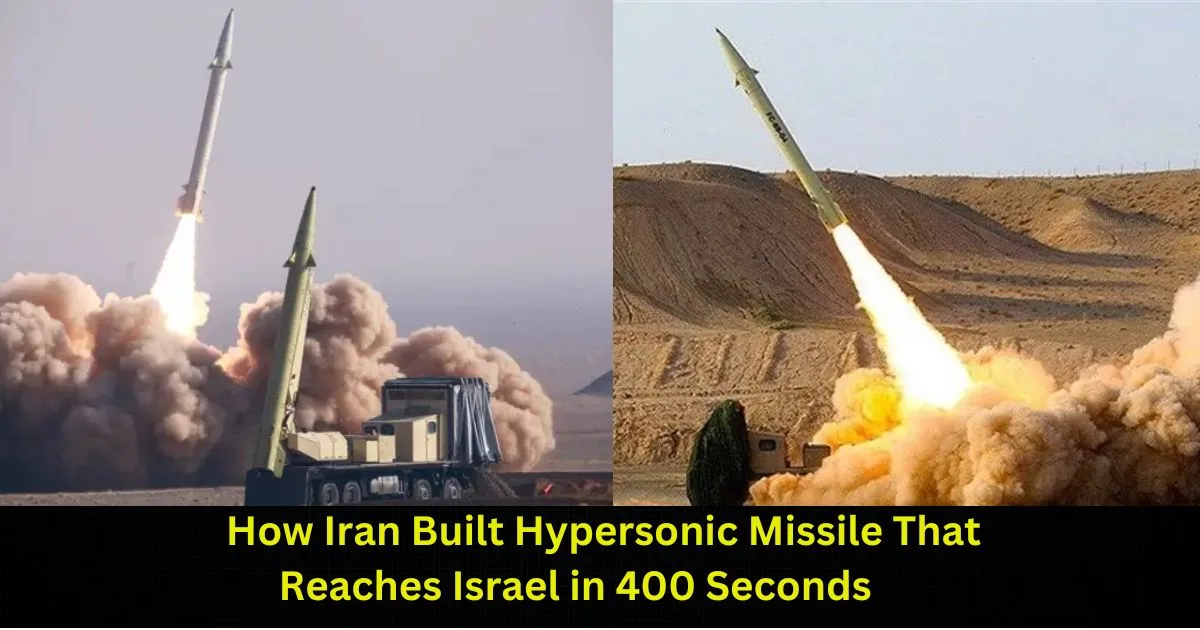
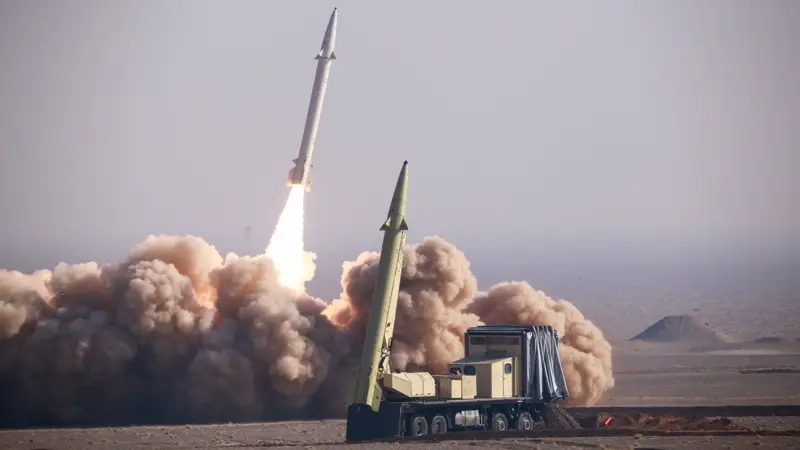
Picture this: It’s June 2023 in Tehran. Giant billboards pop up across the city, showing a sleek new missile with bold text in Persian, Arabic, and Hebrew: “400 seconds… to Tel Aviv.” The message was impossible to miss. Iran had just unveiled the Fattah-1, its first claimed “hypersonic” ballistic missile, and the Islamic Revolutionary Guard Corps (IRGC) was making sure everyone — especially Israel — got the point. From launch sites in western Iran, they said, this weapon could cover roughly 1,400 km and hit Israel’s biggest city in under seven minutes. Click Here To Follow Our WhatsApp Channel
Fast-forward to early 2026, and the Fattah family isn’t just propaganda anymore. Iran has fired these missiles in real combat multiple times, rebuilt its arsenal after heavy fighting in 2024–2025, and continues to improve the system despite renewed UN sanctions. Here’s the remarkable (and controversial) story of how Iran pulled this off.
The Fattah Missiles: What Iran Actually Built
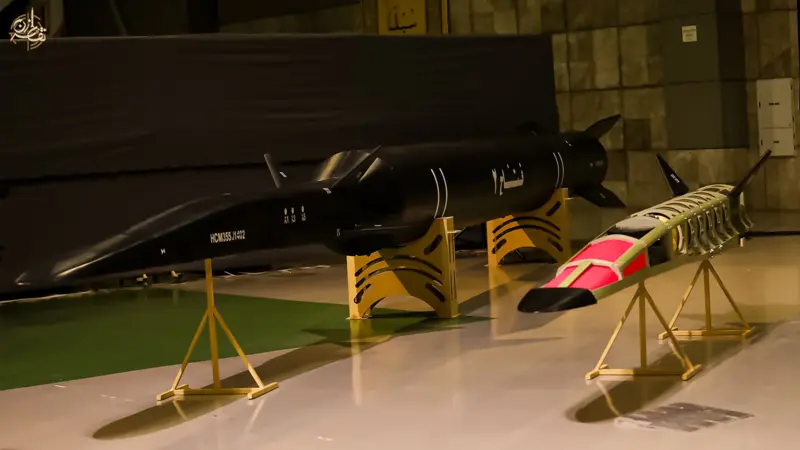
Fattah-1 was unveiled on 6 June 2023 after being announced in late 2022. Iran claims it reaches Mach 13–15 (roughly 16,000–18,500 km/h), has a 1,400 km range, and carries a 350–450 kg warhead. The key feature is a maneuverable re-entry vehicle (MaRV) with its own small solid-fuel motor and thrust-vector control, letting the warhead dodge defenses in the final phase of flight — and even do some maneuvering outside the atmosphere.
Fattah-2 followed in November 2023. It swaps in a hypersonic glide vehicle (HGV) for even more agility across the entire trajectory. Iran says it can hit 1,500 km and is even harder to intercept. Both are solid-fuel designs (at least the booster stage), meaning they can be launched quickly from mobile trucks or underground silos — a big upgrade over older liquid-fuel missiles that need hours to prepare.
The “400 seconds” claim comes straight from IRGC commander Brig. Gen. Amir Ali Hajizadeh. It’s marketing as much as math (a pure Mach-15 flight over 1,400 km would actually be faster), but the point was clear: this missile is designed to overwhelm Israel’s layered defenses — Arrow, David’s Sling, and Iron Dome.
From the Battlefield: Real-World Use (2024–2026)
Iran didn’t wait long to test its claims in combat:
April 2024 — First direct strike on Israel; debris analysis later confirmed Fattah-1 parts.
1 October 2024 (“Operation True Promise II”) — Roughly 200 ballistic missiles, including Fattah-1s, in the largest attack yet. Some penetrated defenses and caused damage.
2025 strikes (including waves in June) — Iran again claimed Fattah-1 and -2 use, with the IRGC boasting that the missiles “shook the shelters of the Zionists.”
Early 2026 — Amid fresh US-Israeli strikes on Iran, Tehran launched retaliatory barrages (reportedly “Operation True Promise” follow-ons) that included Fattah variants alongside Sejjil and older systems. Iranian state media and analysts say the hypersonic weapons targeted Israeli and US bases in the region.
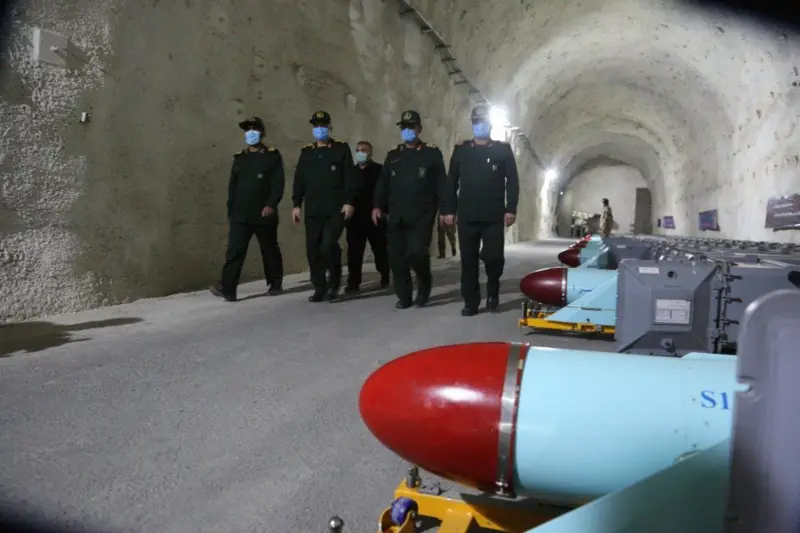
Despite losses in the 2024–2025 exchanges, Iran has rebuilt its stockpile to an estimated 1,500–3,000+ ballistic missiles by early 2026, including precision-guided and hypersonic types. Underground “missile cities” and rapid replenishment (helped by fresh Chinese propellant shipments) made this possible.
How They Did It: Sanctions Backfired
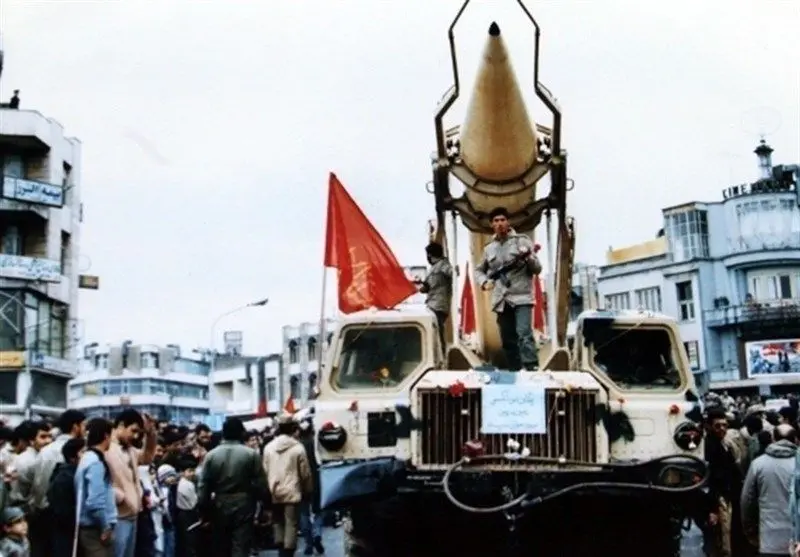
Iran’s missile program was born in desperation. During the 1980–88 Iran-Iraq War, Saddam Hussein rained Scud missiles on Iranian cities. Tehran had almost no air force left, so it begged for help. Libya sent the first 20 Scud-Bs in 1984. North Korea and China followed with more missiles, launchers, and know-how.
Sanctions kicked in hard after the revolution and tightened over the nuclear program. Instead of crippling the effort, they forced Iran to get creative:
Reverse engineering became the national sport. Iranian engineers took apart imported Scuds and produced the Shahab-1 (330 km) and Shahab-2 (500 km) by the early 1990s. The Shahab-3 (based on North Korea’s Nodong) gave them a 1,300 km reach by the late 1990s.
Solid-fuel revolution. Older liquid-fuel missiles were slow to fuel and vulnerable on the launch pad. Iran shifted to solid propellants (thanks to the Shahid Bagheri Industrial Group) so missiles could be fired in minutes from mobile launchers or hidden silos.
IRGC takes charge. The Revolutionary Guard’s Aerospace Force, led for years by the late Hassan Tehrani Moghaddam (the “father of Iran’s missiles”), drove the program. Facilities like the Shahid Hemmat Industrial Group (liquid engines) and underground complexes in Khojir, Semnan, and Isfahan kept production going.
Space program crossover. Work on satellites gave Iran lightweight composite casings and heat-resistant materials needed for high-speed re-entry.
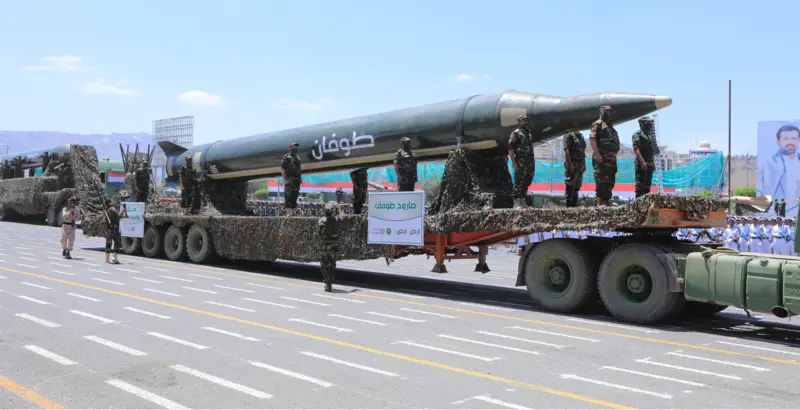
Universities and young engineers were pulled in. Sanctions made imports almost impossible, so Iran built its own machine tools, gyroscopes, and guidance systems. The result? A genuinely indigenous industry that now exports drones and missiles to Russia, the Houthis, and others.
The Foreign Help That Never Stopped
Self-reliance has limits. Iran still got (and gets) outside assistance, often through shadowy networks:
North Korea — The biggest early partner. Designs, engines, and even entire missiles flowed in the 1980s–2000s. Similarities between Iranian and North Korean systems are obvious.
China — Supplied components, machine tools, and — crucially — huge shipments of ammonium perchlorate and sodium perchlorate (solid-propellant ingredients). In 2025 alone, Iran received thousands of tons from China, enough for hundreds of new missiles. Recent reports suggest Beijing is also helping with anti-ship missiles.
Russia — More recent cooperation, especially after Iran supplied drones for Ukraine. Some analysts see Russian fingerprints in upgrades to guidance and maneuverability.
These ties continue despite sanctions because the players use front companies, third countries, and barter deals (oil for tech).
The Reality Check: Hype vs. Capability
Western and Israeli experts are skeptical about the “Mach 15” label. Most say the Fattah is not a true hypersonic glide vehicle that stays in the atmosphere at hypersonic speeds the whole way. It’s a ballistic missile with a fancy MaRV that maneuvers mainly in the terminal phase — impressive, but not revolutionary like China’s or Russia’s scramjet-powered designs.
That said, even critics admit two things:
The maneuverability makes interception much harder.
Iran has now proven it can hit Israel with these weapons, and some got through.
In short: not invincible, but a serious step forward that forces Israel and the US to spend billions on better defenses.
Why This Story Matters
Sanctions were meant to stop Iran from building advanced weapons. Instead, they accelerated a homegrown defense industry, pushed Tehran closer to Russia, China, and North Korea, and turned the IRGC into a missile superpower in the Middle East.
Today, the Fattah series is in serial production, Iran’s arsenal is being replenished faster than many expected, and the “400 seconds to Tel Aviv” threat feels a lot more real than it did in 2023. Whether the missiles will ever be used at full scale is a political question, not a technical one. But the fact that Iran built them at all — under the harshest sanctions in modern history — is a masterclass in resilience, reverse engineering, and geopolitical defiance.
The billboards are gone now, but the missiles remain. And in a region already on edge in 2026, that’s a message no one can ignore.
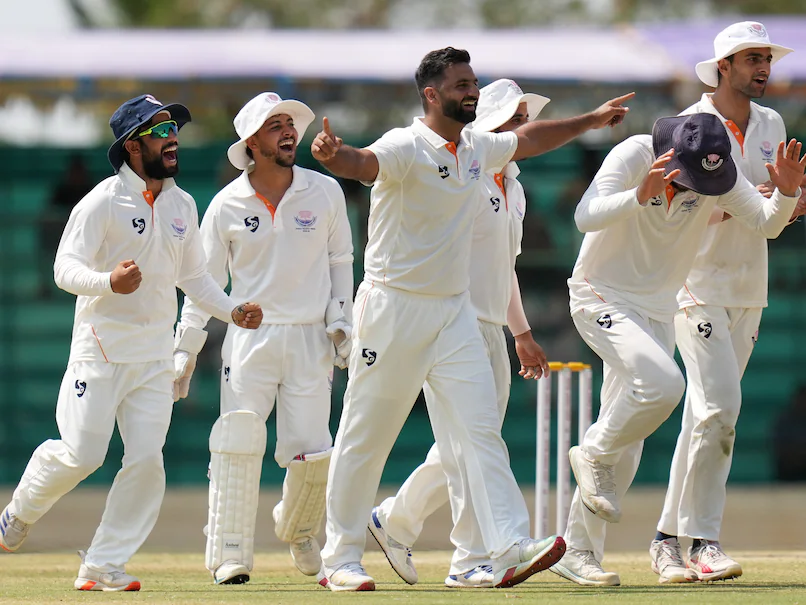
The final against Karnataka ended in a draw on Saturday, 28 February 2026, at the KSCA Cricket Ground in Hubballi. But J&K were declared champions because of their huge first-innings lead of 291 runs.
This is a massive moment after 67 years since J&K first played in the Ranji Trophy back in 1959-60. The team, led by captain Paras Dogra, completely dominated the game against a strong Karnataka side that included stars like KL Rahul, Devdutt Padikkal, Mayank Agarwal, and Prasidh Krishna.Click Here To Follow Our WhatsApp Channel
Match Summary
J&K 1st innings: 584 all out (Shubham Pundir hit 121, Yawer Hassan made 88; Prasidh Krishna took 5 wickets for Karnataka).
Karnataka 1st innings: 293 all out (Mayank Agarwal scored 160; Auqib Nabi took 5-54 – his seventh five-wicket haul this season).
J&K 2nd innings: 342 for 4 declared (Qamran Iqbal stayed not out on 160, Sahil Lotra scored 101).
J&K built a lead of over 600 runs overall before declaring. They controlled every day and never let Karnataka fight back. Auqib Nabi was named Player of the Series for his brilliant bowling.
Celebrations are happening across Jammu and Kashmir – people are full of pride! Chief Minister Omar Abdullah has announced a ₹2 crore cash reward for the team and support staff, plus government jobs for the players under special rules for top sports stars.
Many are calling this a proud day for the region and a big boost for cricket here. Players like Auqib Nabi, Qamran Iqbal, Shubham Pundir, and the whole squad are real heroes.
In a major relief to Aam Aadmi Party (AAP) leaders, a Delhi court today discharged former Chief Minister Arvind Kejriwal, former Deputy Chief Minister Manish Sisodia, and all 23 accused in the Central Bureau of Investigation (CBI) case related to the alleged Delhi Excise Policy scam.
Special Judge Jitendra Singh of the Rouse Avenue Court refused to take cognisance of the CBI chargesheet, ruling that there was no overarching conspiracy or criminal intent in the formulation and implementation of the now-scrapped Delhi Excise Policy 2021-22. The court observed that the prosecution failed to establish even a prima facie case, describing several allegations as misleading and unsupported by cogent evidence. It highlighted serious lacunae in the investigation and criticised the CBI for implicating individuals without sufficient material. Click Here To Follow Our WhatsApp Channel
The judge emphasised that serious criminal allegations against public figures require substantive backing, not mere inferences or narratives. The court noted that policy changes appeared to involve administrative deliberations rather than corrupt motives, and no evidence supported claims of a central conspiratorial role.
The decision marks the end — at least for now — of a high-profile case that had dragged on for years, involving arrests, prolonged judicial proceedings, and intense political accusations. Kejriwal and Sisodia had previously faced custody in connection with the matter, including time in Tihar Jail.
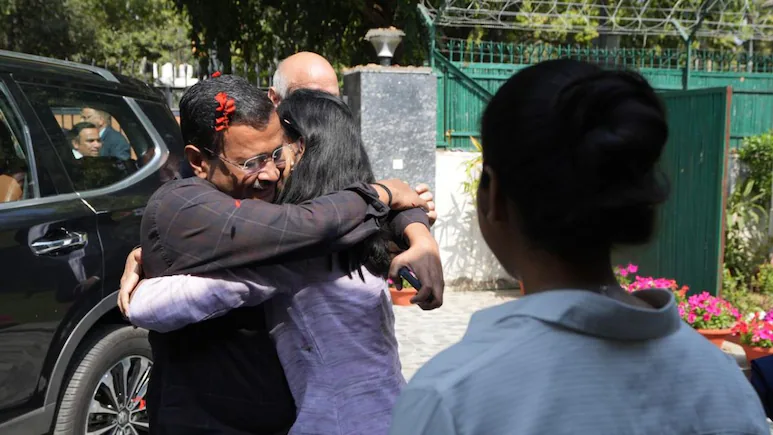
Reacting emotionally after the verdict, Arvind Kejriwal broke down in tears while addressing the media. “I am not corrupt. The court has said that Kejriwal and Manish Sisodia are kattar imaandaar (staunchly honest),” he said, alleging that the case was part of a larger political conspiracy orchestrated against AAP. He claimed Prime Minister Narendra Modi and Home Minister Amit Shah had targeted the party by arresting its top leaders, including a sitting Chief Minister — a first in the country’s history.
Kejriwal’s wife, Sunita Kejriwal, stated, “Truth always prevails,” expressing faith that justice would ultimately triumph despite the challenges faced.
Manish Sisodia was seen consoling his colleague amid the emotional moment, as family members and supporters welcomed them at home.
The CBI is reportedly planning to challenge the discharge order in the Delhi High Court, with sources indicating the agency views the ruling as contestable and intends to file an appeal after reviewing the detailed judgment.
This development provides significant political momentum to AAP ahead of future electoral battles, with party leaders framing it as vindication against what they describe as motivated investigations.
The excise policy, introduced in 2021-22 to reform liquor sales in Delhi, was scrapped amid controversy over alleged irregularities, leading to multiple probes by CBI and the Enforcement Directorate (ED). Earlier related proceedings had seen mixed outcomes, including bail grants and acquittals in some ED-linked matters.
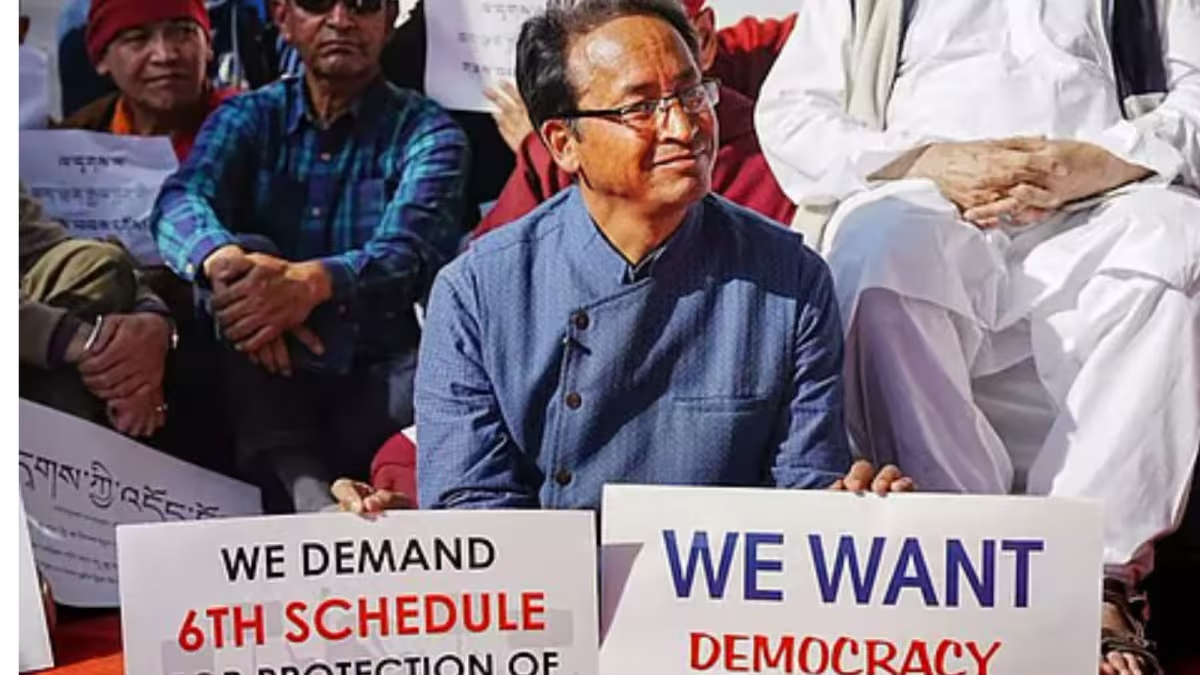
The Supreme Court on Thursday scheduled the final hearing in the plea filed by Gitanjali J Angmos, wife of Ladakh-based climate activist Sonam Wangchuk, challenging her husband’s detention under the National Security Act (NSA), for March 10.
A bench of Justices Aravind Kumar and PB Varale also clarified that the Court will not grant any more time to parties for any further arguments on the matter. Click Here To Follow Our WhatsApp Channel
“If we have any doubt (on the case), only that we will ask. That day we are closing it. We will not allow anything (beyond clearing doubts). Come what may, close it”, the Court stated.
Earlier, on February 11, the Supreme Court had questioned whether Wangchuk’s speeches and social media posts could legitimately be treated as provocative material leading to the Leh violence on September 24, 2025.
While hearing submissions by the Central government and the Leh administration defending Wangchuk’s preventive detention under the National Security Act (NSA), a Bench of Justices Aravind Kumar and PB Varale examined the speeches relied upon by the detaining authorities and raised questions on the interpretation being placed on them, particularly where Wangchuk appears to be expressing concern over youth losing faith in peaceful “Gandhian” methods of protest and the fear of a violent outbreak in the demand for Statehood.
When Additional Solicitor General KM Nataraj, appearing for the Centre, submitted that Wangchuk was the chief provocateur behind the violent protests and had instigated the youth by warning that a Nepal-like situation could arise in India, the Court questioned this reading and remarked that Wangchuk appeared to be expressing concern and surprise over the situation.
“Where does he say that? He is saying they (the youth) have taken it. He himself is surprised,” the Court asked.
Nataraj responded that such an inference could be drawn from the speech itself. He then referred to another portion in which Wangchuk allegedly stated that the deployment of armed forces in Ladakh was unfortunate.
“He says youth say peaceful methods have not proved effective,” Nataraj submitted. “This is a hybrid expression,” he added.
The Court responded that in these speeches, Wangchuk appears to be expressing worry about violence and questioned the interpretation being placed by the Centre that he’s instigating it.
“He (Wangchuk) is saying it’s worrying. He’s expressing that this is not something which would be welcome. If someone says violent — is the expression, ‘I’m worried’. Some people are abandoning the peaceful way and are willing to take violent methods; this is worrying. We are following the Gandhian way. If someone is taking a departure from that way (non-violent Gandhian method) – departure from that is worrying,” the Court said. (ANI)
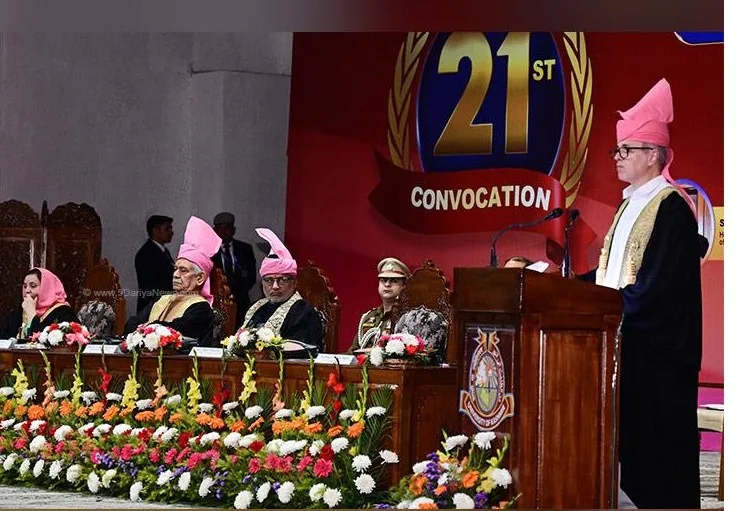
Chief Minister Omar Abdullah delivered an emotional address at the 21st Convocation of University of Kashmir, urging graduating students to recognize that their academic achievements are deeply rooted in the sacrifices of their parents.
Speaking before a distinguished gathering that included Vice President C. P. Radhakrishnan, Lieutenant Governor Manoj Sinha, faculty members, and thousands of students at the historic Naseem Bagh campus, the Chief Minister called on graduates to begin their new journey with gratitude and humility.Click Here To Follow Our WhatsApp Channel
“Before we talk about your future, we must honor those who got you here,” Omar Abdullah said, emphasizing that every degree awarded represents years of silent struggle and unwavering support from families. He described parents enduring cold nights, long working hours, and financial hardships to ensure their children could pursue higher education.
“This degree belongs to them,” he declared, drawing applause from the audience. Quoting a well-known hadith—“Your heaven lies under the feet of your mother”—he reminded students that their success is built upon the dreams and sacrifices of their elders.
The convocation ceremony marked a significant milestone for the University, with over 59,000 degrees and medals awarded, reflecting its expanding academic footprint, research output, and alignment with the National Education Policy. The event celebrated not only scholastic achievement but also the spirit of perseverance that defines the region’s youth.
Describing the graduating class as the “spring of Jammu and Kashmir in full bloom,” the Chief Minister urged them to become architects of a progressive and inclusive future. He encouraged students to define success beyond financial gain, stressing that “success is not just a high salary; it is a peaceful mind and a resilient heart.”
Omar Abdullah also reiterated his government’s commitment to creating merit-based opportunities, ensuring that talent and dedication—rather than background—determine success.
The speech resonated strongly with attendees, with many visibly moved by the tribute to parents. Video clips from the ceremony quickly circulated across social media platforms, amplifying the message of gratitude, cultural respect, and collective progress.
The convocation concluded on a celebratory note, reinforcing themes of academic excellence, family values, and a shared vision for a brighter Jammu and Kashmir.
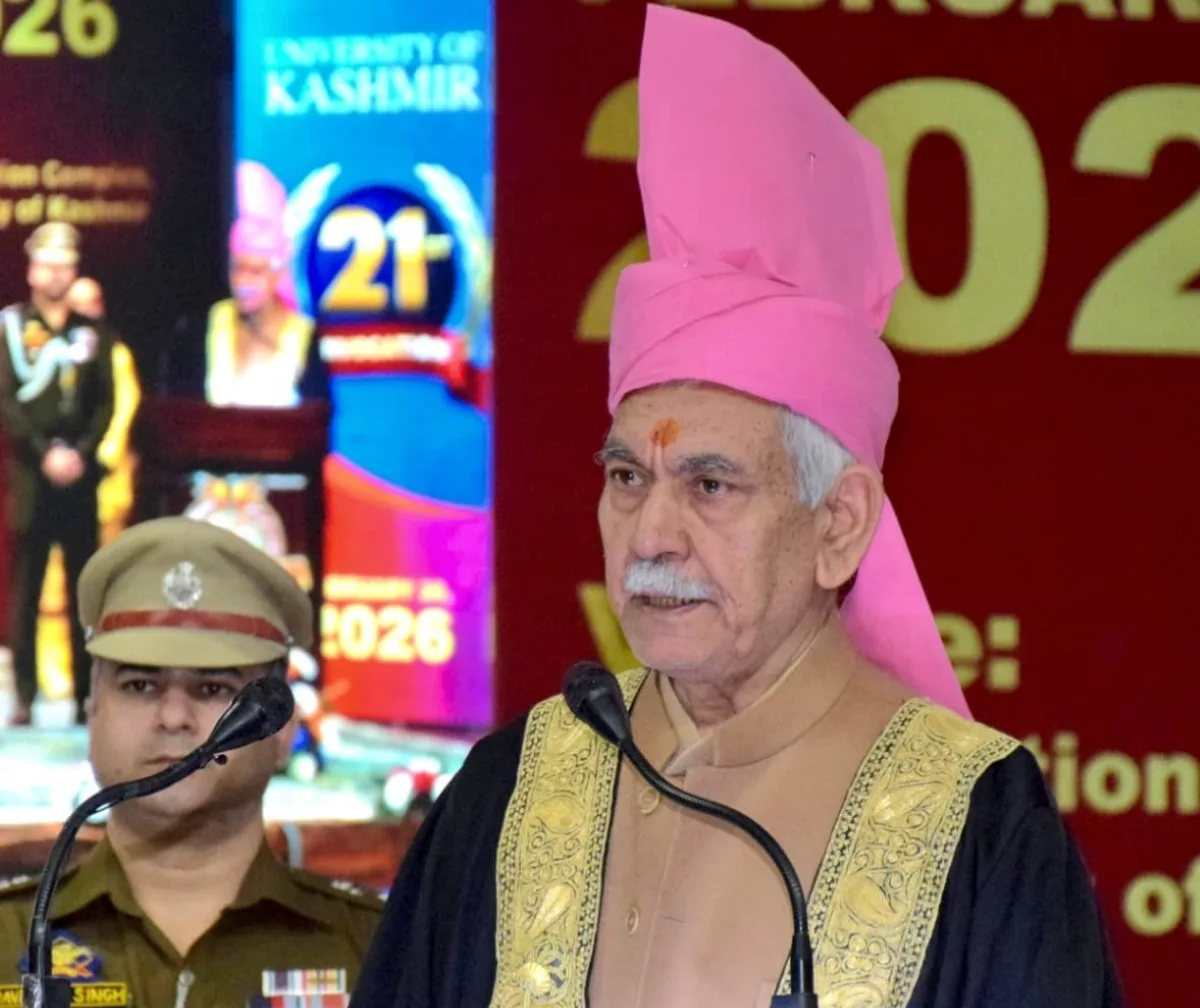
Lieutenant Governor Manoj Sinha on Thursday addressed the 21st Convocation of University of Kashmir. The convocation ceremony was graced by Hon’ble Vice President of India, Shri C.P. Radhakrishnan.
The Lieutenant Governor extended his best wishes to all graduating students for a prosperous future. He them to set a clear path for their future – ‘One purpose. One priority- Country first’. Click Here To Follow Our WhatsApp Channel
“Always remember when you build the country, the country builds you back. Nations don’t rise only from resources. They rise from educated people and when the nation rises, so do you,” he said.
The Lieutenant Governor said that the convocation at the University of Kashmir is a vivid proof of generational metamorphosis, fulfilled aspirations, and youth’s unwavering faith embodied in modern education.
“The knowledge earned in University of Kashmir isn’t merely skills but it is holistic personality growth. Education builds self-confidence, equips for meaningful lives and it molds responsible citizens, linking personal success to collective good.
Education is the most powerful instrument of change ever placed in human hands. It redirects the course of a life. It reshapes the destiny of families. And when the youth embrace it fully, it rewrites the future of a nation from the ground up,” he said.
The Lieutenant Governor emphasised that the ideas in the classroom must impact the world. He called upon the Universities to aspire to move beyond their traditional role as custodians of knowledge- evolving into vibrant centers of innovation, human development, and social transformation.
“My Mantra is that Industry and Intellect should grow together. Our Universities should collaborate with Industry, innovators, research and development organisations to build Viksit Bharat and to ensure that the higher education campuses and companies co-create the Future,” the Lieutenant Governor said.
The Lieutenant Governor stated that the technology evolves at breakneck speed. He said that the digital revolution, artificial intelligence, global realignments, and demands for new skills are redefining higher education.
“Possibilities for collaboration and innovation stretch endlessly. Careers being prepared for today may morph tomorrow. Industries are reshaping. The real question isn’t whether change will come, but whether we can sync with it. I believe those youth will surge ahead who possess critical thinking, core knowledge, and a resolve to lifelong learning.
Artificial Intelligence now permeates every field-healthcare, agriculture, finance, urban planning, governance. So, the question arises: Will technology serve human welfare or just profit? I see universities’ campuses crafting that answer, where knowledge fuses with life’s values,” he said.
The Lieutenant Governor outlined three key priorities for the faculty members- “First, adaptability as every curriculum’s core skill. Second, seamless integration of AI and emerging tech with human intelligence. Third, global and interdisciplinary collaboration. Modern challenges interconnect so universities must shatter subject silos and mandate cross-disciplinary teamwork.”
The Lieutenant Governor highlighted that our goal is to become a fully developed nation by 2047.
“Viksit Bharat isn’t a dream, but a resolve fuelled by hard work. It demands diligence, innovation, moral strength, and ceaseless invention-and this mission falls to our young generation,” the Lieutenant Governor said.
The Lieutenant Governor also congratulated all the medal winners and lauded the girl students for their dominant performance.
He said that out of 239 gold medals, a staggering 186 are won by our daughters and of the 164 PhDs awarded, 108 bear our daughters’ names.
“No statement could more powerfully define the New India. This tells our people: Give daughters opportunity, encouragement, and equal ground, and they don’t just join—they lead, excel, and set new standards. To today’s medalists and graduates: You are not just forging your futures—you are rewriting possibilities for every young woman next at Kashmir University,” the Lieutenant Governor said.
The dignitaries also released the Kashmir University’s Profile on the occasion.
Omar Abdullah, Chief Minister; Ms Sakina Itoo, Minister for Higher Education; Prof. Nilofer Khan, Vice Chancellor, University of Kashmir; Vice-Chancellors of various Universities; HoDs of different educational institutions, senior officials of Civil and Police administration, faculty members, students and their parents attended the convocation ceremony.