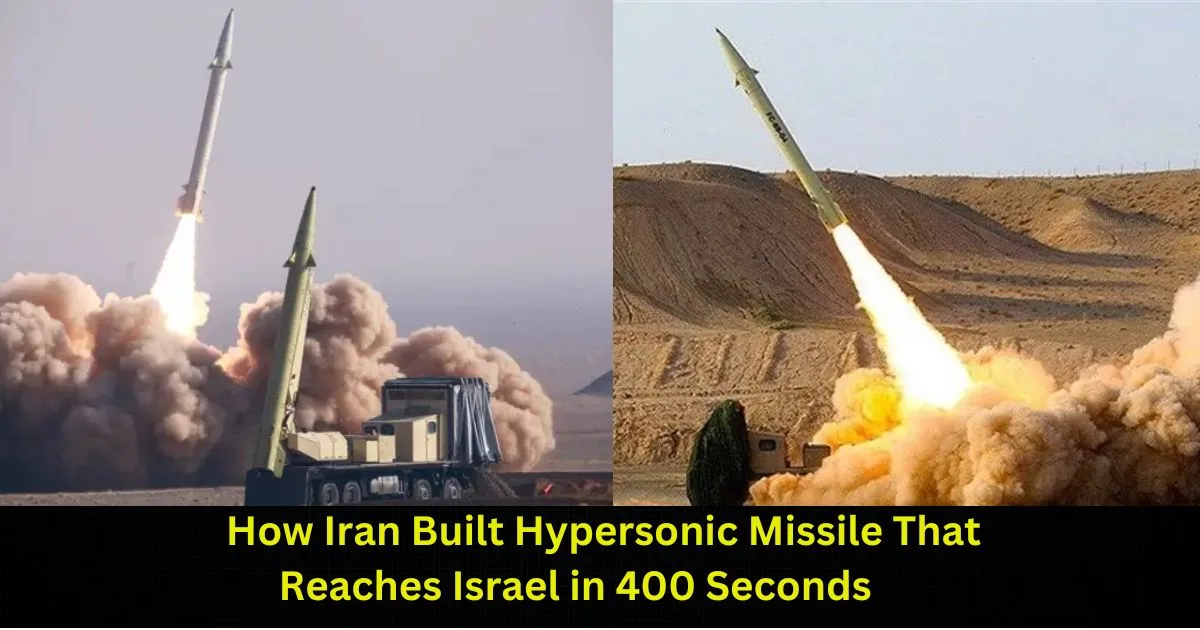
Picture this: It’s June 2023 in Tehran. Giant billboards pop up across the city, showing a sleek new missile with bold text in Persian, Arabic, and Hebrew: “400 seconds… to Tel Aviv.” The message was impossible to miss. Iran had just unveiled the Fattah-1, its first claimed “hypersonic” ballistic missile, and the Islamic Revolutionary Guard Corps (IRGC) was making sure everyone — especially Israel — got the point. From launch sites in western Iran, they said, this weapon could cover roughly 1,400 km and hit Israel’s biggest city in under seven minutes. Click Here To Follow Our WhatsApp Channel
Fast-forward to early 2026, and the Fattah family isn’t just propaganda anymore. Iran has fired these missiles in real combat multiple times, rebuilt its arsenal after heavy fighting in 2024–2025, and continues to improve the system despite renewed UN sanctions. Here’s the remarkable (and controversial) story of how Iran pulled this off.
The Fattah Missiles: What Iran Actually Built
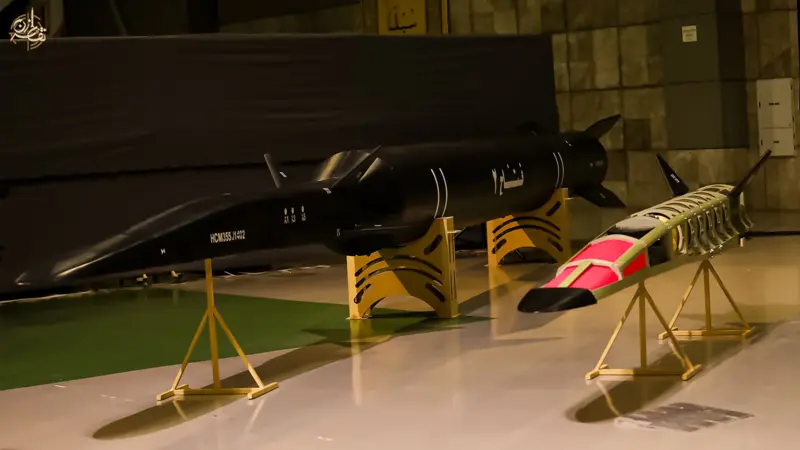
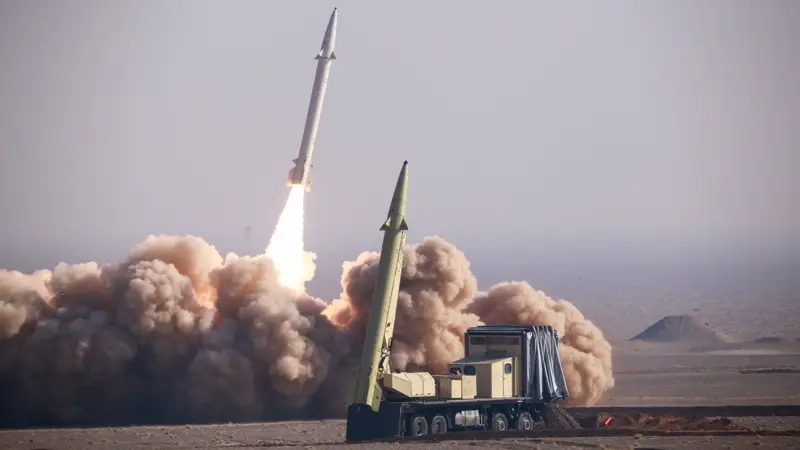
Fattah-1 was unveiled on 6 June 2023 after being announced in late 2022. Iran claims it reaches Mach 13–15 (roughly 16,000–18,500 km/h), has a 1,400 km range, and carries a 350–450 kg warhead. The key feature is a maneuverable re-entry vehicle (MaRV) with its own small solid-fuel motor and thrust-vector control, letting the warhead dodge defenses in the final phase of flight — and even do some maneuvering outside the atmosphere.
Fattah-2 followed in November 2023. It swaps in a hypersonic glide vehicle (HGV) for even more agility across the entire trajectory. Iran says it can hit 1,500 km and is even harder to intercept. Both are solid-fuel designs (at least the booster stage), meaning they can be launched quickly from mobile trucks or underground silos — a big upgrade over older liquid-fuel missiles that need hours to prepare.
The “400 seconds” claim comes straight from IRGC commander Brig. Gen. Amir Ali Hajizadeh. It’s marketing as much as math (a pure Mach-15 flight over 1,400 km would actually be faster), but the point was clear: this missile is designed to overwhelm Israel’s layered defenses — Arrow, David’s Sling, and Iron Dome.
From the Battlefield: Real-World Use (2024–2026)
Iran didn’t wait long to test its claims in combat:
- April 2024 — First direct strike on Israel; debris analysis later confirmed Fattah-1 parts.
- 1 October 2024 (“Operation True Promise II”) — Roughly 200 ballistic missiles, including Fattah-1s, in the largest attack yet. Some penetrated defenses and caused damage.
- 2025 strikes (including waves in June) — Iran again claimed Fattah-1 and -2 use, with the IRGC boasting that the missiles “shook the shelters of the Zionists.”
- Early 2026 — Amid fresh US-Israeli strikes on Iran, Tehran launched retaliatory barrages (reportedly “Operation True Promise” follow-ons) that included Fattah variants alongside Sejjil and older systems. Iranian state media and analysts say the hypersonic weapons targeted Israeli and US bases in the region.
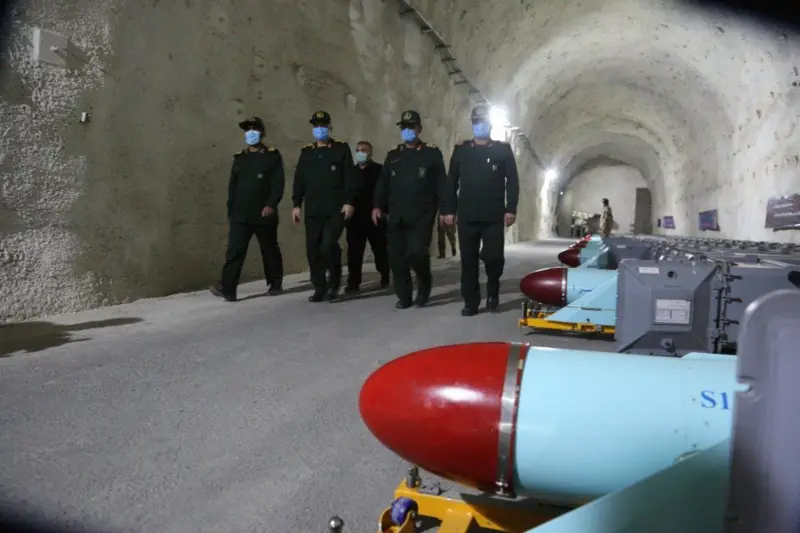
Despite losses in the 2024–2025 exchanges, Iran has rebuilt its stockpile to an estimated 1,500–3,000+ ballistic missiles by early 2026, including precision-guided and hypersonic types. Underground “missile cities” and rapid replenishment (helped by fresh Chinese propellant shipments) made this possible.
How They Did It: Sanctions Backfired
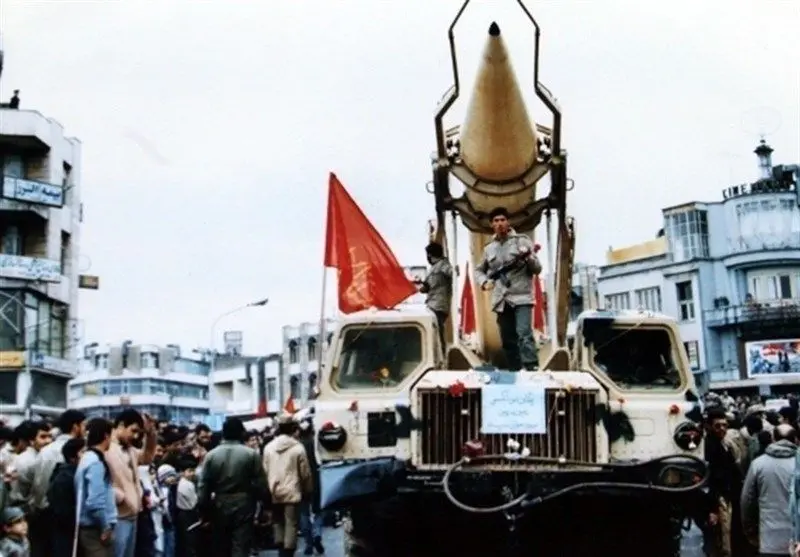
Iran’s missile program was born in desperation. During the 1980–88 Iran-Iraq War, Saddam Hussein rained Scud missiles on Iranian cities. Tehran had almost no air force left, so it begged for help. Libya sent the first 20 Scud-Bs in 1984. North Korea and China followed with more missiles, launchers, and know-how.
Sanctions kicked in hard after the revolution and tightened over the nuclear program. Instead of crippling the effort, they forced Iran to get creative:
- Reverse engineering became the national sport. Iranian engineers took apart imported Scuds and produced the Shahab-1 (330 km) and Shahab-2 (500 km) by the early 1990s. The Shahab-3 (based on North Korea’s Nodong) gave them a 1,300 km reach by the late 1990s.
- Solid-fuel revolution. Older liquid-fuel missiles were slow to fuel and vulnerable on the launch pad. Iran shifted to solid propellants (thanks to the Shahid Bagheri Industrial Group) so missiles could be fired in minutes from mobile launchers or hidden silos.
- IRGC takes charge. The Revolutionary Guard’s Aerospace Force, led for years by the late Hassan Tehrani Moghaddam (the “father of Iran’s missiles”), drove the program. Facilities like the Shahid Hemmat Industrial Group (liquid engines) and underground complexes in Khojir, Semnan, and Isfahan kept production going.
- Space program crossover. Work on satellites gave Iran lightweight composite casings and heat-resistant materials needed for high-speed re-entry.
Universities and young engineers were pulled in. Sanctions made imports almost impossible, so Iran built its own machine tools, gyroscopes, and guidance systems. The result? A genuinely indigenous industry that now exports drones and missiles to Russia, the Houthis, and others.
The Foreign Help That Never Stopped
Self-reliance has limits. Iran still got (and gets) outside assistance, often through shadowy networks:
- North Korea — The biggest early partner. Designs, engines, and even entire missiles flowed in the 1980s–2000s. Similarities between Iranian and North Korean systems are obvious.
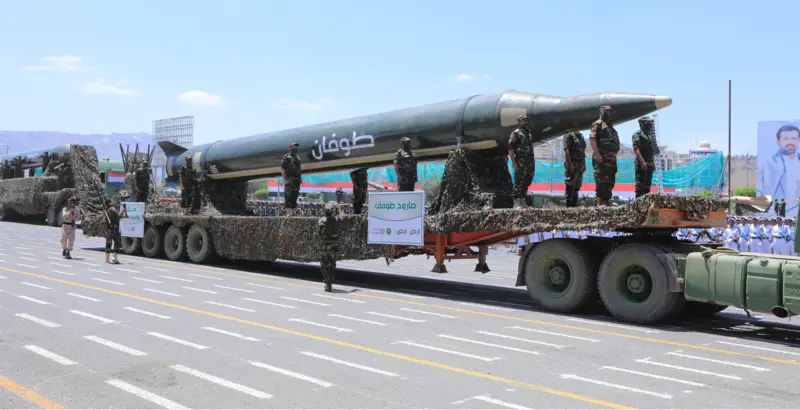
- China — Supplied components, machine tools, and — crucially — huge shipments of ammonium perchlorate and sodium perchlorate (solid-propellant ingredients). In 2025 alone, Iran received thousands of tons from China, enough for hundreds of new missiles. Recent reports suggest Beijing is also helping with anti-ship missiles.
- Russia — More recent cooperation, especially after Iran supplied drones for Ukraine. Some analysts see Russian fingerprints in upgrades to guidance and maneuverability.
These ties continue despite sanctions because the players use front companies, third countries, and barter deals (oil for tech).
The Reality Check: Hype vs. Capability
Western and Israeli experts are skeptical about the “Mach 15” label. Most say the Fattah is not a true hypersonic glide vehicle that stays in the atmosphere at hypersonic speeds the whole way. It’s a ballistic missile with a fancy MaRV that maneuvers mainly in the terminal phase — impressive, but not revolutionary like China’s or Russia’s scramjet-powered designs.
That said, even critics admit two things:
- The maneuverability makes interception much harder.
- Iran has now proven it can hit Israel with these weapons, and some got through.
In short: not invincible, but a serious step forward that forces Israel and the US to spend billions on better defenses.
Why This Story Matters
Sanctions were meant to stop Iran from building advanced weapons. Instead, they accelerated a homegrown defense industry, pushed Tehran closer to Russia, China, and North Korea, and turned the IRGC into a missile superpower in the Middle East.
Today, the Fattah series is in serial production, Iran’s arsenal is being replenished faster than many expected, and the “400 seconds to Tel Aviv” threat feels a lot more real than it did in 2023. Whether the missiles will ever be used at full scale is a political question, not a technical one. But the fact that Iran built them at all — under the harshest sanctions in modern history — is a masterclass in resilience, reverse engineering, and geopolitical defiance.
The billboards are gone now, but the missiles remain. And in a region already on edge in 2026, that’s a message no one can ignore.
You Might Also Like:
At 13, This Kashmiri Boy Built 31 Apps and AI Tools
Delhi Court Convicts Kashmiri Separatist Asiya Andrabi in UAPA Case
Why Is Omar Abdullah Silent as a Kashmiri Shawl Seller Is Brutally Attacked in Uttarakhand?