Under the University’s Academic Outreach Programme and under the aegis of the Dean of Outreach, the Habba Khatoon Centre for Kashmiri Language and Literature (HKC L&L) organised an outreach visit to Meeras Mahal, Sopore. Students from the Social Sciences and Humanities participated in the event, which aimed to familiarize them with the rich cultural heritage of Kashmir.Click Here To Follow Our WhatsApp Channel
According to a statement issued here, during the visit, Dr. Muzzafar, Assistant Professor at HKC L&L, provided detailed insights into the cultural traditions and legacy of the region. Participants expressed keen interest, noting that the programme significantly enhanced their understanding of Kashmiri traditions and material culture. The programme was coordinated by Dr. Afshana, Coordinator of the Centre, who assured that similar initiatives will be organized in the future.
Intro Of Habba Khatoon
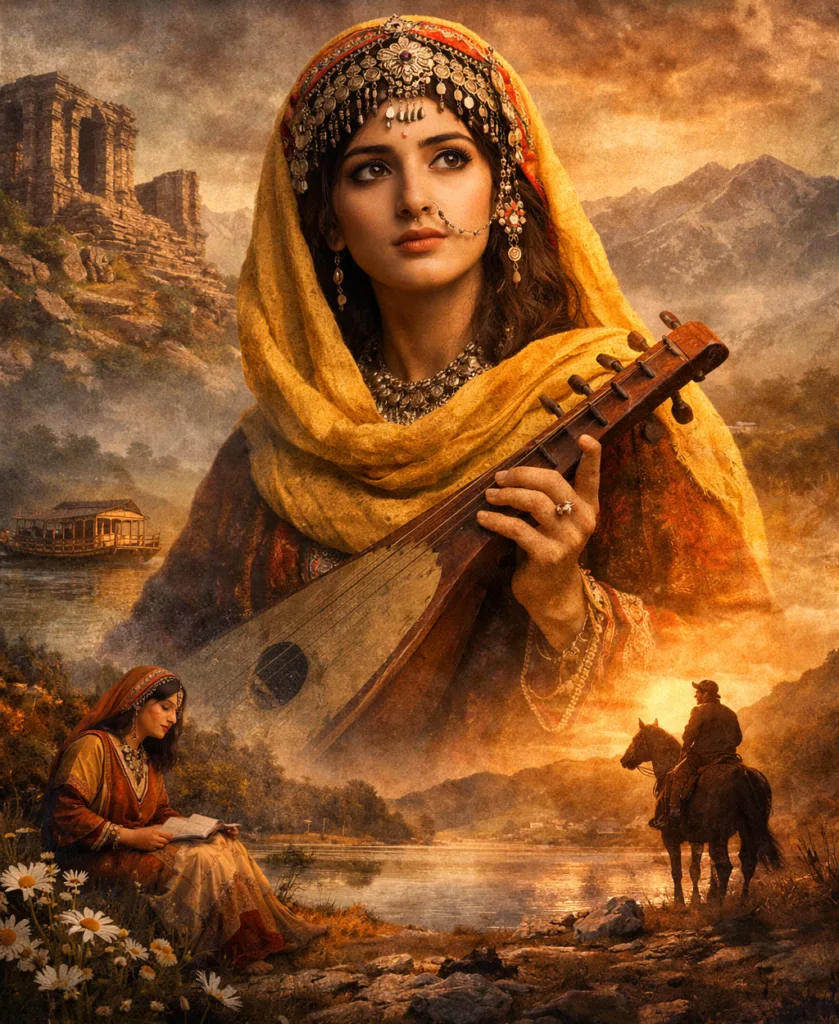
Habba Khatoon is one of the most celebrated and emotional figures in the cultural and literary history of Kashmir. Known as the Nightingale of Kashmir, she represents love, pain, separation, and the deep soul of Kashmiri poetry. Even centuries later, her verses continue to live in the hearts of the Kashmiri people, sung as folk songs and remembered as symbols of timeless sorrow and beauty.
Born in the 16th century, Habba Khatoon was originally named Zoon. She belonged to a humble background, yet her natural talent for poetry and singing set her apart. Her words were simple, heartfelt, and deeply connected to everyday life, which made her poetry accessible to common people. She expressed emotions in a way that felt personal, honest, and deeply human.
Habba Khatoon’s life took a dramatic turn when she married Yousuf Shah Chak, the last independent ruler of Kashmir. For a brief period, she lived as a queen, but happiness did not last long. Yousuf Shah Chak was exiled by the Mughal emperor Akbar, and this separation became the greatest tragedy of her life. Her pain, loneliness, and longing found voice in her poetry, turning personal grief into collective memory.
Her poems are mainly in Kashmiri language and revolve around themes of love, separation, fate, and resistance. What makes her special is the emotional depth of her verses—there is no exaggeration, only pure feeling. Many of her poems later became part of Kashmiri folk music and are still sung today, especially by women.
Habba Khatoon is not just a poet; she is a symbol of Kashmir’s emotional history. Her life reflects the struggles of women, the pain of separation, and the loss of freedom. Through her words, she gave Kashmir a voice that still echoes across mountains, lakes, and generations.
Today, institutions, cultural centres, and scholars continue to honour her legacy. Habba Khatoon remains a timeless reminder that poetry born from pain can become eternal beauty.
You Might Also Like:
Al-Tilmeez: A Pioneering Arabic Literary Journal from Jammu and Kashmir
Professor Mufti Abdul Ghani Azhari: Scholar, Sufi, Historian, and Social Reformer of Kashmir