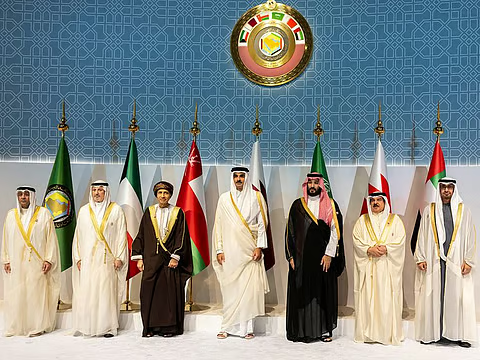
Arab Rulers Wary of Rising Iran Influence Amid Escalating Regional Conflict
April 1, 2026 — As the US-Israeli military campaign against Iran under Operation Roaring Lion enters its second month, Arab Gulf leaders are facing growing pressure and uncertainty. While Iran’s resilience has drawn global attention, Gulf states are more concerned about the direct impact of Iranian retaliation on their security, economies, and stability. Click Here To Follow Our WhatsApp Channel
Rather than fearing Iran’s rise in ideological terms, Arab rulers are focused on real and immediate threats unfolding across the region.
Iranian Retaliation Hits Gulf States Directly
Since the conflict began on 28 February 2026, Iran has launched hundreds of missiles and drones not only towards Israel but also targeting US-linked bases and infrastructure across Gulf countries.
Several nations have already felt the impact:
- United Arab Emirates: Strikes hit Abu Dhabi and Dubai International Airport, causing disruption to flights and tourism, along with reported casualties.
- Saudi Arabia: Missiles targeted Riyadh and key oil-producing regions, though many were intercepted.
- Bahrain, Kuwait, Qatar, and Jordan: Reported attacks on military bases, ports, residential areas, and energy facilities.
These attacks have turned long-standing tensions into real security threats for Gulf nations.
The Gulf Cooperation Council (GCC) and Arab League strongly condemned Iran’s actions, calling them violations of sovereignty and threats to civilian safety. They also reaffirmed their right to self-defence under international law.
Saudi Foreign Minister Prince Faisal bin Farhan warned that trust with Iran has been “shattered” and signalled that Gulf countries have the capability to respond if necessary.
Key Concerns: Economy, Security, and Stability
1. Strait of Hormuz and Economic Risks
One of the biggest concerns is the Strait of Hormuz, a vital route through which nearly 20% of global oil passes.
Iran’s threats and disruptions in this area have:
- Increased global oil prices
- Forced shipping companies to reroute
- Put Gulf exports at risk
This directly affects economic plans like Saudi Arabia’s Vision 2030 and the UAE’s global business ambitions.
2. Civilian Safety and Infrastructure
Missile and drone attacks have raised serious concerns about:
- Safety of major cities
- Airports, hotels, and tourism sectors
- Energy facilities and desalination plants
Gulf leaders fear that prolonged conflict could damage their image as safe and stable global hubs.
3. Strategic Pressure Between US and Iran
Before the war, some Gulf countries had tried to ease tensions with Iran, including the 2023 Saudi-Iran agreement brokered by China.
Now, they face a difficult situation:
- Pressure from the US to support security efforts
- Risk of further Iranian retaliation
- Desire to avoid full involvement in the conflict
Countries like the UAE and Saudi Arabia are now calling for long-term solutions to limit Iran’s missile, drone, and nuclear capabilities.
Sectarian Factor Exists but Is Not the Main Issue
While Sunni-Shia tensions remain part of the background, Gulf leaders are not focusing primarily on sectarian rivalry.
Although Iran supports allied groups across the region, official Arab responses are centred on:
- Protecting sovereignty
- Ensuring economic stability
- Maintaining regional peace
This shows a more practical approach rather than ideological confrontation.
Global and Regional Response
Gulf states have taken several steps:
- Strengthening air defence systems with US support
- Coordinating through GCC and Arab League platforms
- Maintaining diplomatic unity while avoiding full escalation
Meanwhile, the UK has taken a cautious stance. Prime Minister Keir Starmer has stated that Britain will not join the war directly, though limited defensive support continues.
Uncertain Future for the Region
The situation remains highly unpredictable. While Iran has shown its ability to respond strongly, Gulf countries have managed to limit damage through defence systems and alliances.
However, the risks remain high:
- Continued attacks could disrupt global energy markets
- Regional stability could weaken further
- Economic losses may increase for all sides
For now, Arab leaders are focused on protecting their nations from further harm while pushing for a long-term solution to reduce tensions.
Conclusion
Arab Gulf rulers are not simply worried about Iran becoming more powerful — they are dealing with immediate and real threats to their countries.
From missile strikes to economic disruption, the ongoing conflict has forced them into a careful balancing act between security, diplomacy, and survival.
As the crisis continues, the region stands at a critical moment that could shape the future of the Middle East for years to come.
You Might Also Like:
Trump Weighs High-Risk US Commando Raid on Iran’s Nuclear Sites Amid Escalating War
Massive ‘No Kings’ Protests Sweep Across USA as Millions Rally Against Trump Policies and Iran War
Iran Claims Strike on US Air Base in Saudi Arabia, Says AWACS Plane Destroyed in Missile and Drone Attack