
When I think about Dr. Yusuf al-Qaradawi, I picture a man whose life touched millions, sparking both admiration and debate. He was a scholar, a preacher, and a voice for Muslims worldwide, blending old Islamic teachings with the challenges of modern life. Born in a small Egyptian village on September 9, 1926, he grew up to become one of the most famous Sunni Muslim scholars of our time. He passed away on September 26, 2022, in Doha, Qatar, at 96, leaving behind a legacy that still stirs hearts and minds. Let me take you through his story in a way that feels like we’re sitting down for a chat, exploring who he was, what he stood for, and why he remains such a big deal.
Growing Up in Egypt
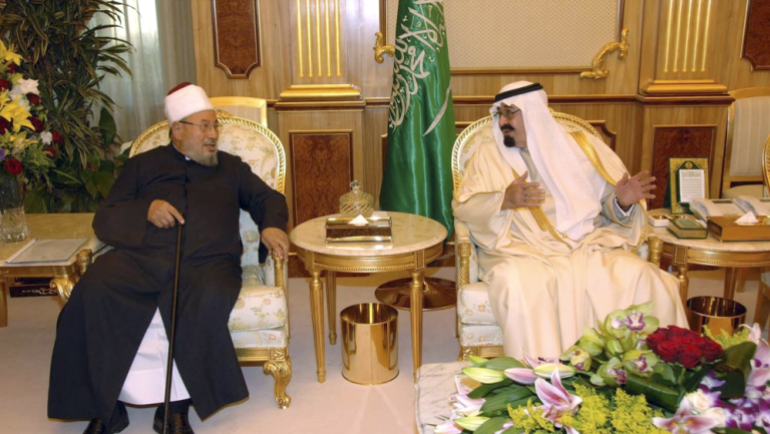
Yusuf al-Qaradawi’s early life wasn’t easy. Born in Safat Turab, a village in Egypt’s Nile Delta, he lost his father at two years old. His uncle raised him, and even as a kid, Yusuf showed a knack for faith. By 12, he’d memorized the entire Quran—a huge feat that marked him as special. He loved learning and went to Al-Azhar University in Cairo, one of the oldest and most respected Islamic schools in the world. In 1953, he graduated with a degree in Islamic theology, and years later, in 1973, he earned a PhD there. His thesis was about zakat (Islamic charity) and how it could help solve social problems. That work became a book that’s still studied today.
As a teenager, Yusuf joined the Muslim Brotherhood, a group founded by Hassan al-Banna to revive Islamic values and resist Western influence. This choice shaped his life. The Brotherhood’s ideas about faith and justice spoke to him, but it also got him in trouble. Egypt’s rulers—first King Farouk, then Gamal Abdel Nasser—saw the group as a threat. Yusuf was arrested three times (in 1949, 1954, and 1962) for his activism. By 1961, things got so tough that Egypt took away his citizenship, forcing him to leave. He moved to Qatar, where he’d spend most of his life.
A New Home in Qatar
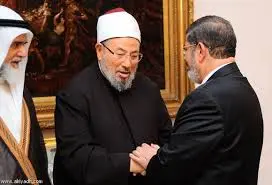
In Qatar, Yusuf found a fresh start. He taught at universities and started building a name for himself. Qatar gave him a safe place to write, speak, and share his ideas. In 1977, he helped start the Faculty of Sharia and Islamic Studies at Qatar University, where he served as dean. Later, he founded the Centre for Sunnah and Seerah, a place to study the Prophet Muhammad’s life. These roles let him teach young Muslims and shape how Islam was understood in a fast-changing world.
But what really made him famous was his TV show, Al-Sharia wa al-Hayat (Sharia and Life), which aired on Al Jazeera from 1996 to 2013. Every week, millions tuned in to hear him talk about everything—family life, money, politics, even how Muslims should live in non-Muslim countries. His warm, clear style made complex religious ideas feel approachable. I imagine people sitting in their living rooms, nodding along as he explained how to be a good Muslim in today’s world.
A Voice for the “Middle Way”
Yusuf al-Qaradawi believed in something called wasatiyya, or the “middle path.” For him, Islam didn’t have to be stuck in the past or blindly follow modern trends. He wanted a balance—sticking to core Islamic values while adapting to new times. This idea made him popular, especially with younger Muslims who felt torn between tradition and modernity.
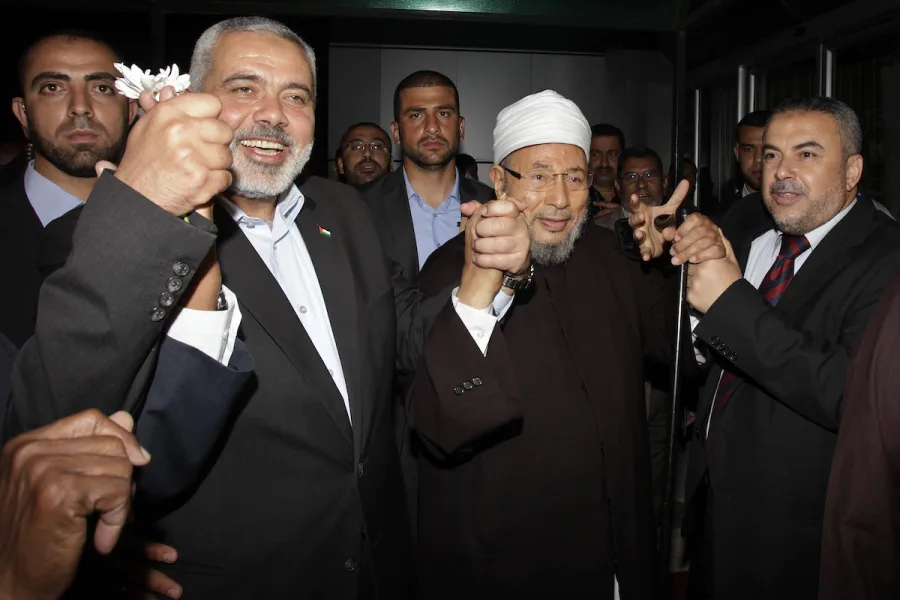
He wrote over 120 books, covering topics like charity, women’s rights, and jihad (struggle or holy war). His book on zakat is still a go-to for scholars. He also started groups like the International Union of Muslim Scholars in 2004, which he led until 2018, and the European Council for Fatwa and Research, helping Muslims in the West live by Islamic rules. His fatwas (religious rulings) were practical—like saying it’s okay for Muslims to wish Christians a happy holiday or that women could study and work.
But not everyone agreed with him. His views on some issues stirred up big arguments, and that’s where things get complicated.
What He Believed
Let’s talk about what made Yusuf al-Qaradawi such a big figure—and why some people loved him while others didn’t.
- Palestinian Rights and Jihad: He strongly supported Palestinians, calling their fight against Israeli occupation a legitimate form of jihad. He believed Muslims had a duty to resist oppression. This made him a hero to many who saw him standing up for justice. But he also supported suicide bombings in Palestine and attacks on U.S. troops in Iraq, which shocked others. To critics, this was promoting violence, and it led to bans from countries like the U.S., UK, and France.
- Women’s Roles: He encouraged women to get educated and work, which was progressive for some Muslim scholars. But he also said husbands could lightly “discipline” their wives in rare cases, based on his reading of the Quran. Many called this outdated and harmful, accusing him of supporting abuse.
- The Arab Spring: When uprisings swept the Arab world in 2011, he cheered them on, seeing them as a chance for Muslims to demand fair governments. He wanted societies based on Islamic principles but not strict theocracies. Some saw this as a push for democracy; others thought he was tied too closely to the Muslim Brotherhood’s political goals.
- Interfaith and Social Issues: He was open to dialogue with other faiths, saying Muslims could greet Christians or Jews on their holidays. He also called stoning for adultery “un-Islamic,” linking it to Jewish law, not the Quran. But he held harsh views on homosexuality, saying it deserved punishment, and made comments about Jews and the Holocaust that critics called anti-Semitic.
These mixed messages made him a lightning rod. Supporters saw him as a bold voice for justice and moderation. Critics said he fueled division, with some calling him the Muslim Brotherhood’s spiritual leader.
Why He Mattered
Yusuf al-Qaradawi wasn’t just a scholar; he was a bridge between old and new. His TV show, books, and fatwas reached people from Morocco to Malaysia. He gave Muslims a way to think about faith in a world of smartphones, global politics, and cultural clashes. For many, he was a guide who made Islam feel alive and relevant.
When he died in 2022, people mourned him as a giant. Posts on X called him a “light for the Muslim ummah” (community), quoting his prayers for places like Al-Aqsa Mosque. Others criticized him, pointing to his controversial fatwas as a source of division. His family carries on his legacy—his three daughters are PhD holders, one a nuclear scientist, and his son, Abdulrahman, is a poet and activist. Sadly, Abdulrahman has been detained in Egypt since 2023, and groups like Amnesty International are fighting for his release.
The Big Picture
Looking back, I see Yusuf al-Qaradawi as a man of his time. He lived through wars, revolutions, and huge changes in the Muslim world. He tried to answer tough questions: How do you stay true to faith in a globalized world? How do you fight injustice without losing compassion? Not everyone liked his answers, but he got people talking. His life reminds me that faith isn’t just about rules—it’s about wrestling with big ideas and trying to make a difference.
If you want to dig deeper, his autobiography, Ibn al-Qarya wa al-Muhtadi (Son of the Village and the Guide), tells his story in his own words. For now, his name lives on—in classrooms, mosques, and debates about what it means to be Muslim today.
Click Here To Follow Our WhatsApp Channel
You Might Also Like:
Cristiano Ronaldo Greets Fans on Saudi National Day, Celebrates Pride and Unity
Abhishek Sharma, Shubman Gill Script Record 105-Run Partnership as India Defeat Pakistan
School of Engineering and Technology Wins Vice Chancellor’s Employee Cricket Tournament 2025 Final with Enthusiasm