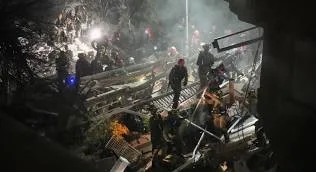
Fresh joint airstrikes by Israel and the United States have hit multiple locations across Iran, killing more than 25 people, including civilians and children, according to reports. The escalation comes as US President Donald Trump’s deadline for Iran to reopen the vital Strait of Hormuz approaches.
The strikes targeted areas in and around Tehran, including locations near Sharif University of Technology, which is believed to have links to Iran’s missile programme. A nearby gas distribution site was also hit. Click Here To Follow Our WhatsApp Channel
In Tehran’s Baharestan district, at least 15 people were reportedly killed after a strike hit a residential area. Other cities such as Qom and Eslamshahr also reported casualties, pushing the total death toll beyond 25. Iranian officials strongly condemned the attacks, calling them indiscriminate and aggressive.
Iran Launches Counterattacks
Iran quickly responded with missiles and drones targeting Israel and US-allied Gulf countries.
In the Israeli port city of Haifa, a missile struck a residential building, killing at least two to four people, with others feared trapped under debris. While Israel’s air defence systems intercepted many incoming threats, some missiles still caused damage in central and northern regions.
Meanwhile, countries like Kuwait and the United Arab Emirates activated their defence systems. Some interceptions led to minor damage and injuries, especially in industrial areas.
Trump’s Deadline Raises Stakes
The current crisis is centred on the Strait of Hormuz, a key route through which nearly 20% of the world’s oil supply passes.
Since the conflict began on February 28, 2026, Iran has restricted shipping in the strait, reportedly blocking vessels linked to the US and its allies. As a result, global oil transport through the route has dropped sharply, and prices have surged, with Brent crude nearing $109 per barrel.
President Donald Trump has issued a strict warning, giving Iran until April 7, 2026 (Washington time) to fully reopen the strait or face severe consequences. He warned of potential strikes on Iran’s key infrastructure if the demand is not met.
Iranian leaders, including parliamentary speaker Mohammad Bagher Qalibaf, have rejected these threats, calling them reckless and warning that targeting civilian infrastructure would be a serious violation of international law.
Wider War and Rising Casualties
The ongoing 2026 Iran war has now entered its sixth week. The conflict began with large-scale US and Israeli strikes on Iranian military and nuclear facilities, followed by strong retaliation from Iran.
So far, the war has caused heavy losses:
- More than 1,900 deaths reported in Iran
- Dozens killed in Israel
- Additional casualties across the region, including Lebanon
Diplomatic efforts are ongoing, with mediators from Oman, Egypt, and Turkey proposing a 45-day ceasefire. However, both sides remain firm in their positions, making a breakthrough difficult.
Global Economic Impact
The crisis has triggered serious concerns worldwide, especially in energy markets. Disruptions in the Strait of Hormuz have pushed oil prices higher, raising fears of inflation and economic instability in many countries.
Experts warn that if the situation escalates further, it could draw in more regional powers and deepen the global energy crisis.
What Happens Next?
With the deadline set by Donald Trump fast approaching, tensions remain extremely high.
Iran has warned of a strong response to any further attacks, while the US and Israel appear ready to continue military operations if their demands are not met.
The coming hours and days are likely to be critical, with the possibility of further escalation or last-minute diplomatic efforts.
This analysis is based on verified international reports as of April 6, 2026. Developments may change as the situation evolves.
You Might Also Like:
US Rescues Downed Pilot from Iran in High-Risk Operation, Trump Declares “We Got Him”
Dr.Fatemeh Ardeshir-Larijani Ousted from Emory, Visa Revoked After Protests Over Iran Links