Srinagar and Baramulla Welcome Winter with First Snowfall of the Season, Attracting Tourists

Srinagar welcomes first snowfall

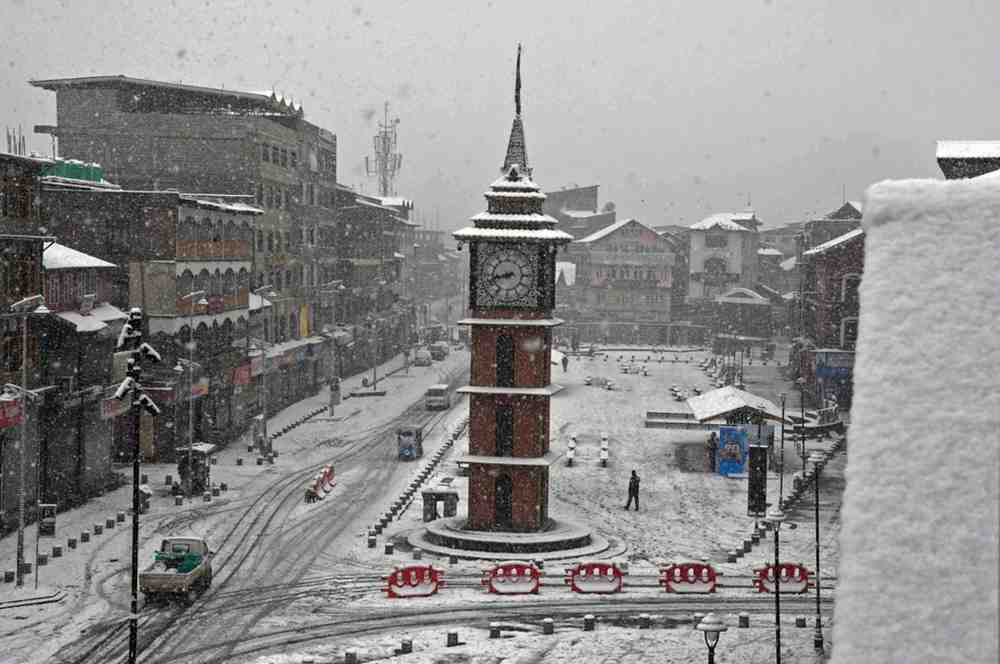
The picturesque city of Srinagar, known for its serene landscapes and scenic beauty welcomed the winter season with its first snowfall of the year on Friday.As delicate snowflakes began to blanket the valley, the summer capital turned into a shimmering winter paradise.

The snow-covered roofs, the white dusting on the iconic houseboats of Dal Lake, and the snow-capped peaks of the surrounding mountains create a mesmerizing view that draws visitors from around the world.

As temperatures dip, the famed Kashmiri saffron fields and apple orchards lie dormant, preparing for the seasonal rest, while local markets begin to fill with winter essentials like Pashmina shawls, woollen garments, and the rich aroma of traditional Kashmiri food, including the popular Wazwan cuisine and hot Kahwa tea.

The winter season in Jammu and Kashmir also brings with it the allure of snow sports, with places like Gulmarg becoming a hub for skiers and snowboarders.

The landscape wears a thick white blanket, making it a dream destination for those who seek tranquillity amidst the pristine beauty of nature.

As Srinagar witnesses its first snowfall, it marks not just the start of winter, but a celebration of the region’s stunning beauty and the warmth of its people, who are always ready to share the joys of the season with visitors.

Meanwhile, the Baramulla district in the union territory also received a fresh spell of snowfall on Friday.The snow-capped mountains, along with the crisp, cool air, give the district a serene and tranquil atmosphere that draws visitors and photographers alike.

The pristine white scenery, especially in the rural areas and along the banks of the Jhelum River, offers a photographic contrast against the dark green of the pine forests.

Earlier on Tuesday, Bhaderwah, a serene town nestled in the Doda district of Jammu and Kashmir witnessed an influx of tourists, drawn by the region’s fresh snowfall.

Visitors could be seen joyfully playing in the snow, building snowmen, and soaking in the winter charm. To keep warm, they gathered around bonfires, sipping hot tea.

The India Meteorological Department (IMD) has forecast isolated light rain and snowfall in Jammu and Kashmir until December 30, adding to the region’s allure for winter tourism.A yellow warning has also been issued for December 25, with a cold wave predicted across the area. (ANI)
South Kashmir Plains Receive First Snowfall of the Season, Authorities Halt Traffic on Sinthan Pass

South Kashmir

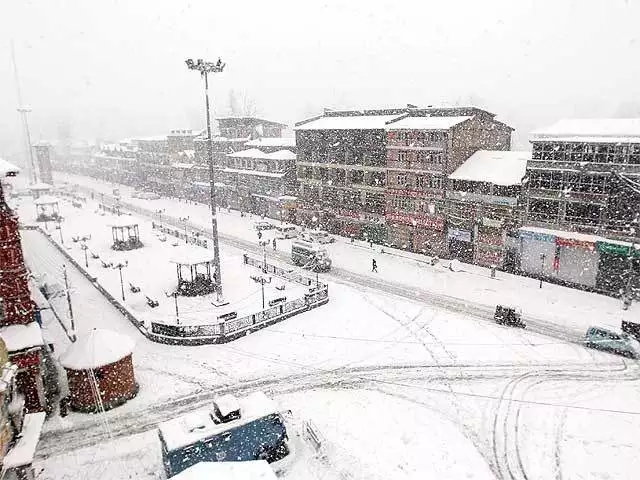
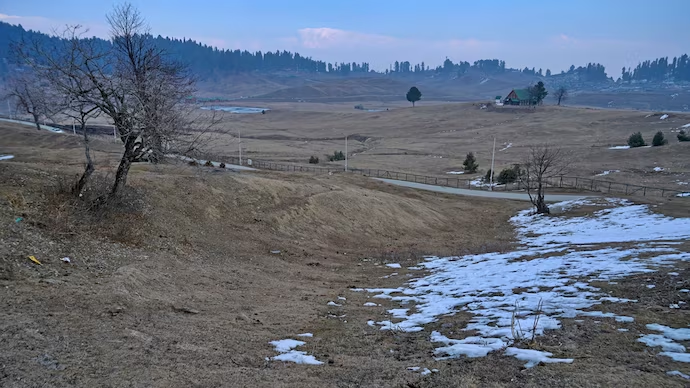
‘South Kashmir plains received the season’s first snowfall on Friday bringing cheer to the residents, while higher reaches experienced moderate snowfall, officials said.

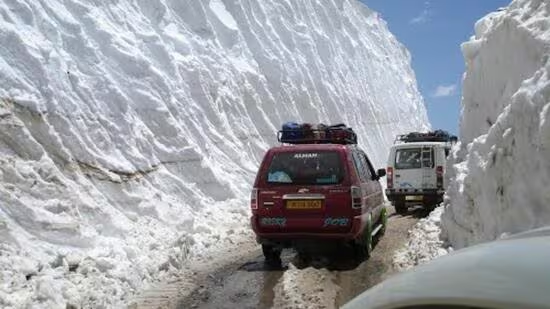
Fresh snowfall on Sinthan Pass along the NH-244 has prompted authorities to suspend all vehicular movement in the area until further notice.The snow clearance team informed the onset of snowfall earlier today, creating hazardous driving conditions on the mountain pass.Officials have requested that all types of traffic on the route be halted to ensure public safety.“

The National Highways and Infrastructure Development Corporation Limited (NHIDCL), responsible for road maintenance, will issue clearance once the route is deemed safe for travel,” officials said.Authorities have urged travelers to cooperate with the suspension and avoid attempting to navigate the route during this period. “Travelers are advised to stay updated on road conditions and official announcements before planning their journeys through the area.”

Sinthan Top is a mountain pass, that borders with South Kashmir’s Breng Valley of South Kashmir’s Anantnag connects with Kishtwar district.Meanwhile, the vehicular movement on the Mughal Road and the SSG Road has been halted due to fresh snowfall in the area.An official said that the traffic movement has been halted for the safety of the public.

Authorities have advised commuters to avoid traveling on the Mughal Road and SSG road until weather conditions improve and the road is cleared.Travelers are urged to follow official updates and exercise caution, officials said.”

Jammu and Kashmir Experiences 81% Rainfall Deficit, Several Districts Report Severe Shortages

Rainfall Deficit

Jammu and Kashmir has experienced a significant decline in rainfall, with a recorded precipitation deficiency of 81% over the past three months. From October 1 to December 25, 2024, the region has only received 21.0 mm of rainfall, far below the normal 110.0 mm for this period.

Shopian in South Kashmir has seen the most severe shortage, with a 97% deficiency, followed by Poonch in Jammu and Kulgam in South Kashmir, which recorded deficits of 96% and 95%, respectively. Srinagar, the summer capital, also reported a notable shortfall, with an 88% decrease in rainfall, while Udhampur in Jammu division similarly recorded an 88% deficiency during this period.

Other areas including Pulwama and Kishtwar reported a 92% rainfall deficit, while Budgam in Central Kashmir saw a 91% decrease. Kupwara, in North Kashmir, had a lower shortfall, with 50% less rainfall than normal, recording just 69.6 mm compared to the usual 133.7 mm.

On a positive note, Samba is the only area that has experienced above-normal rainfall during this period, recording 47.0 mm, surpassing the normal 42.2 mm. Anantnag, Bandipora, and Baramulla, however, have faced substantial rainfall deficits, with Anantnag recording 89%, Bandipora 76%, and Baramulla 73% deficiencies in precipitation.

These weather patterns indicate a significant drought-like situation, affecting agricultural activities and water resources across the Union Territory.

Kashmir Faces Intense Cold as Minimum Temperatures Continue to Drop to minus 9.5°C, Freezing Water Bodies

Weatherman forecast

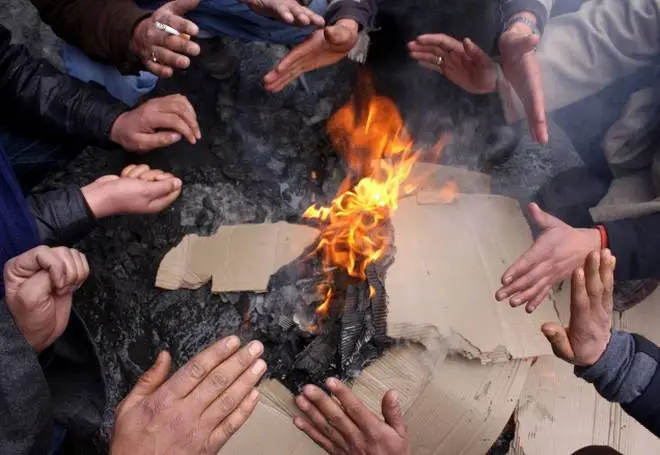
Kashmir is experiencing a significant drop in minimum temperatures, as intense cold continues to grip the valley, leading to the freezing of several water bodies and water supply lines in numerous areas.

On Tuesday night, Srinagar recorded a low of minus 7.3 degrees Celsius, a further decline from the previous night’s minus 6.6 degrees Celsius, as reported by the meteorological department. They forecast that temperatures in Kashmir will continue to drop by two to three degrees in the next two days.

Except for Gulmarg, temperatures fell sharply across all other weather stations in the valley.

The region is currently in the midst of ‘Chillai-Kalan,’ the harshest 40-day winter period, which began on December 21. During this period, both maximum and minimum temperatures are significantly below normal for this time of the year.

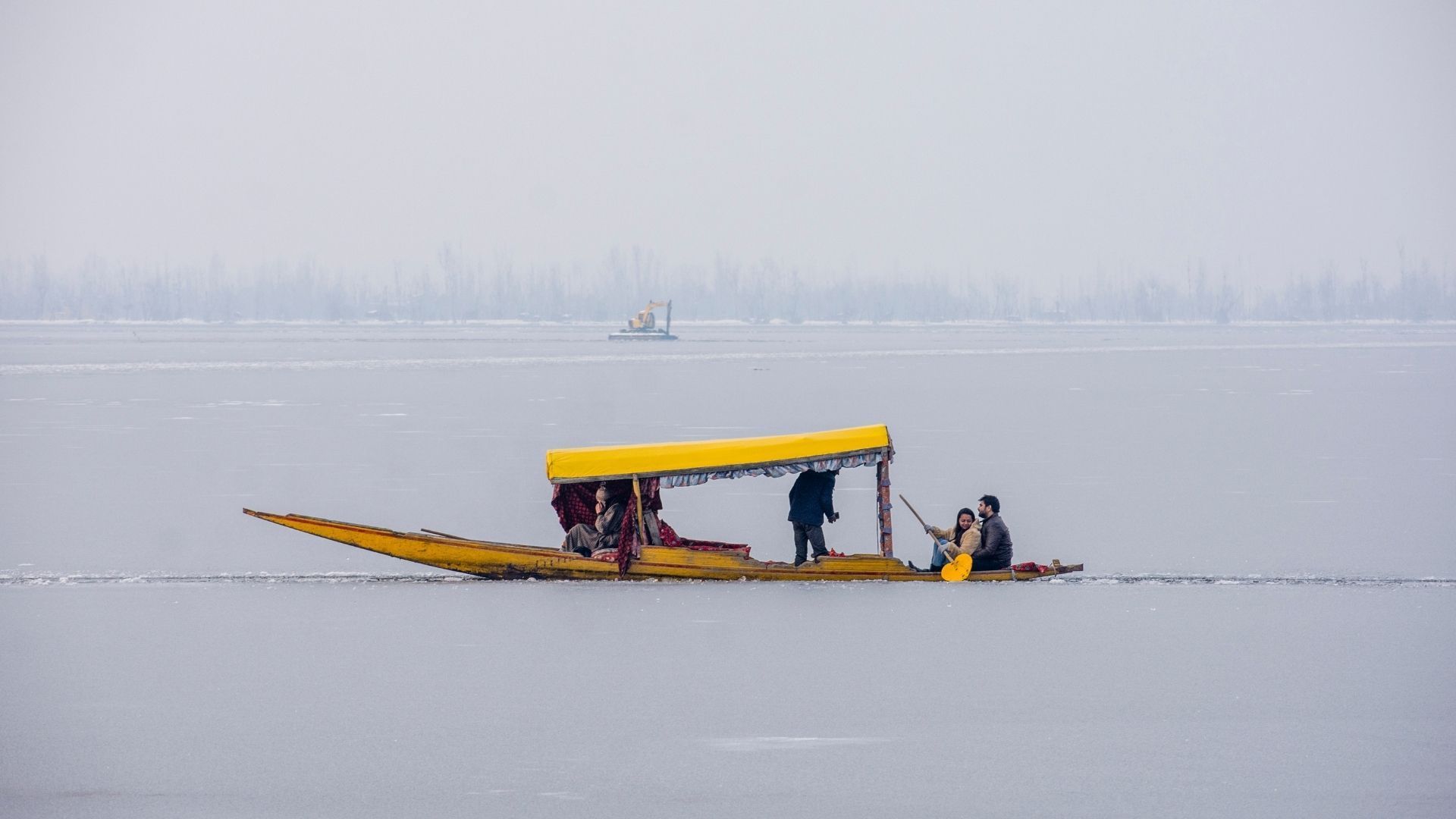
The plummeting temperatures have caused freezing water supply lines, and a thin layer of ice has formed over several water bodies, including the Dal Lake.

Srinagar’s temperatures are lower than those in Gulmarg, a famous skiing destination in north Kashmir, which saw a minimum temperature of minus 6.6 degrees Celsius, a slight improvement from minus 7.4 degrees Celsius the night before.

Pahalgam, in southern Kashmir, recorded minus 8.4 degrees Celsius, down from minus 7.8 degrees Celsius the previous night.

Qazigund, the gateway to Kashmir, saw a minimum temperature of minus 6.6 degrees Celsius, while Konibal, a village in Pampore, was the coldest with minus 9.5 degrees Celsius.

Other notable temperatures included minus 6.4 degrees Celsius in Kupwara (north Kashmir) and minus 5.4 degrees Celsius in Kokernag (south Kashmir).

The weather forecast indicates light snowfall over the higher reaches of the valley from the afternoon of December 27 through the morning of December 28. However, conditions will remain mainly dry from December 29 to 31. Light snowfall is expected in isolated higher areas on New Year’s Eve, with additional snowfall possible in scattered locations in Kashmir from January 1-4.

Chillai-Kalan, the 40-day period of extreme cold, is typically marked by frequent snowfall and significant drops in temperature. This period concludes on January 30, but the cold wave is likely to persist beyond that, followed by the 20-day ‘Chillai-Khurd’ (small cold) and the 10-day ‘Chillai-Bachha’ (baby cold).

Kashmir Faces Intense Cold Wave with Fresh Snowfall and Sub-Zero Temperatures

weather

The higher reaches of Kashmir received fresh snowfall on Tuesday as the cold wave conditions persisted across the valley and the minimum temperature plummeted several degrees below the freezing point, officials said.

They said light snowfall was recorded last night in the tourist resort of Sonamarg and a few other areas in the higher reaches of the valley.The fall in mercury led to the freezing of water supply lines even as a thin layer of ice covered the surface of several water bodies. Kashmir is experiencing intense cold conditions, with the maximum temperature in Srinagar on Monday settling over six degrees below normal for this time of the season. The city recorded a maximum temperature of 2.8 degrees Celsius on Monday as the day temperature remained below the normal across the valley. The bone-chilling cold continued throughout Monday night as well as the minimum temperatures also settled below normal.

Srinagar recorded a low of minus 6.6 degrees Celsius on Monday night — down three degrees from the previous night, the meteorological department said.

Pahalgam registered a minimum temperature of minus 7.8 degrees Celsius, down from the previous night’s minus 5 degrees Celsius, it said.

The night temperature in Gulmarg settled at a low of minus 7.4 degrees Celsius — almost three degrees down from minus 4.8 degrees Celsius the previous night, the department added.

Qazigund logged a minimum temperature of minus 6.2 degrees Celsius, while Konibal, a hamlet in the Pampore area, was the coldest recorded place in the valley at minus 8.5 degrees Celsius, it said.

Kupwara, in north Kashmir, and Kokernag, in south Kashmir, registered a low of minus 6.4 degrees Celsius.

The meteorological department has predicted a dip of two to three degrees in the minimum temperatures over the next few days till December 26.

There is a possibility of light snowfall over the higher reaches towards the later afternoon of December 27 till the forenoon the next day, the Met Office said.

While the weather would stay mainly dry on December 29 and 30, light snowfall is possible in the isolated higher reaches on New Year’s Eve, and light snowfall could take place at isolated to scattered places in Kashmir from January 1-3.

Kashmir is currently under the grip of ‘Chillai-Kalan’ – considered the harshest period of winter – which started on December 21.

During the 40 days of Chillai-Kalan, the chances of snowfall are most frequent and maximum and the temperature drops considerably.

It ends on January 30 next year, but the cold wave continues even after that in the valley. The 40 days are followed by a 20-day ‘Chillai-Khurd’ (small cold) and a 10-day ‘Chillai-Bachha’ (baby cold).”

For Precautionary Measures Mughal Road Closed for Traffic After Fresh Snowfall

Mughal Road Closed

Following fresh snowfall on Monday, Mughal road has been temporarily closed for precautionary measures.

Officials said that Mughal road, connecting Shopian with Rajouri-Poonch districts was closed following the snowfall for precautionary measures.

He said that Traffic movement has been stopped on Mughal Road due to fresh snowfall. People are advised to avoid travelling on Mughal Road until the road becomes passable,” he added.(GNS)

Kashmir Shivers as Shopian Records -10.4°C and Srinagar Records minus 4.6°C: Meteorological Centre Srinagar

Kashmir Shivers

Jammu and Kashmir witnessed an intense cold wave on Friday as temperatures plummeted across the region, with several areas recording sub-zero temperatures.

According to MeT Data, the minimum temperature in Srinagar dipped to minus 4.6 degrees Celsius, while many other places experienced even harsher conditions.

Anantnag recorded a bone-chilling low of -10.5°C, followed by Shopian at -10.4°C and Pulwama at -10.3°C. Larnoo registered -9.3°C, Khudwani -9.0°C, and Sonamarg -8.8°C. The popular tourist destination Pahalgam recorded a minimum temperature of -8.6°C, while Budgam and Qazigund shivered at -8.3°C and -8.2°C, respectively.

The icy conditions have led to freezing water bodies, disrupted water supply lines, and increased difficulties for residents in managing daily chores.

As per Meteorological Centre Srinagar forecast, the region will experience generally cloudy skies with very light snowfall over a few higher reaches of north Kashmir.

“From 23rd to 26th December, the weather is expected to remain generally dry. On 27th and 28th December, a change is predicted, with generally cloudy skies accompanied by light rain in the plains of Jammu and light snowfall over the higher reaches of Chenab Valley,” it said.

While dense fog continued to engulf many parts on Sunday including the city as a consequence of which vehicles moved with headlights on during the morning and evening hours.

‘Chillai-Kalan’ commenced on December 21 and will conclude on January 31, followed by an extended cold wave with ‘Chillai-Khurd’ (small cold) lasting for 20 days and ‘Chillai-Bachha’ (baby cold) persisting for 10 days in Kashmir.

You Might Also Like:

Srinagar Records Coldest Night in December 2024 at Minus 8.5⁰ C After 1990

weather

Chillai-Kalan, a 40-day harshest winter period, commenced with an intense cold wave conditions as Srinagar has recorded the coldest night of December in the last over two decades.

After 1990, Srinagar, the summer capital of Jammu and Kashmir, recorded the coldest night in the month of December at minus 8.5 degree Celsius, which is the third lowest December temperature ever recorded in Srinagar in the last 133 years.

Shopian in South Kashmir recorded a low of minus 10.4 degree Celsius while Anantnag recorded minus 10.5 degree Celsius.The minimum temperature at Pulwama settled at minus 10.3 degree Celsius while in Kulgam it settled at minus 6.8 degree Celsius.

Pertinently, the harshest winter period commenced today (December 21) and culminates on January 31 next year, which is followed by a 20-day long Chillai-Khurd (small cold) that occurs between January 31 and February 19 and a 10-day long Chillai-Bachha (baby cold) which begins from February 20 to March 2.Notably, Chillai-Kalan is a Persian word which means “Major Cold”—(KNO)

Thick layer of fog grips Delhi; IMD predicts severe cold waves conditions for Himachal Pradesh, J&K

Weatherman forecast

As per the India Meteorological Department (IMD), the minimum temperature in Delhi dropped to 8 degrees Celsius near New Delhi’s Safdarjung while the maximum temperature is expected to reach 23 degrees Celsius on Saturday at 8:00 AM.

The minimum temperature recorded at 8:30 AM today at Safdarjung was 7.6 degrees Celsius while Palam recorded 8.7 degrees Celsius.

A resident said, “It is our routine to go for cycling. We are not troubled by winters or summers. We have a whole group that is in different parts of Delhi…”

As of December 21, the overall Air Quality Index (AQI) in the national capital has been recorded at 398, as per the Central Pollution Control Board (CPCB), keeping close to the ‘severe’ category.

The Air Quality Index in Delhi’s Anand Vihar was recorded at 414 while the number reached 413 in Dwarka Sector 8. The north campus of Delhi University recorded AQI at 376 while the number at Lodhi Road was 362.

The AQI at Delhi’s Rohini was recorded at 425 while the number decreased to 398 in Najafgarh, but remains close to the ‘severe’ category.

An AQI between 0-50 is considered good, 51-100 is satisfactory, 101-200 is moderate, 201-300 is poor, 301-400 is very poor, and 401-500 is severe.

Moreover, the Republic Day parade rehearsals were underway at Kartavya Path as cold waves and dense fog engulfed the national capital.
Visuals from Akshardhan in Delhi as thick layer of fog engulfs the area.

Meanwhile, IMD predicts severe cold wave conditions for Himachal Pradesh and remote areas in Jammu and Kashmir. It also predicted cold wave conditions in isolated Punjab and Rajasthan. Dense fog at isolated places over Himachal Pradesh and east Rajasthan.

Earlier on Friday, a layer of dense fog engulfed Delhi as a cold wave gripped the city. The minimum temperature in the national capital had dropped to seven degrees Celsius. As per the IMD, cold wave to severe cold wave conditions are to prevail in most of North India. (ANI)

Kashmir Under Intensifying Cold Wave and Dry Spell, Srinagar records minus 6.2⁰C

Cold Wave and Dry Spell

As majority of places across Kashmir continued to witness prolonged dry spell, the mercury has plummeted to the season’s lowest at several parts of the Valley with Srinagar, recording the coldest night so far at minus 6.2 degree Celsius.

The cold wave has tightened its grip across Kashmir with the majority of the areas recording the season’s coldest night including Srinagar, the summer capital of Jammu and Kashmir.

Srinagar has recorded the season’s lowest temperature at minus 6.2 degree Celsius, marking the coldest night here.Furthermore, Gulmarg, a famous ski-resort, recorded a minimum temperature of minus 6.0 degree Celsius.Pahalgam, a famous tourist destination, recorded a low of minus 8.2 degree Celsius while Shopian in South Kashmir recorded a low of minus 10.0 degree Celsius.

Also, Qazigund, a gateway of Kashmir, recorded a low of minus 7.6 degree Celsius while Kupwara in north Kashmir recorded minus 6.5 degree Celsius. Kokernag in South Kashmir recorded a low of minus 5.8 degree Celsius.

Furthermore, the weatherman here has predicted no major weather activity till December 31st—(KNO)