Mirwaiz Umar Farooq Calls for Dialogue, Offers Two Steps Forward for Peaceful Resolution

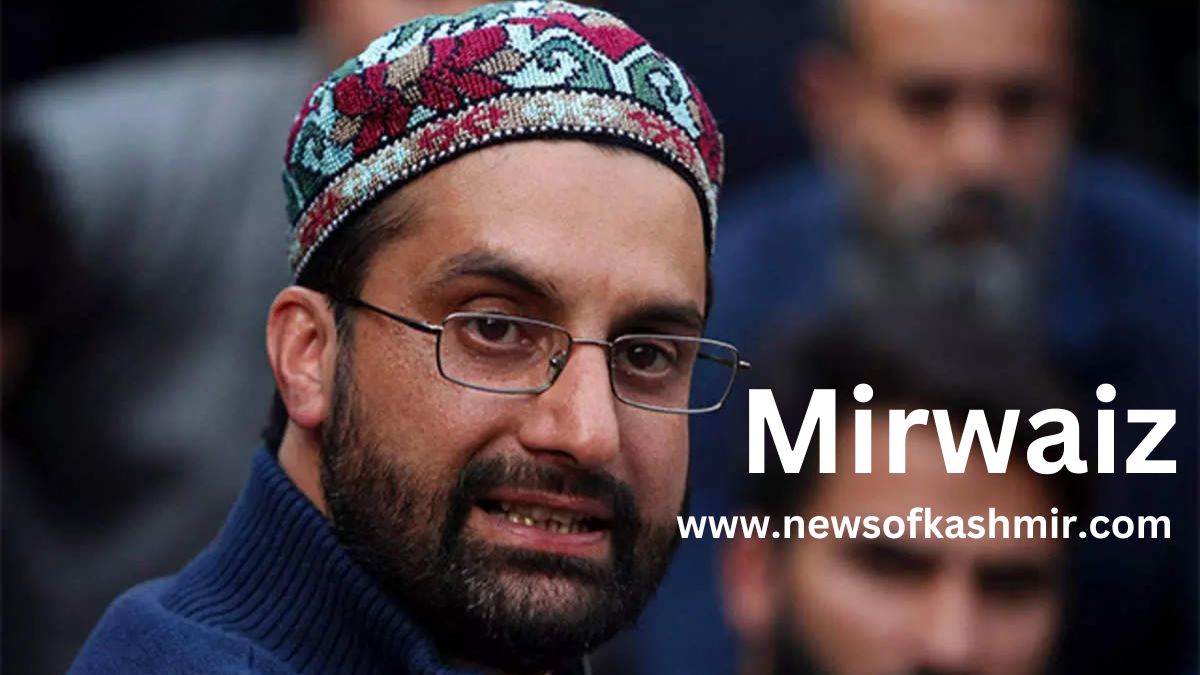
Mirwaiz Umar Farooq

Mirwaiz Umar Farooq stated on Friday that if New Delhi takes one step forward, he is ready to take two steps towards a peaceful resolution of issues. He made these remarks while speaking to the media at Jamia Masjid Srinagar after attending Friday congregational prayers.

Farooq expressed his frustration over being kept under house arrest without any legal notice. “It is unfortunate that the government keeps me under house arrest without serving any legal notice. I don’t understand why this continues to happen. I hope this policy ends, and I am allowed to move freely and share my views publicly,” he said.

He emphasized that the government’s belief that he would abandon his ethical stance on various issues is misguided. “If the government thinks I will leave my ethical stand on issues, they are wrong. I hope the government will realize the situation and take amicable steps accordingly,” Farooq added.

Farooq reiterated the Hurriyat Conference (M)’s longstanding support for dialogue, stressing the importance of talks to address and resolve outstanding issues. “The Hurriyat Conference has always supported dialogue and wants talks to initiate so that pending issues can be addressed and resolved. We have supported talks a lot, and despite suffering attacks, we have not changed our stance,” he said.

He expressed deep concern over the detention of youth and the complex verification process required for jobs and travel documents by the J&K government. “A significant number of youth are lodged in jails while the government has made the verification process very complicated. I hope the government rethinks this and makes the process easier,” he said.

Farooq concluded by emphasizing the desire for peace and the need for a realistic approach from the government. “If the government takes one step forward, we are ready to take two,” he stated. However, he made it clear that the Hurriyat Conference will not bow to the “iron fist” policy adopted by New Delhi and the J&K administration.

“We don’t want violence and bloodshed. We don’t want our youngsters filling jails and graves. It’s time to move forward. The government should abandon its muscle-power policy and embrace a realistic approach to resolving issues,” he concluded.
Ghulam Nabi Azad Drops Bombshell Revelation on Article 370 –  There was nothing left of the special status that merited removal

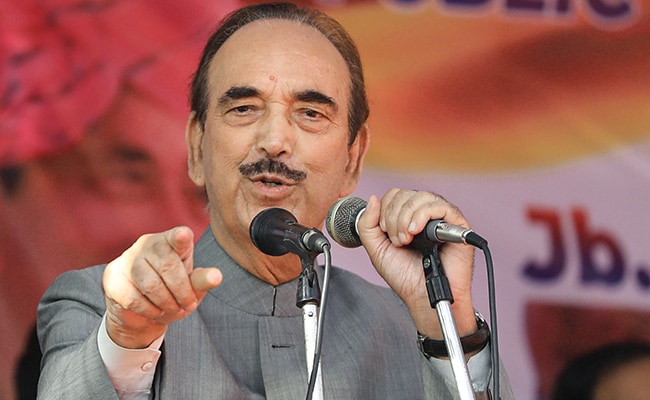
Former Jammu and Kashmir Chief Minister Ghulam Nabi Azad expressed his disappointment on Friday, stating that had the BJP consulted him prior to the abrogation of Article 370, he could have offered valuable guidance. Azad asserted that the removal of Article 370 has left nothing of the special status that warranted its removal.

Azad’s remarks came in an interview with a New Delhi-based newspaper, as reported by the news agency Kashmir News Observer (KNO). He highlighted that the original framework of Article 370 had already been diluted over time, with control over foreign affairs, defense, and currency already integrated into India by leaders like Nehru and Indira Gandhi. He suggested that only a few local rights remained, and consulting him could have provided better insights.

Responding to accusations of being soft on the BJP, Azad dismissed such claims, emphasizing his focus on development and advocating for a politics of unity over religion. He stressed the need for national unity, particularly in the face of external threats along the borders.

Reflecting on his tenure with the Congress, Azad expressed frustration with internal dynamics, citing resistance to instilling a strong work ethic. He criticized the lack of willingness to work among those appointed to key positions during his time, lamenting defeats despite his efforts to secure victories.

Azad’s departure from the Congress and establishment of a new party, the DPAP, was driven by what he described as internal conflict within the Congress and a lack of meaningful work ethic. He questioned the purpose of remaining in a party where such issues persisted.

Mehbooba Mufti Urges High Voter Turnout in Crucial Jammu and Kashmir Elections

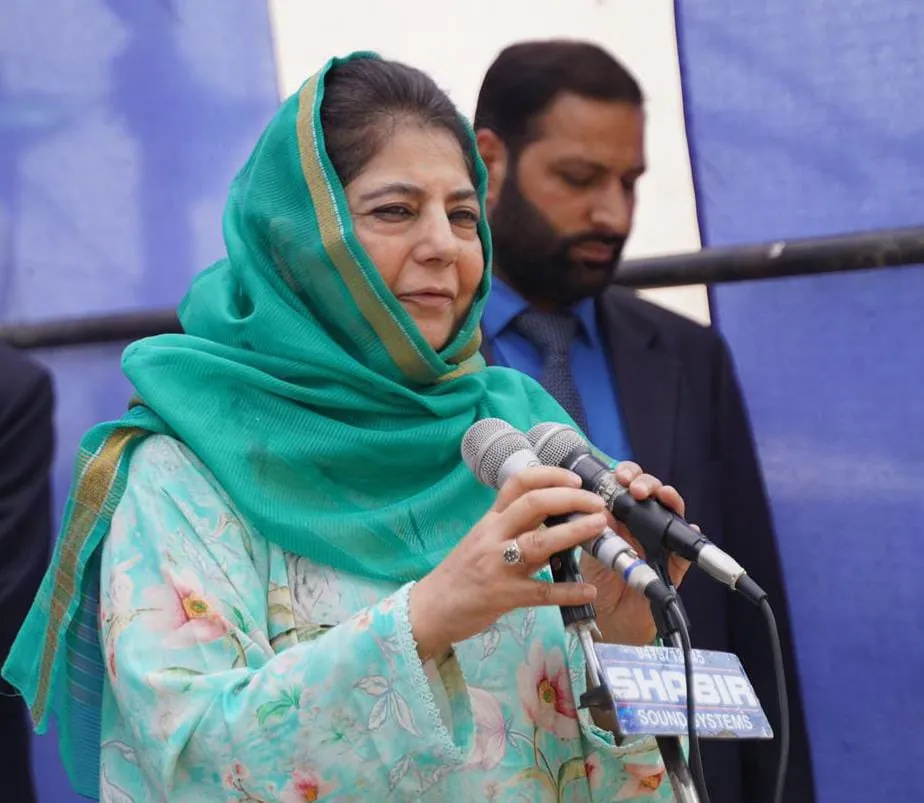
Peoples Democratic Party (PDP) President and candidate for the Anantnag-Rajouri Parliamentary segment, Mehbooba Mufti, addressed the media today after visiting her father’s grave at Dara Shukoh, Bijbehera. She described the ongoing elections in Jammu and Kashmir as a pivotal moment for the region’s residents to make their voices heard in parliament.

Mufti stressed the importance of dissenting against the disempowerment experienced since August 5, 2019. Accompanying her were Party Youth President Waheed ur Rehman Parra, former MP Fayaz Ahmad Mir, District President Adv Sheikh Javaid, Party Spokesperson Najmu Saqib, State Secretary Arif Laigaroo, Parvez Waffa, Aditya Gupta, Mohd Altaf, and many others.

Citing the significant voter turnout in the Srinagar and Baramulla parliamentary polls, Mufti highlighted the political maturity and foresight of the people of Jammu and Kashmir. She drew attention to the plight of thousands of Kashmiri youths imprisoned outside the region, whose parents struggle with legal challenges. “This election is about those youth – to get them freed,” she declared.

Mufti emphasized the necessity of high voter turnout, cautioning against efforts by the BJP and its allies to suppress participation. “The BJP-led administration and its operatives in Kashmir are trying hard to discourage voting because they know the votes will go to the PDP,” she said.

In response to questions, Mufti criticized the National Conference’s (NC) recent actions, accusing them of betrayal. She expressed disappointment in Dr. Farooq Abdullah, whom she had trusted, for undermining the Political Alliance for Gupkar Declaration (PAGD). “We nurtured the PAGD for four years, and NC dismantled it in one stroke. I hoped Farooq Abdullah would make decisions as the leader of the alliance, but he acted as NC President, prioritizing party politics over the greater cause,” Mufti remarked.

She urged the people of Anantnag and Rajouri to vote in large numbers, stating that their vote would stand against the 2019 decisions and send a clear message demanding the restoration of their rights.

President Aga Syed Hassan Reflects on the Legacy of Ibrahim Raesi and Mohammad Ali

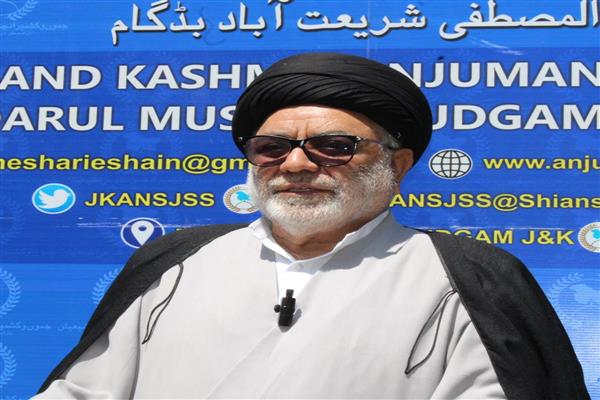
President of Anjuman Sharia Shian, Aga Syed Hassan, led a congregation in mourning the tragic loss of Ayatullah Aga Syed Ibrahim Raesi and Ayatullah Syed Mohammad Ali, along with others, in a recent helicopter crash.

Speaking to the mourners, Aga Syed Hassan expressed deep reverence and profound sadness, reflecting on the immense impact these revered leaders had on the Islamic community and beyond.

“In the wake of this tragic loss, we find ourselves grappling with a profound sense of emptiness,” he began. “Ayatullah Aga Syed Ibrahim Raesi and Ayatullah Syed Mohammad Ali were not merely leaders; they were beacons of wisdom, compassion, and unwavering devotion to the principles of Islam. Their guidance illuminated our path, their teachings enriched our souls, and their presence filled our hearts with hope and inspiration.”

Aga Syed Hassan highlighted the personal qualities that defined these esteemed individuals. “Ayatullah Aga Syed Ibrahim Raesi’s steadfast leadership and unyielding commitment to justice embodied the very essence of our faith. His unwavering resolve in the face of adversity served as a source of strength for us all. Similarly, Ayatullah Syed Mohammad Ali’s humility and compassion touched the lives of countless individuals. His dedication to fostering unity and understanding among diverse communities was unparalleled.”

In the midst of sorrow, he urged the congregation to find solace in the enduring legacy left by these extraordinary souls. “Though they may no longer walk among us, their teachings, their ideals, and their spirit will continue to guide us,” he proclaimed. “Let us honor their memory not only through our words but through our actions. Let us strive to emulate their example of selflessness, generosity, and unwavering faith.”

As the assembly bowed their heads in silent prayer, Aga Syed Hassan offered words of comfort and encouragement. “In this time of sorrow, let us draw strength from our shared bond as a community,” he said. “Let us come together to support one another, to uplift one another, and to carry forward the torch of hope that Ayatullah Aga Syed Ibrahim Raesi and Ayatullah Syed Mohammad Ali ignited within us.”

In closing, Aga Syed Hassan reiterated the magnitude of the loss. “The passing of Ayatullah Aga Syed Ibrahim Raesi and Ayatullah Syed Mohammad Ali is not just a loss for our community; it is a loss for humanity,” he declared. “But let us take comfort in the knowledge that their legacy will endure, inspiring future generations to strive for a world guided by love, compassion, and the timeless values of Islam.”

Jamat e Islami former Gen Secy casts vote Reveals Shocking Details About 1987 Election Rigging

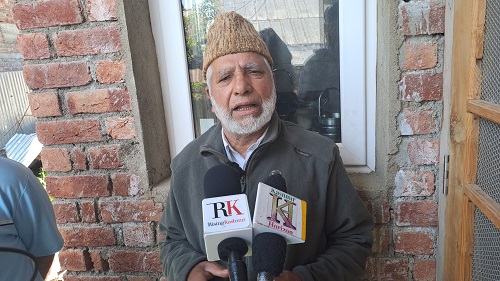
Ghulam Qadir Lone, former General Secretary and district president of the banned Jama’at-e-Islami (JeI) from Ananwan, Qaziabad, voiced his hope on Monday that the electoral irregularities of 1987 would not be repeated. Speaking to Rising Kashmir after casting his vote in Ananwan village, Lone reflected on the loss of faith in democracy due to the mass rigging in the 1987 elections.

Lone, who was a contestant in that election and lost by 700 votes to the NC’s candidate, expressed his desire for future elections in Kashmir to be free of rigging, with the results accurately reflecting the voters’ will.

When asked why he was confident about the absence of future rigging, Lone said he had no assurances but believed that things had changed. He noted that India had recognized the significant damage caused by past rigging and that young people were becoming more aware of these issues. He stressed that avoiding rigging was crucial for improving the situation.

Lone urged the youth to actively participate in the electoral process by registering to vote, emphasizing their vital role in shaping the future through democratic engagement. He also expressed his willingness to engage in elections if the current ban on certain political activities is lifted, stating, “If the ban is revoked, I will take part in elections.”

Reflecting on the 1987 election, Lone recounted how thousands of voters were prevented from voting after 1 PM due to rigging, which led to the opposition candidate’s victory. He reiterated his hope that such electoral fraud would not occur again, allowing for genuine representation of the people’s will.

Fourth Phase of Lok Sabha Elections: 24.87% Voter Turnout Across Nine States and One Union Territory

As the fourth phase of the Lok Sabha elections unfolded, voters turned out in significant numbers across 96 constituencies spanning nine states and one Union Territory. By 11 am, reports from the Election Commission of India (ECI) indicated a voter turnout of 24.87%.

West Bengal led the voter participation with a turnout of 32.78%, while Jammu and Kashmir recorded the lowest turnout at 14.94%. Other states reported varying levels of participation: Madhya Pradesh (32.38%), Andhra Pradesh (23.10%), Bihar (22.54%), Jharkhand (27.40%), Odisha (23.28%), Maharashtra (17.51%), Telangana (24.31%), and Uttar Pradesh (27.12%).

The voting process commenced at 7:00 am on Monday, encompassing 96 Parliamentary Constituencies. Simultaneously, polling took place for all 175 seats of the Andhra Pradesh State Legislative Assembly and 28 seats of the Odisha State Legislative Assembly.

Among the 96 Lok Sabha seats, Andhra Pradesh and Telangana contributed 25 and 17 seats respectively, while Uttar Pradesh and Maharashtra provided 13 and 11 seats. Other states included Madhya Pradesh and West Bengal with eight seats each, Bihar with five seats, and Jharkhand and Odisha with four seats each. Additionally, one seat was allocated from Jammu and Kashmir.

According to the ECI, a total of 4,264 nominations were filed for these 96 parliamentary constituencies.

The fourth phase witnessed significant contests in various constituencies, featuring prominent leaders such as AIMIM chief Asaduddin Owaisi, Samajwadi Party chief Akhilesh Yadav, West Bengal Congress chief Adhir Ranjan Chowdhury, TMC leader Mahua Moitra, BJP leader Giriraj Singh, JDU’s Rajiv Ranjan Singh (Lalan Singh), TMC leaders Shatrughan Sinha and Yusuf Pathan.

Other notable figures seeking electoral success included BJP leaders Arjun Munda and Madhavi Latha, and Andhra Pradesh Congress Chief YS Sharmila.

Thus far, the Lok Sabha polls have progressed smoothly and peacefully through the first three phases, covering a total of 283 Lok Sabha seats.

PDP Chief Mehbooba Mufti Demands Election Commission Action Against Harassment in Jammu and Kashmir

Amidst brewing controversy, Mehbooba Mufti, leader of the People’s Democratic Party (PDP), has raised serious concerns about the integrity of the electoral process in Jammu and Kashmir. In a letter addressed to the Election Commission of India (ECI), Mufti has called for urgent action to address what she describes as “disturbing developments” unfolding in the region.

According to Mufti, her party workers have been subjected to harassment and arbitrary detention by the state administration, allegedly acting under directives from the Union government. She accuses security forces of conducting raids and detaining PDP members in Pulwama and Shopian districts, suggesting these actions are punitive measures aimed at stifling political dissent and undermining voter mobilization efforts.

Mufti’s letter to the ECI underscores the critical importance of maintaining a level playing field in the electoral arena. She expresses apprehensions about the impartiality of the Commission, particularly in light of delays observed in the Anantnag-Rajouri constituency. Mufti warns that such actions not only threaten to subvert the democratic process but also erode public trust in the electoral machinery.

The PDP chief’s allegations come amidst heightened tensions in Jammu and Kashmir, with the region gearing up for crucial elections. Mufti’s plea to the Election Commission signals a growing urgency to address issues of electoral integrity and ensure that the democratic rights of citizens are protected.

As the political landscape in Jammu and Kashmir remains fraught with uncertainty, Mufti’s intervention serves as a stark reminder of the challenges facing the region’s democratic transition. With voting scheduled for several constituencies in the coming days, the eyes of the nation are on the Election Commission to uphold the principles of free and fair elections.

Farooq Abdullah Questions Detention of Party Workers During Jammu and Kashmir Polls

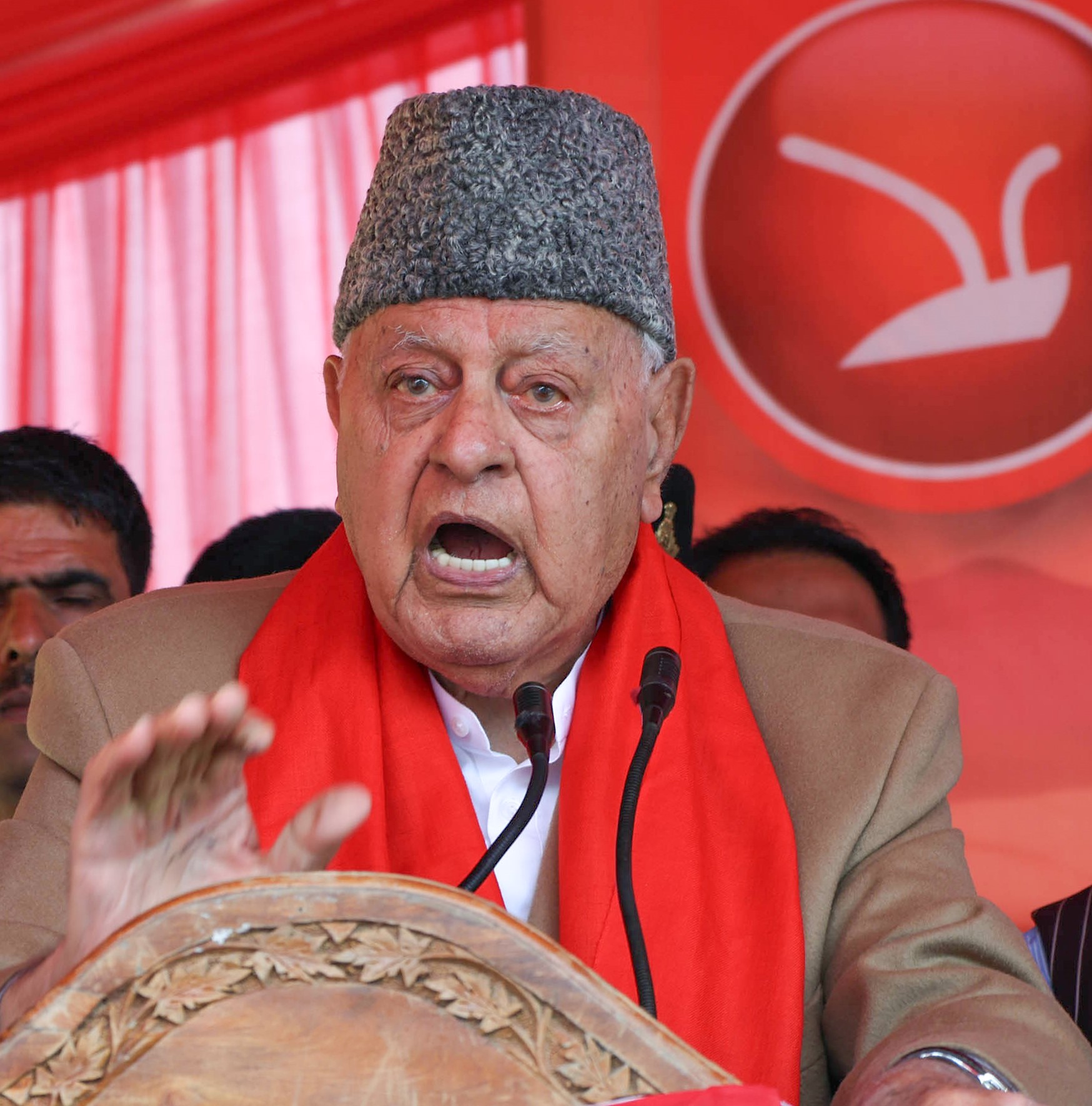
Former Chief Minister of Jammu and Kashmir, Farooq Abdullah, has raised concerns over the detention of his party workers, alleging that they have been held for the past two days. His remarks come amidst polling for the Srinagar Parliamentary constituency, marking the first election in the Union Territory since the abrogation of Article 370.

Accompanied by the Vice-President of his party, Omar Abdullah, Farooq Abdullah expressed dismay over claims of normalcy by Prime Minister Narendra Modi and Home Minister Amit Shah. “It is sad that they say that there is no violence and everything is smooth but I want to say that the workers of our party have been locked up for 2 days,” he stated, questioning the motive behind the detention.

Farooq Abdullah directed his questions towards the Union Home Minister and Prime Minister Modi, demanding to know the reason behind the confinement of their workers. “Are they scared that they will lose? They will lose,” he added emphatically.

Omar Abdullah, responding to reports of harassment faced by polling agents, condemned the administration’s actions. “This is an attempt from the administration to vitiate the poll process and it is condemnable,” he asserted. Urging the people of Srinagar, Budgam, and Shopian to exercise their voting rights, Omar appealed for high turnout in the elections.

Interestingly, neither the Congress nor the BJP have fielded candidates for the Srinagar seat, indicating a unique electoral landscape in the region. With Jammu and Kashmir under central rule since the collapse of the PDP-BJP government in 2018, the electoral process assumes added significance.

The ongoing voting in Jammu and Kashmir is part of a five-phase election process, with the 2019 elections witnessing the BJP securing three seats and the National Conference clinching the remaining three.

Despite being allies in the opposition alliance INDIA bloc, the PDP and NC have opted to contest independently in the Lok Sabha elections in Jammu and Kashmir.

As the 2024 Lok Sabha elections unfold in seven phases from April 19 to June 1, the outcome will be keenly awaited, with the counting of votes and declaration of results scheduled for June 4.

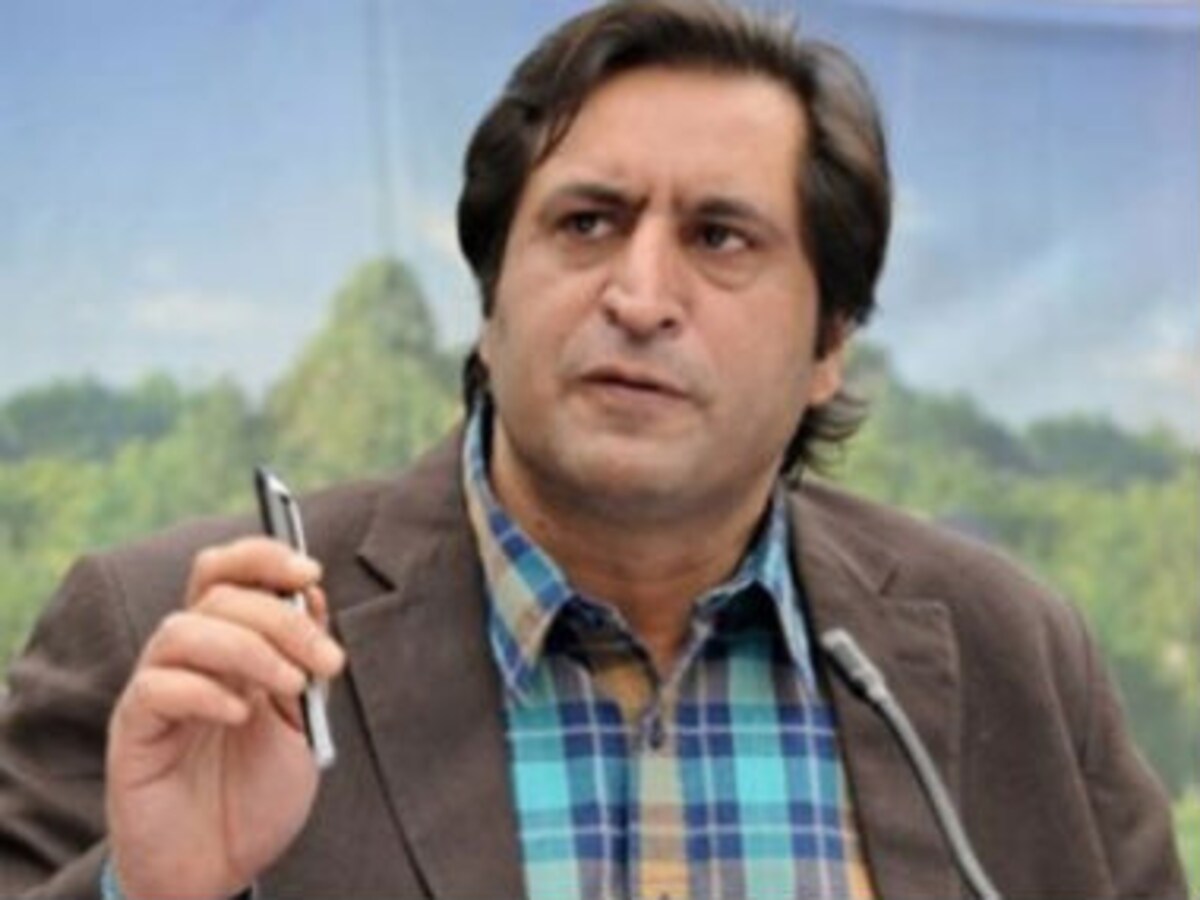
J&K PC President Sajad Lone Raises Concerns Over Arrests and Harassment During Electoral Process

sajad lone

J&K Peoples Conference President, Sajad Gani Lone, expressed apprehension regarding the arrests and harassment of workers on alleged OGW (Overground Worker) grounds and other arbitrary pretexts. He appealed to both the Election Commission and the administration to uphold principles of fairness and impartiality in the electoral process, urging them not to selectively target parties and their workers.

Lone echoed the sentiments voiced by Mr. Altaf Bukhari, emphasizing agreement with his assertion that workers are being unjustly detained under OGW grounds and other flimsy excuses. He noted a coincidence that these OGW lists were compiled during the regimes of the National Conference (NC).

Calling for a level playing field for all political entities, Lone urged the Election Commission and administration to refrain from selective actions. He also urged them to scrutinize the history and context of lists in police stations, alleging that many were compiled by the NC.

Furthermore, Lone accused the NC of attempting to portray themselves as victims and staging a drama of victimhood. He criticized the NC, labeling them as past rulers who imposed cruelty upon Kashmiris.

Lone highlighted a perceived status-quoist ecosystem, suggesting that those advocating for political stagnation in Kashmir are still active. Additionally, he accused certain elements, whom he referred to as “Tourist/Tarbaaz (TT)”, of perpetuating a narrative of victimhood.

Mehbooba Condemns BJP Amid Rising Militant Attacks in Pir Panchal; Questions Security Situation

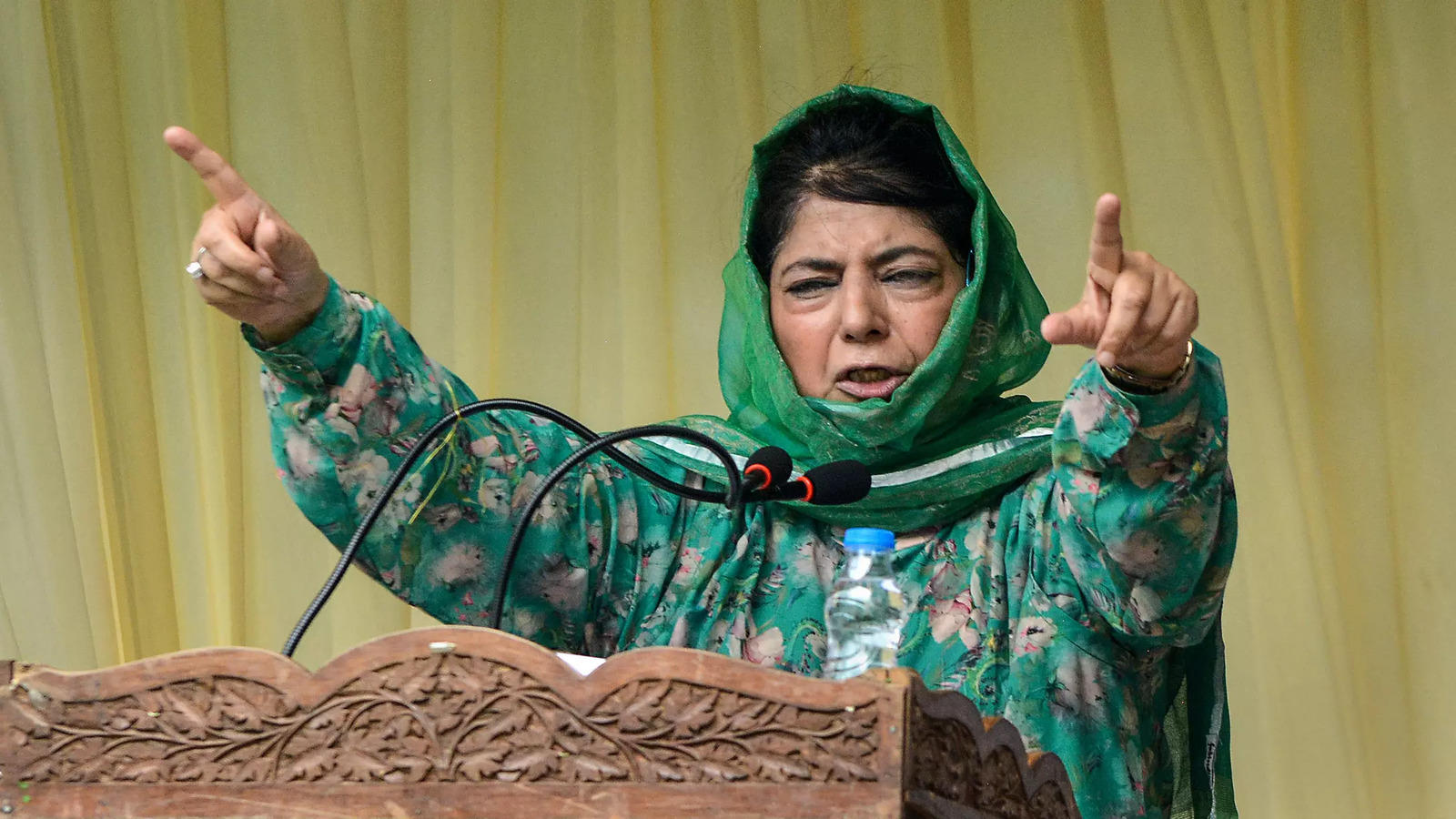
PDP President Mehbooba Mufti has launched a scathing criticism against the BJP, pointing to a surge in militant attacks in the Pir Panchal region. Speaking to reporters in Srinagar, Mufti expressed her condemnation of a recent attack in the area. She emphasized that under BJP rule, regions that were once peaceful and free from militancy are now experiencing heightened violence.

Mufti’s remarks underscored her concern over the deteriorating security situation in the Pir Panchal region, questioning why it has become a target for militant activities. She called on the BJP to provide answers regarding the security measures in place and the reasons behind the escalation of violence in previously tranquil areas.

The recent incident that prompted Mufti’s remarks involved the ambush of an Indian Air Force convoy in Shaistar, Poonch district. Tragically, one soldier lost his life, and four others sustained injuries in the attack. Following this incident, security forces launched a massive Cordon and Search Operation (CASO) across various parts of dense forests and adjoining areas.

Mufti’s criticism highlights the ongoing tensions between the PDP and BJP, particularly concerning security and governance issues in Jammu and Kashmir. As the situation in the Pir Panchal region remains tense, Mufti’s demand for accountability and action from the BJP underscores the need for effective measures to address the escalating violence and restore peace in the region.