Mirwaiz Umar Farooq Honors Battle of Badr Martyrs and Molana Muhammad Yousuf Shah at Historic Srinagar Gathering After 7 Years

Molana Muhammad Yousuf Shah

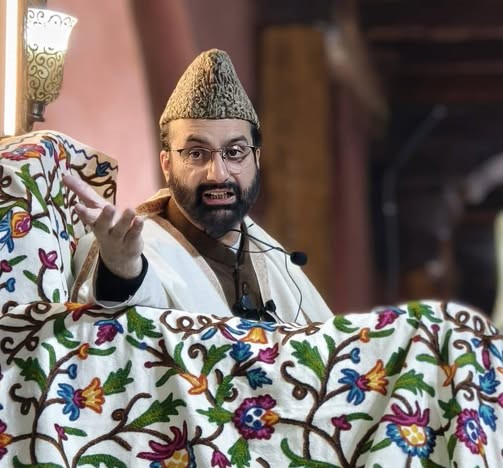
The historic Aali Masjid Eidgah in Srinagar buzzed with life as a large gathering assembled after a seven-year hiatus to commemorate Youm-e-Badr, a day marking the Battle of Badr—Islam’s first significant clash between truth and falsehood. Leading the event was Dr. Molvi Muhammad Umar Farooq, the Mirwaiz of Kashmir, whose presence carried a deep resonance for the valley’s Muslim community. The occasion doubled as a tribute to the 58th death anniversary of the revered Islamic scholar and political leader, Mufassir-e-Quran Muhajir-e-Millat Mirwaiz Molana Muhammad Yousuf Shah, making it a powerful convergence of history, faith, and legacy.

A Day of Remembrance and Reflection

The Battle of Badr, fought in 624 CE under the leadership of Prophet Muhammad (Peace be upon him), holds a sacred place in Islamic history. It was a defining moment where a small, determined group of believers triumphed over a larger opposing force, laying the groundwork for the spread of Islam. Addressing the crowd, Mirwaiz Umar Farooq paid heartfelt tributes to the martyrs of this battle, emphasizing their courage and sacrifices. He highlighted how their victory not only shaped the faith’s early trajectory but also eased the path for future generations to share its message. His words struck a chord with the attendees, many of whom see parallels between that historic resilience and their own challenges today.

The gathering wasn’t just about looking back—it was a bridge to the present. After seven years, the Aali Masjid Eidgah, a site steeped in Srinagar’s cultural and religious fabric, reopened its doors to such an event. The gap, marked by restrictions and unrest, made this assembly all the more significant. For the people of Kashmir, it was a rare moment to come together, reflect, and honor their shared heritage under the Mirwaiz’s guidance.

Celebrating a Scholar’s Enduring Legacy

The event also served as a solemn tribute to Mirwaiz Molana Muhammad Yousuf Shah, whose death anniversary coincided with Youm-e-Badr. Known as Muhajir-e-Millat (the Exile of the Nation), he was a towering figure in Kashmir’s history—a scholar, preacher, and political leader who left an indelible mark. Mirwaiz Umar Farooq spoke warmly of his predecessor’s contributions, noting his unwavering commitment despite facing exile and hardship. “He remained steadfast in his principles,” the Mirwaiz said, “serving his people and nation through extraordinary religious, social, and community efforts.”

What stood out most in the Mirwaiz’s address was his praise for Yousuf Shah’s translation and interpretation of the Holy Quran into Kashmiri. Known as Bayan-ul-Furqan, this work broke barriers by making the Quran’s teachings accessible in the local tongue—a feat Mirwaiz Umar described as “destined to benefit generations.” Its widespread acceptance among Kashmiris underscores its enduring relevance, a testament to Yousuf Shah’s vision of connecting faith with identity.

A Modern Twist to a Timeless Mission

The gathering wasn’t just about honoring the past—it also looked to the future. Mirwaiz Umar Farooq announced an ambitious project by the Mirwaiz Foundation: a mobile app version of Bayan-ul-Furqan. Tailored to today’s digital age, this app aims to bring Yousuf Shah’s celebrated exegesis to a new generation, particularly the youth. Beyond preserving religious scholarship, it’s designed to strengthen ties to the Kashmiri language, which the Mirwaiz sees as a vital thread of the region’s identity. “This will connect our young people to their roots,” he said, signaling a blend of tradition and technology that could reshape how Kashmiris engage with their heritage.

The announcement drew nods of approval from the crowd, where prominent religious scholars and spiritual leaders like Molana Shaukat Hussain Keng, Molana Khursheed Ahmed Qanoongo, and others had gathered. These figures, too, spoke at length about Muhajir-e-Millat’s life, painting him as a patron whose influence continues to guide the valley’s moral and intellectual compass.

A Gathering Heavy with Meaning

The event at Aali Masjid Eidgah carried a weight beyond its religious focus. For many, it was a rare public appearance by Mirwaiz Umar Farooq, whose movements have often been restricted in recent years amid Kashmir’s complex political landscape. As the chairman of the All Parties Hurriyat Conference and a key spiritual leader, his role bridges faith and community aspirations, making such gatherings a focal point for both devotion and dialogue.

The seven-year gap since the last such assembly at this location added layers of anticipation. Attendees filled the space, their presence a quiet statement of resilience and unity. The Mirwaiz’s words—whether about the martyrs of Badr or Yousuf Shah’s legacy—resonated as a call to remember history while adapting to the present, a message that felt especially poignant in a region navigating constant change.

Looking Ahead

As the event concluded, the echoes of prayers and tributes lingered over Aali Masjid Eidgah. The Mirwaiz’s tribute to the Battle of Badr’s martyrs and Yousuf Shah’s legacy wasn’t just a look back—it was a step forward. With the upcoming Bayan-ul-Furqan app, the Mirwaiz Foundation is poised to carry this legacy into the digital era, ensuring that Kashmir’s spiritual and cultural inheritance remains vibrant for years to come.

For those who gathered on March 18, 2025, the day was a reminder of their roots and a glimpse of what lies ahead. In honoring the past, Mirwaiz Umar Farooq offered a vision for the future—one where faith, language, and community stand strong, even amidst the challenges of a modern world.

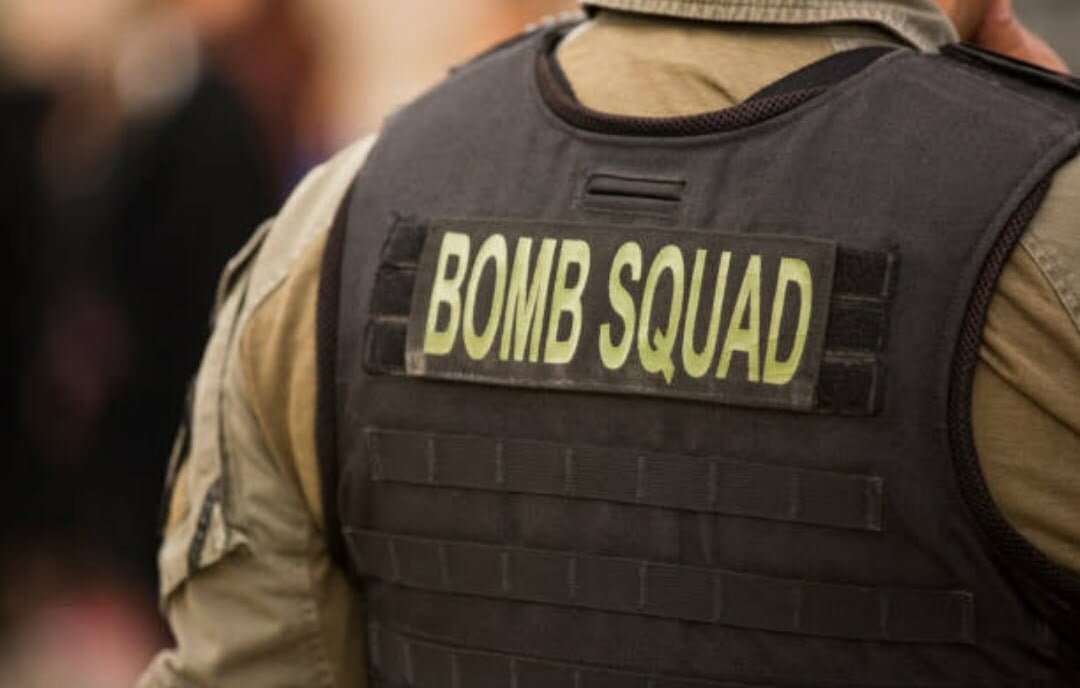
IED Detected in Shopian’s Habdipora, Bomb Squad Deployed

bomb

An improvised explosive device (IED) was found in Habdipora area of south Kashmir’s Shopian district on Tuesday, officials said.

An official said that as soon as the IED was detected, a bomb disposal squad was called in.He said that bomb squad is on job to defuse the IED—(KNO)

Counter Intelligence Kashmir (CIK) Arrests Showkat Ahmad Dar for Running Radical Facebook Handle

Drug Smuggling 2 arrested

Counter Intelligence Kashmir on Tuesday arrested a man operating a radical social media handle on Facebook.In a statement a police spokesperson said, Showkat Ahmad Dar, son of Ghulam Ahmad Dar of Doodh Mohalla, Shalimar, Srinagar was arrested for operating the social media handle ‘Shaddy Kashmir Dryfruits.’

The spokesperson said, “Acting on credible intelligence, and during the course of social media surveillance, a team of CIK successfully identified and apprehended an individual operating a radical social media handle on Facebook, ‘Shaddy Kashmir Dryfruits’, which was being used to disseminate extremist content with an intention to disturb peace.”

“Upon receiving input about the online activity, a swift investigation was launched, social media handle was resolved leading to the identification of the suspect as the social media abuser Showkat Ahmed Dar was found to be actively engaged in posting and sharing content aimed at glorifying terrorism, terrorist commanders and inciting anti-national sentiments among young minds,” the statement said.

“Efforts to track the suspect were initially hindered due to his constant movement and change of location.

However, a well-coordinated strategy was implemented on ground to apprehend him along with his electronic device. A preliminary inspection of the digital devices revealed access to the radical Facebook account, along with incriminating materials, including a video of slain terrorist commander Zakir Musa and other extremist propaganda,” it added.

“It is crucial to highlight that Showkat Ahmad Dar has a history of radical activities. He was previously arrested in 2019 by Harwan Police Station of Srinagar for involvement in stone-pelting incidents.

Additionally, in 2022, he was detained by Cyber Police Station Srinagar for engaging in the online dissemination of radical content” the statement said.

“It is noteworthy that on the request of intelligence agencies in Jammu and Kashmir, all the social media service providers have established special units to monitor the radical propaganda especially in J&K. The moment any such radical activity is witnessed by their monitoring unit, it is reported to the security agencies immediately,” it said.

“These joint actions by security and intelligence agencies in Jammu and Kashmir in coordination with The Special Monitoring units of social media companies, has been responsible in busting many radical modules and identify potential terrorists,” the statement added.

“The successful apprehension of the suspect highlights the commitment of law enforcement agencies to curb online radicalization and safeguarding the youth from extremist influences.

Investigations are going on, his role and other associates are under probe, and further legal action will follow as per the provisions of the law,” it said—(KNO)

US Deports Over 200 Alleged Venezuelan Gang Members to El Salvador Amid Legal Battle

Venezuelan Gang

In a controversial move, the United States has deported more than 200 Venezuelans accused of gang affiliation to El Salvador, despite a court order attempting to block the removals. The deportations have sparked legal and diplomatic tensions, with human rights groups raising concerns over due process and international law violations.

Mass Deportation Despite Court Order

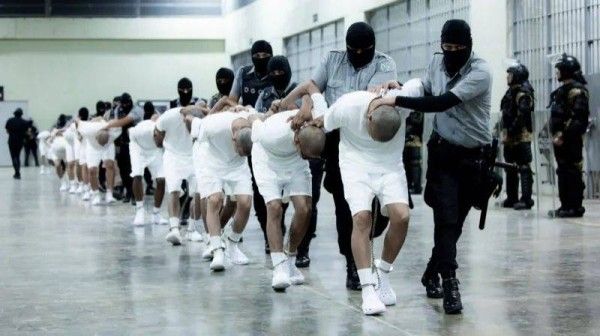
On Sunday morning, El Salvador’s President Nayib Bukele confirmed the arrival of 238 alleged members of the Venezuelan gang Tren de Aragua (TdA), along with 23 individuals linked to the notorious MS-13 gang. The detainees were immediately transferred to the high-security Terrorism Confinement Center (Cecot), a mega-prison known for its harsh conditions.

This development came after US District Judge James Boasberg issued a 14-day halt to the deportations on Saturday, pending further legal arguments. However, flights carrying the deportees had already departed before the ruling was formally recorded, leading to disputes over the legality of the removals. In response, President Bukele mocked the ruling on social media, posting “Oopsie… Too late.”

Legal and Political Justifications

The White House defended the deportations, stating that the administration had acted within legal bounds. White House Press Secretary Karoline Leavitt argued that the court order “had no lawful basis” and was issued only after the deportees had left US territory.

The legal foundation for the removals rested on President Donald Trump’s invocation of the Alien Enemies Act of 1798, which allows the deportation of foreign nationals considered a security threat. Trump accused Tren de Aragua of conducting an “irregular warfare” campaign against the United States, declaring them a terrorist organization. This is the first time the Alien Enemies Act has been used in this manner since World War II.

Human Rights and Constitutional Concerns

The deportations have drawn strong criticism from rights groups and legal experts. The American Civil Liberties Union (ACLU) has argued that the move violates constitutional protections and due process, as many deportees had pending asylum or legal proceedings.

Amnesty International USA labeled the deportations as “racist targeting” of Venezuelans based on unverified claims of gang affiliation. The Venezuelan government also condemned Trump’s actions, stating they “unjustly criminalize Venezuelan migration” and evoke historical parallels with oppressive regimes.

El Salvador’s Role and Diplomatic Ties

The arrangement between the US and El Salvador underscores strengthening ties between the two nations. President Bukele had previously offered to accept deportees, citing it as part of his government’s crackdown on organized crime. The Cecot mega-prison, which can house up to 40,000 inmates, was specifically designed to detain gang members.

However, human rights organizations have heavily criticized the facility for alleged mistreatment of prisoners, inhumane conditions, and lack of due process. Reports indicate that detainees endure extreme isolation, restricted movement, and harsh disciplinary measures.

Implications for US Immigration Policy

The mass deportations mark a significant escalation in President Trump’s aggressive immigration policies. Since taking office, Trump has prioritized cracking down on illegal immigration and gang activity. His administration has boasted record-low border crossings but has faced resistance over the pace and legality of deportations.

The latest move is part of Trump’s broader pledge to conduct the largest deportation operation in US history. His supporters view the crackdown as a necessary measure to protect national security, while critics warn of potential constitutional crises and international backlash.

Legal Challenges Ahead

The Department of Justice has appealed Judge Boasberg’s ruling, setting up a legal battle over the scope of executive authority in immigration enforcement. The case raises critical questions about checks and balances within the US government, as well as the legal and moral obligations towards asylum seekers and foreign detainees.

As the situation unfolds, it remains to be seen how the courts will rule and whether further deportations will proceed. For now, the transfer of these alleged gang members to El Salvador highlights the contentious and evolving nature of US immigration policy under Trump’s leadership.

United Forum of Bank Unions (UFBU) Calls for Nationwide Bank Strike on March 24-25 Over Key Demands

United Forum of Bank Unions (UFBU)

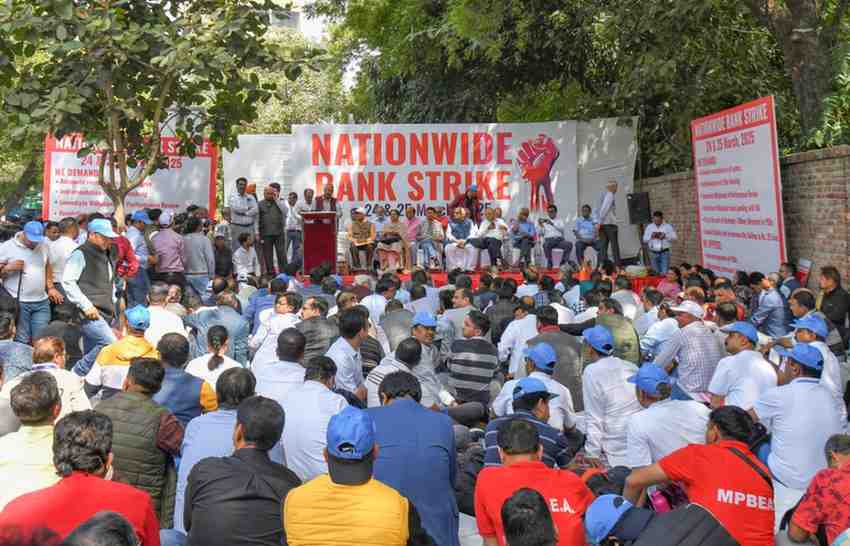
The United Forum of Bank Unions (UFBU) has called for a nationwide two-day strike on March 24 and 25, demanding better recruitment across all cadres, regularisation of temporary employees, and the implementation of a five-day work week in the banking sector.

UFBU is a collective that includes nine bank unions representing more than eight lakh employees and officers in public sector banks, private sector banks, foreign banks, co-op banks and regional rural banks.

Pankaj Kapoor, VP, All India Bank Officers Confederation (AIBOC) told ANI, “Banking services will be interrupted for four days starting from March 22, and March 23 is bank holiday, and 24-25 March is strike. Due to this, banking services like clearing house, cash transaction, remittances, advances will be affected for four days starting from March 22.”

The demands include adequate recruitment in all cadres, regularise all temporary employees,

implementation of five-day work week, immediate withdrawal of the recent DFS/government directives on performance review and PLI, which threaten job security, create division and discrimination amongst employees and officers, violate the Eigth Joint Note, and

undermine Public Sector Bank’s (PSB) autonomy; safety of bank officers/staff against the assault/abuses by unruly banking public; filling up the post of workmen/officer directors in PSBs; resolution of residual issues pending with IBA; amending Gratuity Act to increase the ceiling to Rs 25 lakh on the lines of scheme for government employees along with exemption from income tax.

The demand said: “Do not recover income tax on staff welfare benefits given to employees and officers on concessional terms.”

Managements to bear the same, a statement by the union said.

Other demands include maintaining a minimum of 51 per cent of Equity Capital in IDBI Bank by thr government, stopping Micromanagement of PSBs by DFS on policy matters affecting service conditions of employees and officers and undermining bilateralism.

Other demands listed are stopping outsourcing permanent jobs in banks and stopping unfair labour practices in banking industry.

In a press release issued by the UFBU, they demanded adequate recruitments should be made to provide sufficient staff in all Branches to extend satisfactory customer services and to reduce the undue workload on the existing staff.

In the entire financial sector including RBI, insurance companies, etc, they are following five days’ work week. In the government too, it is five days working.

“Even in many private sectors including IT, it is five days working in a week. Hence, we demanded five days working per week in banks also. Indian banks agreed to the same and recommended to the government one year ago but still, the issue is pending with the government. Hence, we are demanding implementation of five days working in banks without any further delay,” the release stated.

Other demands include immediate withdrawal of the recent unilateral instructions of the government on monthly review of efficiency of staff, modifications in the incentive sheme without any discussions with the unions.

To press the above demands and seeking amicable resolution of the same, United Forum of Bank Unions has given the call for All India Bank strike for two days from the midnight of March 23 to midnight of March 25, 2025.

“Since the management or the government are not coming forward to settle these issues, the agitation and strike has been forced on us. We seek the support of the people for our strike and request them to bear with us for any inconvenience caused to them,” said the release signed by Rupam Roy, General Secretary of the UFBU. (ANI)

J&K High Court Quashes PSA Detention of Advocate Nazir Ahmad Ronga

Advocate Nazir Ahmad Ronga

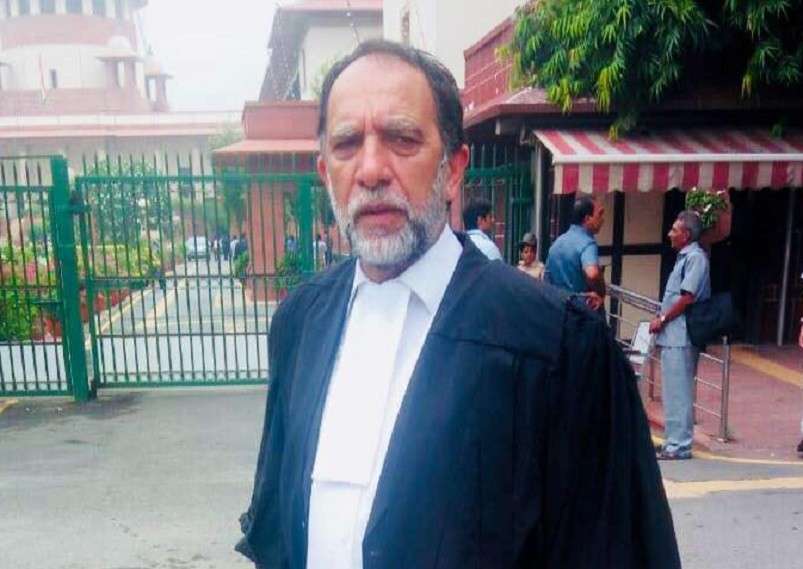
The Jammu and Kashmir and Ladakh High Court has set aside the preventive detention of advocate Nazir Ahmad Ronga, former President of the Jammu and Kashmir High Court Bar Association. Ronga was detained under the Jammu and Kashmir Public Safety Act (PSA) in July 2024.

A bench led by Justice Sanjay Dhar, according to the news agency—Kashmir News Observer (KNO) directed the authorities to release Ronga immediately, citing lack of specific material evidence supporting the allegations against him.

The High Court observed that the grounds for detention were “vague and ambiguous,” making it difficult for Ronga to make an effective representation against the detention order.

The High Court noted that the detention record did not include any intelligence report to substantiate the claims against Ronga.

It further stated that the grounds of detention appeared general in nature, without mentioning any specific role played by him.

The absence of material particulars in the detention order, the court held, violated Article 22(5) of the Constitution of India, which provides detainees the right to make a representation against their detention, the High Court stated—(KNO)

Three Additional Judges Sworn In as Judges of J&K and Ladakh High Court

Additional Judges

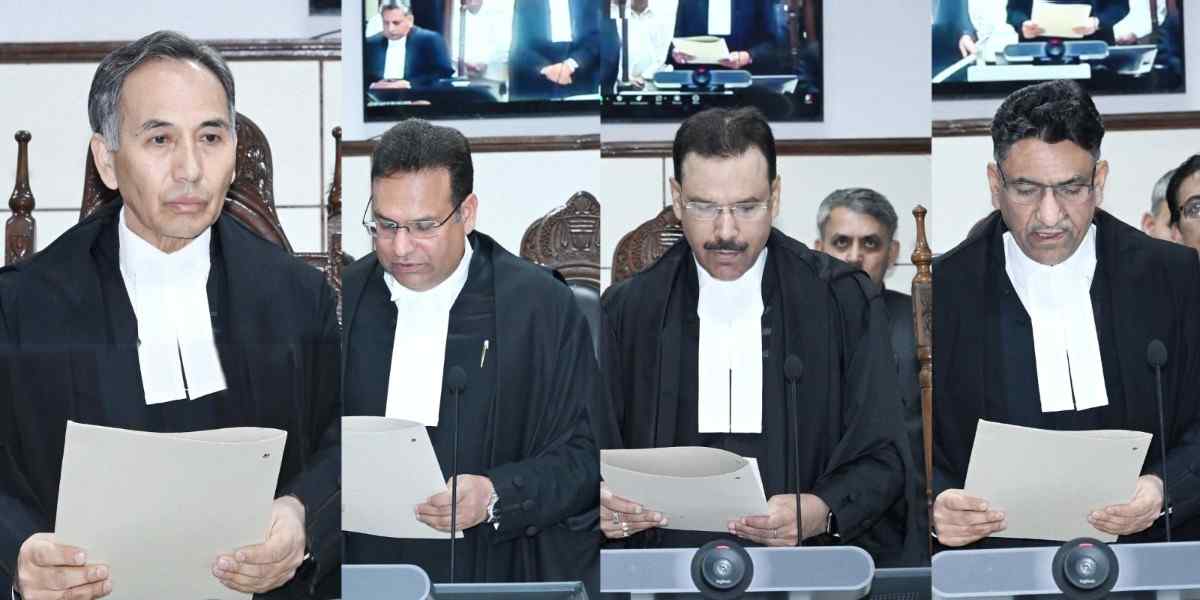
Chief Justice, High Court of Jammu & Kashmir and Ladakh, Tashi Rabstan, today administered the Oath of office to Justice Wasim Sadiq Nargal, Justice Rajesh Sekhri and Justice Mohammad Yousuf Wani, Additional Judges, as Judges of the High Court of Jammu & Kashmir and Ladakh, in the Chief Justice’s Court Room, Jammu.

The oath taking ceremony was attended at Jammu by Justice Sanjeev Kumar, Justice Sindhu Sharma, Justice Vinod Chatterji Koul, Justice Sanjay Dhar, Justice Puneet Gupta and Justice Mohammad Akram Chowdhary while Justice Atul Sreedharan, Justice Rajnesh Oswal, Justice Javed Iqbal Wani, Justice Rahul Bharti, and Justice Moksha Khajuria Kazmi participated online from Srinagar.

The proceedings of the oath taking ceremony were conducted by Shahzad Azeem, Registrar General, who read the contents of the Notification received from Government of India, Ministry of Law & Justice, Department of Justice (Appointments Division), the Warrants of Appointment issued by the President of India and the Letter of Authorization issued by the Lieutenant Governor, Union Territory of Jammu & Kashmir, authorising the Chief Justice of the High Court of Jammu & Kashmir and Ladakh, to administer the Oath of office to Justice Wasim Sadiq Nargal, Justice Rajesh Sekhri and Justice Mohammad Yousuf Wani.

The ceremony was also attended by Former Judges of High Court, Chief Secretary, UT of J&K, Deputy Solicitor General of India, Jammu, Secretary to Government, Department of Law, Justice and Parliamentary Affairs, Member, Central Administrative Tribunal, Principal District Judge Jammu, Inspector General of Police, President, J&K High Court Bar Association, Jammu, Members of the Bar, Senior Advocates, Officers of Civil and Police Administration and Officers and Staff of the Registry.

LeT Abu Qatal’s Guard Shot Dead in Pakistan

Body Garud

Lashkar-e-Taiba (LeT) terrorist Abu Qatal, chargesheeted by the National Investigation Agency (NIA) in connection with the January 2023 Rajouri attacks, has been shot dead in Pakistan after an assailant opened fire on his vehicle on the Mangla-Jhelum Road, local media reported on Sunday.

An armed guard of Qatal was also killed in the attack that took place on Saturday night, according to a report in Islamabad-based outlet The News International.

At the time of the attack, Abu Qatal, whose real name is Zia ur Rehman, was travelling in his black jeep, The News International reported. Both Qatal and his armed guard died on the spot.

Following the attack, the suspected assailant was apprehended, The News International reported, citing sources. However, there has been no official confirmation of the arrest.

The National Investigation Agency (NIA) had charge-sheeted five accused, in the case of the January 2023 attacks in Rajouri district of Jammu and Kashmir.

The case RC-01 & 02/2023/NIA/JMU, relates to a heinous terror attack on civilians at village Dhangri, District Rajouri on January 1 2023, followed by an IED blast the next day, the NIA said.

Seven people, including two children, were killed and several others severely injured in the attacks. The three charge-sheeted LeT handlers had been identified as Abu Qatal alias Qatal Sindhi, Saifullah whose alias include Sajid Jutt, Ali, Habibullah, Nouman and Mohd Qasim.

While Abu Qatal and Sajid Jutt had been Pakistani nationals, Qasim had crossed over to Pakistan around 2002 and had joined the LeT.

Investigations had revealed that the trio had orchestrated the recruitment and deployment of LeT terrorists from Pakistan to target civilians, particularly from the minority community in Jammu and Kashmir, as well as security personnel. The attacks had been carried out under their directions.

Abu Qatal had come to India in 2002-03 and was active in the Poonch-Rajouri range, along with other terrorists. It was found during investigations that they had provided logistical support to the terrorists on the directions of Abu Qatal. (ANI)

Silver Prices Expected to Outpace Gold in 2025 Amid Supply Deficits and Rising Industrial Demand

Silver Prices Expected

Prices of silver are anitcipated to outpace that of gold, driven by supply deficits and growing industrial demand, which are expected to act as strong tailwinds for the metal’s value, according to the global investment firm WisdomTree.

“We anticipate that silver will outpace gold, gaining 23 per cent over the coming year compared to gold’s projected 17 per cent increase (Q4 2024 to Q4 2025),” the report added.

“We remain optimistic about its potential, with supply deficits and increasing industrial demand acting as strong tailwinds,” the report said, answering the question on whether the fortunes of silver is set to change in 2025.

According to the report, there has been a shortage of supply for silver for four years in a row, and 2025 will probably be the fifth.

Above-ground inventory is depleted by deficits, and even while there is still plenty of inventory, investors hold a large portion of it and demand higher prices to encourage sales.

Industrial demand for silver has reached record highs, driven by increasing usage in photovoltaic (solar panel) applications, 5G technology, and automotive electronics. Photovoltaic installations are expected to set another record in 2025, further boosting silver demand, the report added.

Additionally, technological advancements have led to the mass production of higher-efficiency N-type solar cells, which require greater silver content.

Beyond renewable energy, the expansion of data centres and artificial intelligence applications in 2025 is set to further increase silver demand.

In the automotive industry, the growing use of electronic components and investment in battery-charging infrastructure will continue to support silver consumption, the report added.

The prices of silver in the international markets have witnessed an uptick due to the industrial demand and global uncertainties.

Until mid-December 2024, silver was on track to outperform gold. However, a sudden contraction in the final two weeks of the year allowed gold to overtake silver, closing the year up 27 per cent, while silver finished with a 21 per cent gain.

Silver has been undervalued, relative to gold, with the gold-to-silver ratio surpassing 90 in January 2025 before beginning to decline.

“Historically, this ratio has faced resistance around 92, followed by sharp corrections in silver’s favour. This technical indicator suggests silver may be poised for another upward move,” said the report.

In the Indian markets, silver prices are heavily dependent on factors such as the global economic conditions, Rupee-Dollar exchange rate and government policies on trade.

The price of silver per kilogram has reached the level of RS 1,03,000 in India. (ANI)

Second Missing Gujjar Youth’s Body Recovered in Kulgam, Search Continues for Third

dead

Police on Sunday recovered the body of another Gujjar youth, who had gone missing with two others in this South Kashmir District last month.

According to the details available with the news agency—Kashmir News Observer (KNO) body of Mohammad Showkat, son of Mohammad Sadiq Bajad, resident of Chata Doonda, Rajouri (currently residing in Chandian Pajan, Qazigund) was found in Vaishow Nallah at Mah Ashmuji area in Kulgam district this morning.

Pertinently, last month, three youth—Riyaz Ahmad Bajad, his younger brother Showkat Ahmad Bajad, and a third person, Mukhtar Ahmad—went missing from Qazigund.

Their relatives have been searching for them for the past month and had lodged a missing report at the local police station.

Body of another youth Riyaz was found three days ago from the same nallah. All three hailed from Rajouri and were working as laborers in Qazigund.

The trio left for Ashmuji, Kulgam on February 13, to attend a function in a relatives house. However, they went missing before reaching their destination. Their phones have remained switched off since their disappearance.

Search operation to locate the missing trio was launched by Kulgam Police, SDRF, and NDRF.

Till now two bodies have been recovered while search is on to locate the another missing youth—(KNO)