J&K Seizes 11,000 Kg Unsafe Meat, Sends Samples for FSSAI and Halal Testing Amid Public Outrage

Unsafe Meat

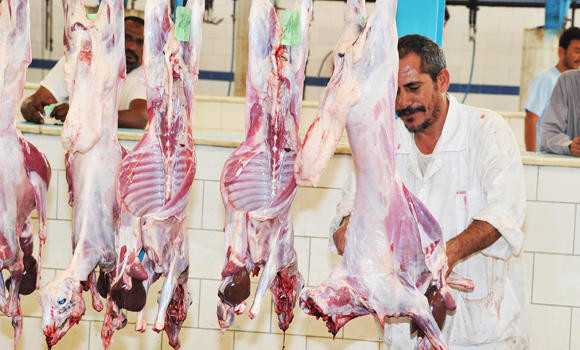
In response to the recent crackdown on unsafe meat in Jammu and Kashmir, authorities have intensified their efforts to ensure compliance with Food Safety and Standards Authority of India (FSSAI) regulations. Over 11,000 kg of meat, including rotten and substandard products, have been seized across the region, with 30 samples sent for advanced testing at the FSSAI laboratory in Ghaziabad and the Meat Species Identification Laboratory in Hyderabad. The investigation focuses on microbial and chemical contamination, animal species verification, and adherence to Halal requirements. This action follows public outrage and a viral video exposing unhygienic meat storage, prompting the J&K government to establish food safety check posts and enhance testing to safeguard public health.

Pahalgam Terror Strike Casts Shadow Over J&K Statehood Demands, Supreme Court Observes

BJP Links J&K Statehood to Elimination of Terror Networks as Supreme Court Reviews Restoration Plea

Kashmiri MBBS Student Saba Rasool Dies in Iran; Family Seeks Urgent Repatriation, Alleging Medical Negligence
J&K Police Attach Property of Active Terrorist in Anantnag Under UAPA Crackdown

Active Terrorist in Anantnag

Jammu and Kashmir Police, in its continued crackdown on the terror ecosystem, has attached immovable property belonging to an active terrorist under relevant provisions of law in Anantnag district.

The land falling under Khasra No. 165 MIN, situated at Guree, Bijbehara, and owned by Adil Hussain Thoker S/o Wali Mohammed Thoker R/o Guree, Bijbehara, an active terrorist, has been attached under Section 83 of CrPC.

The action has been taken in connection with FIR No. 11/2023 registered under Sections 20, 38 of the Unlawful Activities (Prevention) Act (UAPA) and Sections 2/3 of the EIMCO Act.

This attachment is part of lawful measures aimed at dismantling the support structure of terrorism in the district. Such actions will continue against individuals found aiding or involved in unlawful and anti-national activities.

Anantnag Police reaffirms its commitment to maintaining peace, security, and the rule of law in the district.

Pahalgam Terror Strike Casts Shadow Over J&K Statehood Demands, Supreme Court Observes

BJP Links J&K Statehood to Elimination of Terror Networks as Supreme Court Reviews Restoration Plea

Kashmiri MBBS Student Saba Rasool Dies in Iran; Family Seeks Urgent Repatriation, Alleging Medical Negligence
Srinagar Police Attach Property Worth ₹1 Crore of Designated Terrorist Asif Maqbool Dar in Baramulla

Terrorist Asif Maqbool Dar

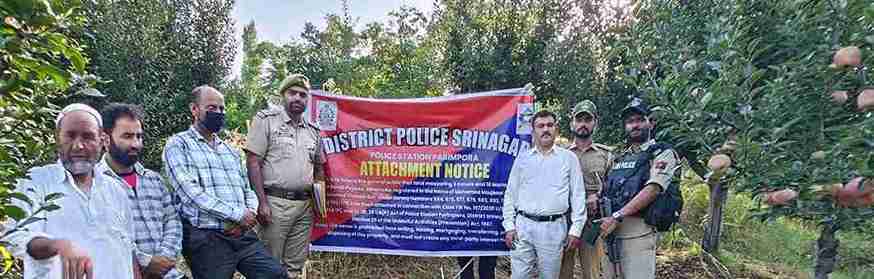
In a major step towards dismantling terror networks and their support structures, Srinagar Police has attached orchard land measuring 3 kanals and 18 marlas, valued at approximately Rs 1 crore, belonging to designated terrorist Asif Maqbool Dar , son of Mohd. Maqbool Dar, who is presently operating from across the border. The property is located at Bandi Payeen, District Baramulla.

This action has been taken in connection with FIR No. 107/2020, registered at Police Station Parimpora, under Sections 124A, 153A, 295A IPC and Sections 13, 18 & 38 of the Unlawful Activities (Prevention) Act – UAPA. Proceedings were initiated under Section 25 of the UAPA, which empowers authorities to attach property used or intended to be used for terrorist activities. The attachment was carried out in the presence of the concerned Executive Magistrate.

Although the property is formally held in the name of his father, Mohd. Maqbool Dar (resident of Bandi Payeen, Baramulla / presently residing at HIG Colony, Bemina), investigations have established that Asif Maqbool Dar is an active stakeholder. He has been involved in facilitating terrorism, spreading anti-national propaganda, and inciting disaffection against the Government through various social media platforms for several years.

The Ministry of Home Affairs, Government of India, has already designated Asif Maqbool Dar as a terrorist. The attachment of his property is part of a larger and ongoing strategy aimed at disrupting the financial, logistical, and operational ecosystem of terror networks and their cross-border sponsors.

This decisive action by Srinagar Police is intended to send a clear and strong message: those engaged in anti-national and terror-related activities will face strict legal consequences, including forfeiture of their assets.

Srinagar Police reiterates its unwavering commitment to upholding the rule of law, protecting the peace and security of the region, and ensuring that no individual or network is allowed to threaten the safety and sovereignty of Srinagar City or the Union Territory of Jammu & Kashmir.

Pahalgam Terror Strike Casts Shadow Over J&K Statehood Demands, Supreme Court Observes

BJP Links J&K Statehood to Elimination of Terror Networks as Supreme Court Reviews Restoration Plea

Kashmiri MBBS Student Saba Rasool Dies in Iran; Family Seeks Urgent Repatriation, Alleging Medical Negligence
Omar Abdullah Says Survival Chances Slim in Kishtwar Cloudburst; 61 Dead, 116 Rescued as Massive Operations Continue

CM Omar Abdullah

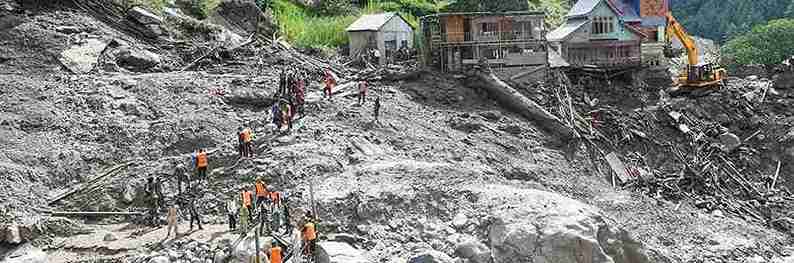
Jammu and Kashmir Chief Minister Omar Abdullah on Tuesday said that it might be impossible to find anyone alive in the Kishtwar incident, stating that the disaster took place due to cloudburst rather than a breach of glacial lakes.

“Finding the missing persons alive now looks nearly impossible. In these circumstances, we will try to retrieve as many bodies and hand them over to their loved ones. According to the information we have received so far, the disaster that happened in Kishtwar was due to a cloudburst and not a glacial lake breach,” Omar Abdullah told reporters.

The J-K CM stated that the government will now appoint a team of experts to find out the other affected areas in the region and sought a report from them so that such incidents do not take place in the future.

“Now we have to appoint a team of experts to identify areas which might be in danger. A few months ago, the same thing was seen in Ramban, at that time the financial loss was more and the loss of life was less. This time the loss of life was more, but to avoid such a situation in future or if it arises, what steps can be taken by the government to reduce the loss, for this we will have to appoint some experts and ask for their report,” Abdullah said.

Jammu and Kashmir Chief Secretary Atal Dulloo confirmed that 61 people have lost their lives in the cloudburst and flash flood incident that occurred in the Kishtwar district, while 116 individuals have been rescued so far.

Addressing mediapersons, Chief Secretary Dulloo said, “61 people have lost their lives in the incident. Security forces and various agencies have launched a collective search and rescue operation. CISF, J&K Police, CRPF, BRO, Indian Army, and NHPC were present at the spot immediately after the incident. Almost 450 people are working there day and night in a rescue operation. 116 people have been rescued so far.”

Central Industrial Security Force (CISF) Deputy Inspector General (DIG) MK Yadav stated that the rescue operations are ongoing and efforts are being made to locate and save those still missing.

“Rescue operations are ongoing here, and JCB machines are also working continuously. SDRF, NDRF, local police, and CISF have all been divided into teams, zoning up the area. All agencies are working here. We are hopeful of saving more people. Other people who are missing, who are trapped inside boulders, muddy areas, we are trying our best to get them out. The situation here is better than before,” Yadav said while speaking to ANI. (ANI)

Pahalgam Terror Strike Casts Shadow Over J&K Statehood Demands, Supreme Court Observes

BJP Links J&K Statehood to Elimination of Terror Networks as Supreme Court Reviews Restoration Plea

Kashmiri MBBS Student Saba Rasool Dies in Iran; Family Seeks Urgent Repatriation, Alleging Medical Negligence

Ganderbal Shock: 22-Year-Old Girl Arrested for Killing Her 14-Year-Old Sister After Altercation

Ganderbal Shock

Less than 48 hours after body of 14-year-old girl was recovered on Batsar- Sehpora road in Ganderbal, police has arrested her sister for the death in the central Kashmir district.

Addressing a presser, SSP Ganderbal Khalil Poswal said that the 22-year-old girl ( Sister of deceased) has been arrested in connection with the incident. He said soon after the incident, police registered a case and started investigations. During the Investigation, he said, role of deceased’s sister came to fore and it was found she killed the minor.

The SSP further stated that an altercation between two sisters escalated, resulting in the elder sister hitting the younger one with a rod, which unfortunately led to her death.

The Chief Minister Omar Abdullah had termed the murder has heinous and expressed his anguish. He demanded stern punishment for those guilty of murdering the minor. (GNS)

Pahalgam Terror Strike Casts Shadow Over J&K Statehood Demands, Supreme Court Observes

BJP Links J&K Statehood to Elimination of Terror Networks as Supreme Court Reviews Restoration Plea

Kashmiri MBBS Student Saba Rasool Dies in Iran; Family Seeks Urgent Repatriation, Alleging Medical Negligence

Body of 7-Year-Old Girl Recovered After Being Swept Away in Stream at Surankote’s Poonch

Dead

The body of a 7-year-old girl was retrieved after she was washed away in a stream in Dhoke Umrah, Bankasi, in the Surankote area of Poonch.

Officials told GNS that a 7-year-old girl, Asiya Kauser, daughter of Mushtaq Ahmad, a resident of Marah, was swept away in a stream yesterday.

A team of police, SDRF, and locals soon rushed to the spot and launched a rescue operation. After strenuous efforts, her body was recovered this morning at Shidhara.

Meanwhile, police have taken cognizance of the incident.(GNS)

Pahalgam Terror Strike Casts Shadow Over J&K Statehood Demands, Supreme Court Observes

BJP Links J&K Statehood to Elimination of Terror Networks as Supreme Court Reviews Restoration Plea

Kashmiri MBBS Student Saba Rasool Dies in Iran; Family Seeks Urgent Repatriation, Alleging Medical Negligence

Deputy CM Surinder Choudhary Visits Kathua Relief Camp, Assures Full Support to Cloudburst-Affected Families

Surinder Choudhary

Deputy Chief Minister, Surinder Choudhary today visited the relief camp established at SIDCO Ghati Industrial Estate, Kathua to take stock of arrangements being extended to the families affected by the recent cloudburst.

The Deputy Chief Minister interacted with the displaced families, heard their concerns and assured them of full government support.

“The government stands shoulder to shoulder with the affected families in this hour of crisis. Every possible measure will be taken to ensure their immediate relief and long-term rehabilitation,” the Deputy Chief Minister said while addressing the victims at the relief camp.

During the visit, the Deputy Chief Minister also inspected the nearby bridge connecting the adjoining villages of Ghati which was damaged in the incident. He directed the concerned authorities to take up immediate restoration work. “Restoration of connectivity is the top priority and the administration has been directed to execute works on war footing,” he asserted.

The Deputy Chief Minister also visited the Military Hospital Pathankot where he enquired about the well-being of the injured admitted following the Ghati cloudburst. He appreciated the timely response of the medical staff and instructed them to provide best possible treatment to the injured till their full recovery.

Later, the Deputy Chief Minister visited Government Medical College Kathua where he met the injured and families affected by cloudbursts and flashfloods at Jakhole and Janglote. He assured them that all necessary assistance including medical care and rehabilitation support, will be extended without delay.

“The safety and well-being of the people is our foremost concern. The Government will leave no stone unturned in providing relief and rebuilding the damaged infrastructure,” the Deputy Chief Minister reaffirmed.

He also directed the district administration to maintain round-the-clock monitoring in all calamity-hit areas and ensure timely assistance to the affected population.

Pahalgam Terror Strike Casts Shadow Over J&K Statehood Demands, Supreme Court Observes

BJP Links J&K Statehood to Elimination of Terror Networks as Supreme Court Reviews Restoration Plea

Kashmiri MBBS Student Saba Rasool Dies in Iran; Family Seeks Urgent Repatriation, Alleging Medical Negligence
Breakthrough Study Confirms Year-Round Breeding Population of Snow Leopards in Jammu & Kashmir’s Kishtwar Himalayas

Snow Leopards

The snow leopard, one of the world’s most elusive big cats, though hard to track, is silently not only surviving but thriving and is a resident population in Jammu and Kashmir all year round, according to findings of a new survey.

The existence of these “grey ghosts of the mountains” came to be known through anecdotal sightings in the remote mountains of the Himalayas, and there was no verifiable source to confirm their presence except for some fleeting footage captured by camera traps.
This proved to be a major challenge for researchers to estimate the population of these apex predators, which are a highly vulnerable species.
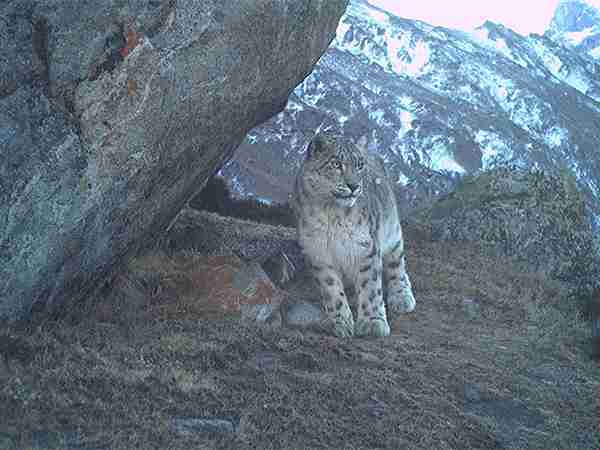
Now, a landmark camera trapping study conducted by the Nature Conservation Foundation (NCF) and the Wildlife Protection Department of Jammu and Kashmir has confirmed year-round presence and breeding activity of snow leopards in the Union Territory — marking a significant breakthrough for high-altitude biodiversity conservation in India.
Conducted between 2022 and 2025 across the Kishtwar Himalayas, this effort was launched under the nationwide Snow Leopard Population Assessment in India (SPAI) protocol and supported by the Royal Enfield Social Mission.
“We started the project in 2022 and confirmed the presence of snow leopards in the UT of J-K,” said Shahid Hameed, Wildlife Research and Project Coordinator at NCF and one of the co-authors of the study.
According to the Global Snow Leopard and Ecosystem Protection Programme (GSLEP), the total snow leopard population in the world is roughly estimated at between 4,000 and 6,500.
For India, the latest population estimate is 718, meaning India has around one-ninth of the total population of snow leopards.
Hameed said that previously, there was no verifiable source to confirm the presence of snow leopards, with surveys in the Western Himalayas being limited to Ladakh, Himachal Pradesh and Uttarakhand. However, later surveys established the presence of snow leopards for the first time in the Union Territory of J-K.
The first photographic records of snow leopards (Panthera uncia) in Kishtwar High Altitude National Park were obtained through camera trapping. This was documented in a study published in Oryx, a journal of Cambridge University Press and Assessment. The study, conducted by researchers from the University of Kashmir and the National Development Foundation, captured images of at least four different snow leopard individuals using camera traps.
“Our prior surveys were mostly done in the summer-autumn seasons; last year, we placed camera traps from late autumn to May 2025. This was the first systematic winter camera-trapping effort in these landscapes, despite snow accumulation reaching 10-12 feet and the risks of equipment loss,” said Hameed.
Also, he said the snow leopards were previously found in the areas adjacent to Ladakh and Himachal Pradesh, and they were unclear whether the snow leopards of J-K are residents or migratory.
“For this, winter monitoring was important, and now we know they are the resident population with year-round presence in the landscape, he said.
The survey began in the year 2022 and confirmed the presence of snow leopards in Jammu and Kashmir, but the 2024-25 phase of the project brought new insights — recording snow leopards during winter months in both Paddar (Jammu division) and Zojila (Kashmir division).
This, the survey suggests, is year-round use of the landscape, a critical indicator of stable habitat and a resident population.
The Nature Conservation Foundation Coordinator explained that camera trapping is one of the methods to record wildlife without actually being present in the field.
“The camera trap does the job of a field observer. We strategically place these cameras in the field based on our understanding of the landscape and ecology/behaviour of our target animal. These cameras are triggered by motion, and once an animal passes in front of the camera, the sensor detects the motion and activates the camera to take photos, said Hameed.
We predicted the distribution of snow leopards based on data collected across approximately 12,000 km2 from the Union Territory of Jammu and Kashmir,
Over 3,000 camera trap nights across Kishtwar High Altitude National Park (KHANP), Paddar, and Zojila resulted in the identification of at least 12 adult snow leopards, with an estimated presence of up to 20 individuals. Notably, the presence of at least a mother with cubs in Kishtwar confirms that this is a breeding population, according to the findings of the survey.
“These findings reaffirm the importance of Jammu and Kashmir as a key snow leopard stronghold. It is time to treat the Kishtwar Himalayas not as isolated valleys, but as part of an interconnected conservation landscape,” said Hameed.
Apart from snow leopards, the study also documented the presence of 16 other mammal species in the region, including the rare Himalayan brown bear, Himalayan wolf, common leopard, Kashmir musk deer, stone marten, pika, Asiatic ibex, and red fox.
“Much of the credit must go to the continued commitment of the Jammu and Kashmir Wildlife Department to conserve their high-altitude homes,” said Hameed.
According to Vigyat Singh, Director- Operations of the Eicher Group Foundation, the CSR arm of Royal Enfield, Snow leopards are more than just an indicator species. “Conserving their habitat reflects the overall health and resilience of high-altitude ecosystems.”
“In some instances, both snow leopards and common leopards were detected at the same camera locations in Paddar, raising important questions about species interactions and the possible impact of climate change on range shifts,” Singh explained.
The survey also included a landscape-level threat assessment based on interviews with over 300 households across Paddar, Warwan, Dacchan and Marwah. Livestock depredation and crop damage emerged as major challenges impacting the primary livelihood of the locals, with a need for more context-specific mitigation strategies. These losses shape community attitudes towards wildlife and demand the need for conflict resolution interventions.
As part of its community engagement efforts, the team conducted six outreach workshops, in collaboration with the Wildlife Research and Conservation Foundation (WRCF), reaching over 1,200 participants, including students and frontline forest staff.
These sessions included biodiversity awareness and demonstrations of field equipment, mock drills for handling human-wildlife conflict, and hands-on conservation education.
The report underscores the need for landscape-level, adaptive conservation strategies, in line with the vision of the Government of India’s Project Snow Leopard and the Kunming-Montreal Global Biodiversity Framework, which places strong emphasis on the role of local communities in conservation.
“We are helping the Project Snow Leopard by providing robust data on the distribution and population sizes of the snow leopard and also helping them to prioritise the areas of urgent conservation through our science-based approach,” said Hameed.
The Government of India launched Project Snow Leopard in 2008 with the goal of conserving high-altitude wildlife like snow leopards while ensuring that local communities are part of the process.
For the NCF study, Hameed said in landscapes where snow leopards were recorded, the researchers also mapped the threats faced by both snow leopards and local people.
“Agropastoral communities living in these high-altitude regions experience significant livestock depredation, and in response, retaliatory killing of snow leopards sometimes occurs,” he said.
Snow leopards and their habitats currently face severe global threats, including rapid climate change, habitat degradation, prey depletion, retaliation due to livestock depredation, poaching, and illegal wildlife trade.
Asked about the impact on the big cats of climate-driven changes like landslides and flash floods that have impacted areas in Jammu and Kashmir recently, Hameed said, “The landslides and cloudbursts are directly linked to climate change and increasing anthropogenic pressures in these fragile and ecologically sensitive landscapes.”
“While such events may not directly impact the snow leopard, they signal the severity of climate change is pronounced in these areas and foreshadow negative consequences for both the species and its habitat,” he said.
The way forward for the study, said its authors, is to continue to monitor snow leopards in key areas and work across the Kishtwar Himalayas in the long term.
The idea, they said, is to understand how snow leopards are using this landscape across space and time, especially in navigating different types of land uses, seasonal variations and climate-driven changes such as glacial melt.
“We are also committed to better understanding threats faced by snow leopards and other mammals in this landscape such that we can devise appropriate conservation interventions,” the authors said. (ANI)

Pahalgam Terror Strike Casts Shadow Over J&K Statehood Demands, Supreme Court Observes

BJP Links J&K Statehood to Elimination of Terror Networks as Supreme Court Reviews Restoration Plea

Kashmiri MBBS Student Saba Rasool Dies in Iran; Family Seeks Urgent Repatriation, Alleging Medical Negligence
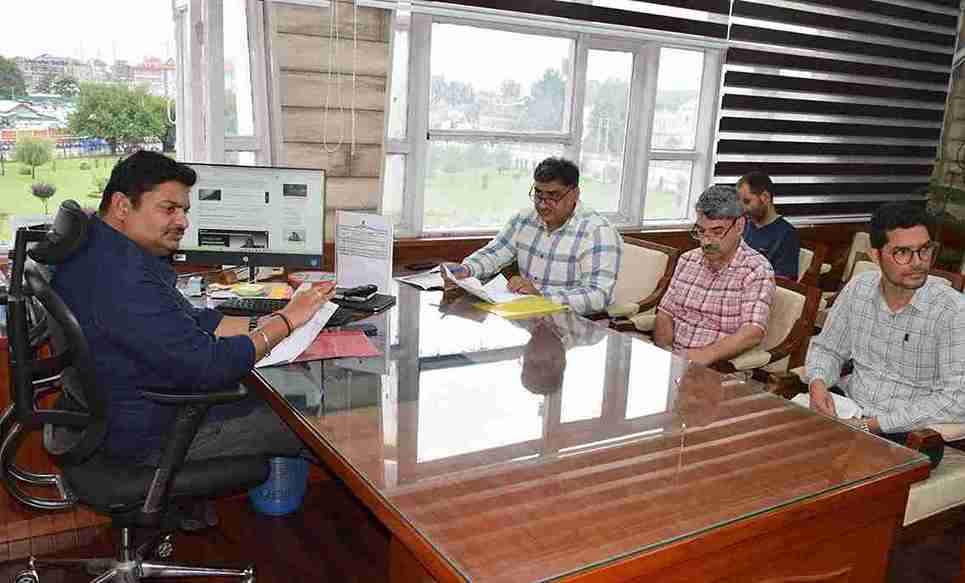
Divisional Commissioner Kashmir Reviews Essential Services, Flood Preparedness Amid Continuous Rainfall Across Valley

Divisional Commissioner Kashmir

In light of incessant rainfall across the valley, the incumbent Divisional Commissioner Kashmir, M. Raju, conducted a comprehensive review of the operational status of essential services, including electricity supply, drinking water provision, and road connectivity, during a meeting held here today.

The meeting was attended by SMC Commissioner Fazlul Haseeb, Director Indian Meteorology Department Srinagar, Additional Commissioners of Kashmir, senior officials from KPDCL and PHE, and representatives from other departments.

During the meeting, M. Raju assessed water levels of the river Jhelum and its tributaries to evaluate potential flood threats.

The meeting highlighted that all essential services are functioning smoothly, with restoration efforts underway to address minor outages in certain 11kV electricity lines.

The Divisional Commissioner instructed all departments to submit comprehensive updates on essential service operations by the evening.
He further stressed the importance of maintaining close interdepartmental coordination, ensuring vigilant monitoring, and preparing to respond swiftly to emergencies to mitigate the impact.

The SMC Commissioner provided an update on dewatering efforts across various locations in Srinagar, informing about the deployment of pumps to prevent waterlogging in roads and low-lying areas within the Srinagar city.

Pahalgam Terror Strike Casts Shadow Over J&K Statehood Demands, Supreme Court Observes

BJP Links J&K Statehood to Elimination of Terror Networks as Supreme Court Reviews Restoration Plea

Kashmiri MBBS Student Saba Rasool Dies in Iran; Family Seeks Urgent Repatriation, Alleging Medical Negligence

Awantipora Court Sentences Man to One Year Jail for Rash Driving That Killed Two-Year-Old Child

police

J&K Police in Awantipora have secured conviction from the Hon’ble Court of Addl. Special Mobile Magistrate Awantipora against an accused Mohd Waseem Dar, involved in Case FIR No. 65/2014 under Sections 279, 337 and 304-A RPC of Police Station Awantipora for rash and negligent driving which caused the death of a two-year-old minor child and injuries to two others.

The accused has been sentenced to 01-year imprisonment with a fine of ₹5,000 under Section 304-A RPC, three months’ imprisonment with a fine of ₹500 under Section 337 RPC, and three months’ imprisonment with a fine of ₹1,000 under Section 279 RPC.

The Court directed that all the sentences shall run concurrently. The Hon’ble Court, after thorough trial proceedings and examination of evidence, delivered the judgment, ensuring justice.

SSP Awantipora commends the efforts of Investigating officer in collection of evidence and subsequently prosecution was diligently conducted by Ld. Assistant Public Prosecutor Mashooq Wani.

Pahalgam Terror Strike Casts Shadow Over J&K Statehood Demands, Supreme Court Observes

BJP Links J&K Statehood to Elimination of Terror Networks as Supreme Court Reviews Restoration Plea

Kashmiri MBBS Student Saba Rasool Dies in Iran; Family Seeks Urgent Repatriation, Alleging Medical Negligence