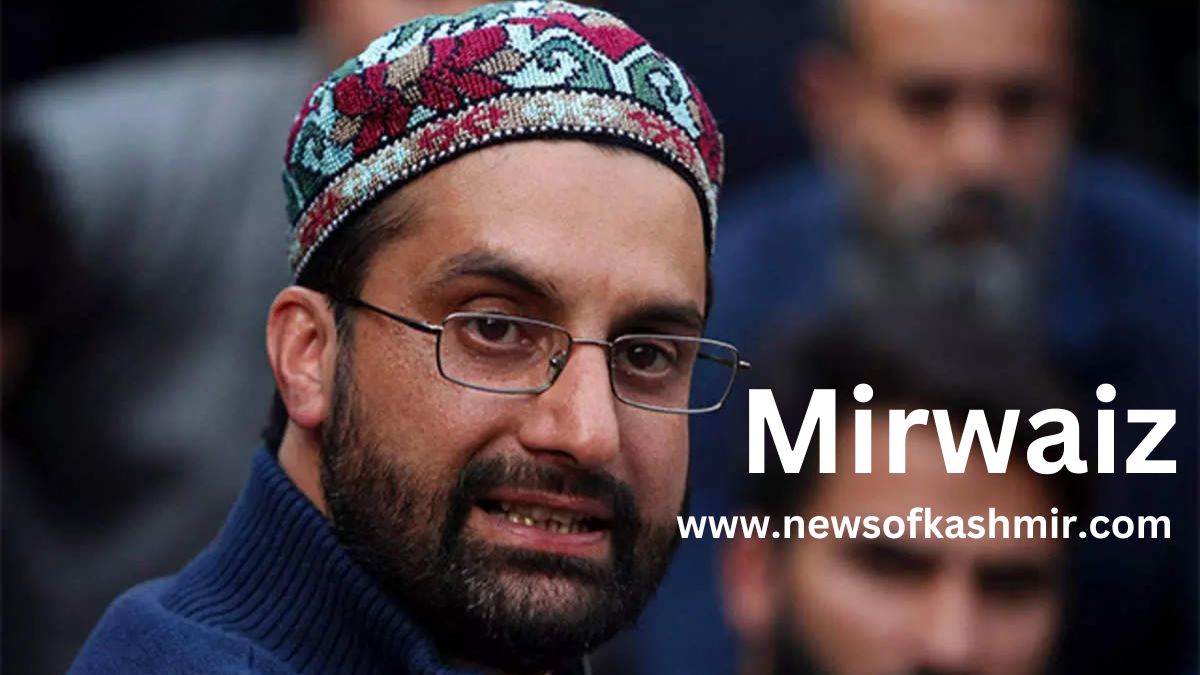
Mirwaiz Umar Farooq Monday condemned the killing of six workers and a doctor in a terror attack on a construction site in Gagangeer area of central Kashmir’s Ganderbal district, terming it “outrageous”.
“Islam, like all religions, deplores such inhuman behavior. Every life is precious, and to be lost in this manner is extremely painful. Another grim reminder of the unending cycle of violence and uncertainty we are suffering for decades,” he said.
He also prayed for the speedy recovery of the injured and patience to the families of those killed.
Six construction workers and a doctor were killed a major terror attack on a construction site in Gangangeer area of central Kashmir Ganderbal district late last evening—(KNO)
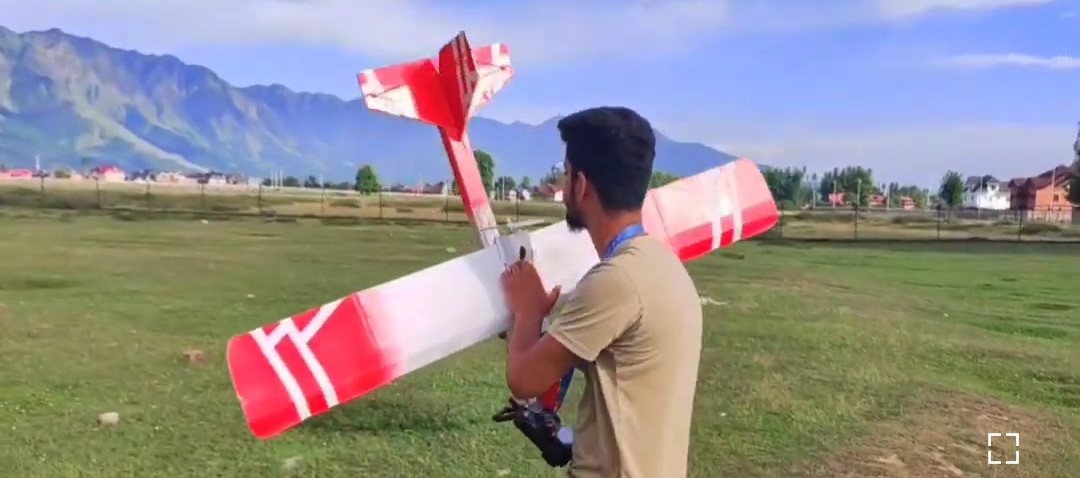
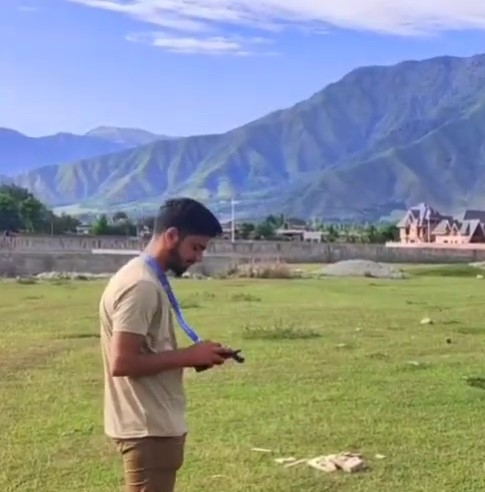
In an age where technology has become a vital part of healthcare, innovations that bridge gaps in medical services are particularly noteworthy. One such innovation comes from the picturesque valleys of Kashmir, where a young boy named Aban Habib has made headlines for his groundbreaking invention: a drone specifically designed for the rapid transport of blood supplies in emergency situations. This remarkable development promises not only to save countless lives but also to revolutionize healthcare access in some of the most remote areas of India.
The Vision Behind the Invention
Aban Habib, hailing from Srinagar, was inspired to create his life-saving drone following the catastrophic floods that struck the region in 2014. Witnessing the struggles faced by healthcare providers in delivering essential medical supplies during emergencies, he realized that traditional methods of transportation often fell short. Roads could be blocked or rendered impassable, and time is always of the essence in medical emergencies. Aban’s vision was clear: develop a solution that could efficiently deliver crucial medical resources to those in dire need, regardless of geographic barriers.
Conceptualizing the Drone
Aban began his journey by researching existing drone technologies and understanding their applications in various fields, particularly in healthcare. He studied how drones have been utilized in other countries for similar purposes, like delivering vaccines and medical supplies in hard-to-reach areas. With this knowledge, he conceptualized a drone capable of transporting blood samples, donations, and other essential medical supplies swiftly and securely.
Design and Development
The design phase was both challenging and rewarding. Aban worked tirelessly, often late into the night, experimenting with different models and configurations. He focused on ensuring that the drone could cover significant distances while maintaining speed and stability. His prototype was designed to fly at speeds of up to 80 kilometers per hour and had a range of over 70 kilometers.
Aban also considered the specific requirements of transporting blood, which necessitated maintaining a controlled temperature. His drone features a specialized compartment designed to keep the blood supply at optimal temperatures, ensuring its viability upon arrival.
Collaborations and Support
Recognizing the importance of collaboration, Aban reached out to various corporate entities and technical experts for support. These partnerships were crucial in refining his drone’s technology and expanding its capabilities. By leveraging expertise from experienced engineers and drone specialists, he was able to optimize the drone’s design for both efficiency and reliability.
Additionally, local universities and institutions provided invaluable resources and mentorship. Aban participated in workshops and training sessions, gaining insights into advanced technologies and methodologies that further enhanced his project.
Successful Testing and Implementation
Aban’s drone underwent rigorous testing in Himachal Pradesh, where it successfully demonstrated its capabilities. The tests involved connecting multiple satellite hospitals to a central hospital, showcasing the drone’s ability to deliver blood supplies quickly and efficiently. In one notable trial, the drone covered over 70 kilometers, linking 20-25 satellite hospitals and significantly reducing the time required for blood delivery.
These successful trials were pivotal, as they not only validated the drone’s functionality but also attracted attention from healthcare professionals and government officials alike. The positive feedback encouraged Aban to push forward with his vision, and discussions began regarding the potential for large-scale implementation.
Impact on Healthcare Accessibility
The implications of Aban’s drone extend far beyond mere convenience. In many rural and remote areas, access to healthcare is limited due to geographic challenges. Patients in need of blood transfusions often face delays that can be life-threatening. By utilizing drones, these delays can be significantly minimized, providing timely medical assistance when it is needed most.
The drone’s ability to transport blood supplies from urban centers to rural healthcare facilities could effectively bridge the gap between available medical resources and the patients who need them. This innovation has the potential to drastically improve health outcomes and reduce mortality rates in underserved areas.
Economic Development and Sustainability
Aban’s vision goes beyond healthcare; he aims to create a sustainable business model around his drone technology. By establishing a drone delivery service for medical supplies, he envisions not only saving lives but also generating employment opportunities for local youth.
The plan involves training young people in drone operation, maintenance, and logistics, thereby equipping them with valuable skills for the future. As the demand for drone technology grows across various sectors, Aban’s initiative could position the youth of Kashmir at the forefront of this technological revolution.
Challenges and Future Prospects
While Aban’s invention is a monumental step forward, it is not without its challenges. Regulatory hurdles, logistical issues, and the need for funding are significant obstacles that must be addressed. Securing financial support for scaling the project is crucial, as the initial trials were primarily funded through personal savings and small grants.
Moreover, establishing a framework for drone operation within the healthcare system requires collaboration with governmental and non-governmental organizations. Navigating the complexities of healthcare logistics and ensuring compliance with aviation regulations are critical for the project’s success.
Despite these challenges, the future looks promising. With growing interest from investors and healthcare organizations, there is potential for this innovative solution to gain traction on a larger scale. Aban is actively seeking partnerships to fund and expand his initiative, aiming to launch a pilot program within the Kashmir valley.
Conclusion
Aban Habib’s life-saving drone marks a significant milestone in both technological advancement and healthcare accessibility in India. His journey from a young boy with a vision to a pioneering innovator exemplifies the power of determination and creativity in addressing critical challenges.
As we look towards the future, Aban’s innovation has the potential to not only save lives but also inspire a new generation of thinkers and doers in Kashmir and beyond. By harnessing technology to solve real-world problems, Aban is paving the way for a brighter, healthier future for communities in need.
With continued support and investment, the dream of an efficient, reliable healthcare delivery system powered by drone technology can become a reality, transforming the landscape of medical assistance in remote regions across India.
At least seven people including a doctor from Budgam and five non locals were killed while several other people were injured in a major militant attack in Ganderbal district on Sunday evening.
Official sources told GNS that militants opened fire on a camp, mainly housing labourers and other staff of a private company working at Gagangir area. They were engaged on the construction of a tunnel in the Gund area of the district, they said.
Two labourers died on the spot while five others persons including the doctor succumbed to injuries later. Several others sustained injuries, the officials said, adding that further details are awaited.
The deceased have been identified as Gurmeet Singh resident of Gurdaspur Punjab, Dr Shahnawaz resident of Budgam, Anil Kumar Shukla, Faheem Nazir, Shashi Abrol, Mohd Hanief and Kaleem.
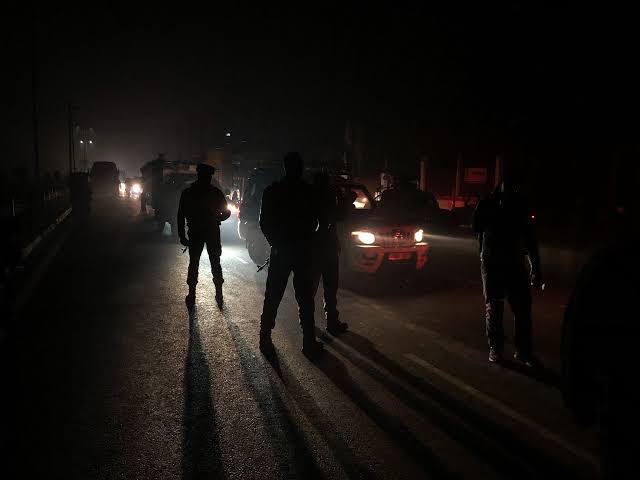
“Terror incident in Gagangeer, Ganderbal. Area cordoned off by security forces,” Kashmir Police Zone said in a post on X.
The attack has been widely condemned with Home Minster Amit Shah saying that the dastardly terror attack on civilians in Gagangir, J&K, was a “despicable act of cowardice”.
Condemnation
Union Home Minister Amit Shah
Union Home Minister Amit Shah on Sunday strongly condemned terror attack on civilians in Gagangir Sonamarg area of Ganderbal district calling it a “despicable act of cowardice.”
In a post on X, Amit Shah wrote, “The dastardly terror attack on civilians in Gagangir, J&K, is a despicable act of cowardice. Those involved in this heinous act will not be spared and will face the harshest response from our security forces.”
” At this moment of immense grief, I extend my sincerest condolences to the families of the deceased. Praying for the speedy recovery of those injured”, he said.
Jammu and Kashmir Lieutenant Governor Manoj Sinha
Jammu and Kashmir Lieutenant Governor Manoj Sinha on Sunday denounced terrorist attack on civilians in Gagangeer and said those behind this despicable act will not go unpunished.
In a post on X, LG Sinha said, “I strongly condemn the heinous terrorist attack on civilians in Gagangeer. I assure the people that those behind this despicable act will not go unpunished. We have given full freedom to J&K Police, Army and Security forces.”
“Our brave personnel are on the ground & they will ensure terrorists pay a very heavy price for their action. My heartfelt condolences to bereaved families. Praying for speedy recovery of the injured. The entire nation stands in solidarity with the families in this hour of grief.”, he said.
Jammu and Kashmir Chief Minister Omar Abdullah
Jammu and Kashmir Chief Minister Omar Abdullah on Sunday condemned terror attack in tGangangir Sonamarg area of Central Kashmir’s Ganderbal district, where two migrant laborers were killed.
In a post on X, Omar Abdullah wrote, ” Very sad news of a dastardly & cowardly attack on non-local labourers at Gagangir in Sonamarg region. These people were working on a key infrastructure project in the area. 2 have been killed & 2-3 more have been injured in this militant attack.”
“I strongly condemn this attack on unarmed innocent people & send my condolences to their loved ones”, he said.
Several political leaders of Jammu and Kashmir
Several political leaders of Jammu and Kashmir Sunday condemned killing of migrant workers in terror attack in Gagangeer area of central Kashmir’s Ganderbal district.
In a post on X, Peoples Democratic Party President Mehbooba wrote, “Unequivocally condemn this senseless act of violence against two labourers in Ganderbal. Deepest condolences to their families.”
The leaders expressed their condolences with bereaved families and prayed for speedy recovery of the injured.
Meanwhile NC leader and MLA Kangan Mian Mehar Ali said: “The brutal killing of non-local laborers at the Z-Morh tunnel in Gangangeer, is heartbreaking. My thoughts are with their families during this tragic time. Prayers for speedy recovery of injured”.
Jammu and Kashmir People’s Conference President Sajad Gani Lone also denounced this attack and wrote, “Strongly condemn the dastardly act of terror wherein two persons have lost their lives in #Sonamarg. This is an insane act of madness. My thoughts with families of these two families. May the perpetrators be brought to justice.”
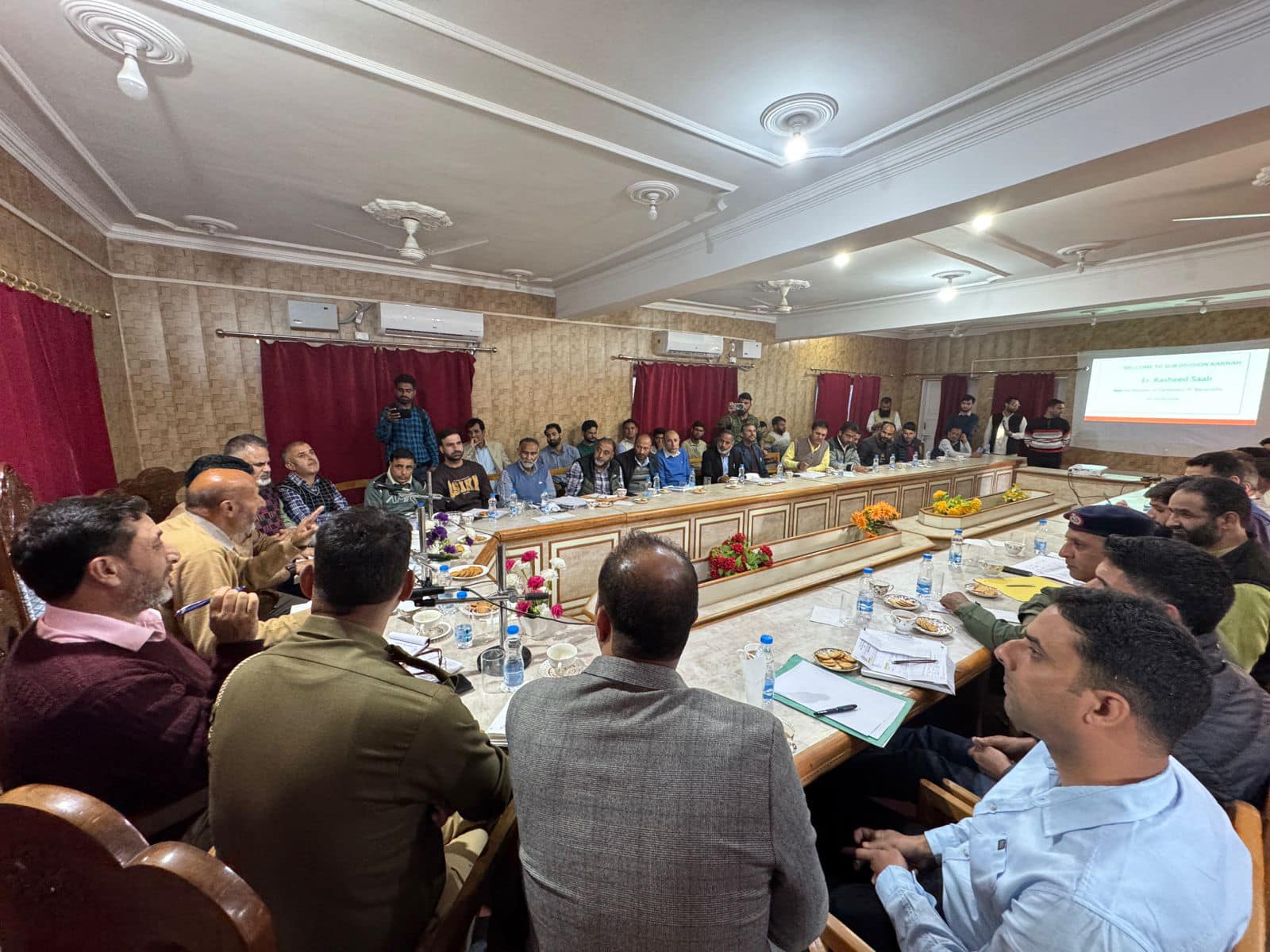
In a significant move to address pressing healthcare and infrastructure issues in Karnah, Engineer Rashid held a comprehensive review meeting at the Mini-Secretariat.
The meeting focused on key developments in the region, with particular attention to improving healthcare services and ongoing developmental projects. Following the meeting, Rashid also visited the Sub-District Hospital (SDH) Tangdar to inspect the facilities and review the hospital’s needs.
One of the central points raised during the meeting was the ongoing shortage of medical personnel at SDH Tangdar.
Engineer Rashid highlighted the urgent need to prioritize the posting of doctors to ensure timely and effective healthcare for the local population. He stressed that immediate action was required to fill these vacancies, as they directly impact the quality of medical care.
In terms of upgrading medical facilities, the meeting revealed that ?15 lakh has been allocated for the procurement of a dialysis machine, significantly boosting renal care services in the region. Additionally, ?3 lakh has been approved for the construction of a new hospital canteen, improving amenities for both patients and their families.
Beyond healthcare, the meeting addressed the region’s developmental needs, particularly focusing on youth engagement and public safety.
Engineer Rashid announced plans to construct new playgrounds in Karnah, encouraging the local youth to participate in sports and recreational activities.
Furthermore, to enhance the safety and convenience of residents, steps are being taken to install street lights across the area. This measure is expected to improve night-time visibility and reduce accidents and safety concerns for the public.
The meeting also brought attention to the long-standing demand for the completion of the Sadhna Tunnel, which remains crucial for improving connectivity between Karnah and other parts of Kashmir. The tunnel is particularly important during the winter months when the region is often cut off due to heavy snowfall. Engineer Rashid reiterated his commitment to accelerating the progress of this essential project, which will serve as a lifeline for the people of Karnah.
Engineer Rashid’s visit to SDH Tangdar and the review meeting at the Mini-Secretariat underscored his commitment to addressing the critical healthcare and infrastructural needs of the Karnah region, promising further progress and development in the near future.(KNS)
Prof. Syed Sajjad Nazir, Head of the Department of Urology and Renal Transplantation at Government Medical College Srinagar, has been awarded the prestigious National Healthcare and Wellness Award 2024.
This recognition is a testament to his outstanding contributions to urological services in Jammu and Kashmir.
Prof Nazir is a highly respected figure in the field of urology, known for advancing urological care in the region. His commitment to excellence has earned him a reputation as a leading urologist, with a career spanning decades of dedication to improving the lives of those in need of specialized urological care
Under Prof Nazir’s leadership, the Department of Urology and Renal Transplantation at GMC Srinagar has made significant strides in advancing urological care. He has brought innovative treatments and compassionate care to countless patients, enhancing healthcare services in Jammu and Kashmir and raising the standards of urological care in the region.
Several Health Experts have congratulated Prof Nazir on this achievement, acknowledging his unwavering dedication to his field and his passion for providing the best possible care to patients. His work has brought significant advancements in urological services, benefiting countless individuals in the region.
Speaking at the ceremony, Prof. Nazir expressed his gratitude for the honor and reaffirmed his commitment to continuing his work in providing the highest quality of urological care. He dedicated the award to his team and all those who have supported him in his journey.
This achievement serves as an inspiration to the medical community, encouraging continued dedication to patient care and excellence in the field of urology.(KNS).
An earthquake of magnitude 3.7 hit Jammu and Kashmir’s Doda district on Sunday, the National Centre for Seismology said.
In a post on X, NCS said, “Earthquake of M: 3.7, On: 20/10/2024 11:21:36 IST, Lat: 33.00 N, Long: 75.94 E, Depth: 5 Km, Location: Doda, Jammu & Kashmir.”There are no immediate reports of any damage, officials said.
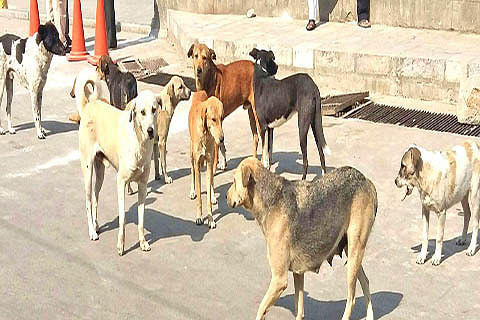
In an appalling incident, a stray dog mauled to death a 70-year- old man and left four others injured in Manchowa area of Central Kashmir’s Budgam on Sunday.
Officials told GNS that a dog attacked the people at around 6 am as they were heading towards their field. Five persons were injured and one of them identified as Khazir Mohammad Magrey, 70 succumbed to his injuries.
Four other persons are admitted in the local, they added. Locals demand immediate action against stray dogs menace in the area and said that today’s incident should serve as eye opener for authorities to act. Otherwise, they said more such incidents may be repeated in future.
” There should be an immediate end to such menace,” the Locals added.(GNS)
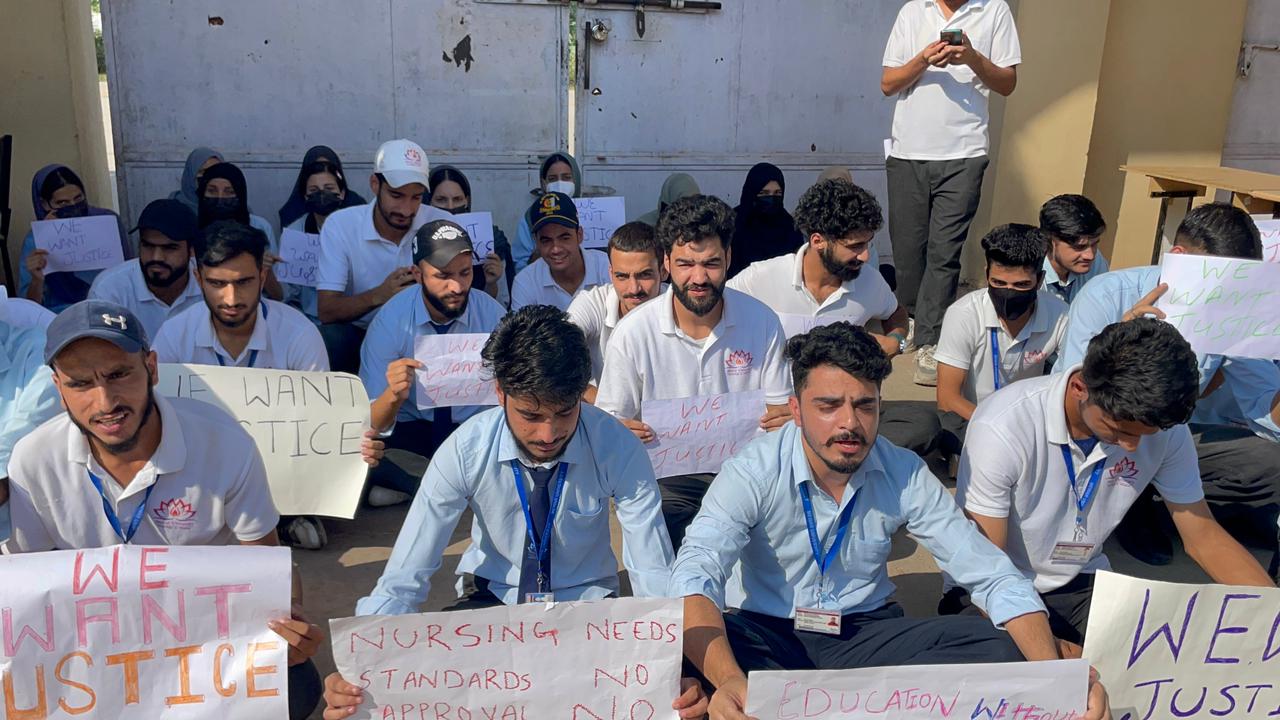
At least 45 Kashmiri B.Sc. nursing students from Mewar University, Chittorgarh area of Rajasthan, staged a protest after learning that the university is not registered to offer the course.The students said they had raised the issue with university authorities multiple times, but it remains unresolved.
“We are B.Sc. nursing students under the Jammu and Kashmir Special Scholarship Scheme (JKSSS) studying here. The university is running the B.Sc. nursing course without the necessary approval. Our demand is to transfer us to another approved college or university, maintaining the same year and semester. They have also threatened that if we raise our voices, they will deregister us,” the students said.
“Either they should resolve our issue or clearly tell us what steps they plan to take. We are fed up now. Our future is at stake. What will we tell our families, who are investing in our education here?” said one of the protesting students.
“After raising the issue and starting our protest within the university premises, we were threatened with imprisonment,” said another student.The students also warned that they will go on an indefinite strike if the university authorities do not resolve their issue in the coming days.
They also sought the intervention of Lieutenant Governor Manoj Sinha and the newly appointed Education Minister of J&K to resolve their issue at the earliest, to prevent further suffering.
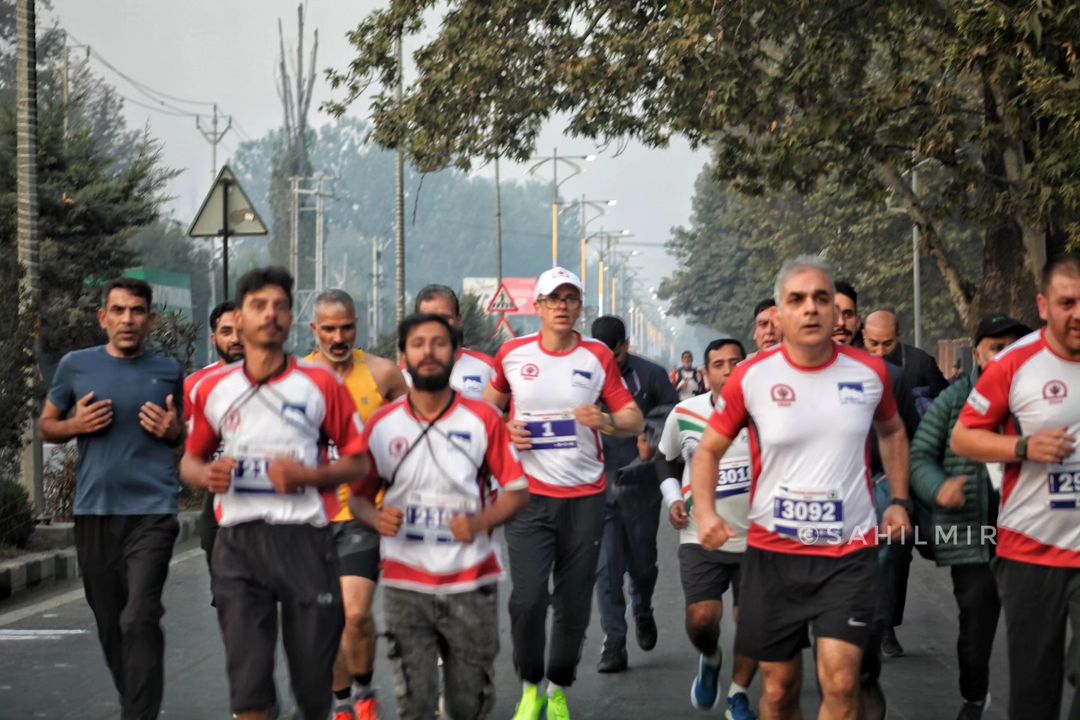
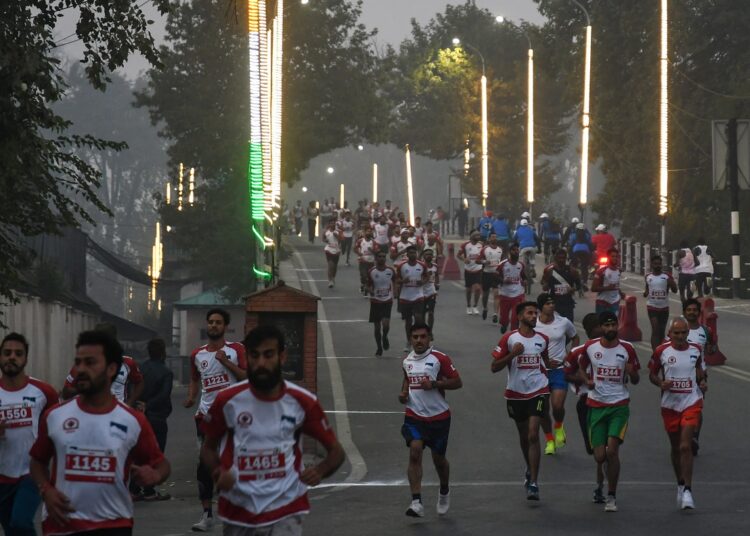
After participating in the Kashmir Marathon, Chief Minister Omar Abdullah expressed his vision of seeing the Kashmir gain global recognition, joining the ranks of the world’s most prestigious marathons.
” I hope that one day it will be as famous as the world’s most renowned marathons. I want to see Jammu and Kashmir on the global map for such events,” he said, adding that the scenic beauty and unique atmosphere of the J&K could help attract international participants and spectators.
According to KNS Speaking to the media post-race, Abdullah praised the event’s organizers, the Tourism Department, and the people of Srinagar for their enthusiastic participation and support, which he believes could propel the marathon to international fame.
“I wasn’t expecting to complete a half marathon, having never run more than 12 or 13 kilometers in my life,” Abdullah admitted. “But running alongside other participants gave me the courage and motivation to finish. The energy and encouragement from the people of Srinagar were truly inspiring.”
He extended his heartfelt congratulations to all the runners who participated and thanked the organizers for a well-executed event.
“The administration and the Tourism Department have done a commendable job, and the people of Srinagar came out in full force to cheer the runners on. Their support was invaluable.” (KNS)
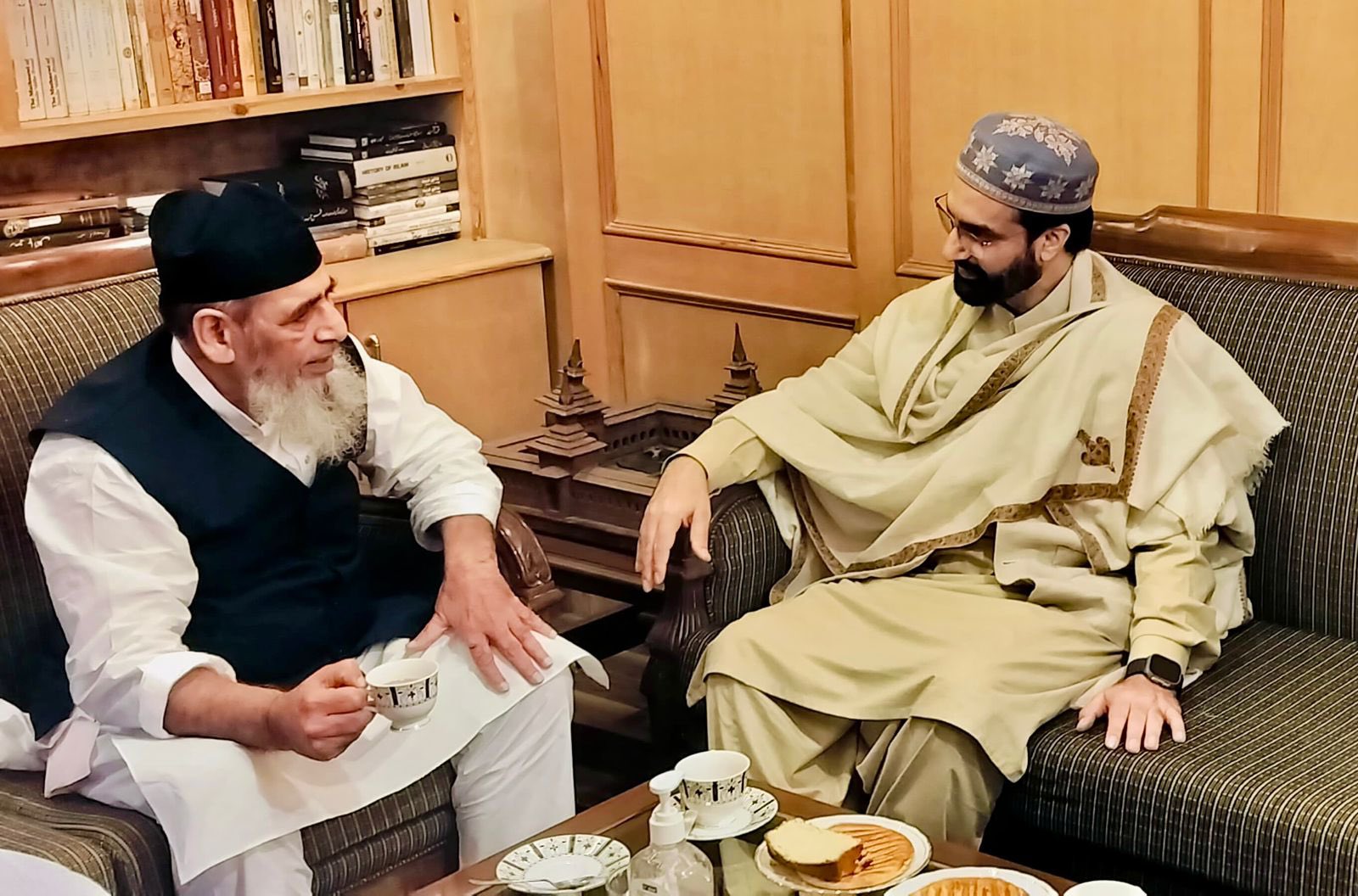
Maulana Muhammad Sufyan Qasmi, Chancellor of Darul Uloom Deoband (Waqf)and member of the All India Muslim Personal Law Board who is on a brief visit to the Kashmir along with a delegation of prominent scholars called upon Mirwaiz -e-Kashmir, Moulvi Muhammad Umar Farooq, at his residence in Nigeen.
The two leaders held a meaningful discussion on the challenges confronting the Muslim world and the specific issues faced by Muslims in India. They emphasized the need for unity, collaboration, and proactive efforts to address these challenges.
During the meeting, Maulana Qasmi extended a formal invitation to Mirwaiz Umar Farooq to visit Darul Uloom Deoband, fostering closer cooperation between religious scholars and institutions. The Mirwaiz expressed appreciation for the invitation and stressed the importance of continued efforts to engage with scholars across in finding solutions to the pressing issues faced by the Muslim community. (KNS)