Pathway Caves In on Boulevard Road Near Dal Lake in Srinagar, Authorities Urged for Urgent Action

Pathway Caves In on Boulevard

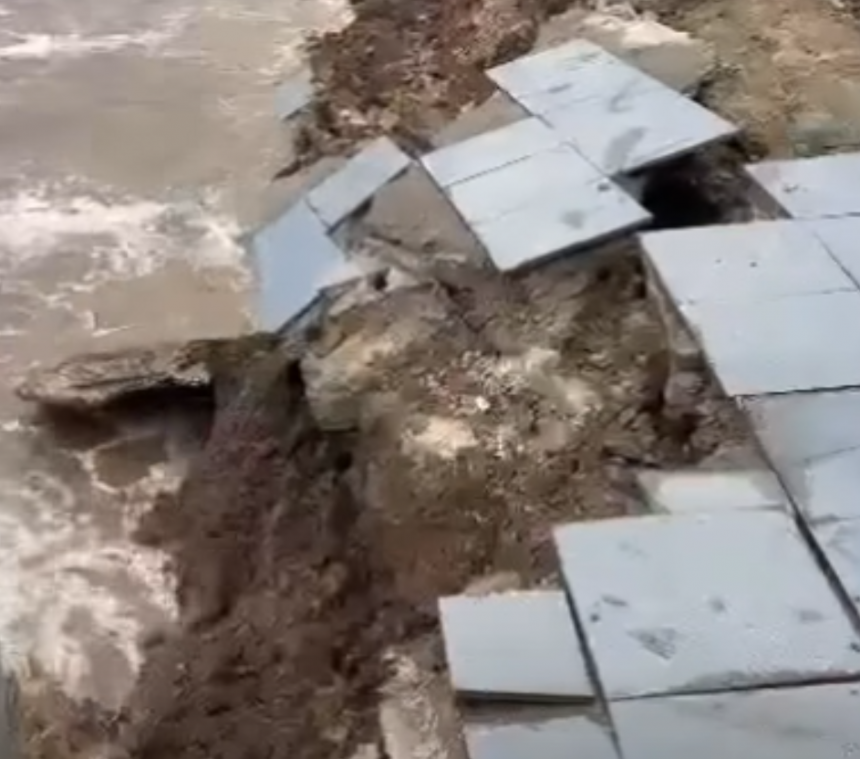
A portion of pathway caved in on Boulevard road along the Dal Lake in Srinagar on Thursday following fresh spell of rain at several places in Kashmir, raising concern among the lcoals.

Residents said that the pathway caved in near Ghat No 17 today morning.

They expressed concern over caving in of the pathway portion, stating that it could pose risks to pedestrians and vehicles commuting the road.

They urged the authorities to take immediate steps to prevent further damage and ensure the safety of people.

An official told KNO that they have got the information about the same, and a team has been deputed for inspection while restoration work will be started soon—(KNO)

Imtiyaz Ahmad Machloo and Muneer Ahmad Sofi Arrested in Culpable Homicide Case in Srinagar District, Investigation Underway

Culpable Homicide

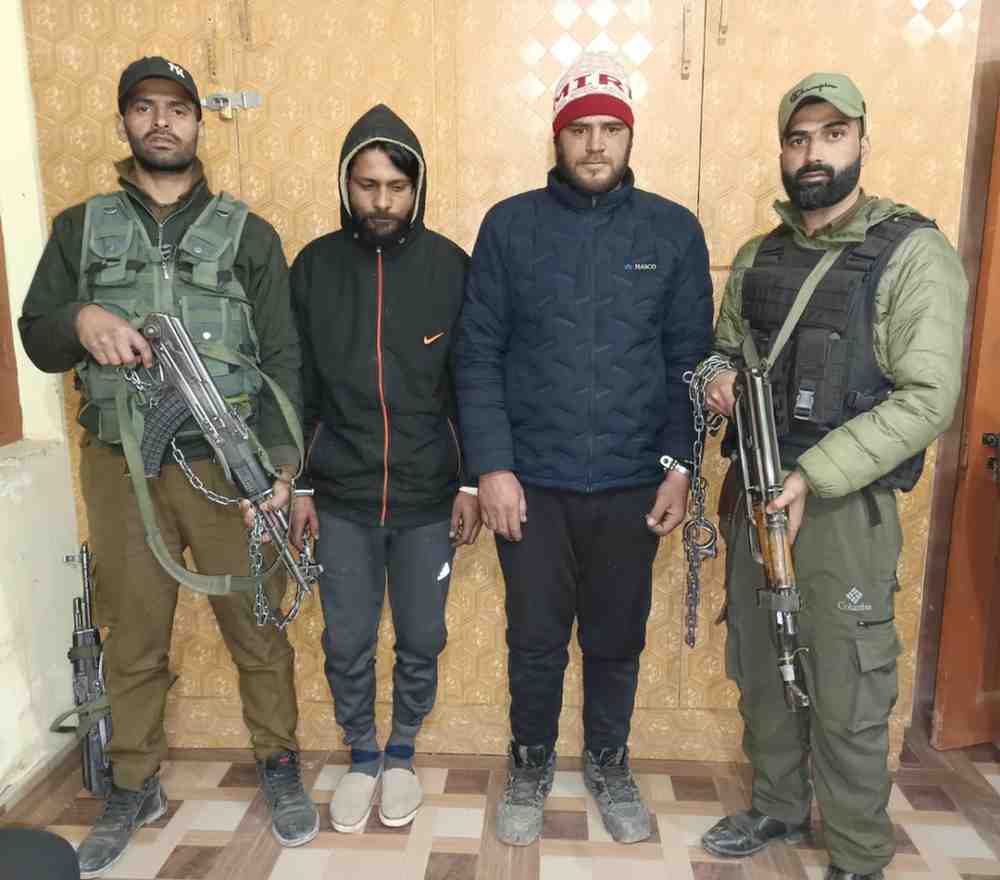
Jammu and Kashmir Police on Wednesday said to have arrested two accused persons involved in culpable homicide in Srinagar District.

A Spokesperson said that On 17th February, 2025, Police Station Bemina received an information through reliable sources that an unidentified male dead body was lying in flood spill channel near Darul-uloom, Bemina.
Upon receipt of this information, police team of PS Bemina reached on the spot alongwith FSL Mobile unit of DPL Srinagar and Crime photographer of PCR Srinagar.

Relevant exhibits were recovered on the spot and proceedings under provisions of 194 BNSS were initiated.

Upon preliminary enquiry, prima facie culpable homicide not amounting to murder was established. Accordingly, case FIR No 13/2025 u/s 105, 238, 241 BNS was registered in PS Bemina and investigation was set into motion.
During the course of investigation, two alleged accused persons namely Imtiyaz Ahmad Machloo son of Ali Mohammad and Muneer Ahmad Sofi son of Bashir Ahmed Sofi were identified and were found involved in the commission of the crime.
Both the accused persons have been arrested.Further investigation into the case is going on.

Advisor Nasir Aslam Wani Highlights Darbar Move’s Role in Strengthening J&K’s Community Bonds

Advisor Nasir Aslam Wani

Advisor to chief minister J&K, Nasir Aslam Wani said on Wednesday that government is working upon strengthening bond between communities dwelling in Jammu and Kashmir, and stated the restoration of historical darbar move is essential in this direction.

Talking to reporters on the sidelines of a folk event held in Jammu, Advisor to chief minister J&K said that Omar Abdullah-led government is taking concrete efforts in strengthening relations between different communities living in Jammu and Kashmir. He stated that darbar move – a historical practice of shifting offices to Jammu in winter months – is must to be restored to its erstwhile position so that contact between people-to-people will be ensured and strengthened.

“It is our belief that restoration of darbar move is must to restore peoples’ contact. The chief minister J&K has already expressed this wish many times in recent past. In this winter you have seen Jammu has witnessed good footfall of people from different areas after a pause of several years, who come here to live together and share their culture with other communities. This makes peoples’ bonding strong. Besides, such exercises push trade and other social activities to new heights. So darbar moves’ restoration is essential to build strong connections between people of different communities,” Advisor Nasir Aslam Wani as per Greater Kashmir said.

He said the efforts are being made in this regard and meetings with people have been restarted in this direction.

About return of Kashmiri Pandits to valley, he said chief minister Omar Abdullah has already taken up this issue. “The CM has taken a decision to reconstitute apex committee to ensure return of Kashmiri pandits back to valley. The government wants their return and dwelling like they were living in past with their brethren,” he said.“The government is working to restore pristine glory of J&K and make the region an example for the world,” he added.

What Is Darbar Move ?

The Darbar Move was a centuries-old practice in Jammu and Kashmir where the state government offices would shift between the summer capital, Srinagar, and the winter capital, Jammu, biannually. This tradition started during the reign of Maharaja Ranbir Singh in the 19th century to make the administration more accessible to people in both regions, taking advantage of the extreme weather conditions.

  • Summer months (May to October): The state government would function from Srinagar.
  • Winter months (November to April): The government would move to Jammu.

The move involved the shifting of government records, employees, and their families, along with heavy logistics. It was considered a way to ensure that the government was always within reach of the people in both regions of the state, especially given Kashmir’s cold winters.

However, the practice was expensive, resource-draining, and led to concerns about inefficiency. In recent years, the Darbar Move was curtailed, with many questioning its relevance and cost-effectiveness in modern times. The debate continues, with some advocating for its restoration, seeing it as a symbol of cultural unity and administrative inclusivity for the diverse regions of Jammu and Kashmir.

Bulbul Nag Spring Dries Up, Leaving Thousands in Pulwama Without Water

Bulbul Nag Spring

Pulwama, Kashmir: Bulbul Nag, a centuries-old spring in the Newa area of Pulwama, has completely dried up, leaving thousands of residents without a reliable water source. The once-thriving natural spring, which has served as the primary water supply for 39 villages for decades, is now barely producing a fraction of the water it once did.

For over 45 years, Bulbul Nag provided around six lakh gallons of water daily, sustaining approximately 20,000 to 30,000 people across the region. The spring’s water was crucial for drinking and irrigation purposes, especially in the dry summer months. However, with the ongoing dry spell and a significant lack of rainfall, the spring now yields only about one lakh gallons per day—far too little to meet the demands of the people who rely on it.

Local residents expressed their concern over the disappearing water source. “The water reduced last year as well, but it came back to normal after rainfall,” said a local resident. “This year, however, there is no rain, and the spring has dried up completely. Now even the bedrocks are easily visible.”

Bulbul Nag is not the only spring in Kashmir facing this issue. Achabal, one of the region’s largest springs, also ran dry just days ago. The Meteorological Department reported that January 2025 recorded an 87% deficit in precipitation, further worsening the situation. The lack of both snowfall and rainfall has led to a significant drop in groundwater levels, with numerous natural springs across the valley disappearing.

Once a vital resource, Bulbul Nag has now become a symbol of the larger environmental crisis unfolding in the region. “The spring used to supply water to 39 villages,” another local resident shared. “We used to produce six lakh gallons of water in 24 hours. Now, we barely get one lakh gallons, which isn’t enough for the people.”

For decades, the government relied on Bulbul Nag to provide water to the villages, even installing pumping stations to distribute the water efficiently. However, with the current dry spell, the spring’s capacity has drastically diminished, and villagers are left searching for alternative water sources.

Elders in the community recall a time when springs like Bulbul Nag flowed freely, with no threat of drought. “Kashmir was once known for its springs, for its flowing water and lush fields,” said an elderly resident. “Now, one by one, they are disappearing. It feels like we are watching our land wither away before our eyes.”

The drying up of Bulbul Nag is not only a local issue but also a stark warning of a much larger environmental crisis in Kashmir. The combination of changing weather patterns, decreasing precipitation, and declining groundwater levels is having a profound impact on the region’s natural resources. With no immediate solution in sight, the residents of Newa and the surrounding villages are left grappling with how they will manage without this vital water source if the dry conditions continue.

As the situation worsens, local authorities are under increasing pressure to find ways to address the water crisis, while residents continue to struggle with limited access to clean water. The drying of Bulbul Nag serves as a clear reminder of the broader environmental challenges that Kashmir faces and the urgent need for sustainable water management solutions in the region.
Press Club of Kashmir Welcomes Quashing of PSA Against Journalist Majid Hyderi

Journalist Majid Hyderi

The Press Club of Kashmir on Wednesday expressed happiness in quashing the Public Safety Act (PSA) against Journalist Majid Hyderi of Kashmir.

The PSA was slapped against Hyderi in 2023 on frivolous grounds.

The executive body of the club met today at the club premises and welcomed the release of Majid, a well-known journalist.

The body complimented Hyderi’s family for showing resilience and bearing this humiliation with steadfastness.

J&K Police Recover 10 Stolen Mobile Phones in Bandipora, Worth Rs. 2.80 Lakhs

10 Stolen Mobile Phones

Police in Bandipora during the current year had received multiple complaints from the general public regarding missing/stolen mobile phones.

A Spokesperson said that acting on these complaints, police achieved significant breakthrough by recovering 10 stolen smart phones worth 2.80 lakhs from different places of UT J&K and outside UT. The smart phones were today handed over to their owners after completion of necessary legal formalities. Recipients expressed their gratitude & appreciation to polices’ relentless efforts in recovering their mobile phones.

Police advises the general public to use their mobile phones and other electronic media gadgets with precaution in order to safeguard themselves from cyber related frauds and crimes. If anyone becomes the victim of any Cyber related crime/fraud he should immediately register complaint on National Cyber Crime Reporting Portal www.cybercrime.gov.in or Call Toll Free No. 1930.

Also, citizens should report missing/stolen mobile phones on CEIR Portal online on www.ceir.gov.in , dedicated online Portal on lost /stolen mobile phones by (Dept.of Telecommunications, Ministry of Communications GOI)

J&K ACB Registers Case Against Bharat Bhushan Sharma and Officials for Illegal Land Allotment

J&K ACB

J&K Anti Corruption Bureau ( ACB) on Wednesday has registered a case against Bharat Bhushan Sharma, the then Managing Director J&K Cooperative Housing Corporation and others for illegal allotment of state land.

As per the statement issued here, A Preliminary Enquiry (PE) was conducted to look into allegations that the J&K Cooperative Housing Corporation Ltd. (JKCHC) purchased 392 kanal of land from private persons for establishing a Housing Colony at Village Bain Bajalta, District Jammu and for that purpose, also illegally occupied Kah Charai, Maqbuza Sarkar and JDA land. It was alleged that the Board purchased 392 Kanals of land at scattered places. The management of JKCHC in connivance with officers/officials of Revenue Department illegally occupied about 584 Kanal land which includes state land. The JKCHC then allotted the same to different persons by making plots.

During the course of preliminary enquiry, it was found that JKCHC acquired land at village Bain Bajalta for establishment of housing colony. During the process of taking possession of land, the Corporation illegally occupied state land measuring 111 Kanal and 17 Marlas. Apart from this, the Corporation also occupied 100 kanal 15 marla land falling under Khasra No’s. 16 min, 17 min, 219 min, 573/34 min from the owners vested with proprietary rights of the land under J&K Agrarian Reforms Act 1976 and Govt. Order No. S-432.

During the course of enquiry, it was surfaced that the officers/officials of JKCHC and Revenue Department in furtherance of a well-knit conspiracy hatched among themselves and the beneficiaries, by abuse of their official position, paved way for transfer of rights of the land for establishing a housing colony by the JKCHC in violation to the government provisions dishonestly and fraudulently by misrepresenting facts, thereby conferring undue benefits upon themselves, the corporation and the beneficiaries.

These omissions and commissions on the part of officers/officials of the JKCHC and the Revenue Department including Bharat Bhushan Sharma the then Managing Director J&K Cooperative Housing Corporation, Shesh Paul Salgotra, the then Tehsildar  Jammu, Sanjay Badyal, the then Tehsildar Jammu, Mahesh Chander the then Naib Tehsildar Sidhra, Farooq Hussain the then Patwari Halqa Bain Bajalta Jammu, Nek Mohd then  Patwari Halqa Bain Bajalta Jammu, the beneficiaries and others constitute offences punishable under Section  5(1)(d) read with section  5(2) of  J&K Prevention of Corruption Act Svt. 2006 and U/s 420, 465, 467,468, 471 and 120-B/RPC. Accordingly a case FIR No. 02/2025 has been registered in Police Station ACB Central.

Dr. Farooq Abdullah Appeals for Special Prayers to Address Dry Spell and Water Crisis in J&K

Farooq Abdullah

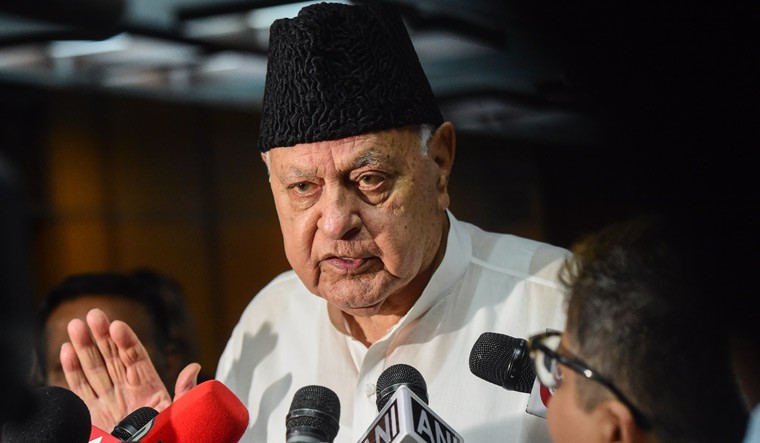
National Conference President Dr. Farooq Abdullah has called upon the people of Jammu & Kashmir, particularly the esteemed Peer Sahiban and Imams, to offer special prayers seeking divine intervention for rainfall and snowfall in the region.

This appeal comes in response to the ongoing dry weather conditions that have led to a significant decline in water levels across various water bodies.

Expressing deep concern, Dr. Abdullah highlighted that the continuous dry spell has adversely affected both domestic water supply and agricultural irrigation needs. He emphasized the urgency of the situation, noting that the diminishing water levels could escalate into a severe crisis if not addressed promptly.

In his statement, Dr. Abdullah underscored the collective responsibility in contributing to environmental challenges, citing pollution and encroachment upon water bodies as significant factors exacerbating the current situation. He urged the community to reflect upon these actions and to seek forgiveness, stating, “We must all work together to save nature.”

IGP V.K. Birdi Reviews Joint Security Preparedness in Anantnag with Police and CRPF Forces

Vidhi Kumar Birdi

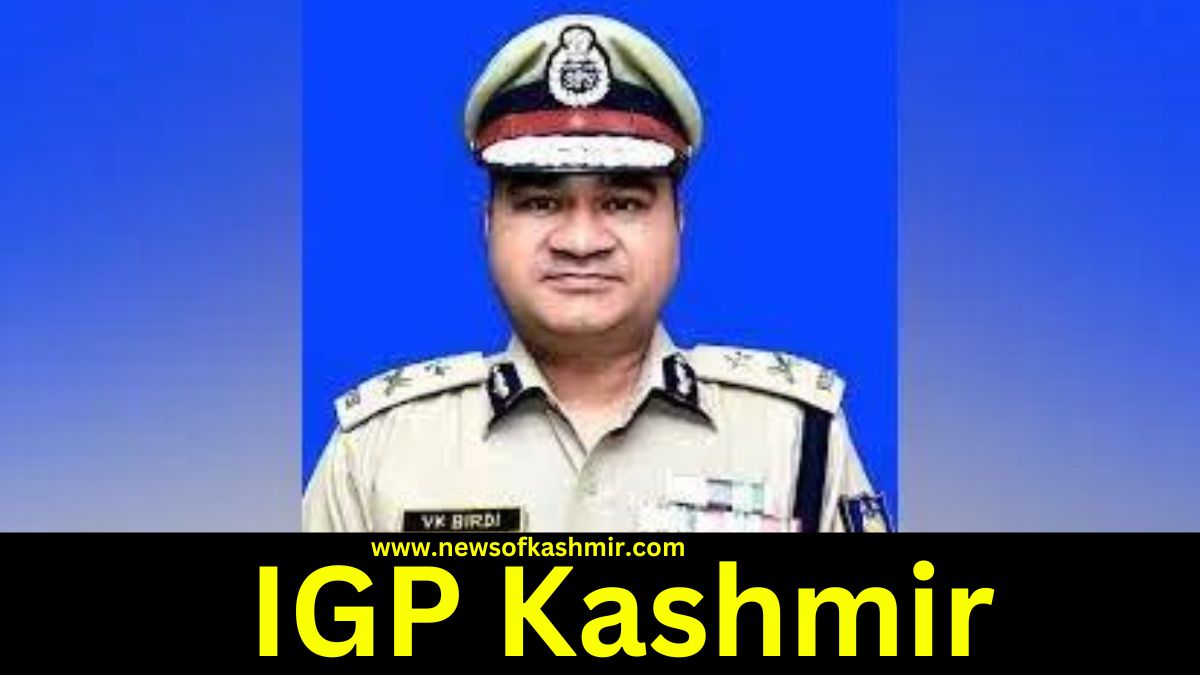
Inspector General of Police (IGP) Kashmir Zone, V.K. Birdi, visited Anantnag today to assess the joint security preparedness and operational capabilities of the Jammu and Kashmir Police and the Central Reserve Police Force (CRPF).

During his visit, IGP Birdi chaired a high-level joint security review meeting at DPO Anantnag, focusing on enhanced coordination, joint resource utilization, and operational efficiency. The Meeting was attended by senior officers from the Police and CRPF, who deliberated on joint deployment strategies, operational preparedness, and emerging security challenges. He commended the efforts of both forces in maintaining law and order and stressed the need for continued collaboration to strengthen the region’s security framework.

IGP Birdi also inspected the Special Operations Group (SOG), reviewing their operational readiness and capabilities. He expressed satisfaction with their high level of training and professionalism, acknowledging their critical role in counter-terror operations. Discussions also included the summer operation strategy, outlining key security tactics and contingency plans for the upcoming season.

Later, IGP Birdi visited the 90th Battalion CRPF camp, where a joint demonstration of operational tactics was conducted by SOG and CRPF personnel. The demonstration showcased advanced operational skills, coordination, and response strategies, reaffirming the commitment of both forces to maintaining peace and security in the region.

Speaking on the occasion, IGP Birdi praised the dedication and professionalism of the personnel, emphasizing the importance of sustained collaboration and proactive measures to counter evolving security challenges.

The visit was attended by IG Ops CRPF Shri Mitesh Jain, Joint Director IB Shri Pankaj Thakur, DIG SKR Shri Javid Iqbal Matoo, DIG CRPF Anantnag Shri Kulvir Singh Deswal, DIG CRPF Awantipora Shri Alok Awasthi, SSP Anantnag Dr. G.V. Sundeep Chakravarthy, SSP Kulgam Shri Sahil Sarangal, SSP Pulwama Ms. P.D. Nitya, SSP Shopian Shri Anayat Ali Choudhary, SSP Awantipora Shri Sajad Ahmad, and commandants of CRPF, IRP, among other Senior officers.

Omar Abdullah Addresses Implementation of New Criminal Laws in Jammu & Kashmir, Emphasizes Need for Awareness

Omar Abdullah Stresses

Chief Minister Omar Abdullah on Tuesday said that implementing three new criminal laws is not the mandate of the elected government in Jammu and Kashmir, but the dispensation led by him needs to do more to create awareness about these provisions.

Talking to reporters here after attending a meeting called by Home Minister Amit Shah to review the implementation of the new criminal laws, Omar said, “As far as the elected government is concerned, it is not our responsibility to implement these laws. Since these are new laws, people should be aware of them. For this, the elected government needs to do more,” he said.

The CM added that J&K has done better in implementation but there are few weak areas which need to be fixed.

Omar Abdullah said there was no discussion on security situation in Jammu & Kashmir during today’s meeting.

“I had discussed security matters relating to J&K during my recent meeting with HM (Amit Shah) on Parliament premises,” Omar said.

Omar expresses inability to comment on his exclusion from security reviews relating to the Union Territory.

“There is a difference between this meeting and those meetings. This meeting was about new laws and their implementation. If the decision has been made to exclude representatives elected by the people from security issues, what more can I say?” he said.

On the reaction of Leader of Opposition Rahul Gandhi over the appointment of the Chief Election Commissioner, Omar said, “The LoP has the right to dissent in the selection meeting. Opposition does not need to always agree with the government. The matter (relating to the constitution of the selection committee for picking the CEC and election commissioners) is sub-judice in the Supreme Court.”

The high-level meeting chaired by the Union Home Minister to review the implementation of new criminal laws in Jammu & Kashmir was also attended by Lieutenant Governor Manoj Sinha and top officials from the central and J&K governments.

The Bharatiya Nyaya Sanhita, the Bharatiya Nagarik Suraksha Sanhita and the Bharatiya Sakshya Adhiniyam replaced the colonial-era Indian Penal Code (IPC), the Code of Criminal Procedure CrPC) and the Indian Evidence Act of 1872 after new criminal laws came into effect from July 1 last year—(KNO)