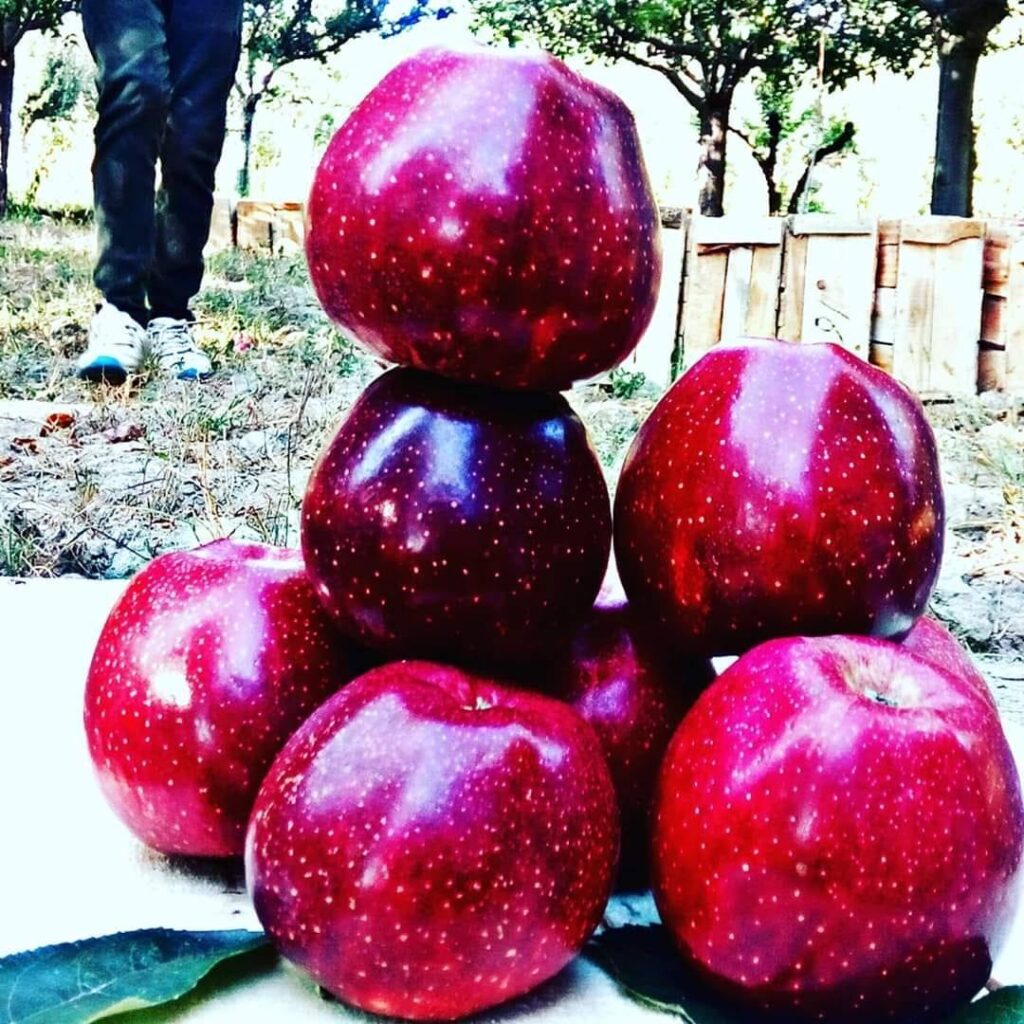
SKUAST-K Reviews Preparations for 11th Gongul Agritech Mela Scheduled from February 14–16

Agritech Mela

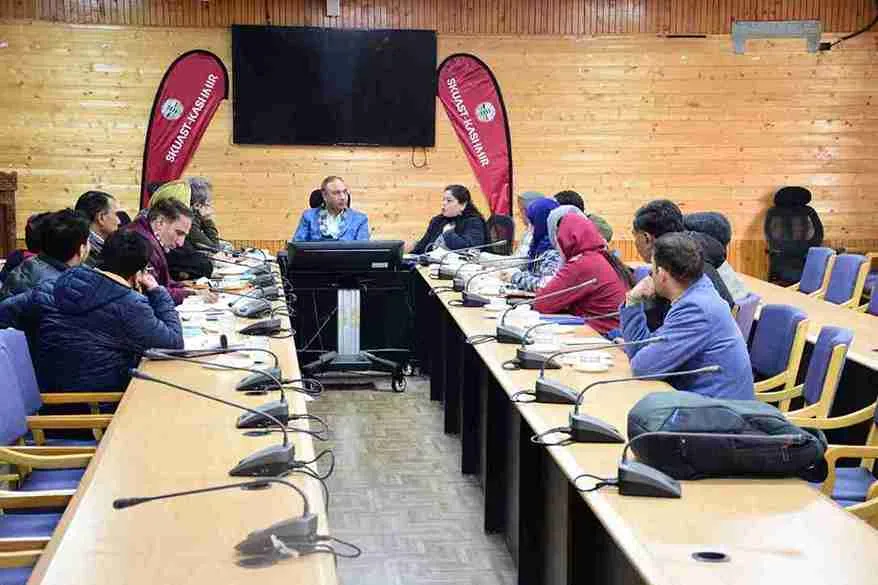
A review meeting on the preparations for the 11th Gongul Agritech Mela, scheduled to be held from 14–16 February 2026, was convened on 8 February 2026 at the Vice-Chancellor’s Secretariat, SKUAST-Kashmir, under the chairmanship of Prof. Nazir Ahmad Ganai, Hon’ble Vice-Chancellor, SKUAST-Kashmir.

During the meeting, the Hon’ble Vice-Chancellor reviewed the progress made by various committees and held detailed discussions on the overall preparedness for the mega event. He emphasized the importance of effective coordination, timely execution of responsibilities, and maintaining high standards in planning and implementation to ensure the smooth and successful conduct of the mela.Click Here To Follow Our WhatsApp Channel

Prof. Ganai highlighted that the Gongul Agritech Mela is a key platform for showcasing innovative agricultural technologies, disseminating research-based solutions, and strengthening farmer–scientist interaction. He stressed the need for focused farmer-centric demonstrations, promotion of agri-startups and entrepreneurship, exposure to modern agri-technologies, and adoption of sustainable agricultural practices suited to the agro-climatic conditions of Jammu and Kashmir.

The Hon’ble Vice-Chancellor also directed all concerned committees to ensure adequate arrangements for exhibitions, technical sessions, farmer facilitation, logistics, publicity, safety, and visitor management to maximize benefits for the farming community.

The meeting was attended by Prof. Raihana Habib Kanth, Director Extension and Dean, Faculty of Horticulture; Director Research; Director Education; Registrar,; SKUAST-K, senior officers of the University, and Chairpersons of various committees.

At 13, This Kashmiri Boy Built 31 Apps and AI Tools

Delhi Court Convicts Kashmiri Separatist Asiya Andrabi in UAPA Case

Why Kashmiri Apple Growers Did Not Receive Government Support After ₹2,000 Crore Losses in 2025

Kashmiri Apple

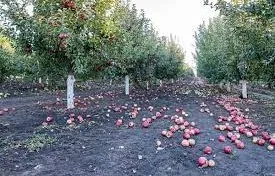
In 2025 Kashmir’s apple sector faced a near-perfect storm: unseasonal hail, intense monsoon rains during harvest and long highway closures that left tonnes of fruit to rot. Grower groups put losses at around ₹2,000 crore, yet many farmers remain unpaid and desperate. This article explains why help has been slow, what gaps the crisis exposed, and what policymakers should prioritise to prevent a repeat. Click Here To Follow Our WhatsApp Channel


How bad was the damage? — scale and immediate impacts

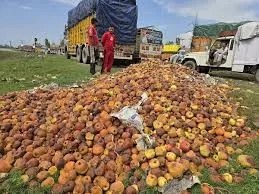
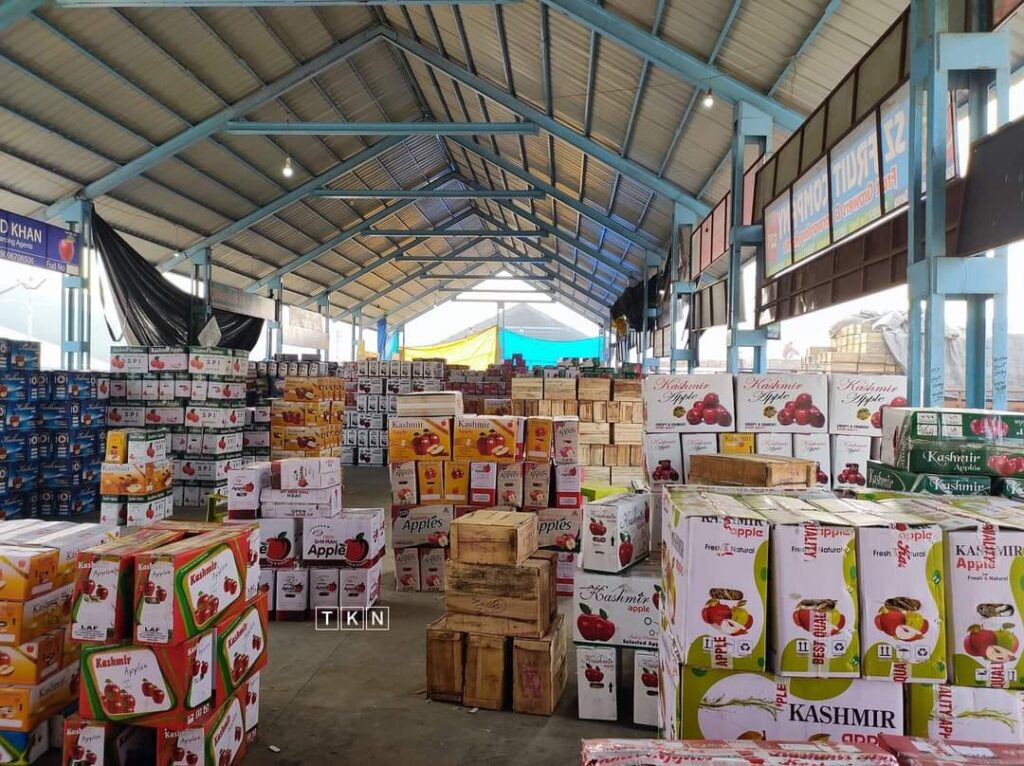
Growers and trade bodies estimate losses close to ₹2,000 crore for the 2025 season. The hit came from three linked failures: weather damage to crops, long delays on the Srinagar–Jammu highway (NH-44) that stranded trucks full of apples, and a severe shortage of post-harvest storage. Thousands of truckloads were reported stranded; large quantities of fruit rotted before they could reach markets, collapsing prices and forcing distress sales.

Kashmir produces over two million tonnes of apples a year and supplies about three-quarters of India’s crop — so the economic and social fallout is widespread, affecting growers, labourers, transporters and packing houses. The sector supports millions of livelihoods across the Union Territory.


Why the government response appears inadequate — five key reasons

1. Differing damage estimates and slow, cautious assessments

One immediate problem is disagreement over the scale of damage. Growers and unions used visible spoilage and local surveys to estimate ₹2,000 crore in losses; official preliminary assessments — which must follow prescribed procedures — have often produced much lower figures (for example, the government’s preliminary estimate for flood damage to agriculture and allied sectors was reported at around ₹209 crore). These gaps create a credibility battle and delay relief while officials verify claims.

2. Disaster funding rules and administrative bottlenecks

Central and UT relief normally flows through defined channels such as the State/Union Territory Disaster Response Fund (SDRF) and special packages. Releases require documented assessments, inter-departmental clearances and sometimes political sign-off. In a large, dispersed horticulture crisis, compiling the paperwork (block-level damage verification, beneficiary lists, etc.) takes time — time that perishable produce and heavily indebted farmers do not have.

3. Post-harvest infrastructure shortfall

Kashmir’s storage capacity is a structural weakness. Controlled-atmosphere (CA) storage in the UT stood at about 2.92 lakh metric tonnes against an estimated need of nearly 6 lakh tonnes. With cold chain capacity well below requirement, growers could not buffer supply when transport failed, turning a logistics problem into catastrophic loss. Until capacity is raised, the same weather + road disruption combination will always multiply losses.

4. Limited insurance penetration and unsuitable schemes

Although government schemes for crop insurance exist, horticulture — especially high-value tree crops like apples — has long been under-covered or poorly designed for local realities. Weather-based crop insurance schemes were being reworked for apples, but rollout and awareness lagged behind the immediate crisis, leaving many growers exposed. Where policies exist, smallholders often face hassles with claims, assessment standards and delayed payouts.

5. Political signalling and budgetary constraints

Compensation and loan waivers are politically sensitive and budget-heavy. Central and UT governments balance competing demands and may prioritise schemes that can be disbursed cleanly and quickly. Large, open-ended loan waivers risk setting precedents and invite scrutiny; targeted packages require tight beneficiary verification and funding. That combination — political caution plus procedural guardrails — slows the rollout even when the moral case for help is strong.


The human cost — beyond numbers

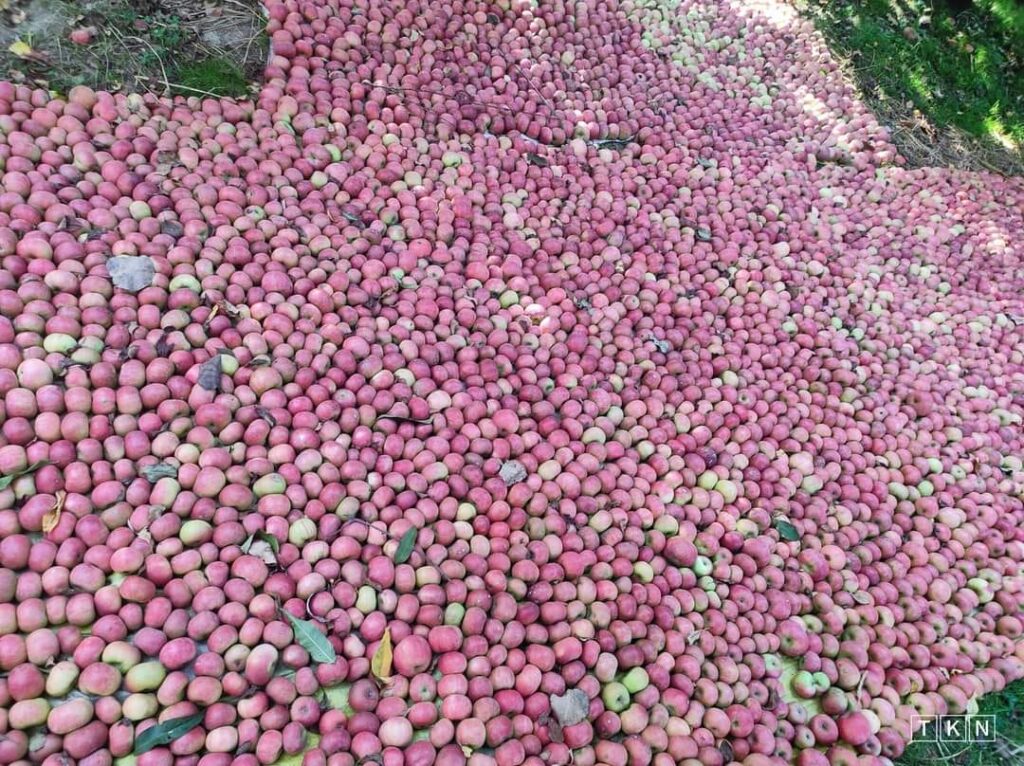
For many orchard households the loss is existential. Workers lose seasonal wages, farm families defer weddings and medical care, and small growers — often dependent on Kisan Credit Card (KCC) loans — may face default and asset sales after distress sales at rupees-a-kilogram prices. Visuals from the season — rotten apples dumped at road sides, trucks stranded for days — capture the despair that statistics can’t fully convey.


What relief has been promised so far?

The UT government acknowledged specific flood-related losses and said it would seek central assistance; ministers have announced plans to expand storage infrastructure and pilot better insurance arrangements. But cash compensation and comprehensive loan waivers remained outstanding at the time of reporting, and growers argue that promises without quick disbursements do little good when families have immediate debts and daily costs.


Practical steps that could have speeded help — and still can

  1. Fast-track emergency cash transfers: Small, means-tested cash grants can bridge families until longer compensation mechanisms kick in.
  2. Temporary freight subsidies and alternative logistics: Subsidise use of alternative routes and chartered transport to move perishable cargo during major highway blockades.
  3. Temporary purchase programmes: State purchase of distressed fruit for processing or food distribution could reduce distress sales and preserve farmer incomes.
  4. Accelerate insurance rollout with simpler claim protocols: For 2026, prioritise weather-indexed products that trigger quick payouts based on objective measurements (rainfall, hail reports, road closure duration).
  5. Rapid CA storage investment and decentralised cold chains: Public–private partnerships to add modular CA units close to production hubs would cut spoilage risk.

Longer-term fixes: resilience, not one-off relief

Helping growers recover must go with reforms that reduce future vulnerabilities: better road maintenance and alternate all-weather routes (upgrading Mughal Road and improving NH-44 resilience), stricter controls on counterfeit pesticides, quality monitoring, and incentives for pack houses and value-addition (processing, export cold chains). Climate adaptation measures — such as hail nets for high-value orchards, diversified cropping, and improved weather forecasting services — will also matter.


Conclusion — a call for urgent, pragmatic action

The 2025 losses exposed policy gaps that turned a tough season into a crisis. Delays in support are not only bureaucratic; they reflect deeper infrastructure, insurance and policy failures. Quick, well-targeted relief — coupled with medium-term investments in storage, insurance and road resilience — can stop a temporary shock turning into generational distress for Kashmir’s apple growers. Policymakers must move from promises to immediate, practical interventions before the next season arrives.

Pahalgam Railway Line Is About Future, Not Fear—Connectivity Is Development

J&K Assembly Committee Probes Rise in Malignant Brain Tumours Among Orchard Workers Linked to Pesticide Exposure

Brain Tumour

A meeting of the Committee on Environment, Jammu and Kashmir Legislative Assembly, was held on Monday to discuss malignant Brain tumours linked with pesticide exposure among the Orchard workers and farmers in the Kashmir Valley.

The meeting was presided over by the Chairman of Environment Committee, MLA Mohammad Yousuf Tarigami and attended by members Dr Sajjad Shafi; Peerzada Feroze Ahmad; Zafar Ali Khatana; Mushtaq Guroo and Darshan Kumar.Click Here To Follow Our WhatsApp Channel

The meeting had a detailed discussion on the alarming rise of primary malignant brain tumours among the orchard workers and farmers in Kashmir Valley, reportedly linked to pesticide exposure. The SKIMS data (2005-2008) highlighted the issue, sparking concerns about the health and well-being of those living and working in the region’s orchards. Key questions were raised about annual screening programs for neurological illnesses and cholinesterase levels, and the proposed steps for initiating mass health surveillance.

Other issues discussed included issuance of departmental advisory to the public regarding safe pesticide use and health hazards, steps being taken to introduce safe pesticide alternatives and biological agents, conduct of awareness programs for the farmers, existing rehabilitation or medical assistance schemes for the pesticide-affected families and orchard workers besides status of the mechanism for periodic reassessment of pesticide safety on neurological health.

Secretary, Health & Medical Education, Dr Abid Rasheed Shah, Director SKIMS, Srinagar and other senior health authorities briefed the Committee about the issues highlighted in the meeting. They assured that every possible step would be taken up to sort out all these issues on priority.

Chairman, Pollution Control Board J&K, Vasu Yadav; Principal GMC Jammu; Director Health Jammu; Director Horticulture (K); Director Agriculture (K) and Director Law & Enforcement JK also apprised the Committee of the issues highlighted in the meeting.

The Chairman directed the concerned officers to evolve an effective mechanism for prompt redressal of the issues highlighted in the meeting. He also directed them to constitute a task force involving experts of the field to look into the main cause behind this cancerous disease.

The Chairman asked the Horticulture and Agriculture authorities to adopt a mechanism to check quality of pesticides and their uses. He also asked to educate the farmers and orchard workers  regarding safety and prevention measures.

The Chairman directed the health authorities to take measures to conduct fresh study in the matter to ascertain the factual position so that the risk of cancer (malignant brain tumour) cases could be reduced.

Javid Ahmad Dar Says Centre’s Special Package for Affected Farmers Likely to Be Announced Soon

Javid Ahmad Dar

Minister for Agriculture Production, Rural Development & Panchayati Raj, Cooperative and Election Departments, Javid Ahmad Dar on Wednesday said the Government of India’s special package for farmers affected is expected to be announced soon.Click Here To Follow Our WhatsApp Channel

Speaking to reporters at SKUAST Wadura, the Minister, as per the news agency—Kashmir News Observer (KNO) said loss assessments have been completed and the proposal has been sent to the Centre.

He expressed hope that the package would be announced soon, assuring farmers of timely compensation and support.On the upcoming Rajya Sabha elections, the Minister said four nominated candidates have filed their nominations and the party is optimistic of winning all seats.

Story of Almond Cultivation in My Village

Story of Almond Cultivation

In my village, we have nearly 2500 kanals of Karewa land & until 2010, 95% of it was under almond cultivation.Click Here To Follow Our WhatsApp Channel

Yes, crop failures were frequent — especially when late March snowfall would often damage the bloom. Diseases/ pests were common, & the trees were seedlings with around 95% hard shell & 5% paper-shell, all by chance. Perhaps our orchards had grown too old Around 2010.

By 2008 to 2014, almost everyone had shifted to apples. Today, except for my own 2-kanal almond orchard, no other villager has almond orchard here. Even we also converted the two kanals karewa land to apples for a year, but the year’s experience on Karewa land convinced me & my father to return back to almonds. (Thankfully, we got great returns for our green almonds this year)

The real reason for decline wasn’t just crop failures or mismanagement — it was the market collapse. I still remember:

In the early 1990s, we would sell hard-shell almonds at ₹40/kg.

By 2010, prices hadn’t even touched ₹100/kg.

Even today, the rates are around ₹150/kg.

Growers would sometimes keep their produce for years because there was no demand. One major blow was the import of Californian almonds with minimal TARIFF, which crushed local markets.

Around 2010, a few buyers from Srinagar purchased large chunks of land belonging to pandiths, dug borewells & made apple cultivation possible — inspiring villagers to follow. Producing quality apples on karewas is always challenging especially if you don’t have your own Borewell.

The story of almonds in my village is a reminder: without fair market support and smart policies, even the richest traditions of cultivation can vanish & become thing of past in no time.

Writer of This Story Is Dr. Tariq Rasool

Watch Dr. Tariq Rasool’s Message to Kashmir’s Apple Orchard Owners: Diseases, Causes

After Three Weeks of Restrictions, Mirwaiz Umar Farooq Addresses Congregation at Jama Masjid

Mehbooba Mufti Criticizes Government for Criminalizing Kashmiris, Condemns Seizure of Geelani’s Widow’s Home

Kashmir Apple Crisis: Highway Blockade Triggers Massive Losses, Protests, and Industry Fears of Irreparable Damage

Kashmir Apple Crisis

Kashmir’s apple industry, the pride of the Valley and a major part of its economy, is now facing one of its darkest moments. Continuous rains since late August have triggered landslides and floods, shutting down the 290-kilometre Srinagar–Jammu National Highway (NH-44). This road is Kashmir’s only all-weather lifeline to markets across India. For more than two weeks, it has remained blocked for heavy vehicles, leaving thousands of apple-laden trucks stranded.

The impact has been devastating. Growers and traders are watching helplessly as their produce rots inside trucks stuck in long queues near Qazigund, Banihal, and Ramban. Viral videos on social media show juice dripping from trucks full of spoiling apples and pears, a heartbreaking sight for families who depend on this harvest for survival.


Why the Apple Industry Matters

Kashmir’s horticulture sector is the backbone of the rural economy. Apples alone make up 70–80% of India’s domestic production, generating around ₹10,000–12,000 crore every year and providing livelihoods for over 3 million people. From packaging to cold storage and transport, nearly every household in the Valley is connected to this industry in some way.

This year, the road closure has put up to 30% of the harvest at risk, especially early-season varieties like Gala and Bagogosha pears. For farmers, the losses are not just about money – they mean the difference between survival and bankruptcy.


The Scale of the Losses

  • Spoilage: Around 2,000–4,000 trucks carrying fruit have been stuck for days. Each truck holds 700–1,200 boxes worth ₹10–15 lakh. Current estimates suggest losses of ₹1,000–1,200 crore, which could rise to ₹6–7 billion if the situation continues.
  • Market Disruption: Sopore, Asia’s second-largest fruit market, suspended auctions multiple times this month. With mandis (fruit markets) closed in protest, daily outflows of 200–300 trucks have stopped. Apple prices have already fallen by ₹200–300 per box.
  • Ripple Effect: Cold stores, packaging units, and labourers are sitting idle. Transport costs have tripled. Many small farmers are delaying harvests or dumping produce because they cannot afford to keep waiting.

Voices from the Valley

Farmers across Kashmir are speaking of despair. Ghulam Nabi Lone, an apple grower from Shopian, said he lost more than 1,500 boxes of fruit. “We were already hit by floods and heatwaves earlier this year. Now this highway closure is pushing us to the edge,” he explained.

On social media, people are sharing videos of rotten apples being thrown away in South Kashmir. Many posts tag politicians and officials, pleading for urgent action to save the harvest.


Protests and Political Pressure

Frustration has spilled onto the streets:

  • Fruit Growers’ Union: The Kashmir Valley Fruit Growers and Dealers Union (KVFGDU) called for two-day strikes and mandi shutdowns across Sopore, Baramulla, Anantnag, and other towns. Their demand is simple – clear the fruit trucks first.
  • Political Leaders: Chief Minister Omar Abdullah blamed the Centre for failing to act quickly. PDP’s Iltija Mufti met the Lieutenant Governor, urging him to treat this as a crisis. Veteran leader M.Y. Tarigami went further, calling the situation a “death knell” for farmers and demanding crop insurance plus more transport options.
  • Government Response: Horticulture Minister Javed Ahmad Dar visited Qazigund on 15 September and promised limited clearance for trucks. The National Highways Authority of India says light vehicles can pass, but full restoration for heavy trucks will take longer.

Attempts at Relief

A ray of hope came when Indian Railways launched a daily parcel train from Budgam to Delhi’s Adarsh Nagar on 13 September. Two coaches are currently reserved for 18 tonnes of apples, with scope to expand for saffron and walnuts. The Lieutenant Governor called it a “faster and economical” lifeline.

However, growers argue that one train cannot replace the thousands of trucks that usually leave the Valley each day. They are asking for more trains, quick repairs to the Mughal Road, and crop insurance schemes to cover repeated disasters.


Long-Term Questions

This crisis highlights a painful reality: Kashmir’s apple economy relies almost entirely on a single road that is highly vulnerable to landslides and weather extremes. Experts warn that unless the region diversifies its transport network and builds climate resilience, similar crises will continue to strike in the coming years.

For now, farmers are being advised to hold off harvesting wherever possible by using Controlled Atmosphere (CA) stores. But for many who have already plucked their fruit, time has run out.


Conclusion

The apple crisis of 2025 is more than just an economic setback – it is a human tragedy. Families who nurtured their orchards for years are now dumping produce on the roadside. The highway blockade has turned Kashmir’s proudest industry into a symbol of helplessness. Unless urgent steps are taken to restore transport and provide relief, the Valley may face irreparable damage to its economic backbone – and the lives tied to it.

Hazratbal Shrine Vandalism Sparks Political, Religious Row in Jammu & Kashmir

Hazratbal Emblem Row: Waqf Board Chief Darakshan Andrabi Demands FIRs

Srinagar-Jammu Highway to Reopen for Light Vehicles After Weeks of Closure

Engineer Rashid Narrowly Escapes Attack Inside Tihar,AIP Demands Probe into Alleged Harassment

3-Day UT-Level Apex Committee Mid-Term Review of HADP Begins at SKUAST-K Shalimar

Review of HADP

A three-day Union Territory (UT)-level Apex Committee mid-term review of the Holistic Agriculture Development Programme (HADP) began today at Sher-e-Kashmir University of Agricultural Sciences and Technology of Kashmir (SKUAST-K), Shalimar.

The review meeting is being presided over by renowned agricultural scientist Dr. Mangla Rai, who is also the chairman of the Apex Committee. Senior officials, agricultural experts, scientists, and representatives from allied departments are participating in the deliberations.

Officials said the mid-term review aims to assess the implementation progress of HADP projects across Jammu and Kashmir, identify challenges, and suggest corrective measures to ensure timely achievements of set targets. The programme is expected to play a transformative role in strengthening the agri-economy of the region by focusing on modern farming practices, technological interventions, and value-chain development.

Dr. Rai, while opening the session, stressed the importance of integrated efforts between government departments, research institutions, and farmers for successful implementation. He emphasised that HADP has the potential to boost productivity, generate employment, and enhance farmers’ income across the UT.

The review meetings will continue over the next two days, covering project-specific presentations, field-level assessments, and future planning.

Hazratbal Shrine Vandalism Sparks Political, Religious Row in Jammu & Kashmir

Hazratbal Emblem Row: Waqf Board Chief Darakshan Andrabi Demands FIRs

Srinagar-Jammu Highway to Reopen for Light Vehicles After Weeks of Closure

Engineer Rashid Narrowly Escapes Attack Inside Tihar,AIP Demands Probe into Alleged Harassment

Kashmir Fruit Growers Face Heavy Losses as Highway Closure Disrupts Transport

Jammu-Srinagar Highway

Kashmir’s fruit growers are facing mounting financial losses after the closure of the Srinagar–Jammu National Highway (NH-44) for four days left hundreds of fruit-laden trucks stranded during the peak harvest season.

Trucks Stranded, Crores at Risk

From August 26, heavy rains, landslides, and road damage blocked the region’s primary all-weather trade route, halting the movement of 700–800 trucks carrying early-season fruit varieties such as Bagogosha pears, Galamast apples, and Red Ghala apples. Each truckload is valued at ₹5–9 lakh, with losses estimated in crores due to the short shelf life of the produce.

Growers like Muhammad Maqbool of Shopian voiced fears that crops may rot if traffic disruptions persist.

Sopore Mandi Sounds Alarm

According to Fayaz Ahmad Malik, President of Sopore Fruit Mandi—Asia’s second-largest wholesale fruit market—300–400 trucks were stuck at different points, threatening the livelihoods of lakhs of people tied to the fruit economy.

The crisis has been worsened by a bumper crop from Himachal Pradesh, which has driven down prices in external markets, further squeezing Kashmir’s growers.

Alternative Routes Fall Short

The Mughal Road, considered an alternative, only accommodates smaller six-tyre trucks. Larger 10- and 16-tyre vehicles, needed for bulk transport to major markets beyond Delhi, remain barred.

On August 30, the highway reopened for stranded vehicles, permitting regulated movement of trucks. Yet, Bashir Ahmad Basheer, Chairman of the Kashmir Valley Fruit Growers-cum-Dealers Union, warned that partial restoration would not be enough. “Full-scale traffic must resume to avoid further devastation,” he stressed.

Calls for Government Intervention

Fruit growers have urged the government to:

  • Prioritize fruit trucks on NH-44.
  • Permit larger trucks round-the-clock via the Mughal Road.
  • Expedite long-term alternatives for transport reliability.

Hope in Rail Cargo Service

Relief may come with the launch of the Railway Cargo Service (JPP-RCS) from Budgam to New Delhi, scheduled for late September 2025. Growers believe the service will provide faster, more dependable transport, reducing dependence on the vulnerable highway.

Kashmir Politics From Mahraja Hari Singh To Syed Ali Geelani

From Boom to Bust: How the April 22 Terror Attack Shattered Pahalgam’s Tourism Dream

Jairam Ramesh Slams PM Modi Over Foreign Visits, Says Manipur Still Awaits His Healing Presence

Modi in Japan: PM Stresses Crucial India-China Ties for Global Stability Ahead of SCO Summit in Tianjin

Kashmir Apple Industry Faces Crisis as Prices Plunge, Farmers Demand Urgent Government Intervention to Save Livelihoods

Kashmir Apple Industry

The apple orchards of Kashmir, long celebrated as the backbone of the region’s economy, are grappling with an unprecedented crisis as apple prices continue their downward spiral. Orchard owners across the valley are reeling from the financial strain, with many fearing that the plummeting market rates could jeopardize their livelihoods and destabilize an industry that supports millions.

Kashmir’s apple industry, which accounts for approximately 75% of India’s total apple production, is a vital economic driver, employing around 3.5 million people directly or indirectly and contributing nearly 10% to the region’s Gross State Domestic Product (GSDP). However, despite a robust harvest this season, growers report that market prices have dropped sharply, with a 10-12 kg carton of high-density apples fetching only ₹750 to ₹1,000, compared to last year’s ₹1,300 to ₹1,400. This steep decline has left farmers struggling to recover even basic production and transportation costs.

kashmiri Apple

“The prices are so low that we’re barely breaking even,” said Mohammad Ashraf Wani, an apple trader and president of the Fruit Mandi in Shopian, one of Kashmir’s largest apple markets. “We’ve had a good yield this year, but the market is flooded with early-harvest varieties from high-density orchards, and the demand isn’t keeping up. If this continues, many farmers will face huge losses.”

The surge in supply is largely attributed to the rapid adoption of high-density apple cultivation across the valley. Over the past decade, farmers have increasingly shifted from traditional orchards to high-density varieties, such as Super Chief, Red Velox, and Gala Redlum, which yield fruit within two to three years and produce up to four times more per acre. The Jammu and Kashmir government’s Modified High-Density Plantation Scheme, launched in 2021, has further accelerated this trend, offering a 50% subsidy to encourage farmers to plant an estimated 2 to 3 million new high-density trees annually. While this has boosted production by 35-45% compared to last year, the oversupply has overwhelmed markets, driving prices down.

“High-density orchards were supposed to be a game-changer,” said Tariq Ahmad, a farmer from Pulwama. “We invested heavily, expecting better returns, but this glut has shaken our confidence. Without government intervention, many of us won’t survive another season like this.”

Adding to the growers’ woes is the influx of cheaper imported apples from countries like the United States, Iran, and South Africa. These imports, particularly Washington apples, have eroded the market share of Kashmiri apples, further depressing prices. Farmers and traders have long opposed such imports, arguing that they undermine the local industry, which supports around seven lakh families. “The government needs to impose higher import duties to protect us,” said Showkat Ahmad Hajam, an apple trader in Pulwama. “Right now, we’re competing against cheaper foreign apples, and it’s killing our market.”

Black Diamond Apple
Black Diamond Apple / Image Source Pintrest

The challenges don’t end there. Erratic weather patterns, including dry spells, unseasonal hailstorms, and rising temperatures, have compounded the crisis. According to the China Economic Information Centre (CIEC), apple production in Jammu and Kashmir dropped to 2,054.828 thousand tons in 2024 from 2,146.347 thousand tons in 2023, a decline attributed to adverse weather and substandard pesticides. This year, growers report a 30% reduction in yields in some areas due to similar conditions, coupled with fungal scab outbreaks and leaf miner infestations, which have further diminished the quality and marketability of their produce.

Orchard owners are now urgently appealing to both the central and Jammu and Kashmir governments for immediate support. Key demands include the reintroduction of the Market Intervention Scheme (MIS), which previously allowed the government to procure lower-grade apples at fixed rates to stabilize prices, and the implementation of a yield-based crop insurance scheme to mitigate losses from natural calamities. “We presented 14 demands to the Chief Minister before the latest budget, including loan waivers and crop insurance, but none were addressed,” said Fayaz Ahmad Malik, president of the Sopore Fruit Mandi, Asia’s second-largest fruit market. “The government seems unaware of how this industry works. We’re being left to fend for ourselves.”

The lack of adequate cold storage and processing facilities in the region further exacerbates the crisis. Approximately 20% of apples remain unsold in Controlled Atmosphere (CA) stores, as growers struggle to find buyers willing to pay fair prices. “CA stores were supposed to help us manage supply and demand, but with low market rates, they’re just piling up losses,” said Bashir Ahmad Basheer, president of the New Kashmir Fruit Association.

The apple industry’s struggles have ripple effects across Kashmir’s economy, impacting not only growers but also laborers, transporters, and traders. With the monsoon session of Parliament concluding on August 21, 2025, growers are pinning their hopes on swift government action. Proposals for import duties, market regulation, and enhanced infrastructure could provide a lifeline to the sector, but time is running out.

“If the government doesn’t act now, the future of Kashmir’s apple industry is at stake,” warned Wani. “This isn’t just about apples—it’s about the survival of millions of families who depend on this trade.”

As Kashmir’s orchard owners await relief, the region’s famed apples, once a symbol of prosperity, now hang heavy with uncertainty, underscoring the urgent need for policies to protect this vital lifeline of the valley’s economy.

J&K Police Attach Property of Active Terrorist in Anantnag Under UAPA Crackdown

Khelo India Water Sports Festival 2025 at Dal Lake: Boost for J&K Athletes and Tourism

Ganderbal Shock: 22-Year-Old Girl Arrested for Killing Her 14-Year-Old Sister After Altercation

Rumors Claim Turkish Actress Fatima Bushra Quit Showbiz, Adopted Hijab — But No Verified Evidence Yet

Vice-Chancellor of SKUAST-K, ICRISAT Team Meet CM Omar Abdullah to Discuss Key Agricultural Initiatives in J&K

ICRISAT Team

Vice-Chancellor of Sher-e-Kashmir University of Agricultural Sciences and Technology, Kashmir (SKUAST-K), along with a delegation from the International Crops Research Institute for the Semi-Arid Tropics (ICRISAT), called on Chief Minister Omar Abdullah on Wednesday to discuss key initiatives for strengthening agriculture in Jammu and Kashmir.

The meeting focused on collaborative measures aimed at boosting productivity, improving farmers’ incomes, and ensuring sustainable use of resources in the region. The Vice-Chancellor briefed the Chief Minister about SKUAST-K’s recent research achievements in horticulture, crop diversification, and livestock management. He also highlighted the challenges farmers face, including climate change, soil degradation, and lack of advanced post-harvest technologies.

Representatives from ICRISAT shared their expertise in climate-resilient crops, dryland farming systems, and water-use efficiency. They emphasised the need for introducing innovative technologies and farmer-centric models to ensure long-term food and livelihood security in Jammu and Kashmir, especially in semi-arid and hilly areas.

Chief Minister Omar Abdullah appreciated the joint efforts of SKUAST-K and ICRISAT, underlining the government’s commitment to transforming agriculture into a profitable and modern sector. He assured full support in creating policy frameworks that would enable large-scale adoption of scientific practices. “Farmers are at the heart of J&K’s economy, and empowering them with the latest research and technology is our top priority,” he said.

The discussions also explored opportunities for skill development, farmer training programs, and international collaborations to link local produce with wider markets. The CM directed concerned departments to extend cooperation with SKUAST-K and ICRISAT for timely execution of projects.

The meeting ended on a positive note with all stakeholders reaffirming their commitment to strengthen agricultural research, promote sustainable practices, and secure a better future for farming communities across J&K.

J&K Police Attach Property of Active Terrorist in Anantnag Under UAPA Crackdown

Khelo India Water Sports Festival 2025 at Dal Lake: Boost for J&K Athletes and Tourism

Ganderbal Shock: 22-Year-Old Girl Arrested for Killing Her 14-Year-Old Sister After Altercation

Rumors Claim Turkish Actress Fatima Bushra Quit Showbiz, Adopted Hijab — But No Verified Evidence Yet