Islamic University of Science and Technology  (IUST) Economics Alumni Meet 2024, Shaping Future Endeavors through Alumni Fund and Success Stories

Alumni Meet 2024

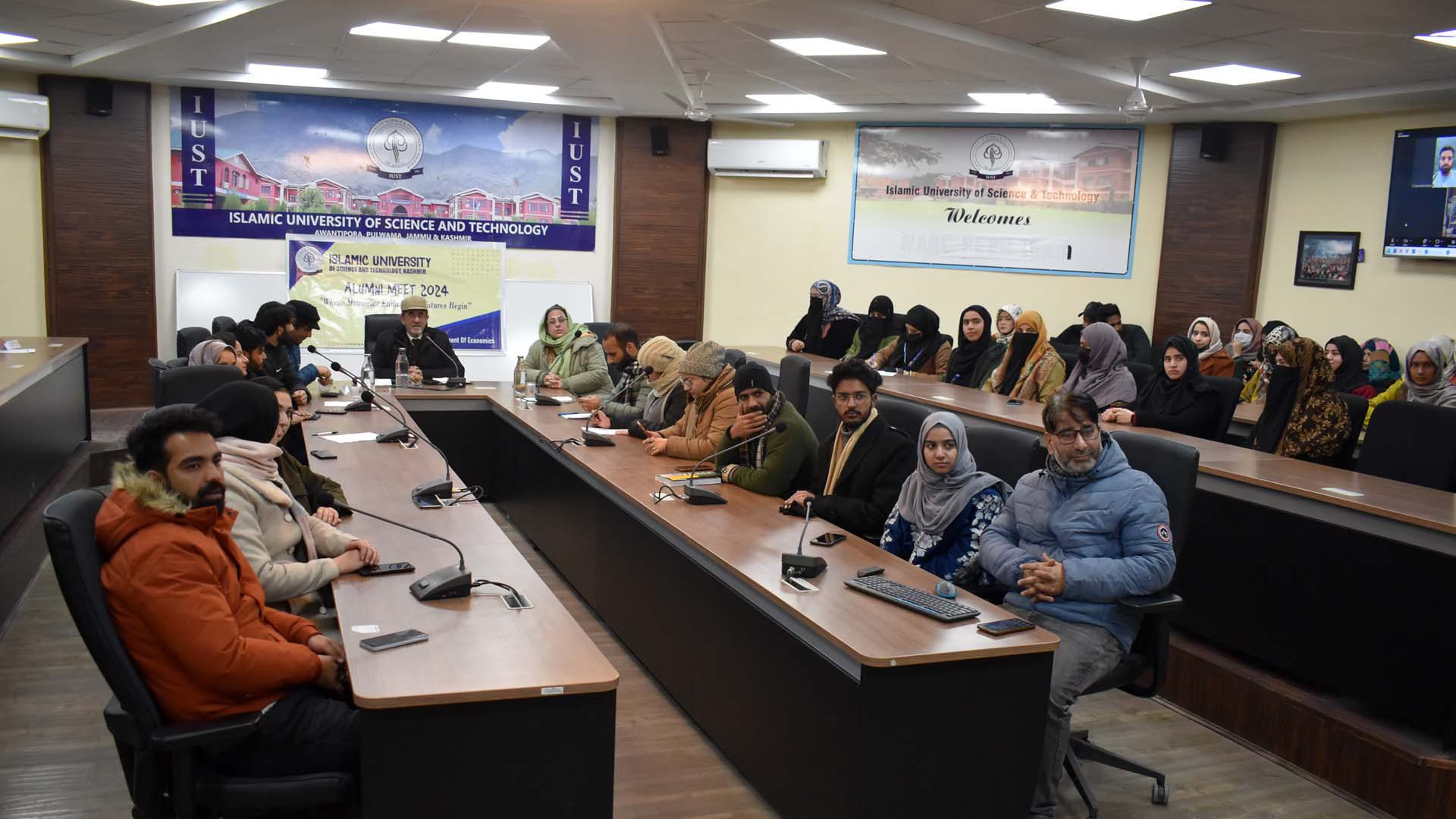
Under the aegis of Alumni Connect Vertical of Dean Outreach, The Department of Economics, IUST, hosted its Alumni Meet 2024 in the Conference Hall, Rumi Library. The event was chaired by the head of the Department, Prof. S. M. Shafi, who highlighted the transformative role of alumni connections in shaping Ivy League universities. He also initiated a meaningful discussion on establishing an ‘Alumni Fund’, encouraging valuable suggestions from alumni and students to strengthen the department’s future endeavours.

The alumni shared their inspiring success stories, offering guidance and motivation to current students, who actively engaged with them during interactive sessions.

establishing an ‘Alumni Fund’ and encouraging valuable suggestions. The event was meticulously coordinated by Dr. Javid Ahmad Khan (Departmental Coordinator, Alumni Connect) and Dr. Shumila. Cheshti and Dr Abdul Hamid Mir, whose efforts ensured its success.

Baba Ghulam Shah Badshah University (BGSBU) Celebrates National Mathematics Day

Baba Ghulam Shah Badshah University

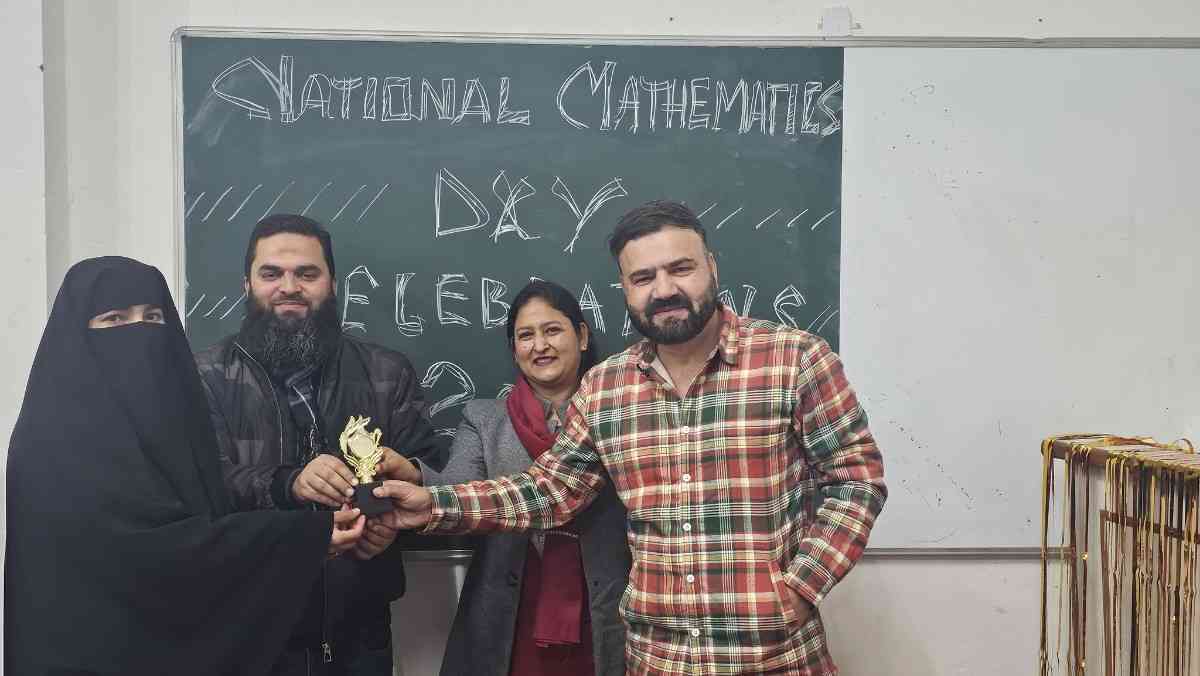
Rajouri, December 23, 2024: The Department of Mathematical Sciences, Baba Ghulam Shah Badshah University (BGSBU), celebrated National Mathematics Day to commemorate the birth anniversary of the legendary mathematician Srinivasa Ramanujan. The event aimed to inspire students and faculty to explore the profound significance and applications of mathematics in various fields.

In his message, the Vice Chancellor of BGSBU, Prof. Jawaid Iqbal, emphasized the importance of National Mathematics Day in promoting the relevance of mathematics in education and innovation. The Vice Chancellor appreciated the Department’s efforts in organizing the event and assured his continued support for such initiatives to advance the field. Prof. Jawaid Iqbal, emphasized India’s remarkable contributions to mathematics, from the foundational concepts of zero and algebra to the groundbreaking work of Srinivasa Ramanujan.

Dr. Asghar Ali Shah, Associate Dean, School of Mathematical & Computer Sciences, extended his congratulations to the Department for successfully celebrating the occasion. The program began with a welcome address by Dr. Zaheer Abbas, Head of the Department, who highlighted the importance of the day and thanked the Vice Chancellor for his encouragement and guidance. He stressed the role of mathematics as a cornerstone of innovation and its vital role in shaping the modern world.

The event featured a special tribute to Srinivasa Ramanujan, acknowledging his extraordinary contributions to mathematics. A quiz competition based on Ramanujan’s work and the 2024 theme, “Mathematics: Bridge to Innovation,” witnessed enthusiastic participation from students.

Govt. Amends RTE Rules 2024: Regular Exams and Detention Policy for Class 5 and 8 Students

Class 5 and 8

The central government has amended the Right of Children to Free and Compulsory Education Rules, 2010, introducing provisions for regular examinations and holding back students in specific cases in Class 5 and 8 if they fail.

Previously, state governments had the discretion to implement detention policies. While 18 states have opted out of the no-detention policy, an equal number have chosen to retain it.

Under the new “Right to Free Compulsory Child Education Amendment Rules 2024” effective from December 16, regular competency-based examinations will be conducted at the end of every academic year for Class 5 and Class 8 students.

If a student fails to meet the promotion criteria, they will be given additional instruction and a re-examination within two months of the results being declared.

However, students failing the re-examination will be held back in the same class.

Speaking to reporters on Monday, Sanjay Kumar, Secretary of School Education, Sanjay Kumar, Secretary of School Education noted that the new rules will help improve the learning outcomes while giving special attention to students who are not academically strong.

“The Government of India has decided that even after every effort, if detention is necessary, students may be detained. However, no child will be expelled from school until Class 8,” he said.

He added, “If a student fails, teachers will provide them with two months of additional instruction, and only in exceptional cases will the student be detained. The focus is on enhancing learning outcomes.”

The amendments also mandate that retained students receive specialised inputs to address their learning gaps. The examination process will be competency-based, ensuring holistic development rather than rote learning.

In 2009, the Right To Education Act introduced the ‘no-detention policy’ under which the students up to class 8 had to be promoted. To ensure quality education, Continuous and Comprehensive Evaluation was introduced, but it was scrapped in 2017 due to poor implementation.

Right to Education was amended in 2019 to empower state governments to decide on the introduction of detention policies, which were previously prohibited until Class 8. The amendments aimed to address concerns regarding learning outcomes.

Kumar highlighted that in 2019, 18 states decided to abolish the no-detention policy, while the other 18 continued with it.

The new rules mark a significant policy shift in elementary education aimed at improving learning outcomes.

To address learning gaps, class teachers are required to guide students and, if necessary, engage with their parents. Teachers will provide specialized inputs based on assessments to help the students improve. School heads must maintain a record of students held back and monitor their progress closely. (ANI)

Deputy Chief Minister J&K Surinder Choudhary Emphasizes Quality Education at Sainik School Nagrota Annual Day Celebrations

Surinder Choudhary

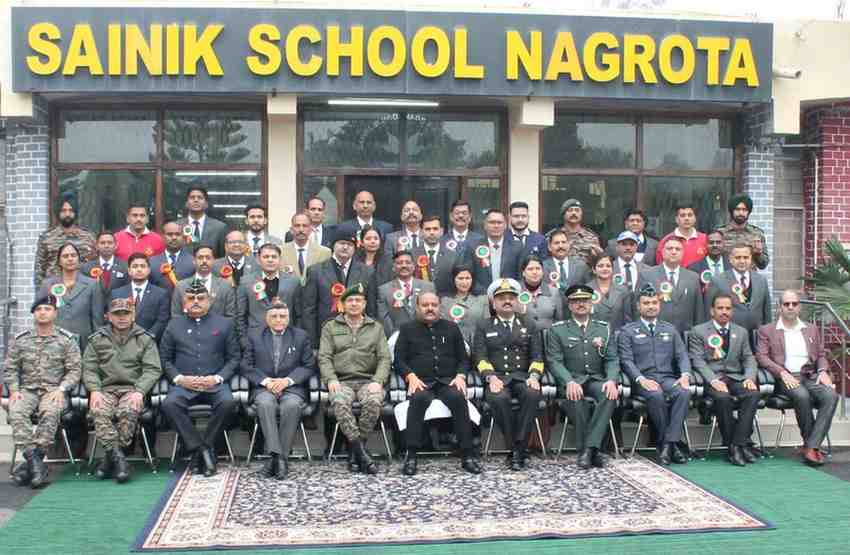
Underscoring the importance of imparting quality education, Deputy Chief Minister, Surinder Choudhary Deputy Chief Minister, Surinder Choudharytoday, said that it imparts a sense of discipline besides honing the intellectual capacity of youth.

“Education not only brings discipline but also supports spiritual growth of youth making a nation developed and prosperous,” maintained the Deputy Chief Minister.

The Deputy Chief Minister was speaking at the annual day of Sainik School Nagrota here today.
Complimenting the school for imparting quality education for decades, the Deputy Chief Minister said that the institution has been contributing immensely in shaping future of our younger generation. He said that the pass outs of the institution have created a niche for themselves in various spheres of life.

While asking the youth to contribute their best in pursuing academic pursuits, the Deputy Chief Minister said that they should not get carried away by the tendencies that are detrimental to their health and future. He said that instead, they should chamnelize their energies and time in making their nation developed and prosperous.

The celebration commenced with a ceremonial Guard of Honour presented to the Chief Guest in the distinctive style of Sainik School Nagrota, reflecting discipline and precision.

The Deputy Chief Minister also inaugurated the art, photography and science exhibition in the academic block, showcasing the creativity and scientific acumen of the cadets.

Cultural programme presented at the School Auditorium was a vibrant spectacle, featuring a variety of performances that highlighted the talent and diversity of the students.

The highlight of the event was the presentation of Cock House Trophy, which was awarded to Sindh House for securing the overall Championship in both junior and senior categories.

In his address, Capt (IN) Shibu Devasia, the Principal presented the school’s annual report. He highlighted the remarkable achievements of the school during the Academic Session 2024-25, underscoring its commitment to academic excellence, holistic development and fostering patriotism among cadets.

University Of Jammu Awarded NAAC A++ grade with CGPA 3.72 score in Recent Reaccreditation Cycle

University Of Jammu awarded

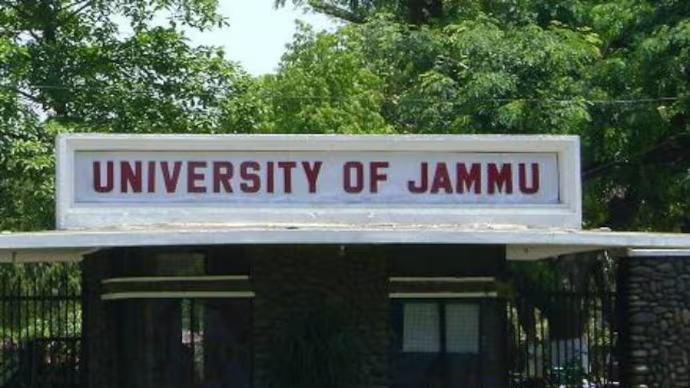
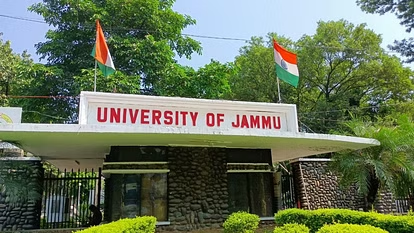
University of Jammu (JU) has been awarded A++ grade with Cumulative Grade Point Average (CGPA) of 3.72 in the recent reaccreditation cycle by the National Assessment and Accreditation Council (NAAC).

Talking to Media, Vice Chancellor JU Prof Umesh Rai said the NAAC score was released on Friday evening and the University has been awarded NAAC A++ grade with a CGPA of 3.72 score.

“It is really a big achievement for the University. Jammu University has created a history in Jammu and Kashmir for being awarded NAAC A++ Grade by NAAC,” VC JU Prof. Umesh Rai told GK.

During the last visit, the Jammu University was awarded NAAC A+ grade.

Earlier this year, Jammu University went up by at least 13 slots to figure at rank 50 from the previous year’s (2023) rank of 63 in the National Institutional Ranking Framework (NIRF) ranking.

Earlier this month, the Chancellor of the varsity, Manoj Sinha re-appointed the incumbent VC Prof. Umesh Rai as Vice-Chancellor of the University of Jammu with effect from April 5 of 2025 for a term of three years.

Professor Umesh Rai from the University of Delhi was appointed as the Vice-Chancellor of the Jammu University (JU) on March 20 of 2022, for a period of three years “with effect from the date he takes over the charge.”

The J&K Lieutenant Governor Manoj Sinha who is also the Chancellor of J&K Universities congratulated the University of Jammu for achieving “prestigious A++ Grade with CGPA of 3.72.

“The Jammu University has achieved the prestigious A++ Grade with a CGPA of 3.72 on a seven-point scale by NAAC. Heartiest congratulations to the Vice Chancellor, faculty, staff, scholars and students for this outstanding accomplishment. You’ve made J&K proud,” J&K LG wrote on his X handle.
“Jammu University’s reform-driven futuristic vision underscores its commitment to fostering academic excellence, goal oriented research, innovative capacity & holistic development of students to make them enlightened citizens. My best wishes to all for success in your mission,” he said.

Centre Sanctions Rs 85 cr for 9 Projects J&K Universities, Colleges under Pradhan Mantri Uchchatar Shiksha Abhiya

Union Ministry for Education, has approved projects

The Union Ministry for Education, has approved projects worth Rs 85 crore under the Pradhan Mantri Uchchatar Shiksha Abhiyan (PM-USHA) for nine higher education institutions in Jammu & Kashmir.

The decision, taken during the third Project Approval Board (PAB) meeting announced on December 20, 2024, underscores the government’s commitment towards transforming higher education infrastructure and fostering inclusivity and excellence in the region.

Among the sanctioned projects, Baba Ghulam Shah Badshah University in Rajouri will receive Rs 20 crore to strengthen its infrastructure.

Additionally, five new girls’ hostels will be constructed in the focus districts of Bandipora, Baramulla, Kulgam, Ramban and Udhampur, each allocated Rs 10 crore to promote gender equity.

Three Government Degree Colleges in Bandipora, Sogam Kupwara and Nowshera will also receive Rs 5 crore each for infrastructure development and upgradation.

PM-USHA, a Centrally Sponsored Scheme under the Ministry of Education, has been designed to address critical gaps in the higher education sector by enhancing infrastructure, curriculum reform, accreditation and employability.

Aligned with the principles of the National Education Policy (NEP) 2020, the scheme aims to ensure equitable access to quality education, particularly for underrepresented groups, thereby fostering a more inclusive and dynamic higher education ecosystem.

These recent sanctions are part of a broader vision to make education a driver of social and economic transformation, bridging regional disparities and empowering students with the skills needed for a rapidly changing world.

The Higher Education Department of Jammu & Kashmir had earlier submitted a comprehensive proposal for 47 institutions, with a total estimated cost of Rs 585 crore. Including the latest approvals, 18 institutions including Shri Mata Vaishno Devi University and several colleges, have been sanctioned under PM-USHA across three PAB meetings held in 2024.

The cumulative funding now stands at ₹155 crore, marking a significant milestone in addressing the infrastructural and academic needs of the region.

The establishment of new hostels and upgraded facilities will not only enhance the quality of education but also support gender inclusion, a critical aspect of NEP 2020’s vision for equitable development.

NEP 2020 emphasizes a holistic and multidisciplinary approach to education, prioritizing equity, inclusivity and excellence.

PM-USHA serves as a key enabler in realizing this vision by bridging infrastructural gaps and promoting reforms that align with global standards. The projects sanctioned for Jammu & Kashmir will create an environment conducive to innovation, learning and employability, ensuring that students from all sections of society have access to quality education.

These initiatives reflect a sustained commitment of J&K Government towards building a robust higher education framework that not only addresses present challenges but also anticipates future needs, ensuring that the region’s academic institutions are well-prepared to contribute to national and global progress.(NOK)
Islamic University of Science and Technology (IUST) Hosts Two-Day Health Screening and Awareness Camp on NCDs

Two-Day Health Screening

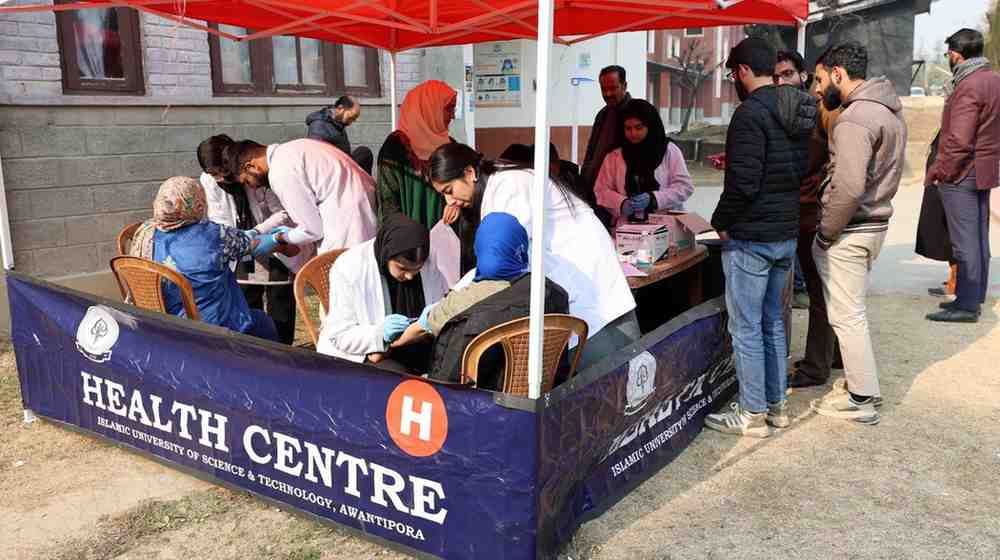
The Islamic University of Science and Technology (IUST) organized a two-day health screening and awareness camp in collaboration with the University Health Centre. Conducted under the IUST-PURSE project, the initiative aimed to raise awareness about non-communicable diseases (NCDs) and assess their prevalence among university employees, students, and scholars.

The camp witnessed participation from faculty, non-teaching staff, security personnel, scholars, and students. Over two days, participants were screened, blood samples were collected, and health education on the prevention and management of NCDs was provided. This initiative highlights IUST’s commitment to fostering health awareness and advancing preventive healthcare through collaborative efforts.

Chapter on Sufi Saint Sheikh-ul-Alam Sheikh Noor U Deen Norani to Remain in Class IX Textbook: Omar Abdullah

Sheikh Noor-ud-din

Responding to the controversy over the removal of a chapter on the revered Sufi saint Sheikh-ul-Alam Sheikh-ul-Alam Sheikh Noor U Deen Norani from the Class IX textbook, Chief Minister Omar Abdullah assured that the chapter would not be removed.

This statement came in response to a post by Muhammad Yousuf Tarigami on X, urging the Chief Minister’s intervention on the matter.

In his reply, the Chief Minister wrote, “assure @tarigami Sb that there will be no deletion of the chapter. The matter has already been taken up by @sakinaitoo sahiba as soon as this was brought to the attention of the government.”

Tarigami had already wrote on X: It is deeply troubling that an entire chapter on the revered Sufi saint Sheikh-ul-Alam has been dropped from the Class IX textbook. This blue-pencilling, carried out prior to the Assembly polls, is unacceptable to a society rooted in rich Sufi traditions. 1/”

“I urge Chief Minister @OmarAbdullah to intervene and ensure that this crucial chapter is reinstated, thereby preserving and honoring our rich cultural and Sufi heritage 2/2 “.

Jammu and Kashmir Students Association Seeks CM Omar Abdullah’s intervention over Removal of Sheikh Noor-ud-Din Wali Chapter from JKBOSE textbook

Jammu and Kashmir Students Association

The Jammu and Kashmir Students Association (JKSA) on Thursday expressed strong resentment over the recent decision to remove the chapter on Sheikh Noor-ud-Din Wali, also known as Sheikh-ul-Alam, from the Class 9 curriculum in Jammu and Kashmir.

The association termed the move unfortunate, emphasizing that Sheikh-ul-Alam is a revered figure not only among Muslims but also among Kashmiri Pandits, symbolizing unity, peace, and communal harmony in the region.

In a statement, state coordinator of Association Rohool Banka, expressed deep concern over the decision, highlighting the cultural and spiritual significance of Sheikh Noor-ud-Din Wali. “Sheikh-ul-Alam is a widely respected figure whose teachings have transcended religious boundaries and continue to inspire people from all walks of life. This decision by the authorities goes against public sentiment and undermines the rich heritage and traditions of Kashmir,” Banka said.

He emphasized that, removing Sheikh Noor-ud-Din Wali’s chapter from the Class 9 textbooks is an attack on the identity and history of Jammu and Kashmir.

“Sheikh-ul-Alam, as he is lovingly called, is not just a Sufi saint but the soul of Kashmir, embodying its ethos of peace, harmony, and brotherhood. He is part and parcel of Kashmir’s rich literary history. For centuries, his teachings have guided generations, transcending religious and social divides. Removing his chapter from our children’s education system is not just disrespectful—it is an attempt to sever our youth from their roots and heritage,” the statement added.

The association has sought the intervention of Jammu and Kashmir Chief Minister Omar Abdullah in the matter, urging him to take immediate steps to address this issue. “We urge the Chief Minister to ensure that our history and culture are not up for dilution. Sheikh Noor-ud-Din Wali belongs to the people of Kashmir, and no institution has the right to diminish his legacy,” the association said.

Suhail Farooq, another coordinator of JKSA, also voiced concern and urged the authorities to reconsider the decision and reinstate the chapter on Sheikh Noor-ud-Din Wali in the curriculum. He stressed that such decisions should be made with due consideration of the cultural and historical context, ensuring that students learn about prominent figures who have shaped the values of tolerance, peace, and coexistence in the region.

“We call on the authorities to respect the feelings and sentiments of the people of Jammu and Kashmir and to preserve the legacy of Sheikh Noor-ud-Din Wali for future generations,” Suhail added.

He further asserted, “This is not just an affront to one community but to every community touched by this pious scholar’s contributions, which have left an indelible impact.” “Sheikh-ul-Alam’s teachings have not only inspired people but have also enriched our literature and cultural heritage. The deletion of this chapter strikes at the very foundation of his legacy, impacting both the literary and moral education of students,” he added.

University of Kashmir Announces Winter Vacations From January-01-2025 to February

University of Kashmir

The University of Kashmir (KU) Wednesday announced winter break for main and its satellite campuses January to February 23.

According to the news agency KNO KU’s Joint Registrar in a notification said, “The teaching departments of the university and its satellite campuses shall observe winter vacations from January-01-2025 to February-23-2025.”

“However, the Departmental offices shall function normally and the heads, directors and coordinators of the Department of satellite campuses and centers shall ensure that the examinations if any, and other activities are conducted as per schedule,” it reads.

It also said, “Further, remedial classes including offline or online mode shall be conducted by the departments to complete the remaining syllabus, if any, during the period of winter break.”—(KNO)