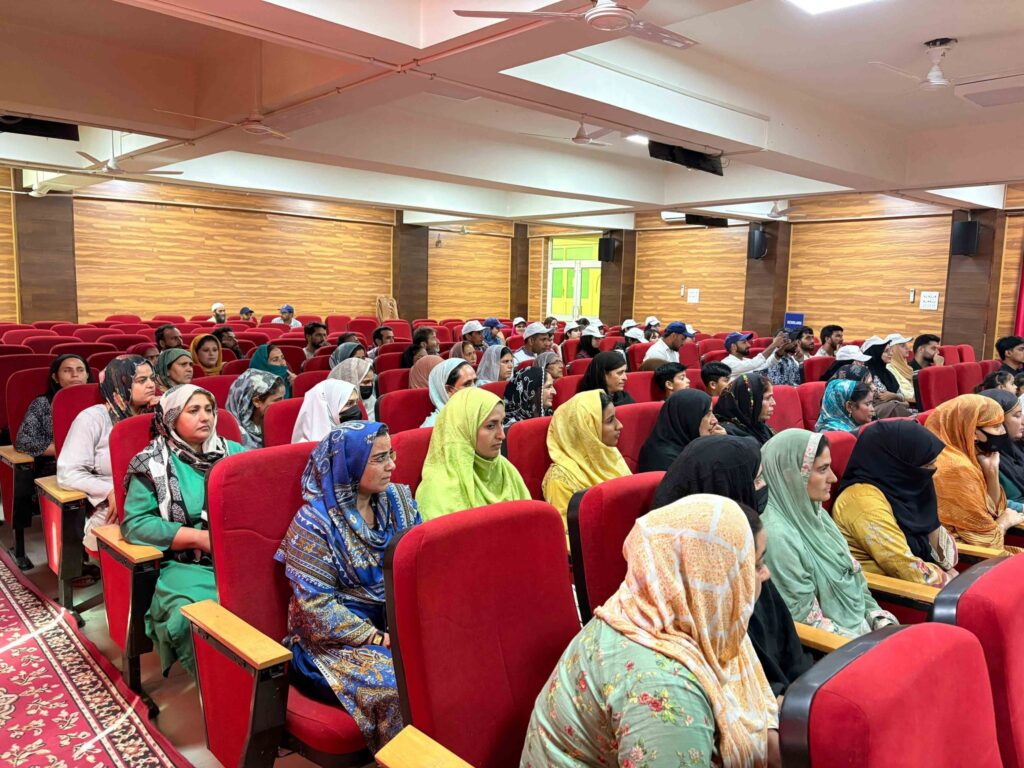
Under the University’s Academic Outreach Programme and under the aegis of the Dean of Outreach, the Habba Khatoon Centre for Kashmiri Language and Literature (HKC L&L) organised an outreach visit to Meeras Mahal, Sopore. Students from the Social Sciences and Humanities participated in the event, which aimed to familiarize them with the rich cultural heritage of Kashmir.Click Here To Follow Our WhatsApp Channel
According to a statement issued here, during the visit, Dr. Muzzafar, Assistant Professor at HKC L&L, provided detailed insights into the cultural traditions and legacy of the region. Participants expressed keen interest, noting that the programme significantly enhanced their understanding of Kashmiri traditions and material culture. The programme was coordinated by Dr. Afshana, Coordinator of the Centre, who assured that similar initiatives will be organized in the future.
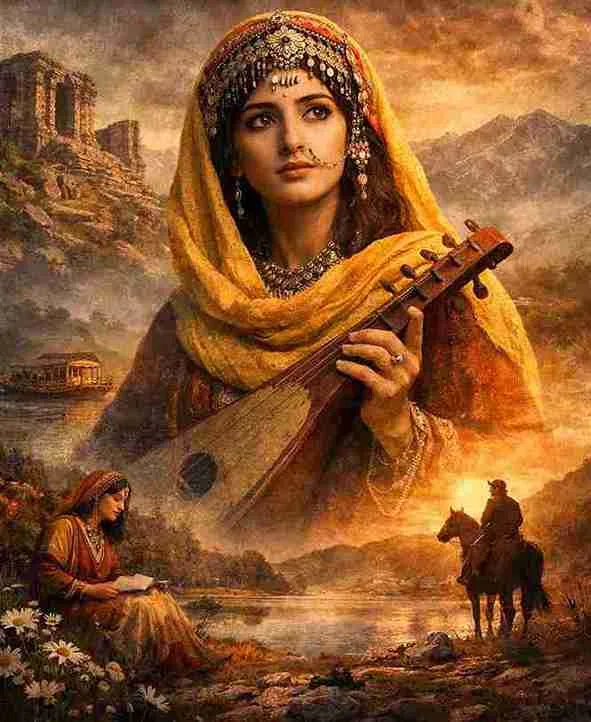
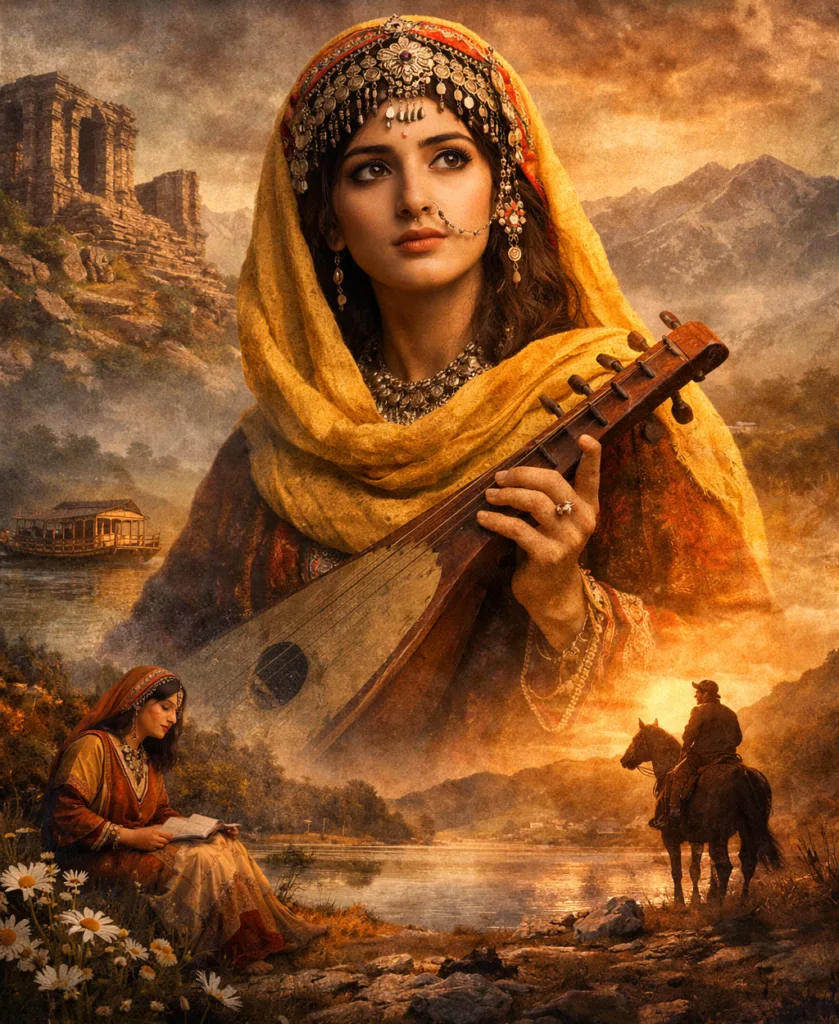
Intro Of Habba Khatoon
Habba Khatoon is one of the most celebrated and emotional figures in the cultural and literary history of Kashmir. Known as the Nightingale of Kashmir, she represents love, pain, separation, and the deep soul of Kashmiri poetry. Even centuries later, her verses continue to live in the hearts of the Kashmiri people, sung as folk songs and remembered as symbols of timeless sorrow and beauty.
Born in the 16th century, Habba Khatoon was originally named Zoon. She belonged to a humble background, yet her natural talent for poetry and singing set her apart. Her words were simple, heartfelt, and deeply connected to everyday life, which made her poetry accessible to common people. She expressed emotions in a way that felt personal, honest, and deeply human.
Habba Khatoon’s life took a dramatic turn when she married Yousuf Shah Chak, the last independent ruler of Kashmir. For a brief period, she lived as a queen, but happiness did not last long. Yousuf Shah Chak was exiled by the Mughal emperor Akbar, and this separation became the greatest tragedy of her life. Her pain, loneliness, and longing found voice in her poetry, turning personal grief into collective memory.
Her poems are mainly in Kashmiri language and revolve around themes of love, separation, fate, and resistance. What makes her special is the emotional depth of her verses—there is no exaggeration, only pure feeling. Many of her poems later became part of Kashmiri folk music and are still sung today, especially by women.
Habba Khatoon is not just a poet; she is a symbol of Kashmir’s emotional history. Her life reflects the struggles of women, the pain of separation, and the loss of freedom. Through her words, she gave Kashmir a voice that still echoes across mountains, lakes, and generations.
Today, institutions, cultural centres, and scholars continue to honour her legacy. Habba Khatoon remains a timeless reminder that poetry born from pain can become eternal beauty.
Delhi Public School (DPS) Srinagar hosted the ‘Fun Te Funkaar Theatre Fest 2025’, a vibrant cultural festival aimed at reviving and celebrating Kashmir’s traditional street performance arts.
The festival brought together young talents from various schools and local theatre circles to showcase their creativity through a series of plays, skits, and open-air performances inspired by Kashmiri folk traditions and street theatre culture.Click Here To Follow Our WhatsApp Channel
According to the organisers, the initiative seeks to reconnect the new generation with Kashmir’s rich artistic heritage, where theatre once served as a powerful community medium — blending humour, social commentary, and public participation.
“Through Fun Te Funkaar, we want to remind our youth that theatre was never meant only for big stages and curtains. Our street artists, folk performers, and storytellers were the real heart of Kashmiri culture,” said one of the event coordinators.
The festival featured several student-led performances that addressed social themes such as environment, education, and compassion — using elements of traditional storytelling, live music, and interactive dialogue.
Well-known actor and filmmaker Aamir Bashir was among the guests who encouraged students to pursue artistic expression as a means of preserving local culture. He lauded DPS Srinagar for offering a platform that goes beyond academics, nurturing creativity and cultural awareness.
Videos shared by the school on social media showed energetic rehearsals, colourful costumes, and lively audience interactions, reflecting the spirit of Kashmiri naatak (street drama) and folk theatre.
Principal Shafaq Afshan said the school is committed to promoting performing arts as a vital part of holistic education. “Theatre teaches empathy, discipline, and teamwork. Reviving our own street art forms through student participation gives them confidence and cultural grounding,” she added.
The event concluded with applause and appreciation for the participating students, teachers, and organisers. Participants expressed hope that such festivals would be held regularly to keep Kashmir’s performing heritage alive for future generations.
The Jammu and Kashmir National Conference President Dr. Farooq Abdullah and Vice President and Chief Minister Omar Abdullah have extended their heartfelt greetings to the people of Kashmir on the auspicious occasion of the Urs of Syed Yaqoob Sahib (RA) at Sonwar.Click Here To Follow Our WhatsApp Channel
In their message, the leaders paid tribute to the revered saint’s timeless teachings of peace, compassion, and spiritual upliftment, which continue to inspire generations across the region. They urged the people, especially the younger generation, to embrace these values to promote unity and foster progress in Kashmir.
Dr. Farooq and Omar Abdullah also prayed for the well-being and prosperity of the people and expressed hope that the spiritual significance of the Urs would strengthen bonds of brotherhood and contribute to lasting social harmony.
Meanwhile, Provincial Vice President and MLA Lal Chowk Ahsan Pardesi also felicitated people on the auspicious occasion.(KNS)
On 5 October 2025 (11 Rabi‘ al-Thani 1447 AH), the Muslim world — especially in places like Iraq, Pakistan, India and Kashmir — observes the Urs of Sheikh Abdul Qadir Gilani (R.A), widely venerated as Hazrat Ghaus-e-Azam and Dastgeer Sahib. For many, this is not simply an anniversary of a saint’s death but a festival of spiritual union: the word Urs literally means a wedding, symbolising the soul’s joyful reunion with the Divine. Across centuries, millions have found in his life and teachings a bridge between law and love, learning and compassion. Click Here To Follow Our WhatsApp Channel
Early life and background
Sheikh Abdul Qadir Gilani (R.A) was born around 470 AH (1077–1078 CE) in the region of Gilan in what is now northern Iran. He is known by the nisba al-Jilani, linking him to Gilan, and later spent most of his public life in Baghdad, the intellectual and spiritual centre of his age. Many sources describe him as thoroughly learned in the Qur’an, Hadith, fiqh and spiritual disciplines. He combined rigorous study with deep devotion, a pattern that would shape his teaching for generations.
Although details of his early family life are not always certain in historical records, he is widely said to have been descended from the Prophet’s family through Hasan ibn Ali (R.A). He studied under leading scholars of his time and was initiated into Sufism by spiritual masters who guided his inner journey. His training combined legal learning (especially within the Hanbali tradition) with a strong emphasis on the discipline of the heart.
The long retreat and spiritual formation
A defining period of his life was a long retreat he undertook in the deserts of Iraq. For many years he lived simply, dedicating himself to worship, meditation, and spiritual struggle (mujahada). These years of solitary discipline formed the inner ground from which his later teaching sprang. When he returned to Baghdad, he was already recognised as a person of deep knowledge and spiritual insight.
His style of teaching was notable for balancing strict adherence to religious law with a compassionate and practical spirituality. He did not separate outward worship and inward purification; instead, he taught that true religion requires both correct practice and sincere inner transformation.
Scholar, preacher and teacher
In Baghdad, Sheikh Abdul Qadir Gilani (R.A) became a well-known preacher and teacher. He lectured on Hadith, Tafsir (Qur’anic exegesis), jurisprudence and spiritual ethics. His sermons drew large crowds: scholars, traders, officials and ordinary people alike came to listen. He founded a school — the madrasa that later gave its name to the Qadiriyya order — where students studied both the legal sciences and the path of the heart.
He earned respect from a wide range of scholars and even political leaders of his time. His influence crossed social and religious lines; people of different backgrounds sought his guidance. He emphasised justice, moral courage and public service alongside personal piety.
Key teachings and spiritual approach
The heart of Sheikh Abdul Qadir Gilani’s (R.A) teaching can be summarised in a few clear, practical points:
Tawhid (Oneness of God): All spiritual striving must be rooted in sincere belief in God alone. Recognition of God’s unity was the foundation of every teaching.
Balance of Sharia and Tariqa: He taught that law (Sharia) and spiritual discipline (Tariqa) are complementary. Observance of the outward rules without inner reform is incomplete; likewise, inward experience without moral conduct can be misleading.
Purification of the heart: Spiritual life requires constant effort to remove pride, attachment and selfishness. Virtues such as patience, gratitude and humility were central to his message.
Service and compassion: True faith shows itself through kindness to people — feeding the poor, caring for the weak and standing for justice.
Practical holiness: He discouraged empty display and encouraged sincere, practical acts of worship and charity.
Books attributed to him — such as Futuh al-Ghaib (Revelations of the Unseen) and Ghunyat al-Talibin (Sufficiency for Seekers) — present these teachings in accessible, often direct language aimed at seekers at different levels.
Miracles and karamat
Stories of miracles (karamat) are numerous in the hagiographical tradition surrounding Hazrat Ghaus-e-Azam (R.A). These accounts include times of supernatural help in famine, healings, and instances where food or resources were miraculously provided to those in need. For followers, such stories are signs of God’s favour manifesting through a saintly person. Classical Sufi authors emphasise, however, that the inner aim of these stories is moral: they strengthen faith and inspire service, not mere wonder.
Whether taken literally or seen symbolically, these narratives have helped generations relate to the saint’s life in a personal way and have supported a living devotional practice centred on compassion.
Founding of the Qadiriyya order
The Qadiriyya is one of the oldest and most widespread Sufi orders, carrying the name of Sheikh Abdul Qadir Gilani (R.A). Its core practices focus on remembrance of God (dhikr), ethical conduct and striving for inner purity. Over time the order spread across many regions: the Middle East, South Asia, North Africa and beyond. Local branches adapted the Qadiriyya teachings to their cultures while preserving the central emphasis on spiritual sobriety, public service and devotion.
The order’s spread owed much to the charismatic force of the teacher’s reputation and the clarity of his teachings, which offered a pathway that was at once rigorous and accessible.
Writings and legacy
The works attributed to Hazrat Ghaus-e-Azam (R.A) blend legal learning with spiritual guidance. They are written in a language meant to instruct and motivate seekers: short, sharp reminders, moral counsel and deep spiritual insights. Apart from Futuh al-Ghaib and Ghunyat al-Talibin, other shorter treatises and letters circulate in manuscript and published forms, often used by students and readers wanting practical guidance.
His legacy is not limited to texts. The living tradition of Sufi practice, the institutions founded in his name, and the social projects inspired by his model of piety and service continue to influence millions.
The shrine in Baghdad and its history
Sheikh Abdul Qadir Gilani (R.A) was buried in Baghdad, at the site of his madrasa. Over the centuries his tomb became a place of pilgrimage. The mausoleum has seen repair and rebuilding many times. It stands as a major site for pilgrims who come to offer prayers, recite the Qur’an, attend lectures and perform acts of charity. For the many who visit, the shrine represents continuity with a living spiritual tradition that reaches back nearly a thousand years.
Dastgeer Sahib shrine in Srinagar
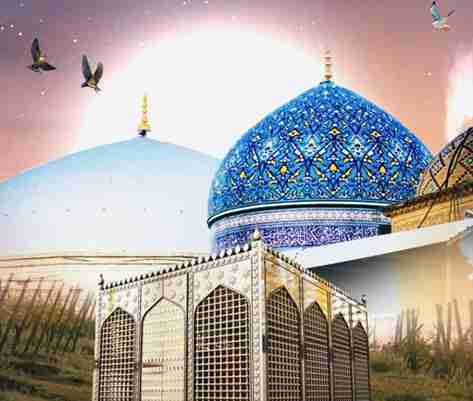
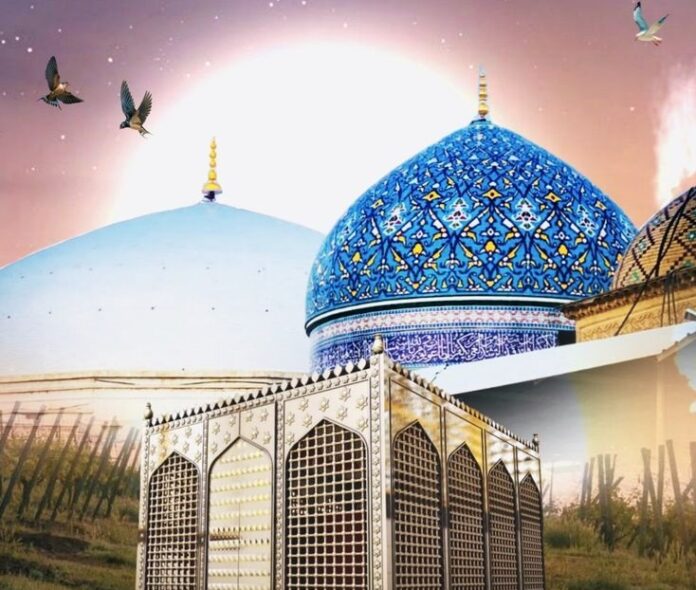
Though Sheikh Abdul Qadir Gilani (R.A) never visited Kashmir, his influence reached the valley through teachers and disciples who brought Qadiri teaching to South Asia. In Srinagar’s Khanyar area stands the famous Dastgeer Sahib shrine, a focal point of devotion for many Kashmiris. The shrine houses relics and has its own local history of devotion and repair. It represents how spiritual figures take root in local cultures, adapting and enriching regional practice.
What is Urs and why it matters
Urs anniversaries mark the death of a saint as a commemoration of union with the Divine. Rather than mourning, the event is celebrated: devotees gather to remember the saint’s life, recite the Qur’an, engage in communal dhikr, listen to sermons and hold gatherings of spiritual music (sama or qawwali in South Asia). Charity and feeding the poor are typical features. Urs is a time for renewal: individual devotees seek spiritual blessings, while communities reinforce bonds of faith and mutual care.
For many people, Urs functions on multiple levels:
A spiritual gathering that revives devotional practice.
A social occasion that brings people together across class and background.
A cultural event that preserves local devotional arts, poetry and music.
A charitable opportunity to serve the needy.
Typical rites and rituals
Although practices vary by region, common elements of an Urs include:
Qur’anic recitation: collective reading and supplication.
Dhikr: groups reciting the names of God and short litanies.
Hamd and Naat: praise-poems in Arabic and local languages celebrating God and the Prophet (PBUH).
Sermons and lectures: teaching that explains the saint’s life and message.
Mehfil-e-sama / qawwali: devotional music sessions in many South Asian shrines.
Ziarat: visiting and paying respects at the tomb, sometimes viewing relics.
Charity and feeding: distribution of food to the poor, a central component.
Processions: in some places, processions and public displays occur, especially where the tradition is deeply rooted.
Organisers generally stress that the core purpose is spiritual: to turn hearts toward God and to renew ethical commitment.
Contemporary observances in 2025
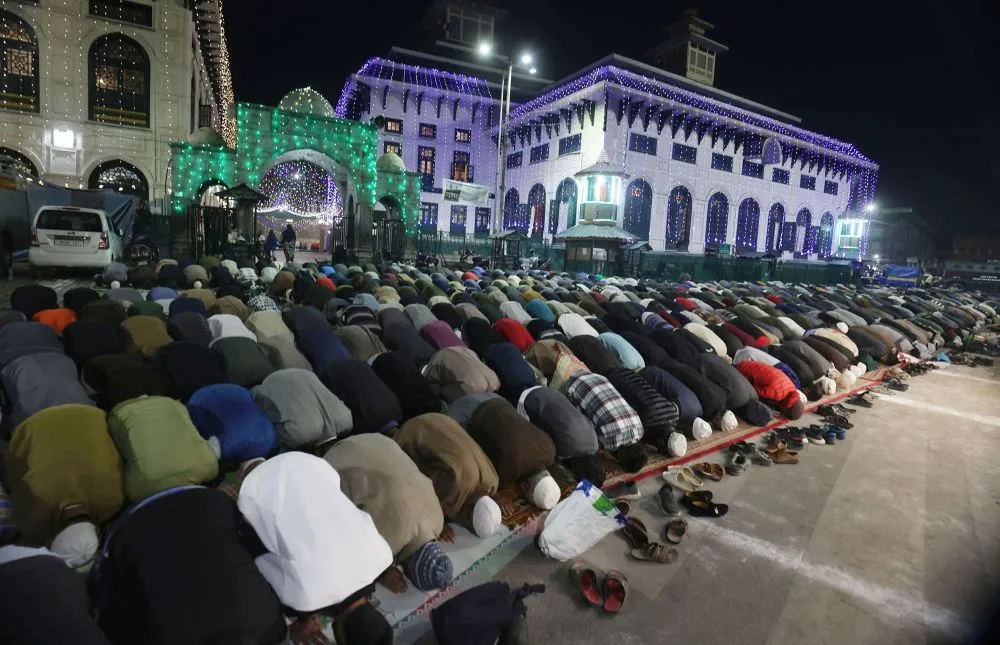
On 5 October 2025, shrines associated with Hazrat Ghaus-e-Azam (R.A) were active with devotees. In Baghdad, the mausoleum drew local and international pilgrims for multi-day gatherings of dhikr, lectures and communal prayers. In South Asia, especially at the Dastgeer Sahib shrine in Srinagar, the day was observed with special programmes: night vigils, recitations, qawwali sessions and large-scale charity meals. Many shrines also used modern tools — live streaming and social media — to include remote devotees who could not travel.
For many devotees, the Urs is a reminder that living spiritual traditions can adapt to new times while keeping their essential message: humility, compassion and service.
The social and moral relevance today
Why does Hazrat Ghaus-e-Azam’s message endure? Several features explain this:
Practical ethics: His teachings stress compassion and justice, which are timeless concerns in any society.
Balance of law and spirit: People facing modern anxieties respond to a message that honours both outward duty and inner peace.
Community orientation: The Qadiriyya emphasis on service and charity offers a framework for organised social aid.
Accessible guidance: His short, direct counsels speak to ordinary people as well as scholars.
In an era of increasing fragmentation, his insistence on unity, tolerance and moral responsibility speaks to both personal transformation and social healing.
Debates and differing views
Like many historical religious figures, Sheikh Abdul Qadir Gilani (R.A) is seen differently across traditions. Some scholars stress hagiographical excesses in later stories; others defend these narratives as expressions of devotional memory rather than literal history. In scholarly circles, there is healthy debate about chronology, authorship of certain works, and the exact historical facts of his life. For devotees, however, the spiritual fruits of his teachings are the primary point of concern.
How to observe Urs with respect and understanding
If you plan to attend an Urs or read about it, here are a few simple suggestions to observe the occasion respectfully:
Approach with sincere intent: the celebrations are primarily devotional, not mere spectacle.
Participate in communal prayers and charity where possible.
Listen to the teachings and reflect on their moral implications.
Remember the central message of service: feeding the poor or assisting the needy is a fitting tribute.
Be mindful of local customs and the diverse ways people express devotion.
Conclusion
The Urs of Hazrat Ghaus-e-Azam (R.A) is more than an annual event; it is a living reminder of a tradition that combines deep learning with compassionate action. Whether observed in Baghdad, Srinagar, or in homes and mosques across the globe, the day calls believers to renew their commitment to inner reform, social justice, and sincere worship. On 5 October 2025, countless hearts turned to the example of this great teacher — a reminder that faith, properly lived, unites people across time and place.
May his example inspire humility, compassion and steadfastness in the service of humanity. Ameen.
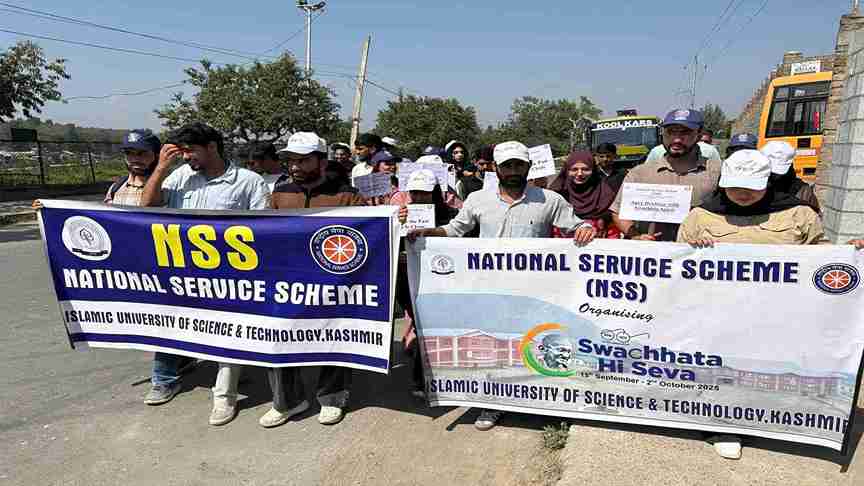
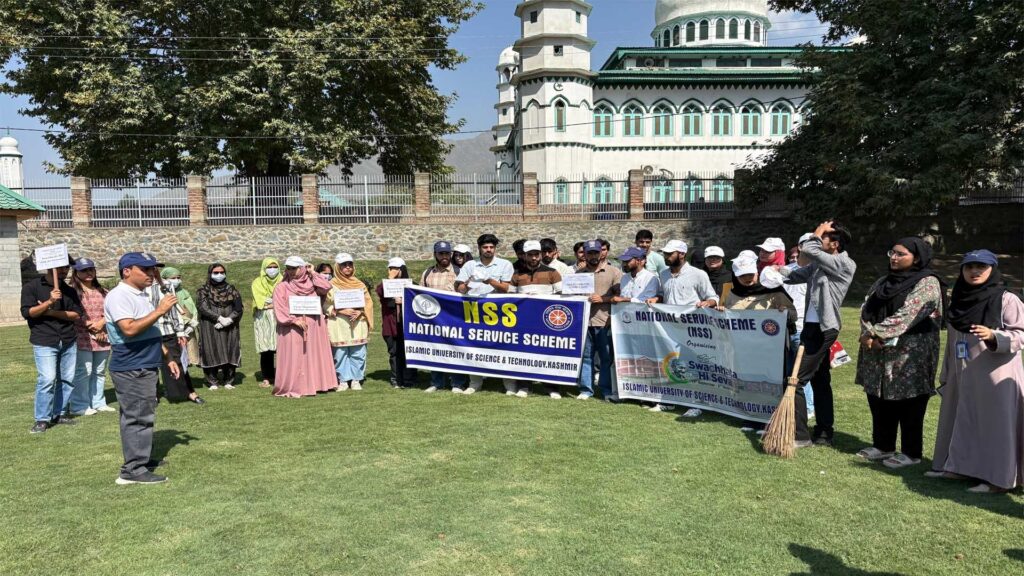
The National Service Scheme (NSS) unit of the Islamic University of Science and Technology (IUST) organized a series of activities under the Swachhata Hi Seva (SHS) Campaign 2025, focusing on cleanliness, heritage conservation, and recognition of sanitation workers.
The campaign began with the nationwide initiative “Ek Din, Ek Ghanta, Ek Saath”, which saw active participation of students, faculty, and volunteers in sanitation drives and awareness programs. In collaboration with the Archaeological Survey of India (ASI), NSS IUST also conducted a heritage conservation drive at the historic Awantipora Temple and along the Jhelum Riverbank, sensitizing participants about cultural preservation.
As part of the campaign, IUST felicitated its Swastha Mitras (sanitation workers) and their children in a special ceremony attended by the Prof. Abdul Wahid Makhdoomi Registrar, Librarian, Dean Outreach, Estates Officer, and. On the occasion, Prof. Makdoomi, Registrar underlined the vital role of sanitation workers in maintaining a healthy and dignified environment on campus and appreciated their commitment to community well-being. He urged students, faculty, and community members to join the SHS campaign as ambassadors for a cleaner and more sustainable future.
Dr. Tariq Ganaie, NSS Programme Coordinator, said that the campaign is not just about physical cleanliness but about instilling a lasting sense of responsibility, environmental care, and social dignity among the youth.
Chief Minister Omar Abdullah today reaffirmed his government’s commitment to the development and upliftment of Gurez and its people. Speaking at the valedictory function of the two-day National Tribal Festival Gurez-2025 held at the picturesque border village of Chorwan in Gurez, the Chief Minister assured residents that Gurez remains high on his government’s priority list.
He lauded the peace-loving nature of the people of Gurez, acknowledging their unwavering commitment to peace even in challenging times. “Gurez has always stood as a symbol of resilience and harmony. My government recognises this spirit and is determined to ensure that the region progresses in all spheres,” he said.
Emphasising the need for improved connectivity, the Chief Minister assured the people that efforts are underway to provide mobile network coverage to keep Gurez connected with the rest of the country.
Highlighting the tourism potential of Gurez valley, the Chief Minister urged the residents to work together to keep Gurez clean and pollution-free. “Gurez is blessed with immense natural beauty, and it is our collective responsibility to preserve it for future generations. While we want development and progress for the region, it must be balanced with safeguarding its heritage, culture and traditions,” he said.
The Chief Minister noted that the expansion of tourism will create employment opportunities, especially for the youth of Gurez.
Earlier, the Chief Minister toured various stalls showcasing local produce, herbs, traditional foods, and handicrafts. Tribal dance performances by cultural troupes from Jammu & Kashmir, Assam, Tamil Nadu, and Gujarat added colour and diversity to the celebrations.
On the occasion, the Chief Minister also distributed appreciation certificates to women-led Self Help Groups for their entrepreneurial efforts.
Advisor to the Chief Minister, Nasir Aslam Wani; MLA Gurez, Nazir Ahmad Gurezi; MLA Zadibal, Tanvir Sadiq; Additional Secretary, Tribal Affairs (Government of India); Secretary, Tribal Affairs (J&K); and Director, Tribal Affairs also spoke on the occasion.
Later, he also inaugurated and witnessed a polo match and flagged off a trekking group from Gurez, promoting the region’s potential for adventure tourism. Additionally, he planted saplings at the Tourist Reception Centre in Gurez as part of a green initiative.
Earlier in the morning, the Chief Minister held a grievance redressal camp at Wampora, Dawar, where residents from various areas including Chorwan, Kanzalwan, Tulail, Markote, and Bagtore raised issues concerning road and mobile connectivity, upgradation of educational institutions, banking facilities, ATM services, community bunkers, and employment opportunities. The Chief Minister patiently listened to all grievances and assured timely redressal.
He said that since the time of Sher-e-Kashmir, has remained committed to delivering justice to the people of Gurez. “We understand the hardships faced by the people of this region. Our government has empathy and commitment to address these concerns,” he remarked.
The Jammu and Kashmir Academy of Art, Culture and Languages (JKAACL) organized a one-day seminar on July 31, 2025, at the Conference Hall of Tagore Hall, Srinagar, to commemorate the life, works, and enduring literary legacy of the eminent Kashmiri writer, researcher, and historian, Late Avtar Krishen Rehbar.
The seminar drew a distinguished gathering of scholars, poets, academicians, and literature enthusiasts who paid rich tributes to Rehbar’s immense contributions to Kashmiri language, literature, and cultural historiography.
The inaugural session was presided over by noted poet and veteran broadcaster Mr. Rafiq Raaz, while distinguished historian Prof. Farooq Fayaz graced the occasion as Chief Guest. The keynote address was delivered by acclaimed critic and academic Prof. Shad Ramzan, who provided deep insights into Rehbar’s multifaceted literary journey, his engagement with Kashmir’s linguistic and cultural traditions, and his pivotal role in enriching Kashmiri literary thought.
Prof. Naseem Shafaie, Sahitya Akademi Awardee, attended as Guest of Honour. Jawaid Iqbal, Editor (Kashmiri), hosted the session and presented the vote of thanks, highlighting the Academy’s ongoing literary initiatives and the significance of preserving the legacies of literary pioneers like Rehbar.
The proceedings were conducted with elegance and clarity by Dr. Gulzar Ahmad Rather, Assistant Editor (Kashmiri), who served as the anchor for the day.
The seminar featured research-oriented presentations by a distinguished panel of scholars and writers including Prof. M. Zaman Azurdah, Prof. Bashar Bashir, Prof. Aejaz Mohammad Sheikh, Prof. Shad Ramzan, Prof. Majrooh Rashid, Prof. Shafi Shouq, Prof. R. L. Talashi, Shamshad Kralwari, Shabnam Tilgami, Yousuf Jehangir, and Prof. Shafi Simbli. The papers explored various dimensions of Rehbar’s literary oeuvre—his editorial vision, his pioneering contributions to literary broadcasting at Radio Kashmir, and his research on folk literature and cultural history.
The first academic session was chaired by Prof. M. Zaman Azurdah, with Prof. Shafi Shouq as Chief Guest and celebrated writer G. R. Hasrat Gadda as Guest of Honour. The session focused on Rehbar’s historical lens, narrative style, and his unique role in bridging traditional and modern literary sensibilities.
The second session was presided over by noted poet and critic Prof. Bashar Bashir, with Prof. Majrooh Rashid as Chief Guest, and Prof. Rattan Lal Talashi and Manshoor Banihali as Guests of Honour. This session explored Rehbar’s poetic worldview, his interpretative methods, and his lasting influence on Kashmiri literary criticism.
The event was also attended by Ghulam Hassan Ghamgeen, Justice Nazir Fida, Mohammad Yousuf Shaheen, Shakeel ur Rehman, Imdad Saqi, Inayat Gul, Nisar Naseem, Mohammad Ayoub Mir Naeem, Mushtaq Ali Ahmad Khan, Rahim Rahbar, Dr.Satish Vimal, Engineer Shafi Ahmad, Mushtaq Ahmad Mushtaq, Bashir Chiragh, Abdul Rehman Bhat, Dildar Ashraf Shah, Seth Rafi, Feroz Ahmad Mahjoor, Neelofar Naz Nahvi, Nasir Mirza, and Saleem Saalik,Jameel Ansari, Aafia Qari, Ghulam Qadir, Abdur Rashid.
The seminar concluded with an open-floor discussion, where participants emphasized the need for renewed scholarly engagement with Rehbar’s legacy and reiterated the importance of documenting Kashmir’s intellectual and literary heritage. The event was widely appreciated for its academic depth, seamless execution, and heartfelt homage to one of the most influential figures in modern Kashmiri literature.
The village of Malpora in Narwav Tehsil, Baramulla district, Jammu and Kashmir, hosted a grand Milad-un-Nabi (ﷺ) and Ahmad Raza Khan (RA) Conference on Saturday, July 26, 2025, at the Central Eidgah. Organized by the Sout-ul-Awliya Unit, the day-long event drew thousands of devotees and prominent Islamic scholars from across the Kashmir Valley to celebrate the birth of Prophet Muhammad (ﷺ) and honor the legacy of Ahmad Raza Khan, a revered figure in the Barelvi Sunni tradition. Moulana Abdul Rasheed Dawoodi, the esteemed founder and chief patron of Tehreek Sout-ul-Awliya, presided as the chief guest, delivering a powerful message of mercy, unity, and spiritual revival that resonated deeply with attendees.
A Day of Spiritual Enlightenment
The conference, held from 8:00 AM to 6:00 PM, was a vibrant celebration of faith, featuring a series of sermons, spiritual talks, and religious discourses centered on the Prophet’s life and teachings. Large waterproof pandals were erected at the Central Eidgah to accommodate the massive turnout and ensure comfort despite potential weather challenges. The event was meticulously planned by the Sout-ul-Awliya Unit, reflecting their commitment to fostering spiritual unity and devotion in the region.
Prominent scholars from various parts of Kashmir delivered enlightening addresses, emphasizing the Prophet’s role as Rahmatul-lil-Alameen (Mercy to the Worlds). Their sermons highlighted the importance of emulating the Prophet’s compassion, tolerance, and justice in daily life, particularly in a region that has faced decades of conflict and division. The atmosphere was charged with devotion as attendees participated in recitations of Naats (poetry in praise of the Prophet) and listened to melodious renderings of the Quran.
Moulana Abdul Rasheed Dawoodi’s Message of Mercy and Unity
The highlight of the conference was the arrival of Moulana Abdul Rasheed Dawoodi at 1:00 PM, greeted by an enthusiastic crowd eager to hear his words. A Kashmiri Sunni Muslim scholar and follower of the Qadriya Sufi lineage, Moulana Dawoodi is renowned for his melodious oratory and unwavering dedication to the Prophet’s teachings. As the chief patron of Tehreek Sout-ul-Awliya, he has been a torchbearer for the Ahle-Sunnat community since the martyrdom of his mentor, Dr. Qazi Nisar (RA), in the 1990s.
In his address, Moulana Dawoodi emphasized the Prophet’s universal message of mercy, urging attendees to embody compassion in their interactions. “The Prophet Muhammad (ﷺ) was sent as a mercy to all creation,” he said. “His teachings guide us to unite as one Ummah, to support the weak, and to spread love in a world filled with challenges.” He called for Muslims to set aside differences and work together to counter divisive forces, a message that carried particular weight in Kashmir’s complex socio-political context.
Moulana Dawoodi also paid tribute to Imam Ahmad Raza Khan (RA), highlighting his contributions to Islamic scholarship and the Barelvi tradition’s emphasis on love for the Prophet. He urged the revival of spiritual practices such as the recitation of Awrad Al Fatiha, a devotional practice attributed to Hazrat Ameer-e-Kabir Mir Syed Ali Hamadani, a revered Sufi saint in Kashmir. “Let us bring these practices back to our mosques and homes to strengthen our connection with Allah and His Messenger,” he said, inspiring attendees to deepen their spiritual commitment.
Drawing from his long-standing advocacy for unity, as seen in previous conferences like the 14th Annual Sout-ul-Awliya Conference in Anantnag, Moulana Dawoodi stressed the need for collective action to address social and religious challenges. He called on the Muslim Ummah to “hold hands together” to defeat conspiracies aimed at sowing discord, reinforcing his vision of a united community grounded in the Prophet’s teachings.
Tehreek Sout-ul-Awliya: A Legacy of Service
Founded in November 2005 by Moulana Dawoodi at an Islamic conference in Anantnag, Tehreek Sout-ul-Awliya (The Voice of Saints) is a non-political, religious, and human welfare organization dedicated to promoting the Quran, Sunnah, and Sufi teachings. Headquartered at Bagh-e-Nowgam, Anantnag, the organization has grown significantly, with nearly 500 members by 2022 and a network of educational and welfare initiatives across Jammu and Kashmir.
The organization operates several departments, including Darsi-Nizami for Islamic education, Hifzu-Nasir for Quranic memorization, Darul Ift-ul-Qaza for Islamic jurisprudence, and a health wing offering free medical services and awareness programs. In September 2024, Tehreek Sout-ul-Awliya laid the foundation stone for Markazus Solihat, a women’s Arabic school, demonstrating its commitment to inclusive education. The organization’s student wing organizes weekly Ijtimas (gatherings) to educate youth about the Sunnah, while its health wing conducts initiatives like blood donation drives and seminars on drug de-addiction.
Moulana Dawoodi’s leadership has been instrumental in the organization’s growth, despite significant challenges. He has faced multiple grenade attacks by adversaries but has miraculously escaped serious harm, earning admiration for his resilience. His arrest in September 2022 by the Jammu and Kashmir government, along with other scholars, highlighted the difficulties of operating in a politically sensitive region, yet he continues to advocate for peace and spiritual reform.
Community Impact and Broader Significance
The Malpora conference was a powerful testament to the enduring appeal of Milad-un-Nabi celebrations in Kashmir, where the Barelvi tradition’s emphasis on love for the Prophet resonates deeply. The event provided a platform for spiritual reflection and community unity, offering hope in a region marked by conflict. Attendees left inspired by Moulana Dawoodi’s call to embody the Prophet’s mercy and work collectively for social good.
The conference also highlighted the organizational strength of Tehreek Sout-ul-Awliya, which successfully mobilized scholars and devotees for a large-scale event. By honoring Imam Ahmad Raza Khan (RA), the conference reinforced the importance of the Barelvi tradition in Kashmir’s religious landscape, fostering a sense of pride and continuity among attendees.
Conclusion
The Milad-un-Nabi and Imam Ahmad Raza Khan Conference in Malpora, Baramulla, on July 26, 2025, was a landmark event that brought together thousands to celebrate the Prophet’s birth and teachings. Moulana Abdul Rasheed Dawoodi’s stirring address, centered on mercy and unity, inspired attendees to embrace the Prophet’s values in their lives and communities. Through his leadership of Tehreek Sout-ul-Awliya, Moulana Dawoodi continues to guide Kashmir’s Muslims toward spiritual renewal and social reform, navigating challenges with resilience and faith. The event underscored the power of collective devotion and the enduring relevance of the Prophet’s message in fostering hope and unity in trying times.
Acclaimed vocalist, composer, and cultural ambassador Waheed Jeelani proudly represented Jammu & Kashmir at the grand Sawan Utsav 2025, a prestigious three-day national music and dance festival held from 18th to 20th July in Patiala, Punjab. The event was organized by the North Zone Cultural Centre (NZCC) under the aegis of the Ministry of Culture, Government of India.
Performing alongside legendary artists from across the country, Waheed Jeelani delivered a soul-stirring one-hour set, weaving together the poetic brilliance of Kashmiri mystics Soch Kraal, Wahab Khaar, Bashir Dada, and Fazil Kashmiri with his signature melodic finesse. His rendition of Urdu ghazals and geets by literary greats like Momin Khan Momin, Daagh Dehlvi, and Anjum Rehbar left the audience deeply moved.
In his heartfelt message, Jeelani expressed immense gratitude to NZCC and the Ministry for providing a platform to showcase the spiritual, folk, and poetic essence of Kashmir. His performance, supported by an ensemble of skilled musicians from Kashmir and Jammu, received thunderous applause and widespread appreciation.
Waheed Jeelani continues to be a torchbearer of Kashmir’s musical legacy, promoting peace, harmony, and cultural pride across borders.
NIT Srinagar is set to host one of its most anticipated traditions; the annual cultural fest, Rang-e-Chinar, on 2nd and 3rd May 2025.
The event serves as a celebration of diversity, expression, and unity, transforming the campus into a vibrant hub of music, art, dance, theatre, and creative brilliance. It is a space where tradition meets modernity, and talent takes centre stage.
The fest draws participation from institutions across the region and is attended by dignitaries, guests, and students. The events include stage performances and musical evenings, offering moments that resonate long after the event concludes.
This year’s edition continues the tradition, reflecting the institute’s spirit, commitment to art, and appreciation for culture. Rang-e-Chinar 2025 promises to be a significant event, where each performance contributes to the celebration ofculture.